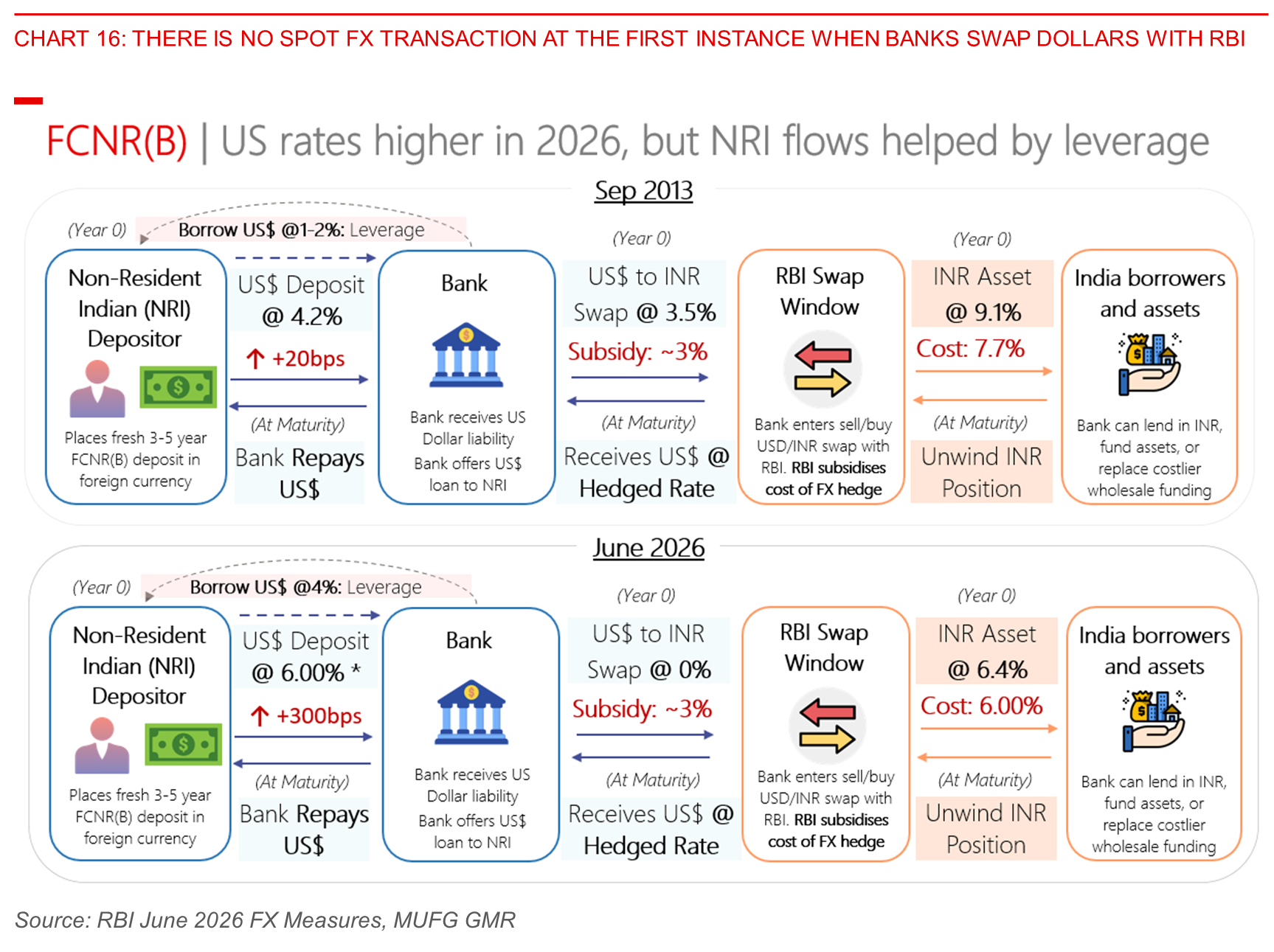

The dictum that too much of a good thing may well be a problematic issue could certainly apply to the situation that India is facing right now.
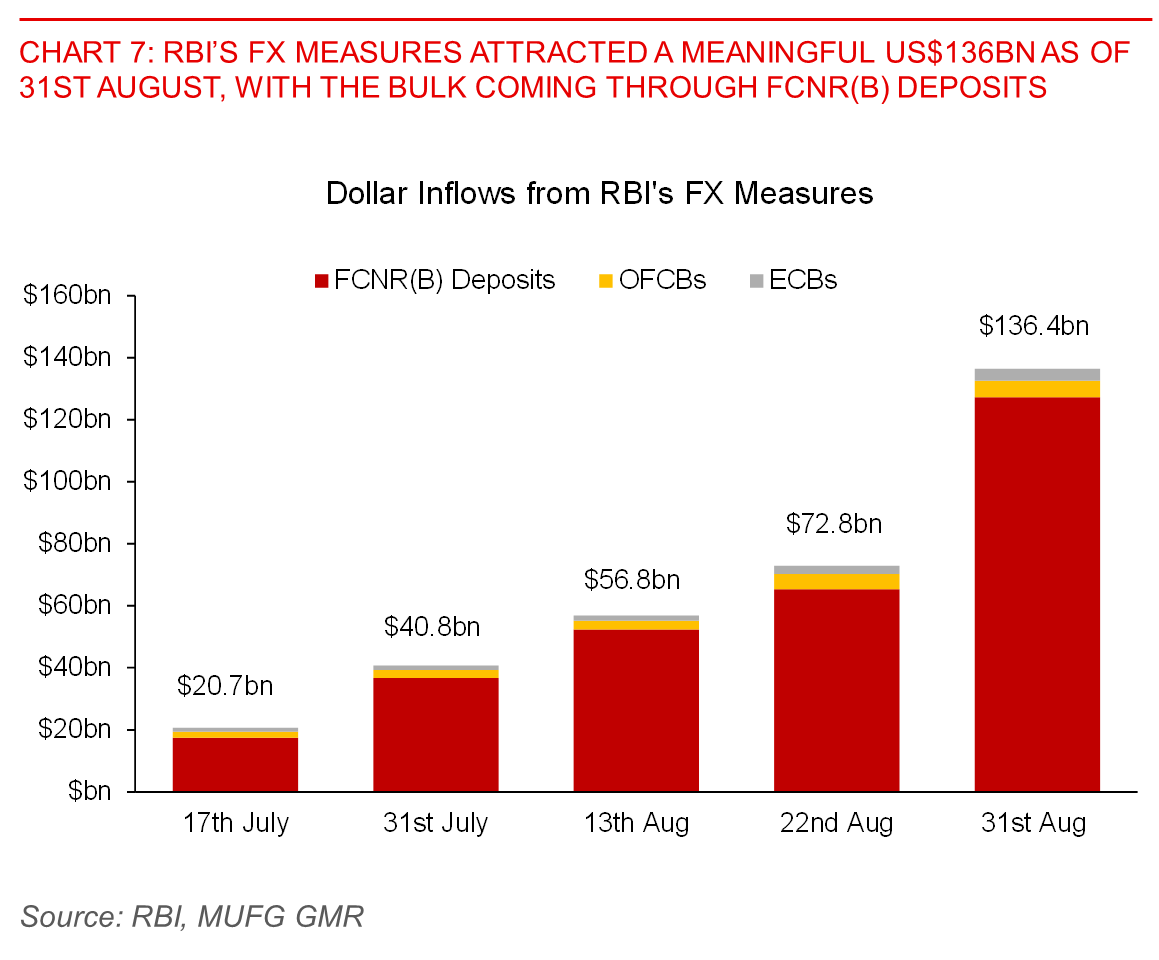
Following RBI’s FX measures announced in June 2026 to support the Indian Rupee, the amount of Dollars attracted through the various facilities including FCNR(B) deposits now stands at a meaningful US$136bn as of 31 Aug, and likely still rising as we speak (see RBI June 2026 Measures - Shoring up the Indian Rupee). With this huge deluge of money, it made sense in retrospect for RBI to have closed the FCNR(B) facility earlier than expected.
The macro, banking system liquidity and market impact were as follows:
1st, RBI received a meaningful build-up in its stock of FX reserves as banks swapped their US dollars with RBI at a subsidised rate. As of 4 September, RBI’s stock of FX reserves stood at US$785bn, up from US$686bn before RBI announced the FX measures, with a minority portion of these inflows likely going to maturing some of RBI’s short FX forward positions and also spot FX intervention to support INR.
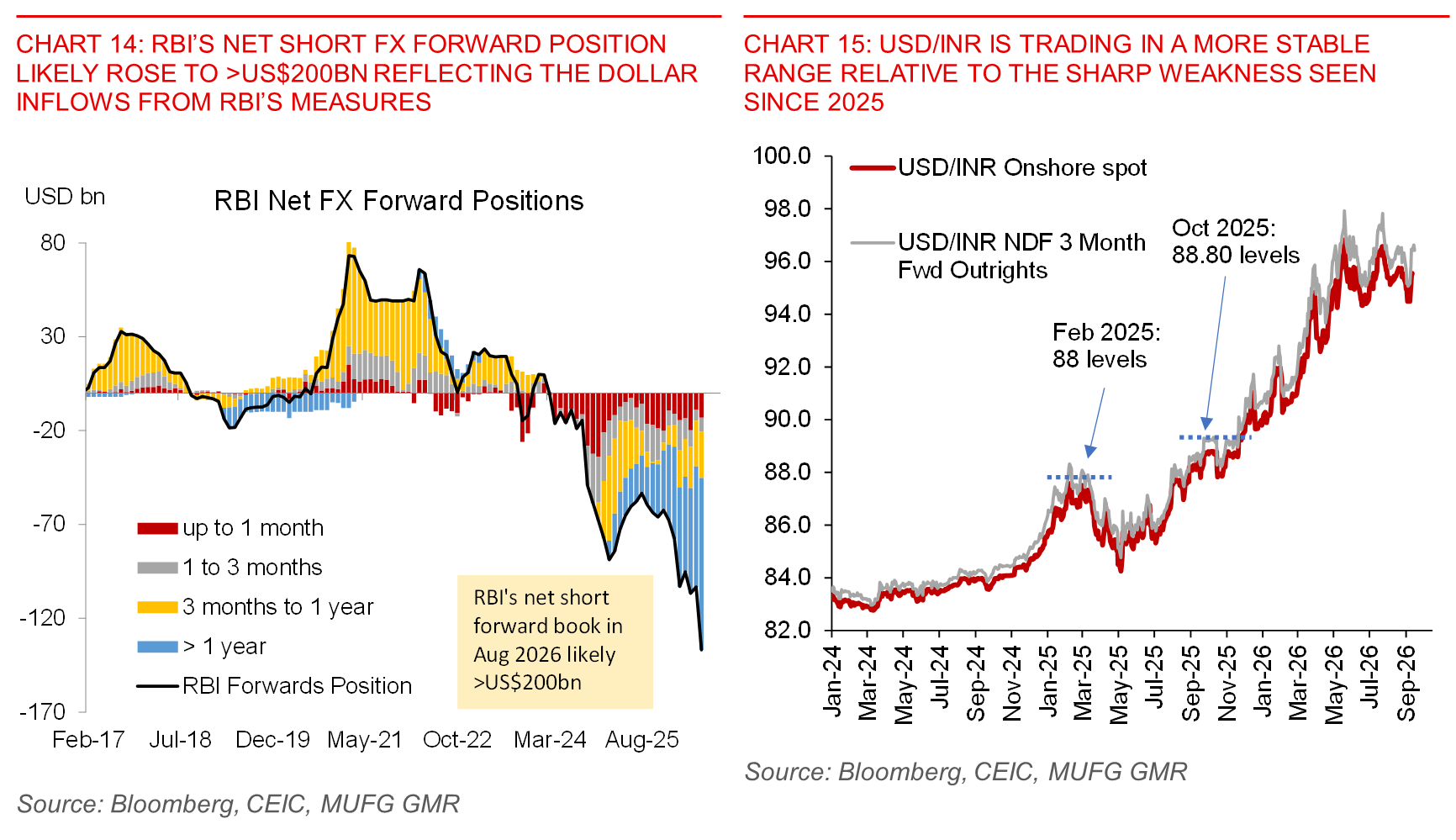
2nd, RBI’s short FX forward position is estimated to have increased to more than US$200bn as a reflection of its commitment to deliver US dollars to banks 3-5 years down the road – an off-balance sheet item.
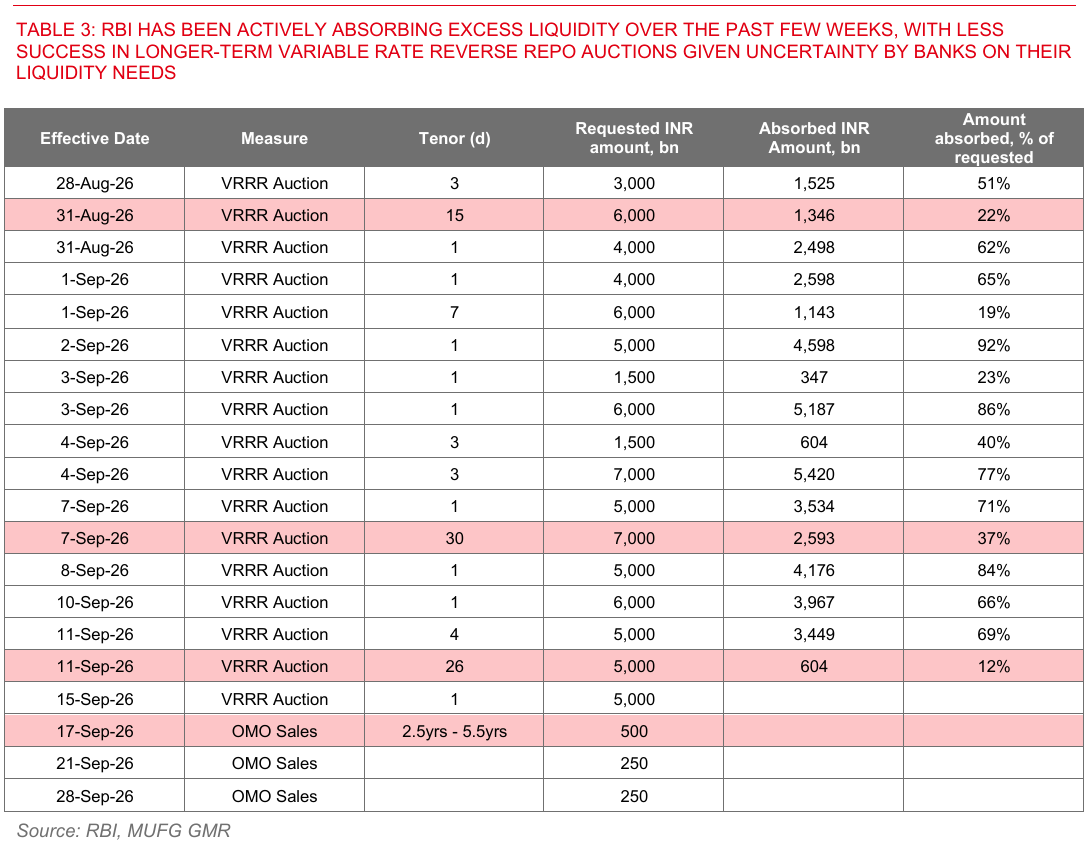
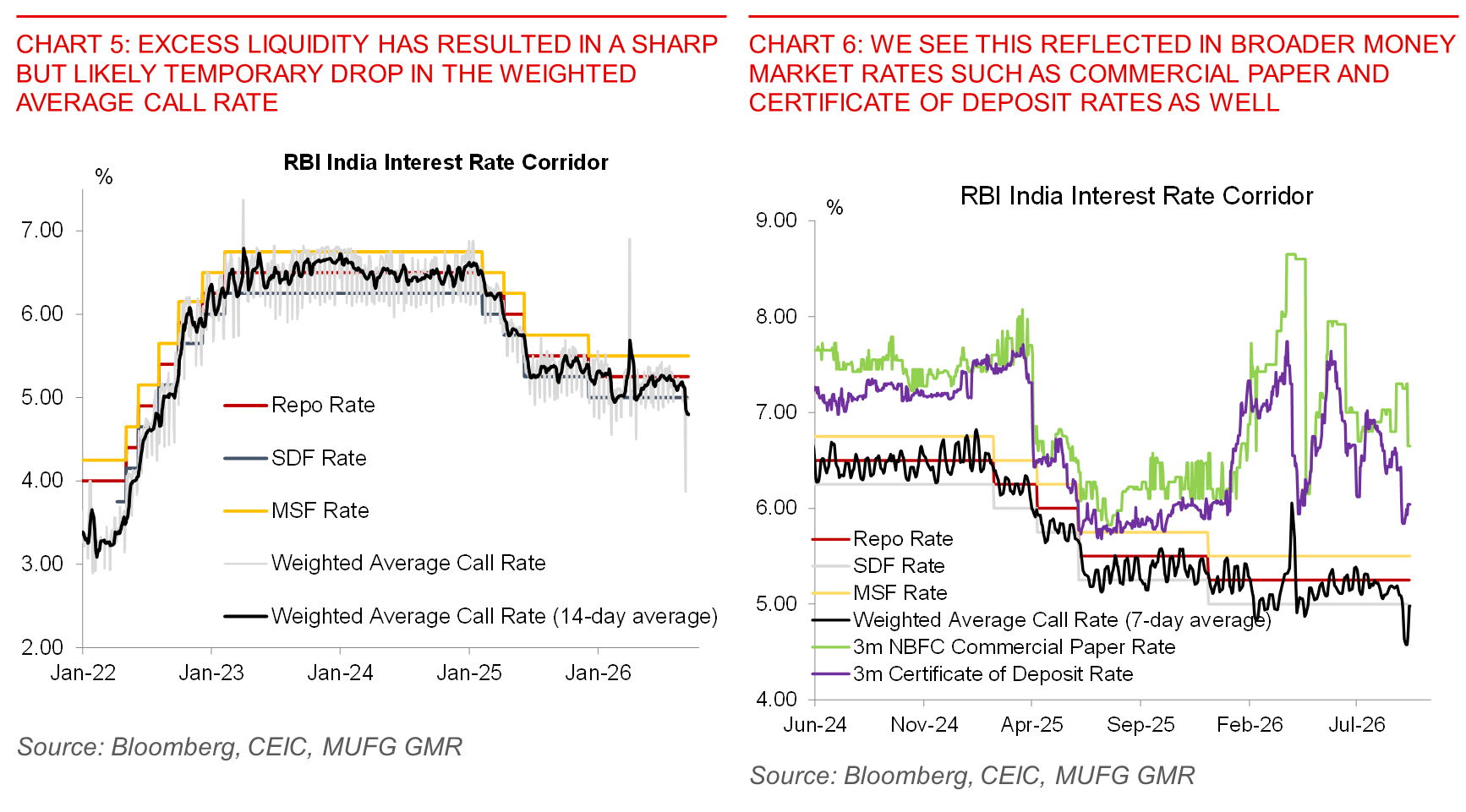
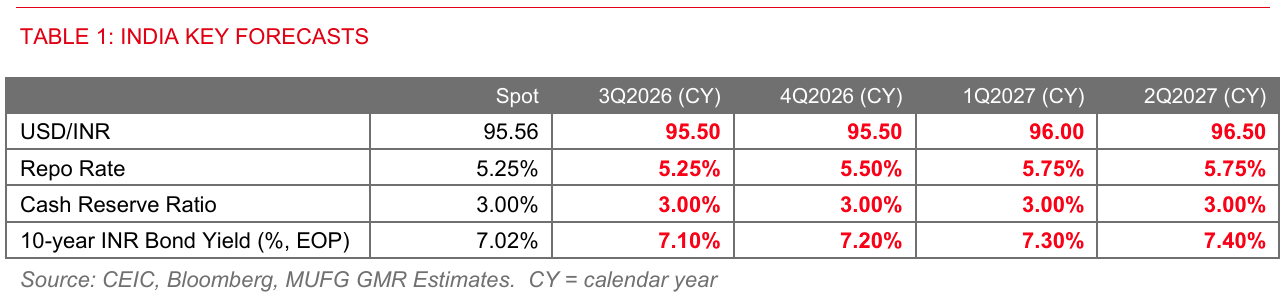
3rd, Banks received a substantial increase in INR deposits as a counterpart to that FX swap operation with RBI, and with that a sharp boost to banking system liquidity to more than INR 10 trillion.
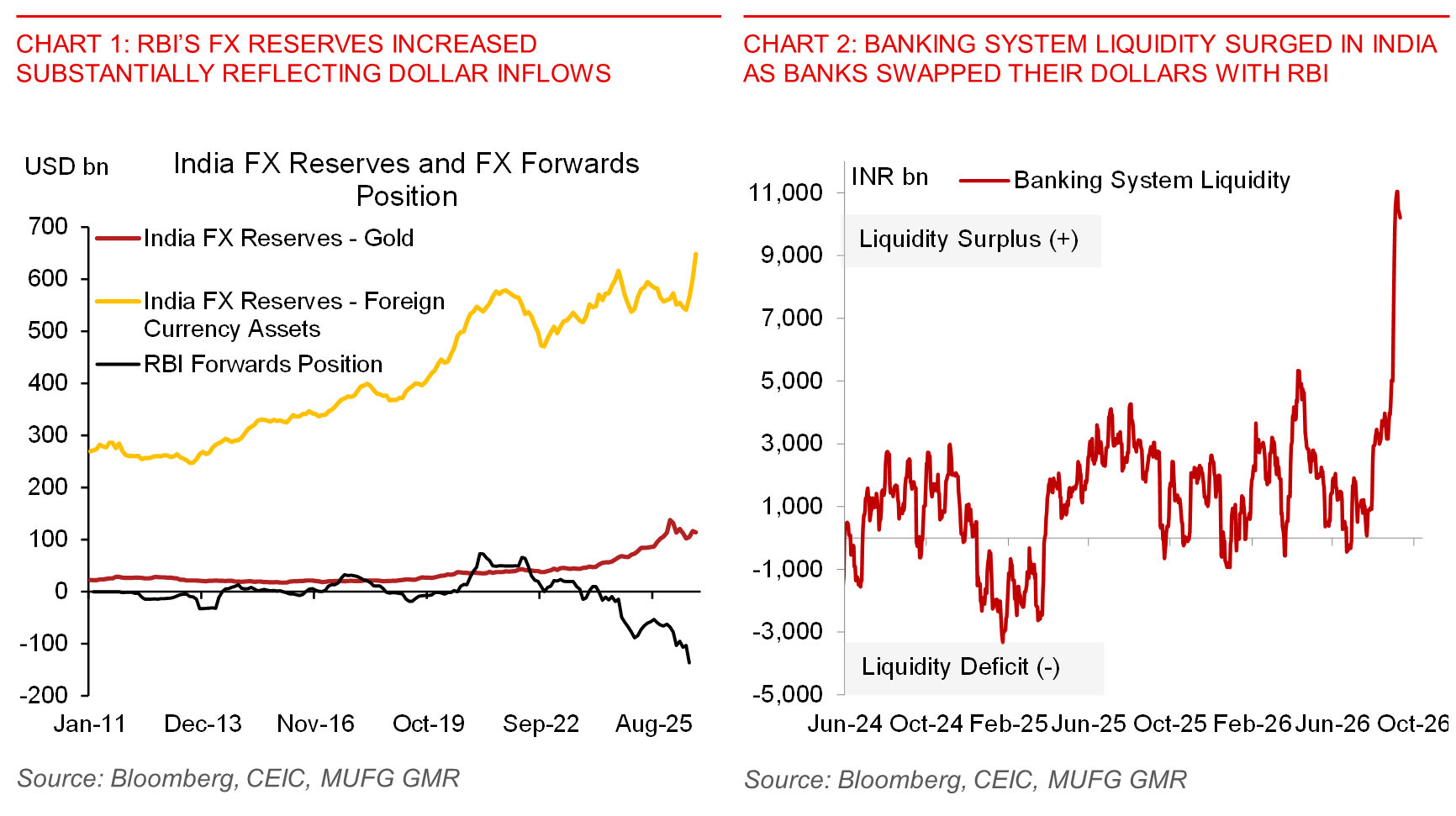
Note that there is no spot FX transaction unless RBI actively chooses to intervene in the INR FX market. As such it’s not surprising that USD/INR did not move much immediately in the first instance. These Dollar inflows do give RBI far bigger firepower to defend against INR weakness, but they also bring about their own set of challenges, namely INR liquidity management.
RBI’s most immediate challenge is to deploy its suite of tools to mop up this excess liquidity as a side effect of the inflows from these FX measures, which now stands at more than INR 10 trillion.
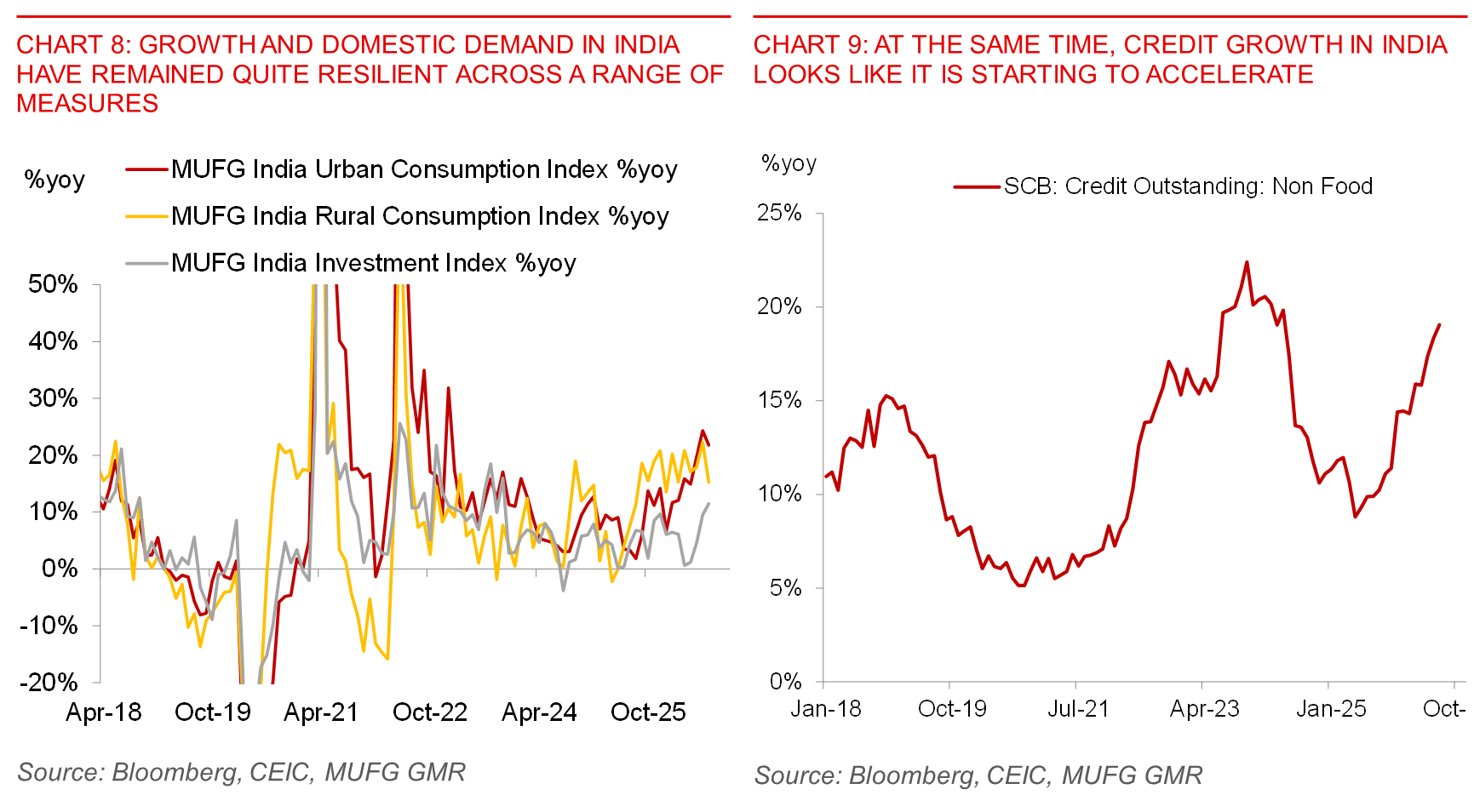
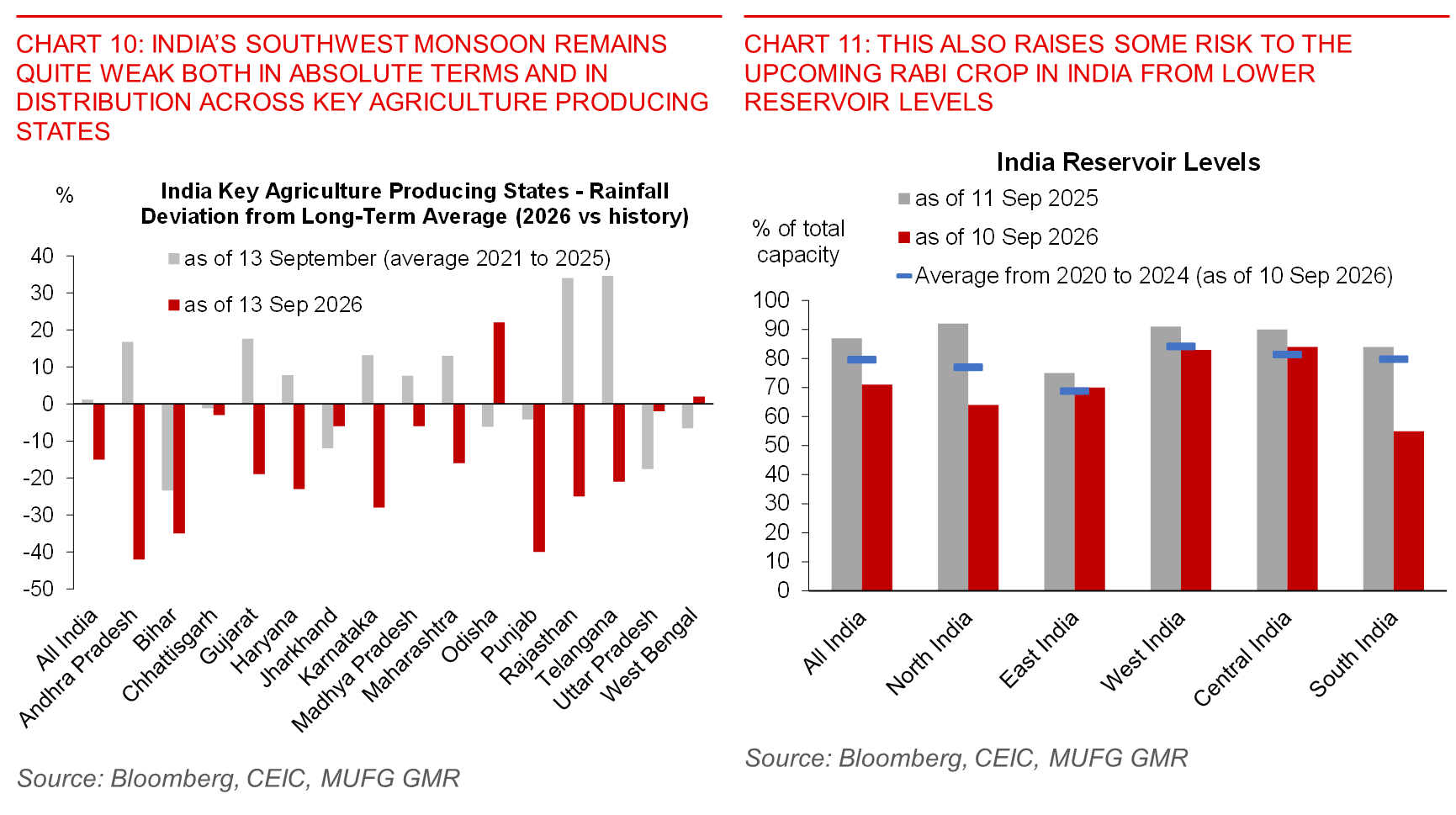
Importantly this is coming at a time when credit growth in India is accelerating, domestic demand and growth is resilient, fiscal policy is supportive, and inflation looks to be picking up into 2027 in part due to possible adverse weather events and elevated global oil prices.
As such, we continue to think the risks tilt towards inflation in India rising faster than expected, with the significant boost to INR liquidity from RBI’s FX measures a potential additional impetus pushing inflation higher over the course of 2027, especially if it is not managed well from a credit growth perspective (see India: Waiting on the world to change).
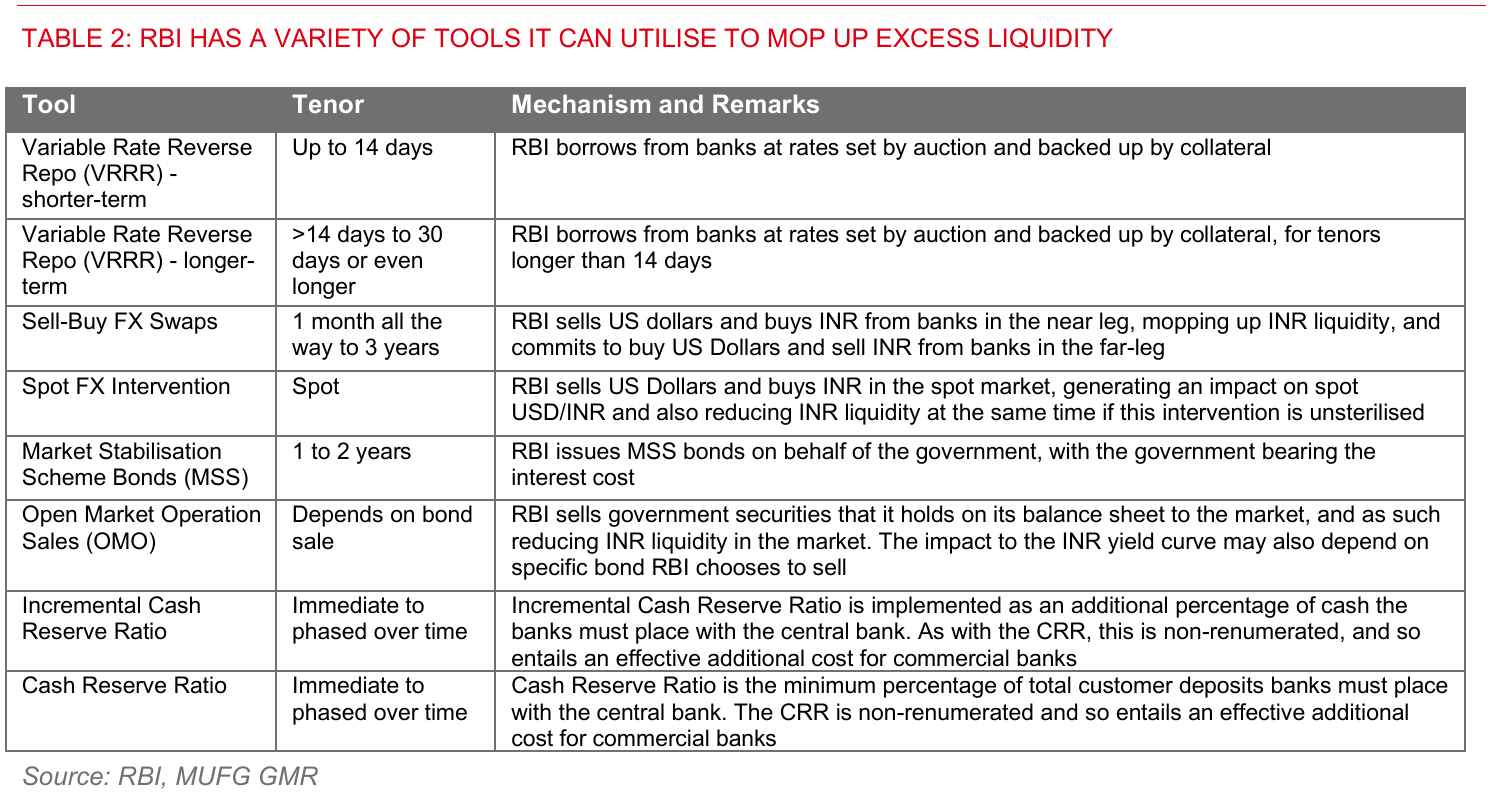
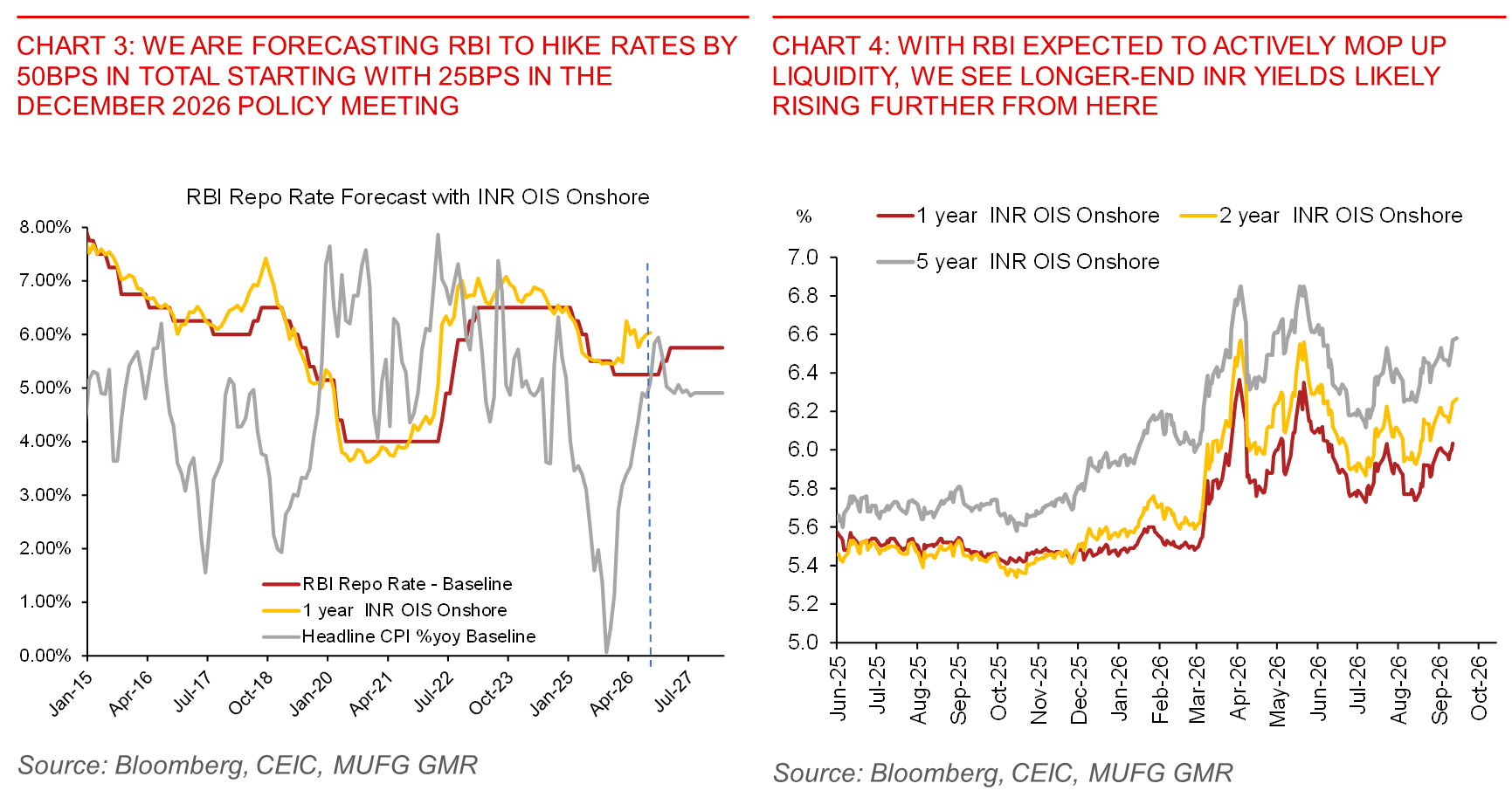
We as such continue to forecast RBI to hike rates by 50bps in total, with 25bps each in the December 2026 and February 2027 meetings, and our conviction level is now higher especially post the hawkish tilt from RBI’s Minutes in August. We see some risk that the RBI could deliver 75bps of hikes in this cycle.
Overall, this would bring RBI’s repo rate to 5.75% by end-FY2026/27.
Our base case is for a shallow rate hike cycle given the much better starting point for India’s macro stability – and rightfully so. Nonetheless, there is some left-tail risks that RBI may eventually be forced to hike rates at a faster pace down the road, especially if credit growth and abundant liquidity conditions are not managed well. We however stress this outcome is not very likely and hence it is more a risk to watch out for rather than a central scenario.
Linking this to the rates markets, we see INR rates especially in the longer-end moving higher from here given our broader thinking around India’s macro environment. We continue to like paying INR 5y NDOIS (see Asia - Pay INR rates post RBI Minutes).
Looking longer-term, we ultimately do not think RBI will deliver the number of hikes and risk premia currently priced into INR OIS markets through the cycle, save in a left tail scenario (3-year INR onshore OIS at 6.37% and 5-year at 6.58%). For corporate clients thinking about fixing interest rate exposure, the decision may as such boil down to whether and at what rate one can continue to borrow at the front-end of the curve over the next few years.
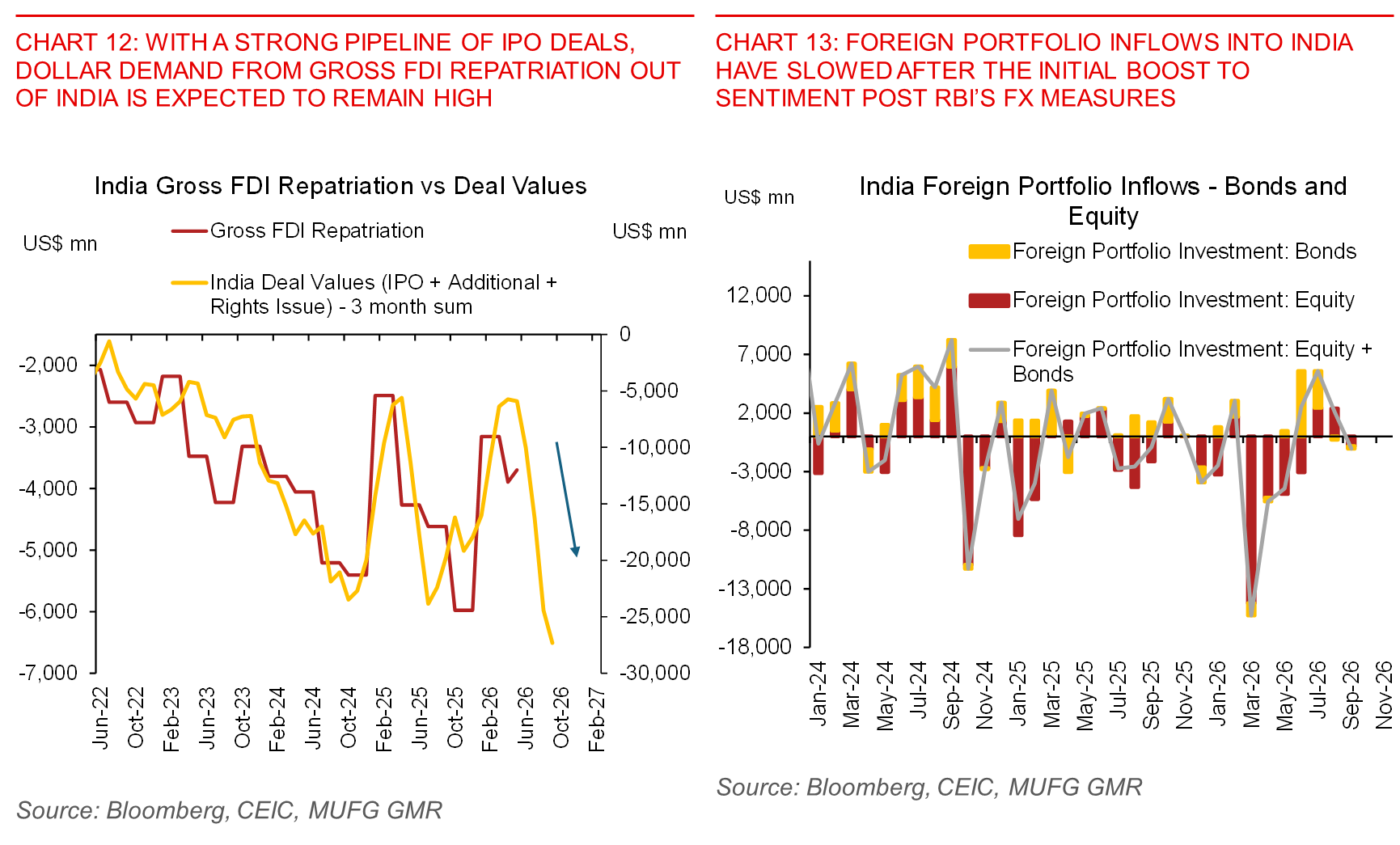
From an FX perspective, we continue to think that RBI’s measures have significantly reduced the left tail risk of sharp INR depreciation. Nonetheless, given still strong underlying Dollar demand including from gross FDI repatriation and a strong IPO issuance pipeline, we are still forecasting USD/INR to move higher directionally (see India: Flows before growth – this time is different for INR).
We are forecasting USD/INR at 95.50 by Dec 2026 and 96.50 by June 2027, implying a gradual depreciation in INR against the Dollar and a modest underperformance against other Asian currencies.