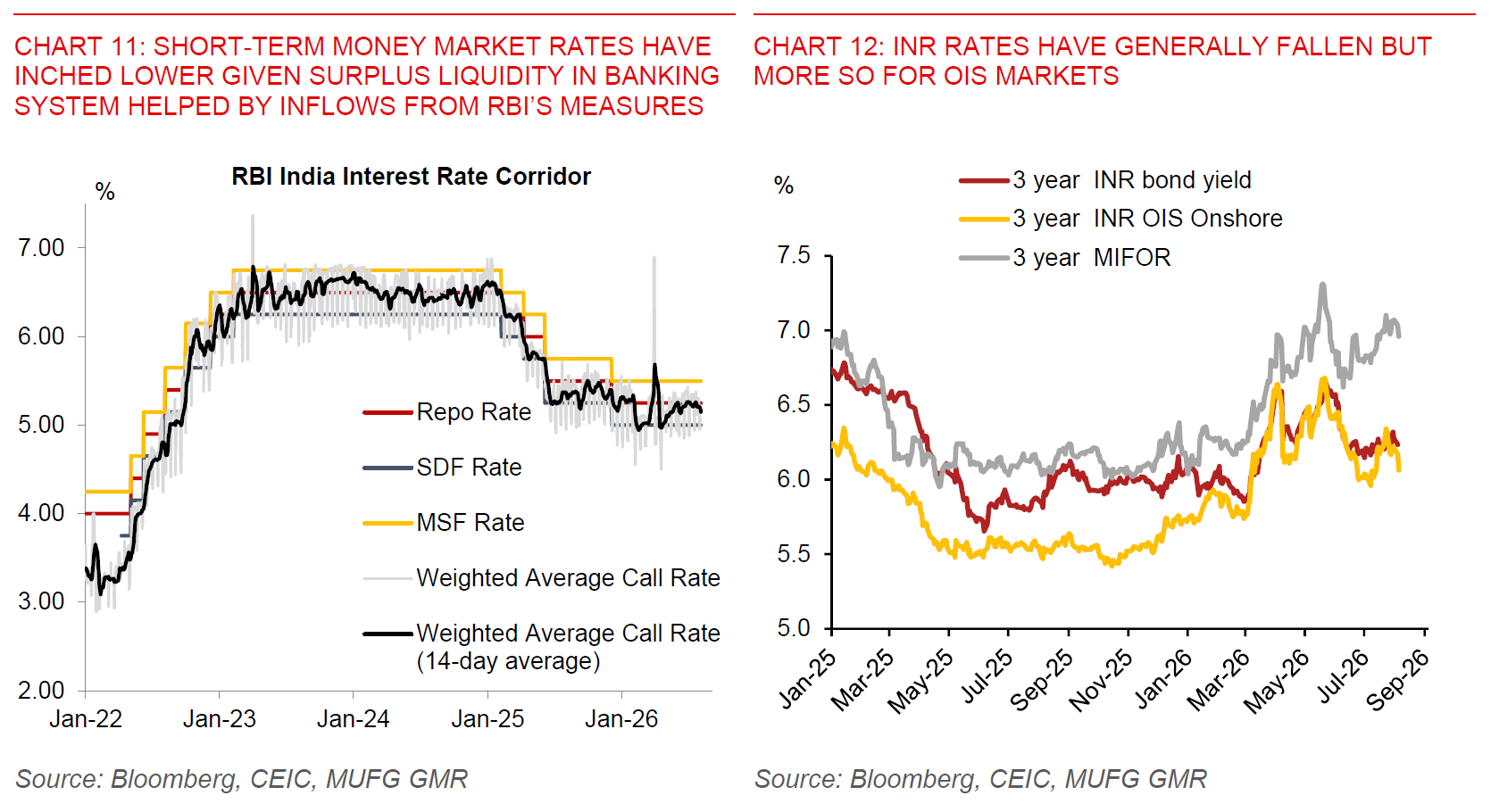

RBI kept its key repo rate on hold at 5.25% and its policy stance unchanged at neutral, in a unanimous decision during its August 2026 meeting. This decision was expected by both ourselves and the consensus.
More importantly for markets, we think the tone from RBI Governor Sanjay Malhotra was neutral and did not signal an urgency to hike rates for now. The focus was on data-dependency and watchful waiting to see how and if the world changes, including on upcoming risks such as El Nino, whether inflation pressure broadens out, and also the FX and liquidity impact of RBI’s measures announced in June (see RBI– Shoring up the Indian Rupee).
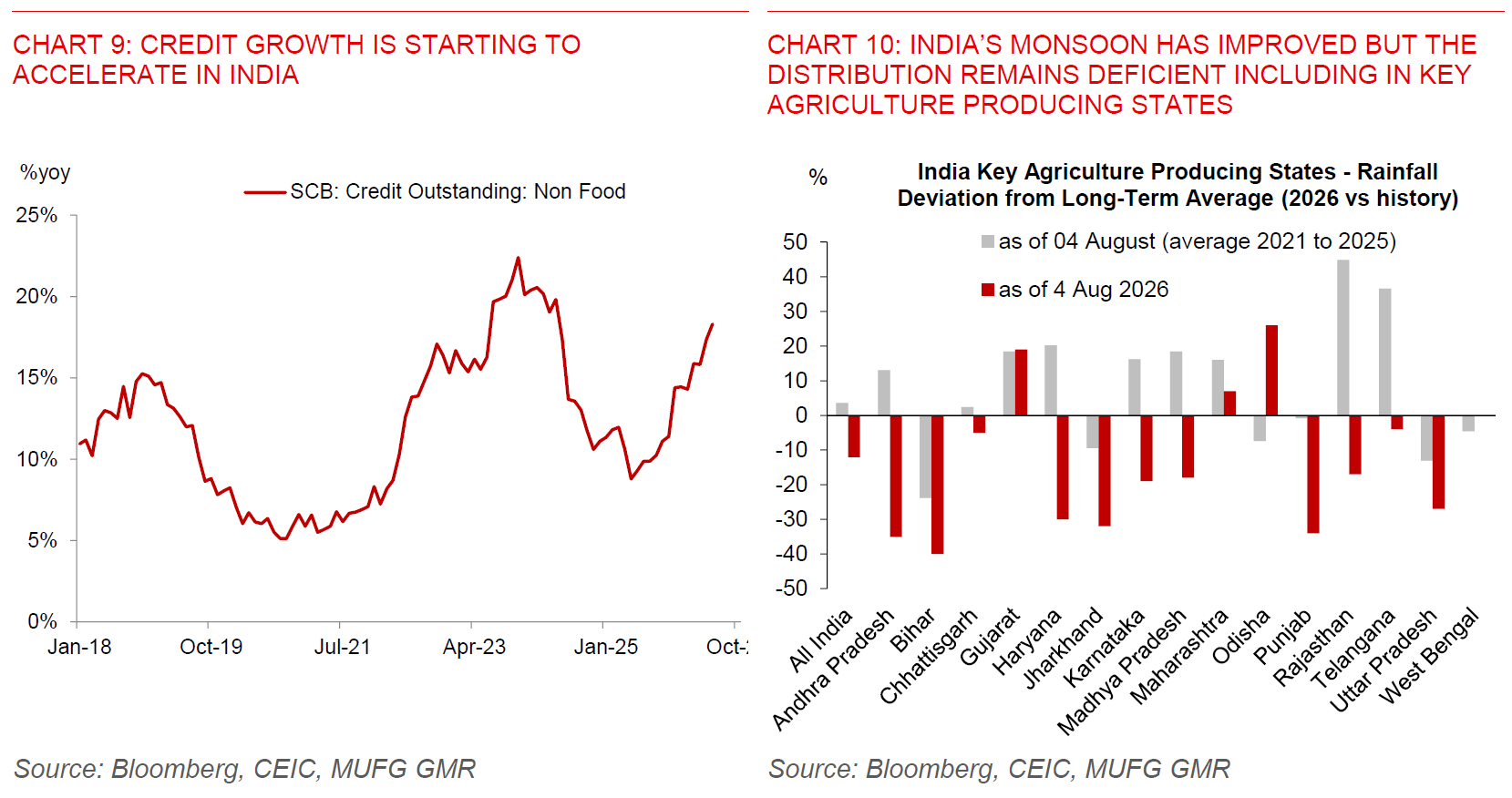
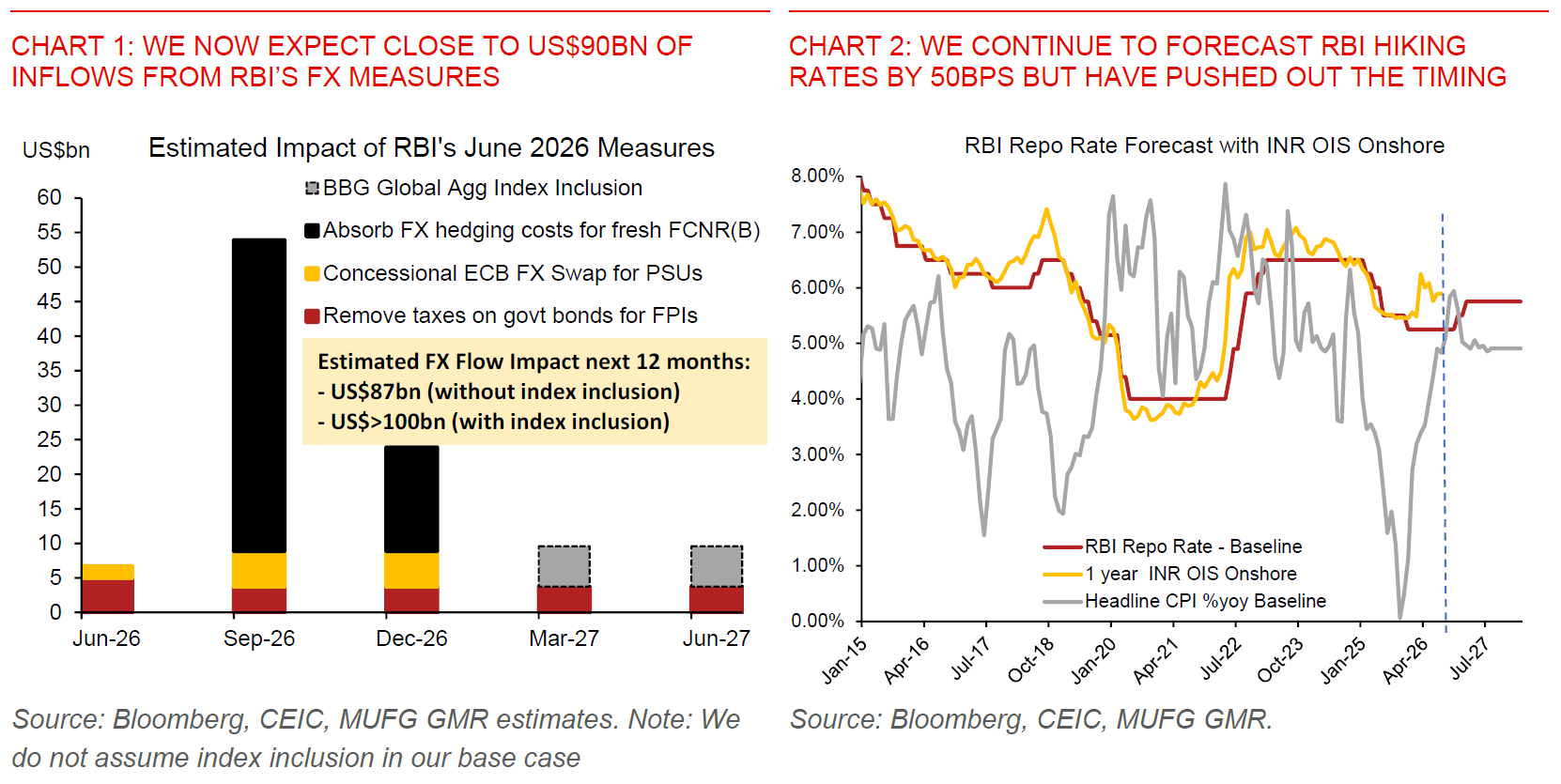
We continue to see RBI hiking rates by 50bps to 5.75% but push out the timing of the first hike to December from our previous expectation of an October move. We still see policy rates moving higher from here with domestic growth remaining quite robust, credit growth accelerating, the lagged impact from earlier oil price increases, fiscal policy supportive with a likely wider fiscal deficit, coupled with possible interaction with adverse weather events.
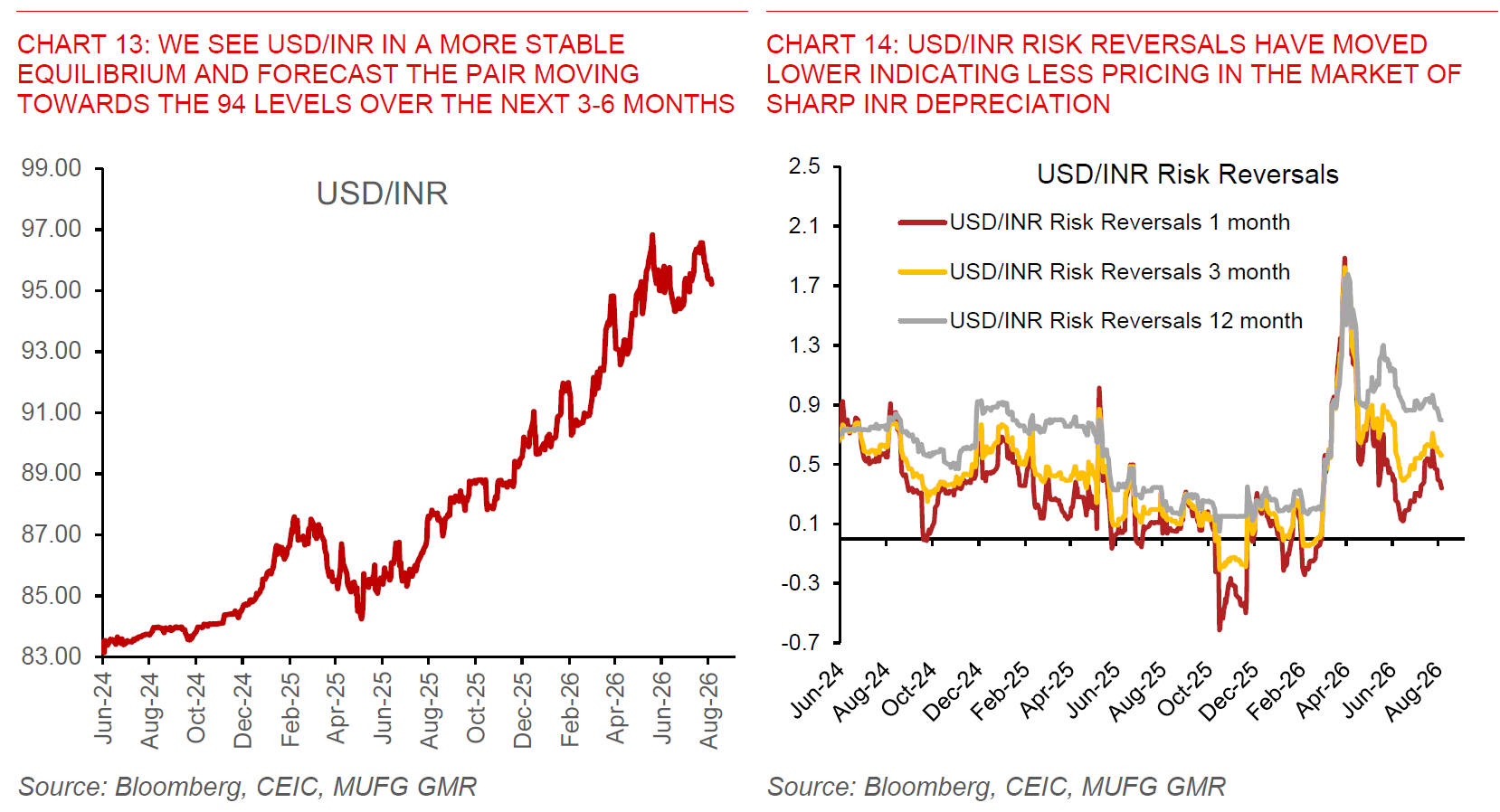
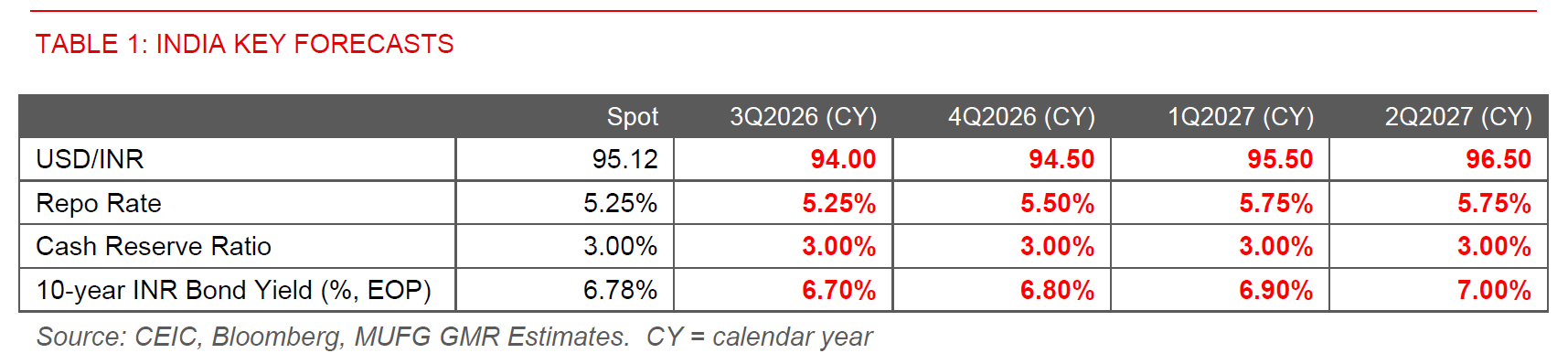
From an FX perspective, we forecast USD/INR grinding lower over the next 3-6 months towards the 94.00 handle, before rebounding towards 96.00 next calendar year. In retrospect, our earlier forecast changes might have been too optimistic on INR. Nonetheless, with the pace of Dollar inflows picking up, we remain comfortable that sharp INR depreciation risk has been curtailed for now.
More details and thoughts:
There were some interesting details mentioned on RBI’s strategy and thinking on FCNR(B) inflows during the press conference with RBI Governor Malhotra.
First, RBI does not have any plan for now to prematurely close the FCNR(B) scheme, but it is keeping optionality on that front if inflows accelerate moving forward with the Governor saying that “we’ll keep you posted on that” but with no explicit target of FCNR(B) inflows in mind.
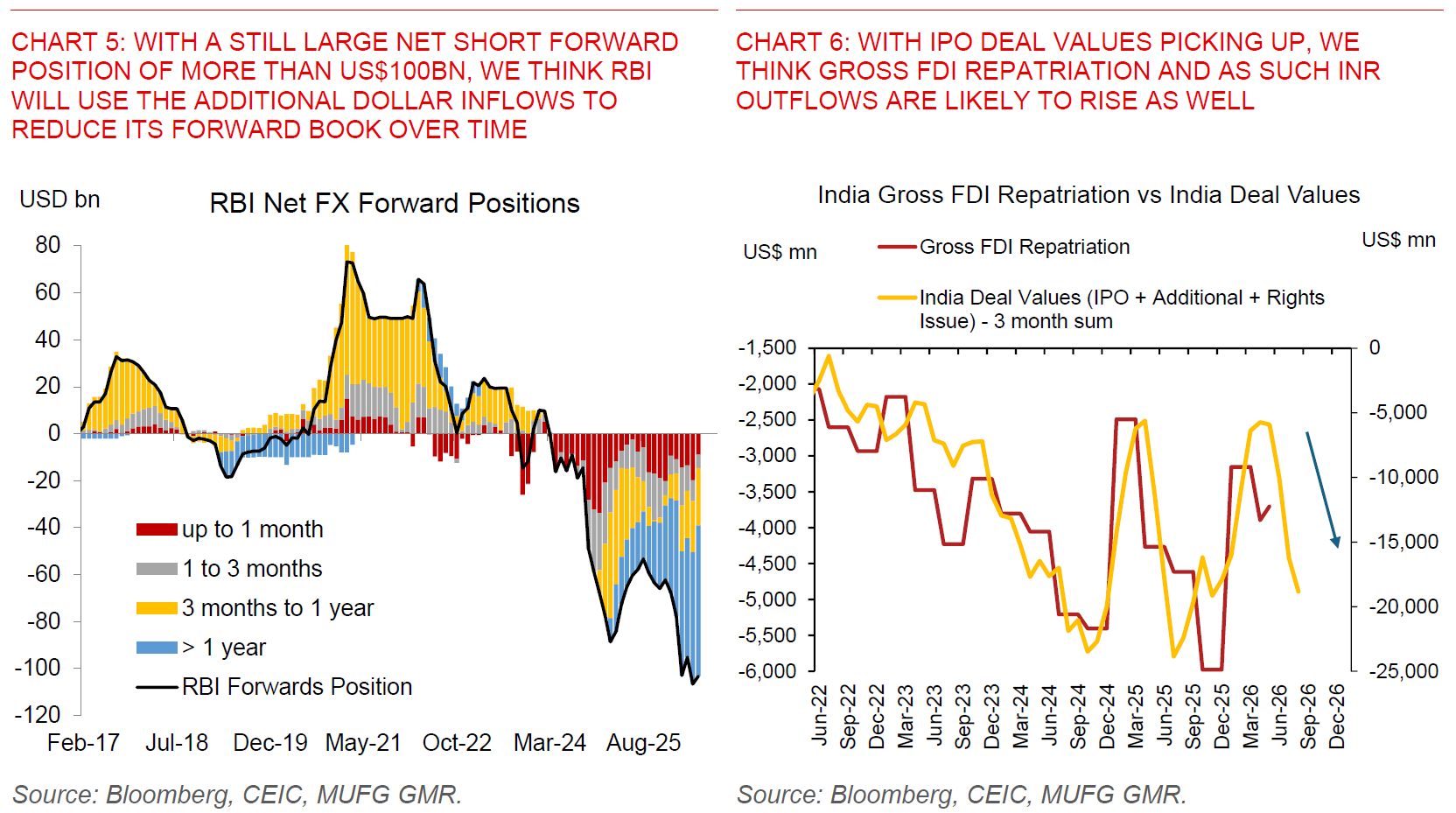
Second, it does not sound like RBI plans to use the additional Dollar inflows to sell into the spot FX market to actively generate INR appreciation. RBI’s strategy this cycle leans towards capping left tail risk of INR weakness and managing excessive FX volatility. RBI Governor Malhotra was also not explicit in guiding whether the Dollar inflows will be used to reduce the RBI’s net short forward book position, but our suspicion is that it will be one important element moving forward.
Third, RBI expects liquidity to remain in surplus only temporarily and peak in the September quarter, and in line with Dollar inflows from the FCNR(B) measures.
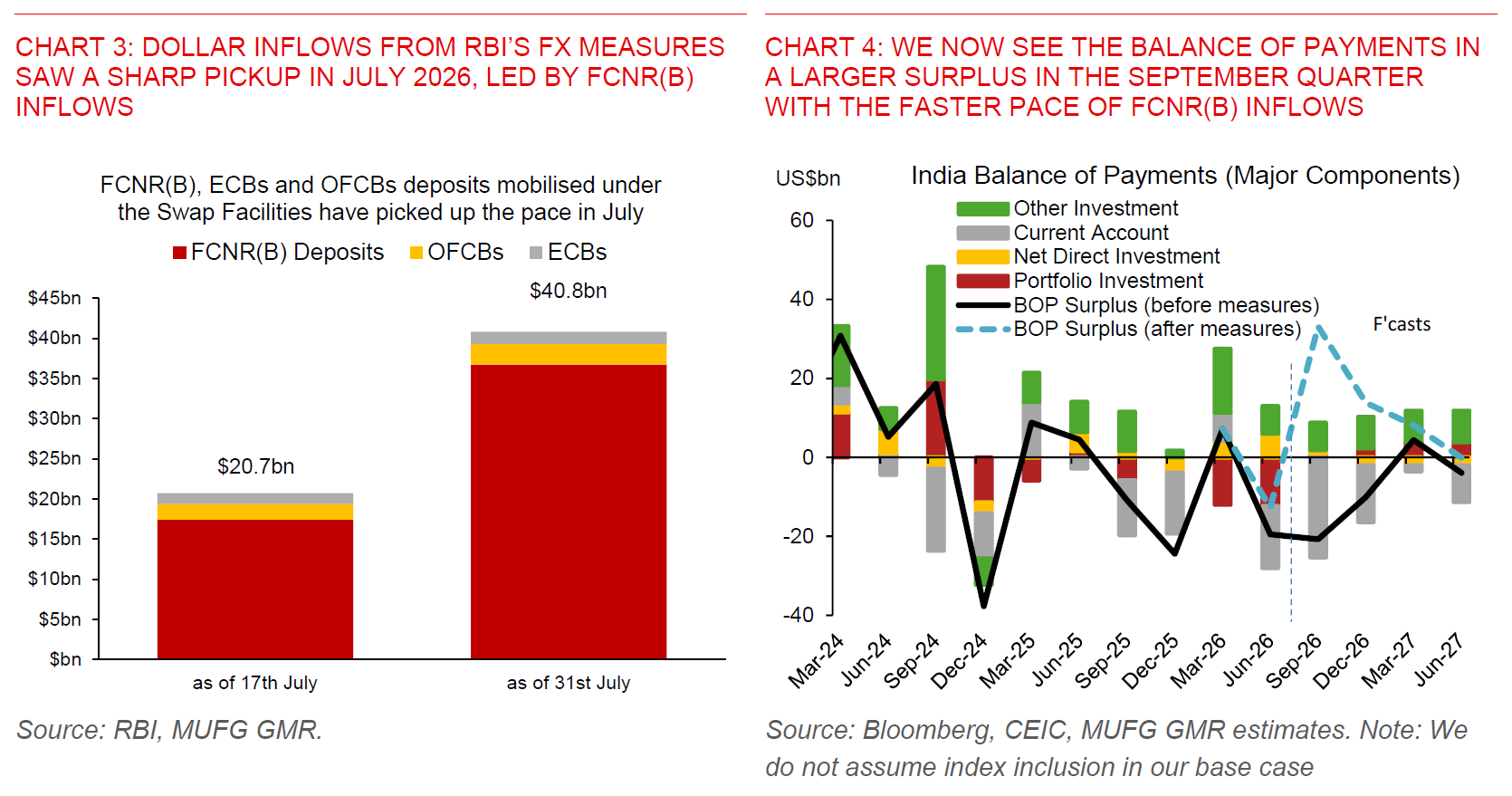
Net-net, the key takeaway from an FX perspective is that sharp INR strength sounds unlikely. The positive FX impact from RBI’s measures have been smaller than we initially anticipated, and this was likely driven by RBI’s reduction of its net short forward book, coupled with stronger RHS Dollar buying needs including pre-hedging of anticipated IPO receipts. Of course, global factors play a role here including volatile oil prices and higher US yields.
We now raise our forecast for inflows from RBI’s FX measures to US$87bn from US$60bn previously, with the bulk of the flows concentrated in the September quarter. This does not assume a possible inclusion of Indian government bonds in the Bloomberg Global Agg Index, of which there was a recent announcement of a delay in the decision.
Nonetheless, with IPO announcements picking up and with that a likely rise in FDI repatriation outflows, we think this will be an important offset to stronger Dollar inflows (see IndiaPulse: Flows before Growth – this time is different for INR).
Net-net, we are forecasting USD/INR to move lower towards 94.00 over the next 3-6 months, before bouncing higher to the 96.00 handle next calendar year.
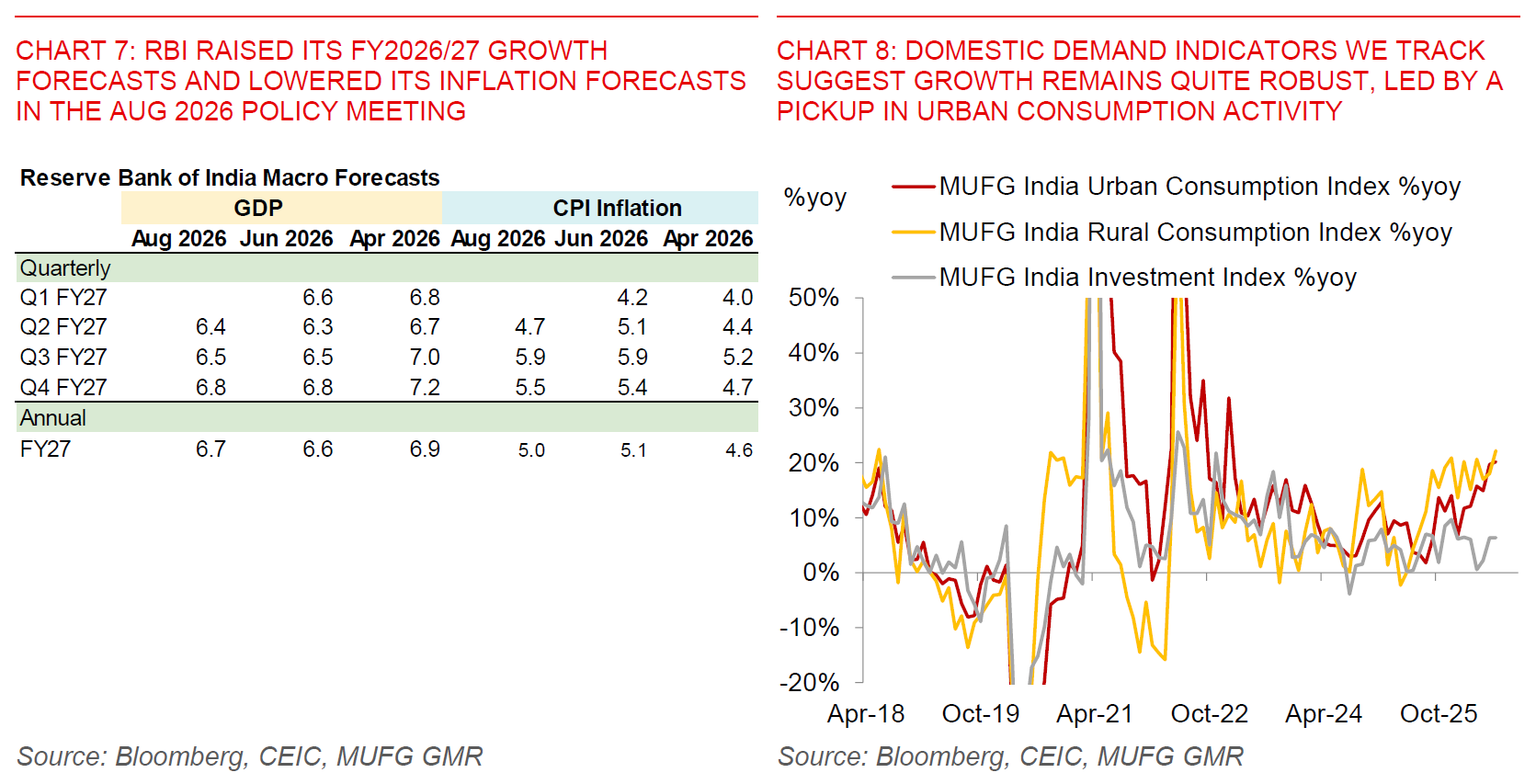
From a policy rates decision perspective, RBI lowered its FY2026/27 inflation forecasts a touch to 5.0% from 5.1%, with a more backloaded profile now, while raising the outlook for FY2026/27 growth to 6.7% from 6.6%, in the August 2026 policy meeting.
Key for the central bank is that it did not see inflationary pressures broadening out at least so far, with limited passthrough of cost pressure and core inflation continuing to be benign. RBI also highlighted that core inflation should remain moderate at 4.3%, and especially if the impact of precious metals is taken into account.
Weather events such as a likely “Super El-Nino” event later this year are major risks for the central bank especially if it means that second round impact to inflation persists including through higher food prices.
Meanwhile, RBI highlighted its expectation that the June 2026 capital flow measures will support inflows with the balance of payments likely to register a healthy surplus, and for RBI to continue its policy of curbing excessive volatility in INR.
Putting it all together, we still see the balance of risks tilted towards RBI raising policy rates by 50bps from here, but we have pushed out the timing of the first hike to the December 2026 meeting from our previous expectation of October.