

To read the full report, please download PDF.
USD upside risks over short-term
FX View:
We are closing out this week with positive momentum building for the US dollar. The Fed rate hike this week was expected and US yields jumped heading into the decision, so the post-FOMC move higher in rates has been more modest. We see scope for further dollar gains over the near-term. The BoJ hiked today but failed to meet lofty hawkish expectations expected by the markets while the BoE yesterday surprised the markets by announcing an overhaul to its QT plans that means less supply into the market of longer-dated Gilts. A Scott Bessent-style rejigging of supply plans that saw longer-dated yields fall sharply. The action was intended to alleviate upward pressure on yields which could weigh on pound performance over the short-term. However, we have not altered our dollar forecasts notably, especially further out the profile as most other G10 central banks are likely to hike further over the coming months. As a result of current central bank policy expectations, front-end rate spreads do not suggest any notable dollar strength. However, upside risks relate to the potential for a rates overshoot in the US, a terms of trade boost on energy risks, growing political uncertainties in France and risks of a pick-up in FX volatility due to risk asset correction.
BROAD-BASED USD GAINS ACROSS G10 WITH JPY UNDERPERFORMING
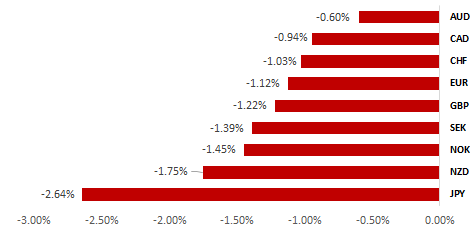
Source: Bloomberg, as of 18th September 14:20 BST (Weekly % Change vs. USD)
Trade Ideas:
We are recommending a new long USD/SEK trade idea, and have taken profit on our short EUR/JPY trade recommendation.
JPY Flows:
This week we analyse the monthly International Transactions in Securities that showed another strong NISA-related foreign equity buying and strong buying of foreign bonds by Japan Trusts. GPIF is not repatriating!
Rates Repricing: Are equities approaching a vulnerability threshold?
With the UST 10-year yield hitting a 19-year high this week, we examined whether a sharp increase in yields has historically impacted equity market performance and spilled over into the FX market.
FX Views
USD: Impact on USD forecasts following Fed rate hike
The US dollar has advanced by over 1.0% this week with the DXY index hitting level last seen at the end of July when the dollar was falling in response to USD/JPY selling intervention by the MoF in Japan. The initial trigger for the advance this week – the FOMC rate hike and communications – has been reinforced today by the BoJ’s communication following its 25bp rate hike that was accompanied by communications that failed to convince investors that the BoJ has embarked on a sustained faster pace of tightening. The BoE yesterday also followed the lead from the Scott Bessent buyback announcement in August by making changes to its QT program that helps improve the supply/demand outlook that saw yields and the pound drop. Do the developments this week warrant a rethink to our view that the US dollar will weaken modestly over the forecast horizon? As a reminder – our current FX forecasts (here) show the DXY index falling 4.2% by Q2 2027 relative to today’s spot level.
Firstly, we see scope over the near-term for the US dollar to advance further versus the yen. The reaction today to the BoJ communications and Governor Ueda’s press conference highlighted the fact that current market pricing may have become excessive. The bar was low for the BoJ delivering a less hawkish message. The two dissents opposing the hike are the newest policy board members (Toichiro Asada & Ayano Sato) and were chosen by the Takaichi administration for the known reflationist leanings. The two biggest hawks (Hajime Takata & Naoki Tamura) will leave the policy board in July next year and will likely be replaced by individuals with more dovish leanings. Hence, the ability for more active hikes will become more difficult from August next year. Is the BoJ moving faster now? Governor Ueda hinted that might be the case but not enough to convince the markets. We expect the next hike in January 2027 and then in June, taking the policy rate to 1.75%. Near-term USD/JPY could advance further but the rates curve is reasonably priced and further hikes and intervention risks will curtail the scope for the move higher in USD/JPY. We would still expect USD/JPY buying to fade ahead of a break above the 160.00-level.
2YR REAL YIELD TURNS POSITIVE; HIGHEST SINCE 2021
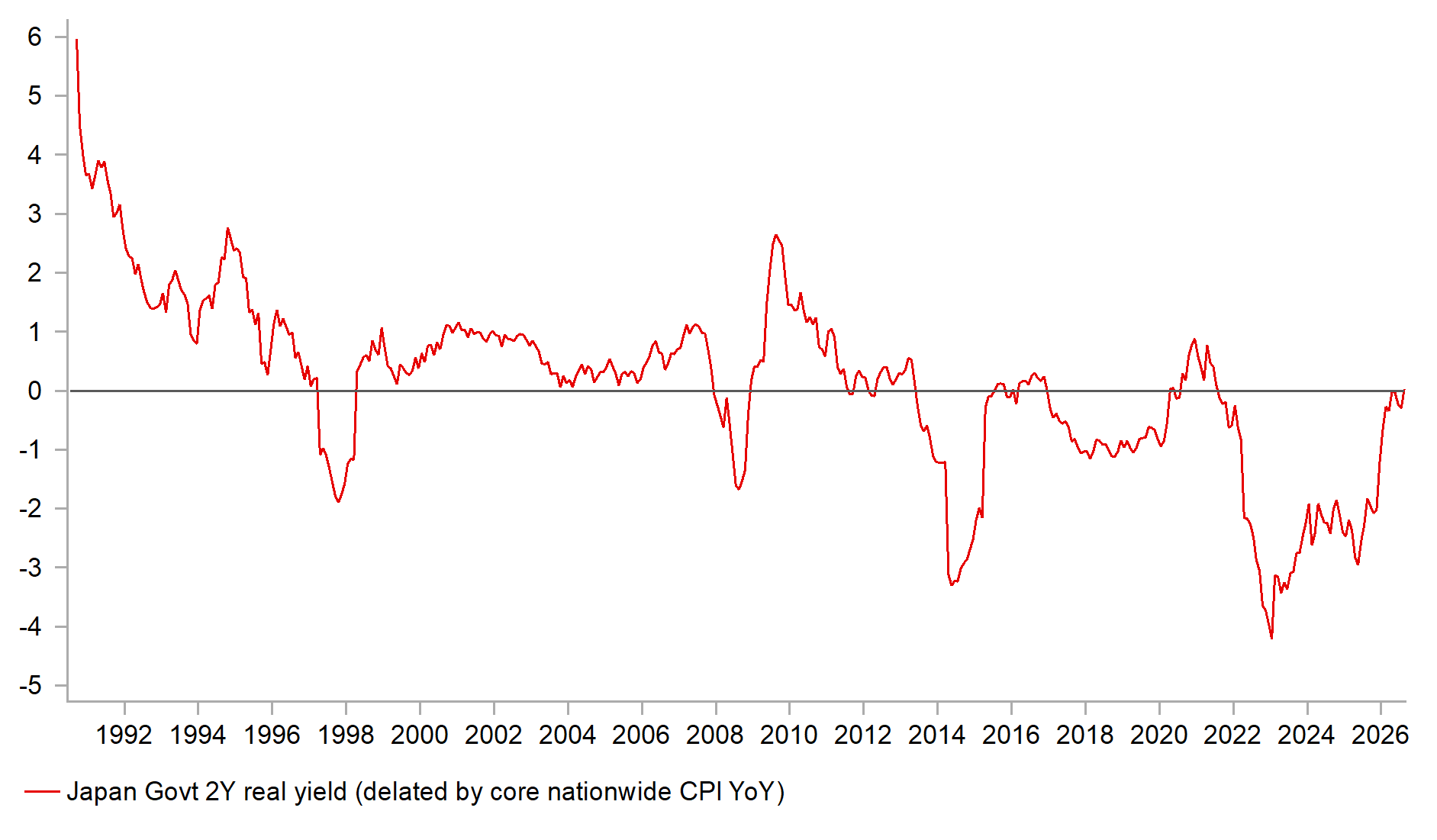
Source: Bloomberg, Macrobond & MUFG GMR
RENEWED JPY SELLING CAPACITY HAS EMERGED
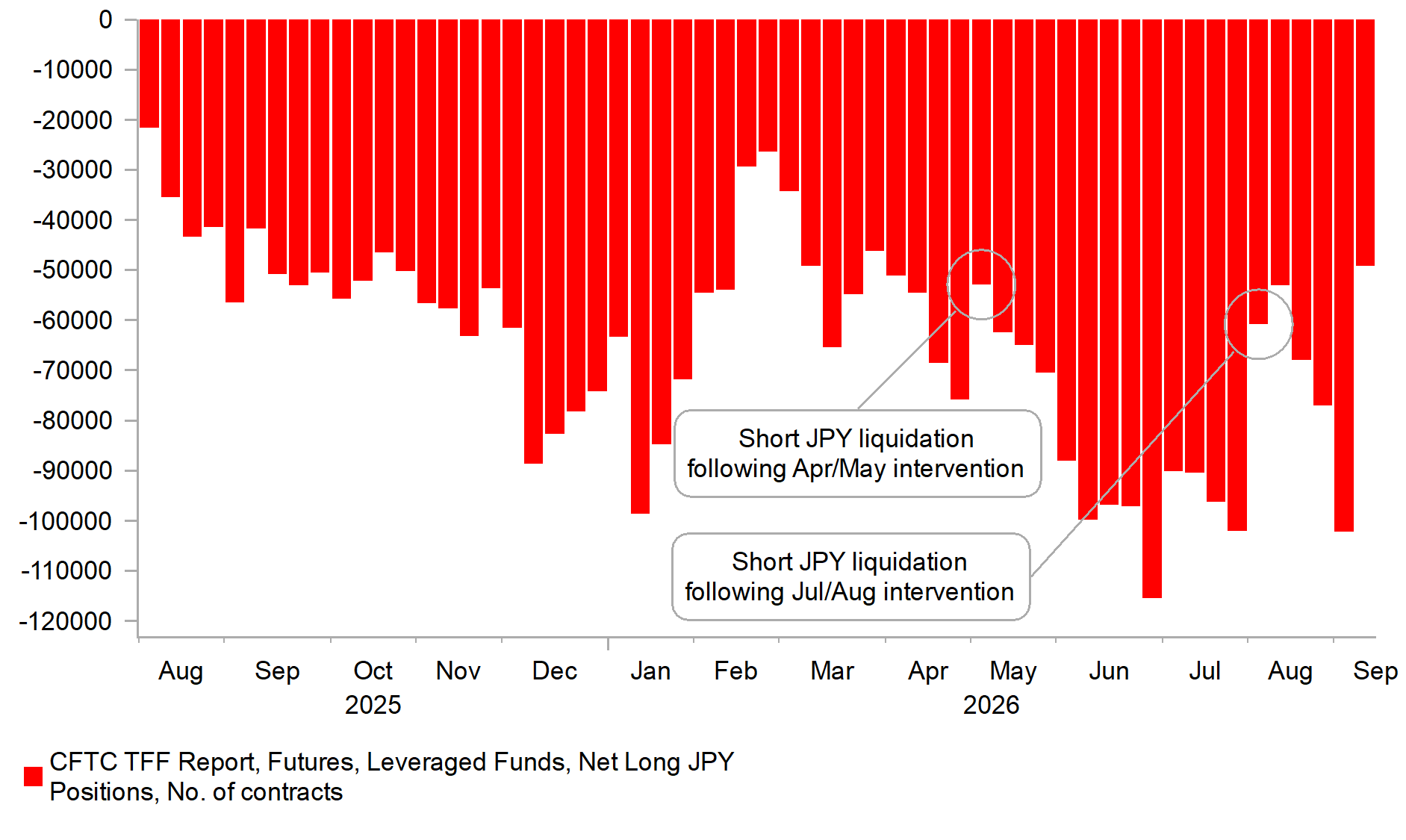
Source: Bloomberg, Macrobond & MUFG GMR
The communication from Fed Chair Warsh on Wednesday when the Fed hiked 25bps as expected was viewed as hawkish. The primary comment that the hike had “removed a dose of accommodation” was an indication that accommodation still existed and hence there was more to do. But that comment was only consistent with the median dots profile which signalled another hike this year anyway. To have suggested anything less would have been inconsistent. One further hike this year and then no change in 2027 before one cut in 2028 and one cut in 2029 is a profile that is still below current market pricing. By mid-2027 the OIS curve shows a fed funds rate reaching 4.625%.
While our views now incorporate two hikes by the Fed (this week and December) we have also altered our views across a number of key G10 countries. Most importantly from an FX perspective, we have added two additional rate hikes by the ECB and now expect the policy rate to reach 3.00% by year-end assuming now that we get three consecutive 25bps rate hikes from last week, October and December. That’s more aggressive than market pricing and the consensus in the market and will be key in providing support for EUR and the justification for maintaining a gradual appreciation trend. We are also raising our RBA policy rate profile. We had assumed just one further hike this year but now expect the RBA to hike twice, bringing the policy rate to 4.85%. RBA Governor Bullock spoke today and stated that “upside risks to inflation appear to be materialising”. We have also added two rate hikes to our BoE policy rate forecasts which means our policy rate will 75bps higher by mid-2027 than we previously assumed. The BoE is lagging and the change to QT could undermine the pound over the near-term. Further out actions by the BoE will provide support. All G10 central banks are priced for at least one hike through the remainder of the year (bar the SNB) and looking across our G10 rate spreads there are no anomalies that point to required FX adjustments – bar USD/JPY where there’s scope for a further move higher.
Beyond the one-year period, the market expects little change in the fed funds rate underlining the higher for longer view. So while the communications from Warsh and the SEPs were viewed as hawkish, there is still a notable gap relative to market pricing. We believe that will likely curtail the upside potential for US rates over the short-term. As always beyond the short-term, incoming economic data will determine whether market rates rise or remain elevated or start to converge with the median dots profile. Of course it’s not just about the incoming data. The Fed’s stance, like other central banks at the moment, is closely tied to the developments in energy markets. We originally assumed conflict de-escalation and energy prices declining ahead of the mid-terms. That was one factor we believed would align with a weaker US dollar. That assumption clearly needs altering. We still assume the worst-case scenario is avoided (much higher from here) but the profile has shifted higher and the decline in crude oil prices is more modest and hence inflationary risks are generally higher.
So we are largely maintaining our US dollar view that implied around a 4% drop in DXY by the middle of year. The risks to our forecasts are more over the short-term where there are risks of the rates move in the US overshooting that could see positioning and momentum extend dollar strength beyond our near-term forecasts. Terms of trade related gains for the US dollar if crude oil extends notably higher is another upside risk for the US dollar over the short-term, especially versus the euro and yen. We are also mindful of EUR downside risks related to building political uncertainty in France.
STRENGTHENING USD / RATE SPREAD CORRELATION
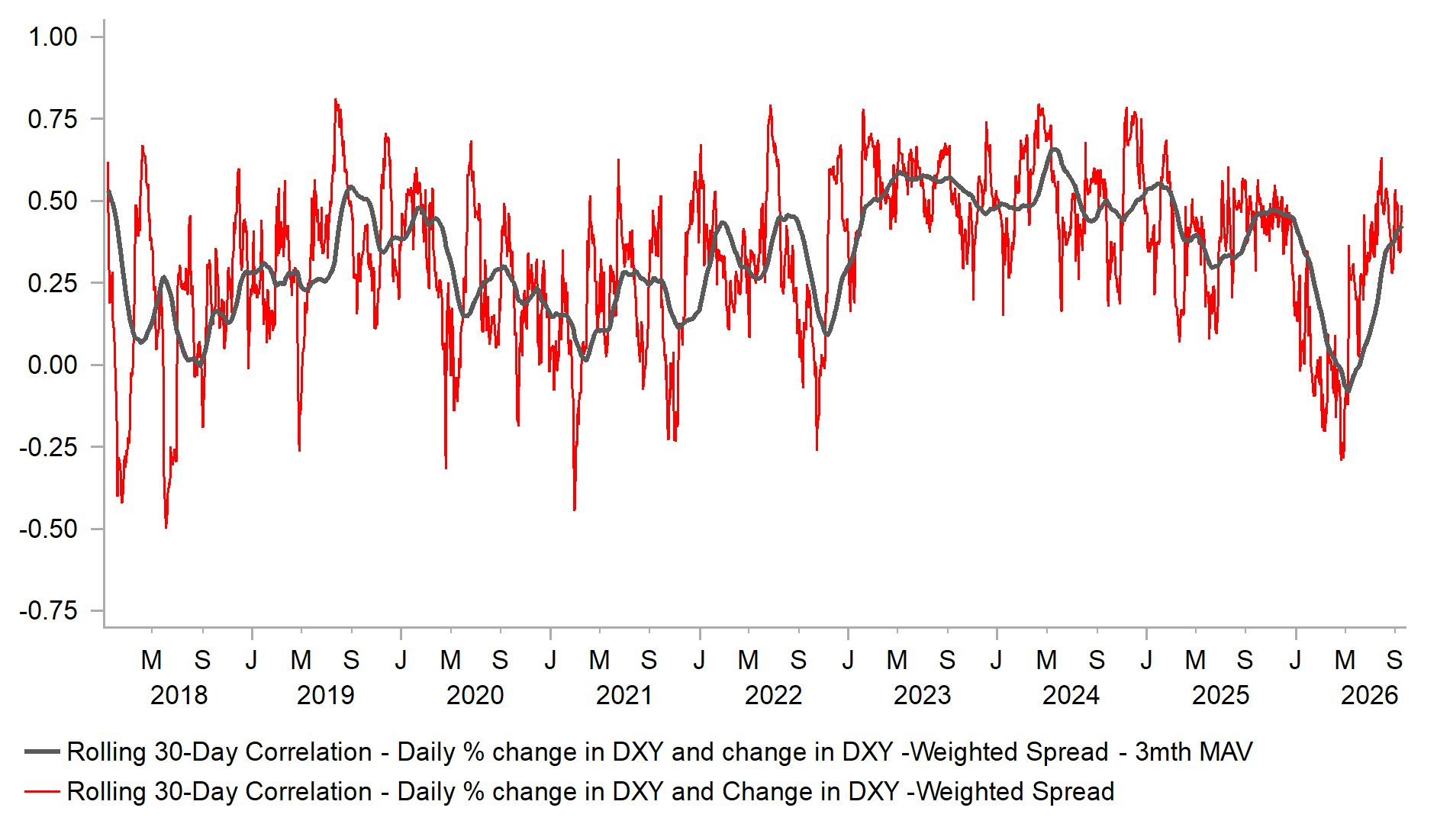
Source: Bloomberg, Macrobond & MUFG GMR
G10 FX VS USD SINCE START OF US-IRAN CONFLICT
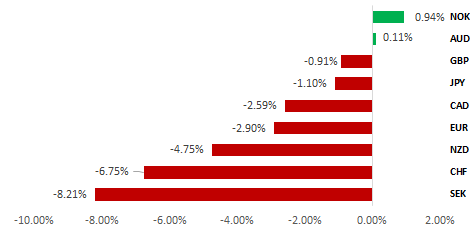
Source: Bloomberg & MUFG GMR, as of 12:15 BST 18th Sept
European FX: Regional monetary policy divergence impacting FX
European currencies have weakened against the USD over the past week after the Fed finally started to hike rates in response to the energy price shock. The unanimous decision to hike rates, and plans to raise rates at least one more time have helped to lift short-term US yields and boost the Fed’s inflation fighting credibility under new Chair Kevin Warsh. It further helps to ease initial investor concerns over threats to the Fed’s policy independence when setting policy at a time when President Trump continues to call on/threaten the Fed for lower rates. The Fed’s policy action could have encouraged market participants to scale back the size of the US policy risk priced into the USD. It follows the US Treasury’s decision on 19th August to expand the size of long-term bond buybacks that had previously tiggered a USD sell-off as market participants moved to price in a bigger US policy risk premium.
However, support for the USD from higher US yields has been partly offset by building expectations for active policy tightening from major central banks outside of the US curtailing the widening of yield spreads in favour of stronger USD. The resilience of economic growth in Europe is encouraging both the BoE and ECB to make policy more restrictive in order to dampen upside inflation risks. The ECB indicated at their last policy meeting that they are considering raising rates into ‘mildly restrictive territory’, which we judge to be closer to 3.00%. Short-term yield in the euro-zone have been consolidating close to recent highs over the past week reflecting market expectations for the ECB to deliver three to four more hikes. It is roughly similar to US rate market expectations for three more Fed hikes. So long as economic growth remain resilient in the euro-zone, downside risks for EUR/USD from moves yield spreads are likely to remain contained. The pair is still trading between 1.1400 and 1.1800 as it has done over the past year.
In contrast to recent ECB and Fed decisions, the BoE decided to leave rate son hold again this week. It is the only major G4 central that has not yet raised rates in response to the energy price shock. The widening policy divergence may have contributed to the GBP sell-off after the BoE’s latest policy meeting. Cable extended its decline following on from the move lower after the FOMC meeting hitting a low of 1.3336, while EUR/GBP attempted to break back resistance at the 0.8600-level. The GBP was also undermined by the move lower in UK yields after the MPC meeting both at the short and long-end of the Gilt curve. The move lower in short-term yields reflects some initial disappointment that the BoE’s policy update (click here) was not even more hawkish although there was a clear indication that MPC members are shifting in favour of a hike. Four out of the six MPC members who voted to leave rates on hold indicated that they are considering raising rates including Governor Bailey. It supports our forecast for a rate hike at the next MPC meeting in November if energy prices remain elevated. The dovish market reaction is more a reflection that market pricing for 4-5 BoE hikes had already gone too far in the near-term. Unlike recent rhetoric from the ECB and Fed, the BoE is still placing more emphasis on the role played by tightening financial conditions in helping to dampen upside inflation risks and thereby dampening the need for policy action. The BoE’s is also somewhat surprised by the limited evidence of second round inflation effects although cautions that may not remain the case the longer energy prices remain elevated.
FX PERFORMANCE DURING US-IRAN CONFLICT
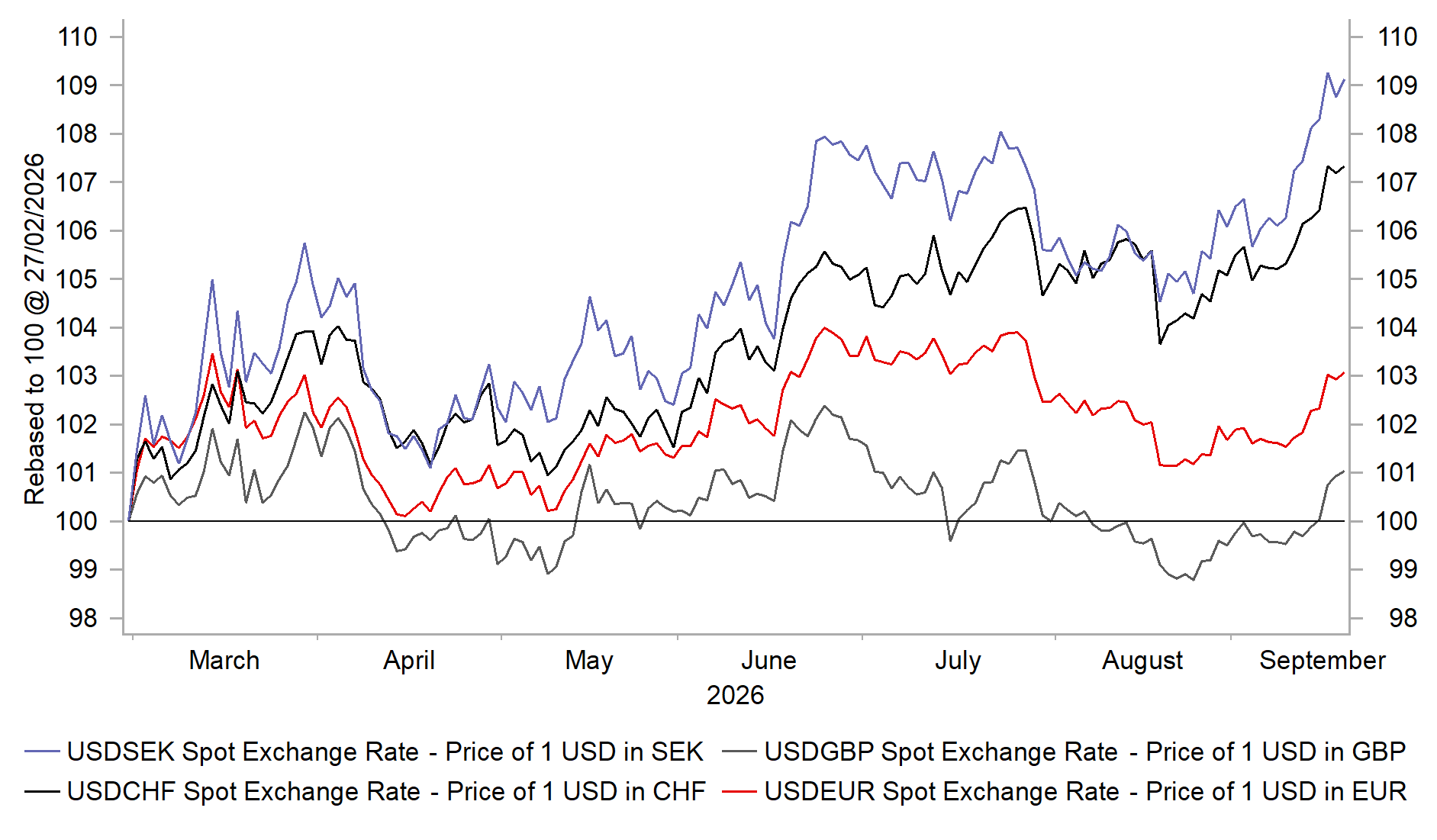
Source: Bloomberg, Macrobond & MUFG GMR
EUR/USD REMAINS RANGE BOUND
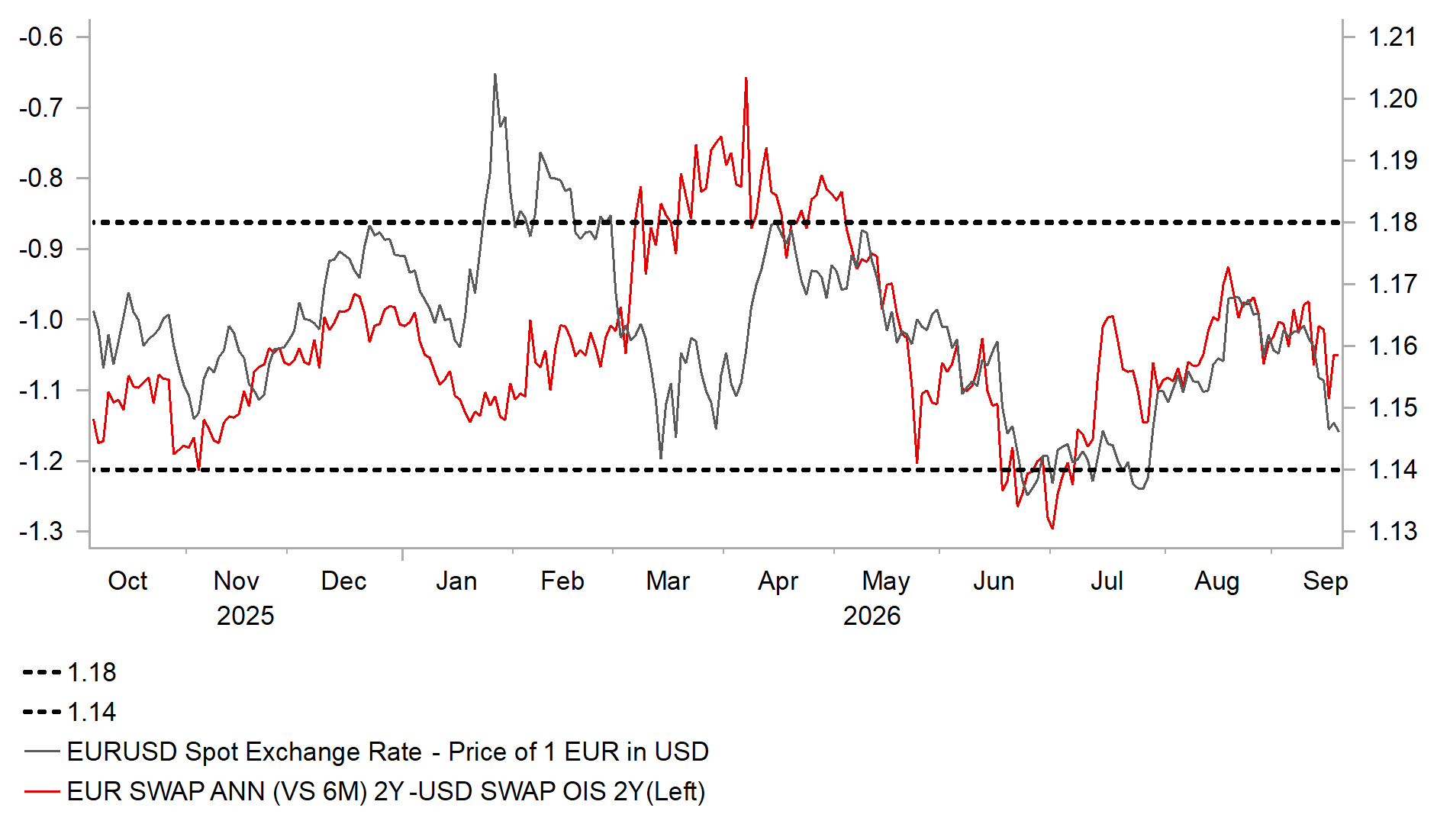
Source: Bloomberg, Macrobond & MUFG GMR
Yields at the long-end of the curve were also driven down by the BoE’s updated plans for the QT. The biggest beneficiaries were Gilts at the ultra-long end with the 30-year yield dropping sharpy by almost 10 bps. The move lower in long-term yields reflected the scaling back of supply expectations. Firstly, the BoE announced that it now plans to keep GBP120 billion of gilts maturing in 2049 or later on their balance sheet, and use them as matching assets against future bank note issuance. It removes a potential future source of ultra-long end supply from ever hitting the market. Secondly, the BoE announced that GBP146 billion of Gilts maturing between 2035 and 2049 will be sold at an annual pace of GBP20 billion. While it is a similar pace to sales over the previous 12 months, the BoE now plans to stop these sales from directly hitting the market. Instead, the BoE are finalizing a plan to sell the Gilts back to the government through the DMO. The government purchases will then be funded by additional debt issuance. While there should be limited impact on the overall supply of debt, it would allow the government to better time and adjust the maturity of supply hitting the market. The government may choose to shorten the maturity of debt issuance to ease upward pressure on long-term yields.
For this reason, it could be viewed as a form of yield curve control similar to the US Treasury’s recent decision to expand long-term bond buybacks which will likely be funded by issuing more short-term debt. The Fed had previously attempted to flatten the US yield curve between 2011 and 2012 (click here). Still, the size of the BoE’s planned annual debt sales of GBP20 billion are relatively small compared to the size of Gilt issuance. For example, the DMO is planning total issuance of GBP246billion for the current fiscal year. It would suggest that the market impact from diverting Gilt sales should be relatively modest. Nevertheless like the US Treasury’s bond buybacks announcement, the involvement of the UK government in efforts to dampen long-term yields could be viewed negatively and contribute to a weaker GBP although to a lesser extent than the USD’s reaction to the US Treasury’s extended bond buyback plans. The BoE and government would argue that it is justified to avoid the risk of disruptive price action in less liquid parts of the Gilt curve. The UK government also has one of the longest average debt maturities in the developed world at around 14-15 years which is roughly double for most other major sovereign issuers. It potentially gives the government more justification/leeway to shorten debt issuance if they desire. Overall, the latest negative developments for the GBP support our forecast for EUR/GBP to move higher heading into year end.
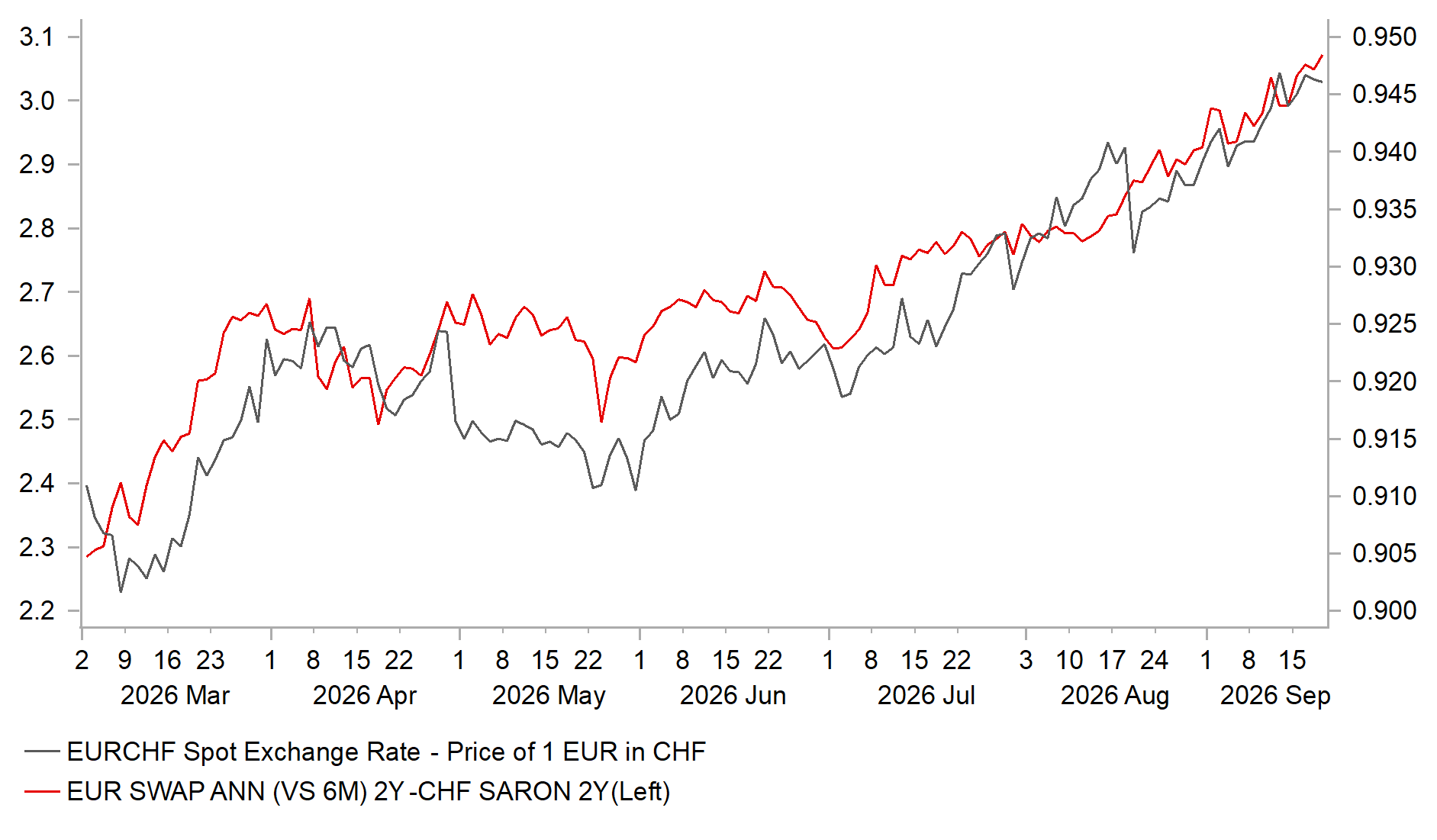
Like the BoE, the smaller European central banks of the Riksbank and SNB are expected to continue lagging behind in tightening policy when they meet in the week ahead. We expect both the Riksbank and SNB to leave rates on hold. Since the US-Iran conflict began in February, the SEK and CHF have been the two worst performing G10 currencies. Widening yield spreads are contributing to weaker domestic currencies. Lower yields on offer in Switzerland and Sweden, and the lack of urgency to tighten monetary policies are encouraging their relative appeal as funding currencies for carry trades. EUR/CHF and EUR/SEK have both been tightly linked to short-term yields spreads with both pairs lifted by the ECB’s relatively more pro-active approach to tightening policy in response the energy price shock. Recent media reports have even indicated that the SNB is planning to leave rates on hold well into next year.
One similarity between Switzerland and Sweden is inflation in both countries is currently undershooting central bank targets at 0.8% and 0.3% respectively in August. However, the Riksbank estimates that inflation would be closer to their 2.0% target excluding the impact from government policy measures. It is one reason why the Riksbank has signalled that it may have to raise rates later this year if higher inflation over the summer proves to be the start of a larger and more lasting upturn. Unless there are hawkish surprises from the SNB and/or Riksbank in the week ahead both currencies remain vulnerable to further weakness in the near-term.
EUR/SEK VS. SHORT-TERM YIELD SPREAD
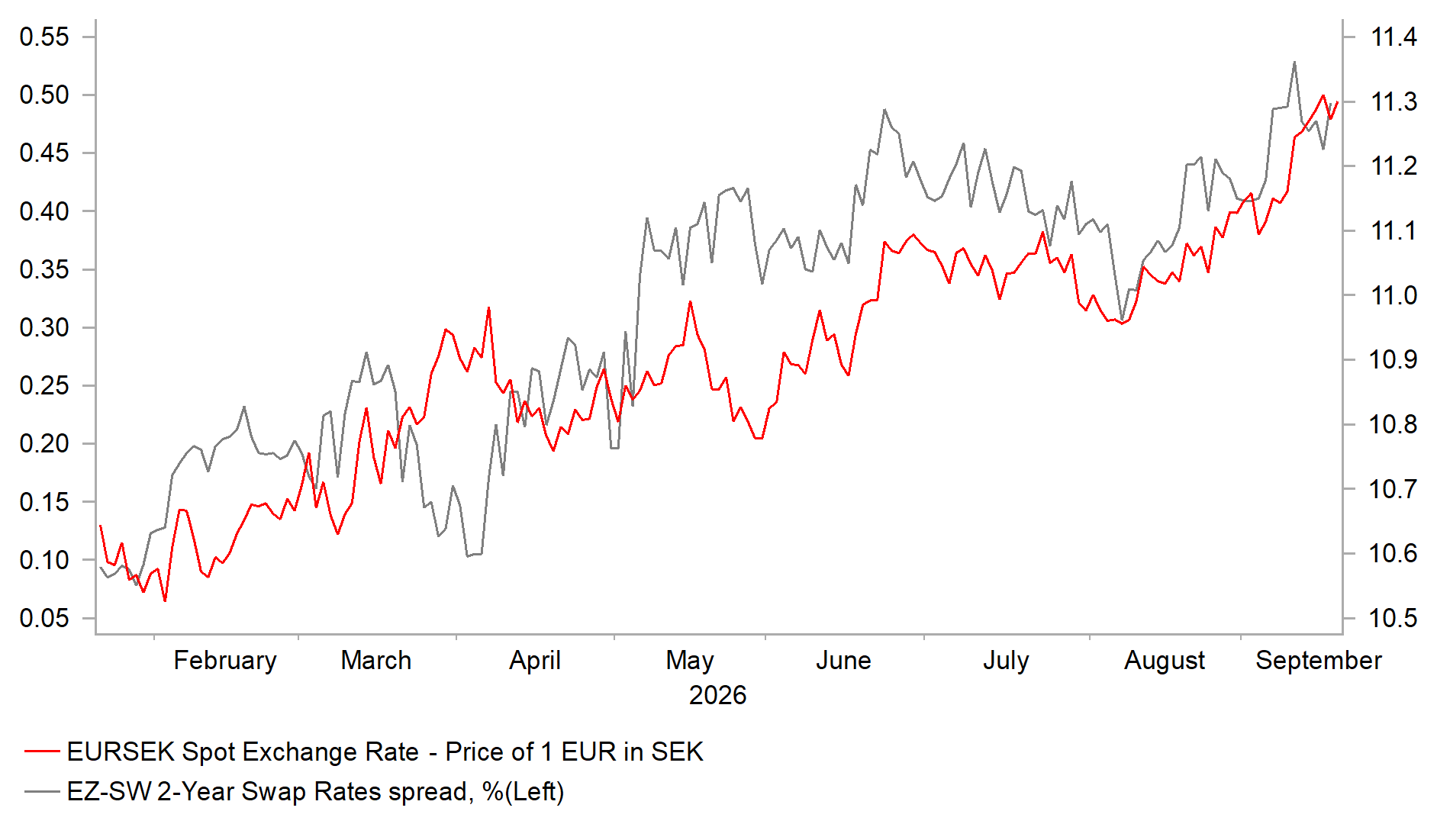
Source: Bloomberg, Macrobond & MUFG GMR
EUR/CHF VS. SHORT-TERM YIELD SPREAD
Source: Bloomberg, Macrobond & MUFG GMR
Weekly Calendar
Ccy | Date | BST | Indicator/Event | Period | Consensus | Previous | Mkt Moving |
USD | 21/09/2026 | 11:30 | Fed's Goolsbee Speaks | !! | |||
CAD | 21/09/2026 | 16:20 | BoC Governor Macklem Speaks | !! | |||
AUD | 22/09/2026 | 04:10 | RBA's Bullock-Fireside Chat | !! | |||
GBP | 22/09/2026 | 07:00 | Public Sector Net Borrowing | Aug | -- | 1.8b | !! |
EUR | 22/09/2026 | 15:00 | Consumer Confidence | Sep P | -- | - 15.5 | !! |
USD | 22/09/2026 | 15:05 | Fed's Williams Speaks | !!! | |||
EUR | 23/09/2026 | 09:00 | S&P Global Eurozone Manufacturing PMI | Sep P | -- | 52.7 | !!! |
EUR | 23/09/2026 | 09:00 | S&P Global Eurozone Services PMI | Sep P | -- | 51.6 | !!! |
GBP | 23/09/2026 | 09:30 | S&P Global UK Manufacturing PMI | Sep P | -- | 51.7 | !!! |
GBP | 23/09/2026 | 09:30 | S&P Global UK Services PMI | Sep P | -- | 52.5 | !!! |
USD | 23/09/2026 | 14:45 | S&P Global US Composite PMI | Sep P | -- | 56.0 | !! |
EUR | 23/09/2026 | 17:30 | ECB's Lane Speaks | !!! | |||
AUD | 24/09/2026 | 02:30 | Employment Change | Aug | 20.0k | -15.8k | !!! |
CHF | 24/09/2026 | 08:30 | SNB Policy Rate | 0.00% | 0.00% | !!! | |
SEK | 24/09/2026 | 08:30 | Riksbank Policy Rate | 1.75% | 1.75% | !!! | |
CHF | 24/09/2026 | 09:00 | SNB's Schlegel Speaks | !!! | |||
NOK | 24/09/2026 | 09:00 | Deposit Rates | 4.50% | 4.25% | !!! | |
EUR | 24/09/2026 | 09:00 | Germany IFO Business Climate | Sep | -- | 88.8 | !! |
USD | 24/09/2026 | 09:10 | Fed's Williams Speaks | !! | |||
CAD | 24/09/2026 | 13:30 | Retail Sales MoM | Jul | -0.8% | 0.6% | !! |
USD | 24/09/2026 | 13:30 | Current Account Balance | 2Q | -- | -$226.8b | !! |
USD | 24/09/2026 | 13:30 | Initial Jobless Claims | -- | -- | !! | |
GBP | 24/09/2026 | 14:30 | BoE's Breeden Speaks | !! | |||
GBP | 24/09/2026 | 15:00 | BoE's Lombardelli Speaks | !! | |||
USD | 24/09/2026 | 15:00 | New Home Sales | Aug | 615k | 607k | !! |
EUR | 25/09/2026 | 09:00 | M3 Money Supply YoY | Aug | -- | 3.4% | !! |
USD | 25/09/2026 | 13:30 | Durable Goods Orders | Aug P | -0.3% | 1.1% | !! |
Source: Bloomberg & MUFG GMR
Key Events:
Market participants will be closely watching comments from Fed and BoE officials in the week ahead after this week’s after their latest hawkish policy updates. The Fed’s decision to begin hiking rates was unanimous. Fed Vice Chair Williams is scheduled to speak on a number of occasions in the week ahead. He will provide further insight into the Fed’s decision to begin tightening policy, and is likely to indicate how much further he believes policy may need to be tightened. In the UK, the BoE left rates on hold at their policy meeting but indicated that their tolerance for upside inflation risks is running thin. MPC members Breeden and Lombardelli are scheduled to speak in the week ahead. They both voted to leave rates on hold this month so their comments provide further insight into how closely they are to potentially voting for a hike at the next meeting in November.
There are three central bank meetings in the week ahead in Europe. The Norges Bank is expected to be raised rates by 25bps to 4.50%. The updated guidance will be watched closely to see if the Norges Bank signals if further hikes are planned. In contrast, we expect the Riskbank and SNB to leave rates hold in the week ahead. The Riksbank has already signaled that a rate hike may be required later this year if they judge that higher inflation over the summer were to be the start of a larger and more lasting upturn in inflation. The updated guidance could provide a clearer signal over whether a hike will be delivered, and whether they plan to hike in November or December. Recent communication from the SNB has indicated that they are the most comfortable to keep leaving rate son hold into next year. It would be a big surprise if the SNB signaled it is starting to consider rate hikes and a greater tolerance for stronger CHF to dampen upside inflation risks.
The main economic data releases in the week ahead will be the latest PMI surveys from the euro-zone and UK for September. Business confidence had improved over the summer alongside resilient economic growth, but may have been challenged recently by higher energy prices and rising interest rates.