

JPY rebound extends further alongside stronger Japanese data
JPY: Upward momentum extends further lowering USD/JPY back below 153.00
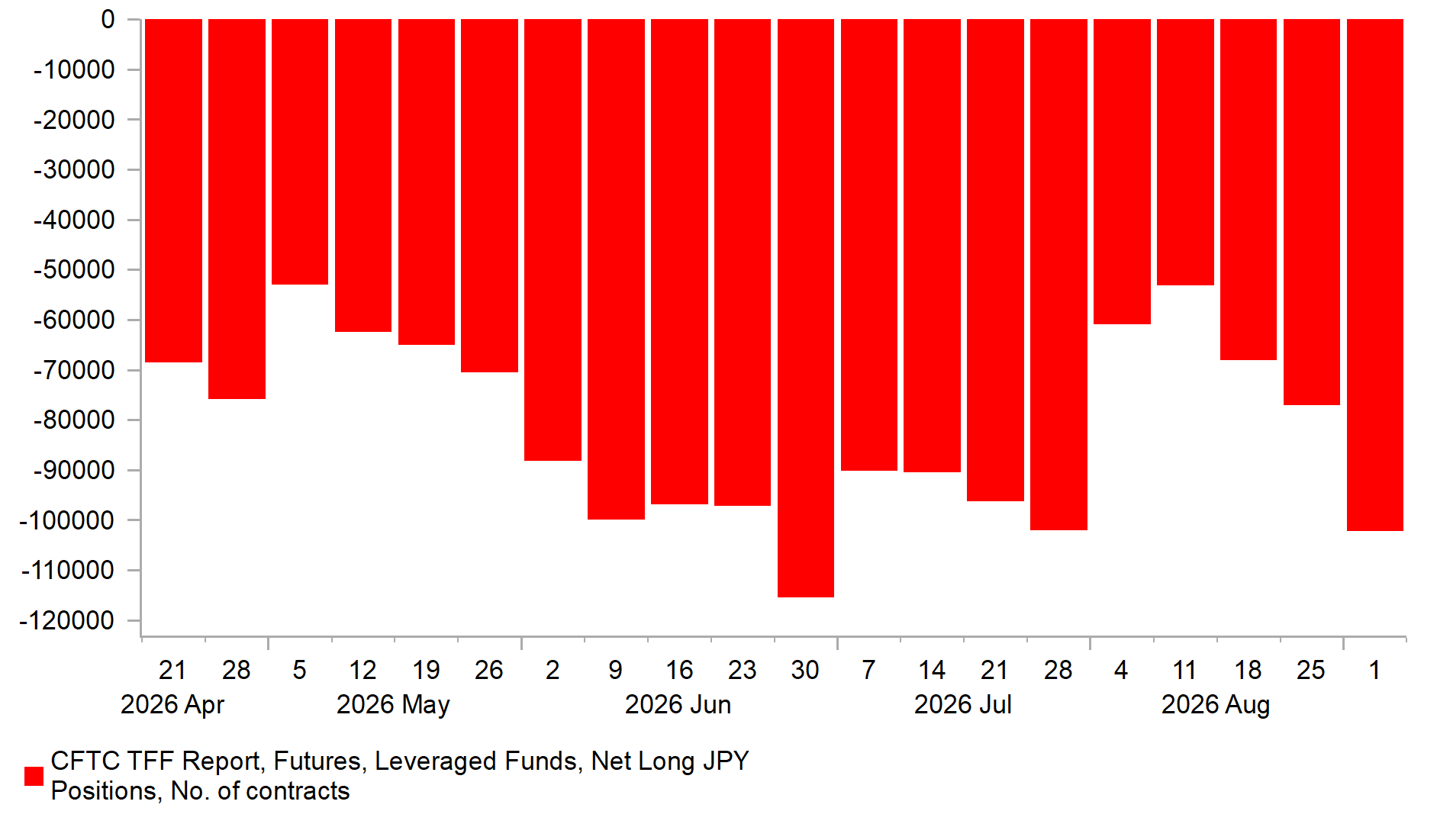
The yen has continued to rebound overnight resulting in USD/JPY back below the 153.00-level for the first time since February. The yen has now reversed all of its losses since the US-Iran conflict began. The yen’s upward momentum was reinforced at the start of this week after USD/JPY broke below important support at the 155.00-level which had held earlier this year following intervention driven yen gains back in late April/early May and in late July/early August. The bullish technical development has encouraged speculation that a bigger reversal of yen weakness could now be underway supported by a change in fundamental drivers including the hawkish repricing of BoJ rate hike expectations. The Japanese rate market is almost fully pricing in a 25bp hike at 22nd September BoJ policy meeting and cumulative tightening of just over 75bps by the middle of next year in line with our own forecasts (click here). We recommended a short EUR/JPY trade idea in our latest FX Weekly report (click here) to take advance of the shift in near-term momentum for the yen.
Despite the yen’s recent sharp gains, Japanese Finance Minister Katayama stated overnight that there has been no change in their currency policy stance. She stated that “as I said at a press conference in Japan on 3rd August and Secretary Bessent also issued a statement in Washington, our approach has not changed at all since Japan and the US conducted coordinated intervention”. She reiterated that “we will continue to maintain close communication with the US Treasury and work to ensure an orderly foreign exchange market”. The comments indicate that Japan is currently comfortable with the current strengthening of the yen which will be viewed by market participants as providing a green light for further near-term gains.
It was revealed yesterday that intervention by Japan at the end of July resulted in their holdings of foreign securities falling by a record USD87.8 billion at the end of August according to the latest FX reserve data. The MoF has confirmed that intervention totalled USD98.6 billion in the month through to 26th August. Intervention appears to have been mainly funded by selling foreign securities including US Treasuries which helps to explain in part why the US Treasury took part in joint intervention to support the yen in attempt to reduce the need for further drawdown of US Treasury holdings, and why Japan has stated that it could use the Fed’s FIMA repo facility if further intervention is needed in the future.
As part of the deal to intervene alongside Japan, the US appears to have put more pressure on the Japanese government to allow the BoJ to speed up the pace of rate hikes. The case for further hikes has been supported as well by economic data releases overnight. The release of the latest monthly labour survey overnight revealed that scheduled cash earnings growth exceeded 4% picking up from an annual rate of 3.5% in June to 4.1% in July. The industry breakdown revealed that scheduled cash earnings growth remained particularly strong in the manufacturing sector increasing by an annual rate of 4.6% in July. However, the upside surprise in July likely reflects sample changes. On a common-sample basis, scheduled cash earnings across all industries increased by an annual rate of 3.0%.
JPY SHORT SQUEEZE REINFORCING UPWARD MOMENTUM
Source: MUFG Research, Macrobond, Bloomberg
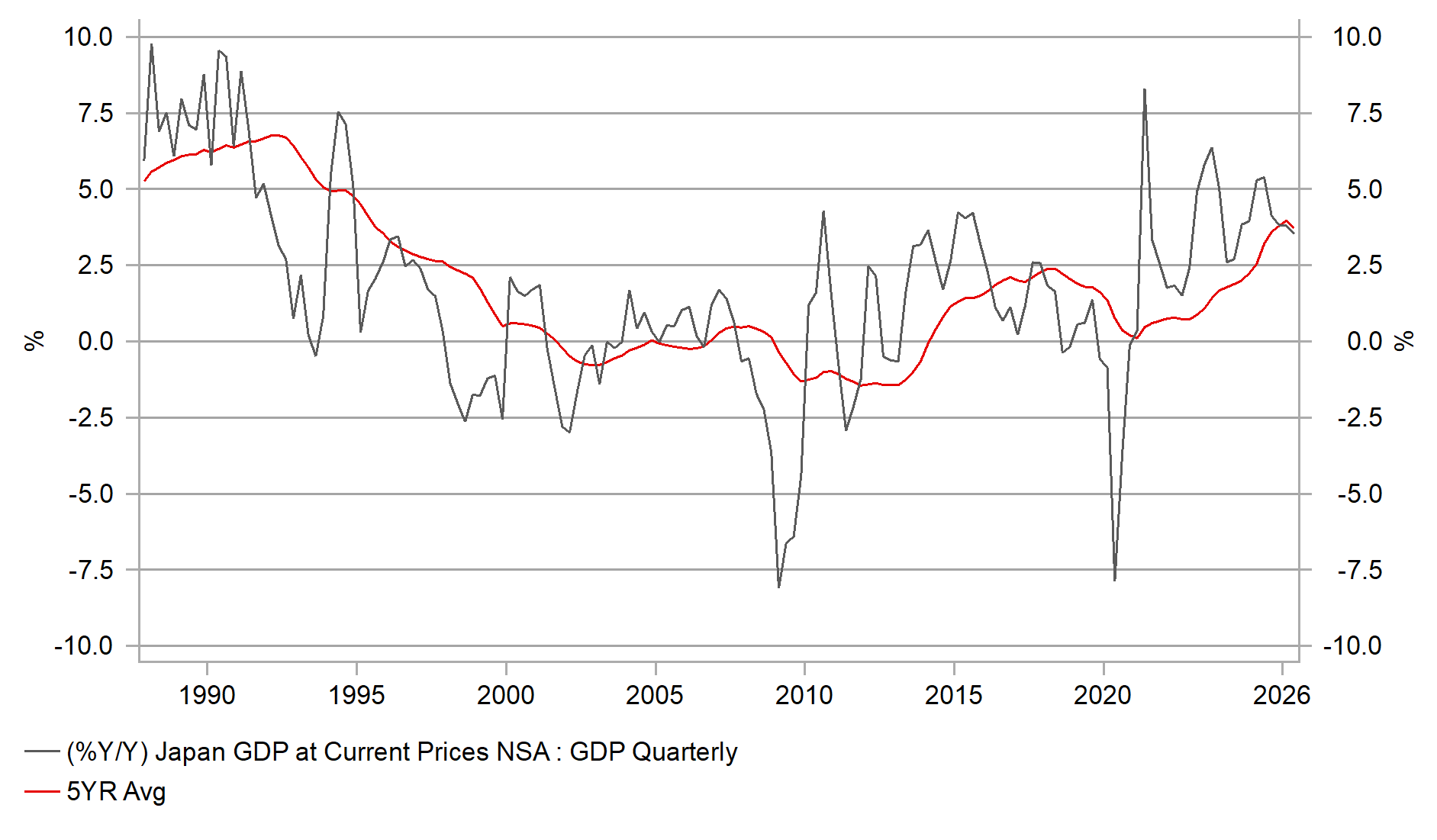
At the same time, the release of the latest GDP report from Japan overnight revealed that economic growth was revised up to 1.4% in Q2 from an initial estimate of 1.1% providing support for a rate hike. The pace of growth is around double the BoJ’s estimate of the potential growth rate. A smaller drop in private capital expenditure contributed to the upward revision to growth. The breakdown of growth highlighted that net exports and private inventories were the main drivers of growth in Q2 contributing 0.5ppts and 0.3ppts respectively. In contrast, domestic demand growth was weak with private consumption flat and private non-residential investment subtracting 0.2ppts from growth in Q2. Weak domestic demand puts dampener on the stronger headline growth figure.
NOMINAL GDP GROWTH AT MULTI-DECADE HIGHS
Source: Bloomberg, Macrobond, MUFG Research
KEY RELEASES AND EVENTS
Country | BST | Indicator/Event | Period | Consensus | Previous | Mkt Moving |
AU | 10:30 | RBA's Hauser-ABC Interview | Aug P | !! | ||
US | 11:00 | NFIB Small Business Optimism | Jul | 99.3 | 99.8 | !! |
US | 16:00 | NY Fed 1-Yr Inflation Expectations | Aug | 3.6% | 3.6% | !! |
US | 20:00 | Consumer Credit | Sep | $11.670b | $14.173b | !! |
Source: Bloomberg & Investing.com