

To read the full report, please download PDF.
Upside JPY risks as momentum turns
FX View:
The week is ending with the US front-end rates jumping modestly after the stronger than expected US jobs report. The contained reaction reflects the greater importance attached to the US CPI data next week ahead of the still finely balanced FOMC meeting on 16th September. The FX response has been even more muted – indeed USD/JPY selling has picked up underlining the shift in momentum that could be feeding into a shift in USD/JPY expectations. This week we assess the largest weekly USD/JPY drop (outside of intervention episodes) since the second week of February when PM Takaichi and the LDP won the election. Retail margin traders were likely part of the JPY buying this week after building up a record short position in July according to FFAJ data. Momentum is key for positioning and risks are high of further JPY buying. We also look ahead to the ECB meeting next week and with the OIS pricing indicating further hikes, the bar is high for a hawkish surprise suggesting EUR risks may be skewed a little to the downside. EUR moves may be contained though ahead of US CPI on Friday.
JPY SURGE AS SHORT JPY POSITIONS CUT ON FASTER BOJ HIKES
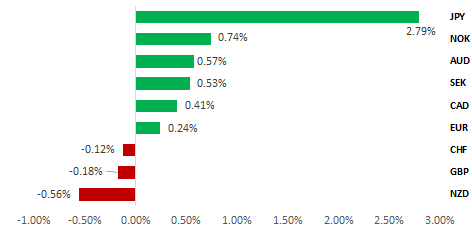
Source: Bloomberg, as of 4th September 14:30 BST (Weekly % Change vs. USD))
Trade Ideas:
We are recommending a new short EUR/JPY trade idea, and have taken profit on our long AUD/JPY trade recommendation.
JPY Flows:
This week we analyse the monthly International Transactions in Securities that showed strong NISA-related foreign equity buying and continued foreign asset switching from equities to bonds by Japan Trusts.
FX Weekly Options Flow Report:
USD/JPY options activity points to investors positioning for a stronger JPY over short and longer periods.
FX Views
JPY: Short yen positions vulnerable to further squeeze
The USD/JPY rate has had its biggest weekly drop since the 2nd week of February when the markets were responding to the general election victory prompted a surge of the yen on expectations of stronger economic growth fuelled by increased fiscal spending. That reaction faded quickly and the yen turned lower on concerns over fiscal dominance undermining the BoJ ability to bring inflation under control. Will this latest yen surge also fade quickly? We certainly think the prospects are much better that this latest surge turns out to be more lasting than the move in February.
One key difference of course is the BoJ and concerns over the BoJ being behind the curve have fuelled more aggressive pricing on future policy moves. The trigger was the speech by policy board member Hajime Takata who spoke of a potential faster pace of monetary tightening. Takata stated that a 25bp hike is “not necessarily set in stone” and spoke of potential back-to-back hikes as well. There is next no chance that the BoJ would hike by 50bps and the Bloomberg news source headline that only a 25bp move was being considered helped dampen down rate hike pricing – pricing for September did reach 30bps but has reversed back. This makes complete sense and the first course of action would certainly be upping the pace further meeting to meeting. A hike in September takes us to every three months. Back-to-back would be the obvious next step before a larger hike would be considered and even back-to-back rate hikes seems a low possibility at this stage. The curve currently has 80bps priced by June 2027, close to our view of hikes in September, January and June 2027 taking the policy rate to 1.75%. We are not convinced that pace of tightening will trigger a larger FX move and given one of the trigger of the yen gain this week was a larger hike or a back-to-back hike, this factor may not be sustained as a yen buying driver.
How big is the yen carry position? This is a question we are often asked and in our view it is difficult and even misleading to suggest a figure can be put on this. But of course we can look at certain areas of the market to provide us with a gauge and certain positioning metrics certainly point to the potential for a further liquidation of yen short positions from here. The IMM data is the most known data set and that showed a 185k short yen position across Leveraged Funds and Asset Managers prior to intervention. That’s equivalent to JPY 2.35trn short position ($15bn @ USD/JPY 155). 85k contracts have been cut so there remains scope for further liquidation and tonight’s IMM data will probably show a more notable reduction in this yen short position. The FFAJ OTC margin trading positioning data showed a huge swing in positioning between June and July primarily due to USD/JPY. In yen terms, the net position for all yen trades went from a long yen positions of JPY 1.45trn to a yen short position of JPY 4.13trn. That’s a JPY 5.58trn yen selling flow in July and the dominant shift was very likely in the final two days of July when intervention took place – so given the MoF has confirmed JPY 15.4trn worth of yen buying on 30th / 31st July, we can reasonably assume that margin retail flows may have been on the other side of possibly about one-third of the yen buying intervention. The FFAJ OTC positioning data implies record retail margin yen selling in July. Furthermore, extending this further to this week’s price action it could well be that margin retail traders may have had a rethink on the potential scale of upside potential. We have seen active yen buying this week by the retail sector. The BIS yen cross border claims total, reported in US dollars, has been rising throughout the period of USD/JPY gains post-covid suggesting total yen funding has grown which would in part reflect a growing yen carry position.
RETAIL FX POSITIONS SHOWS RECORD JPY SELLING
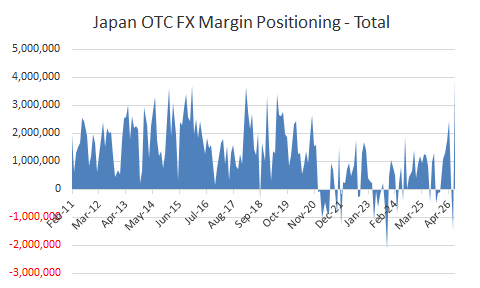
Source: FFAJ & MUFG GMR; July 2026 latest data
SD/JPY POSITION IMPLIED $29BN USD/JPY BUYING
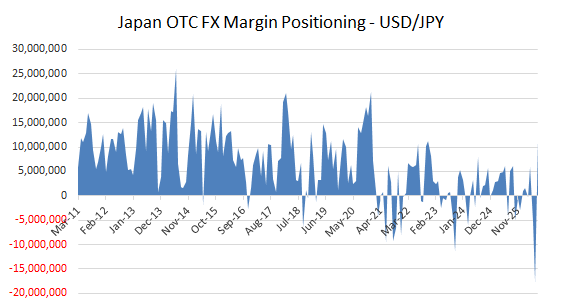
Source: FFAJ & MUFG GMR; July 2026 latest data
Given this week’s USD/JPY has been so large and not triggered by a specific macro event as such, it could certainly have an impact on investors’ expectations of future direction. If investors start to consider the prospects of a more meaningful turn in USD/JPY then Japanese investors may consider converting larger portions of their investment income. This surplus now makes up the entire current account surplus and greater conversion rates would add to yen demand. Similarly, foreign investors are paid to hedge yen exposure in their Japanese equity investments. So yen selling hedging tends to be high. Since April 2025, after the Liberation Day correction, USD/JPY has advanced from 140 to 160 and the Topix index has gained 80%. Foreign investors have bought JPY 18.8trn ($123bn @ USD/JPY avg 153.5) worth of Japan equities in that period. While it pays to hedge, foreign investors could consider lowering hedge ratios if USD/JPY expectations start to shift and yen sentiment improves.
Another factor helping the yen this week were the reports of the GPIF holding a meeting on 21st August – an unusual month to meet – that fuelled speculation of an imminent change in asset allocation. It certainly makes sense to us that the GPIF may well be considering a change. Since March when the current allocation was last confirmed, the 30-year JGB yield is 50bps higher and the 10-year yield is 70bps higher. Those are very big moves that could alter risk-reward dynamics for a long-term investor like GPIF. The latest available flow data does not indicate any shift however with the main focus shifting from foreign equities into foreign bonds rather than showing any outright sales of foreign assets.
These developments in Japan will be important but near-term momentum for USD/JPY will also be dictated by broader US dollar moves. Today’s NFP data reduces these risks somewhat, but the CPI data next week is much more important. Still, the USD/JPY selling following the stronger NFP data is telling.
TRUSTS SWITCHING FOREIGN ASSETS NOT SELLING
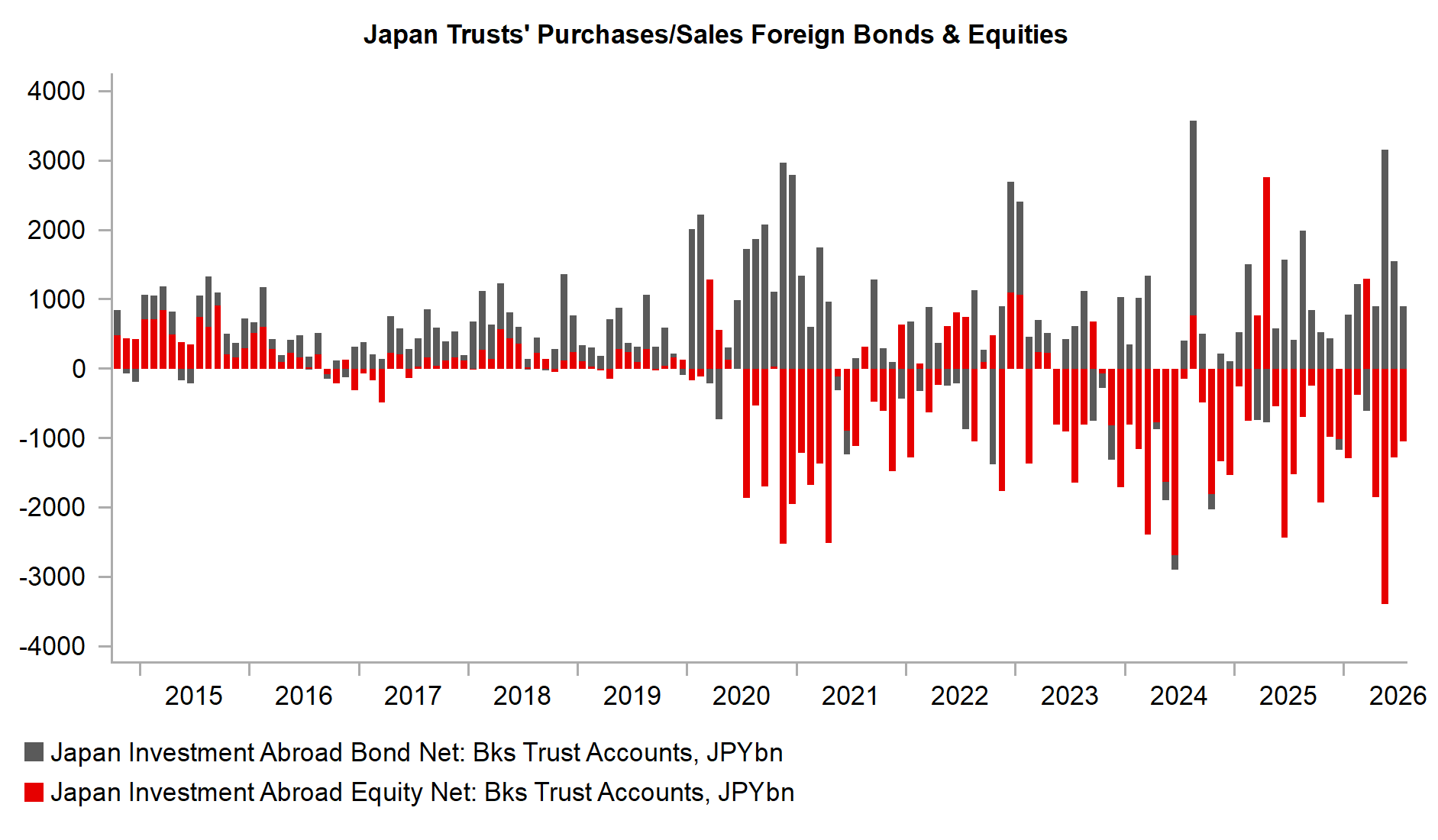
Source: Bloomberg, Macrobond & MUFG GMR
TOPIX INDEX VS USD/JPY SINCE LIBERATION DAY
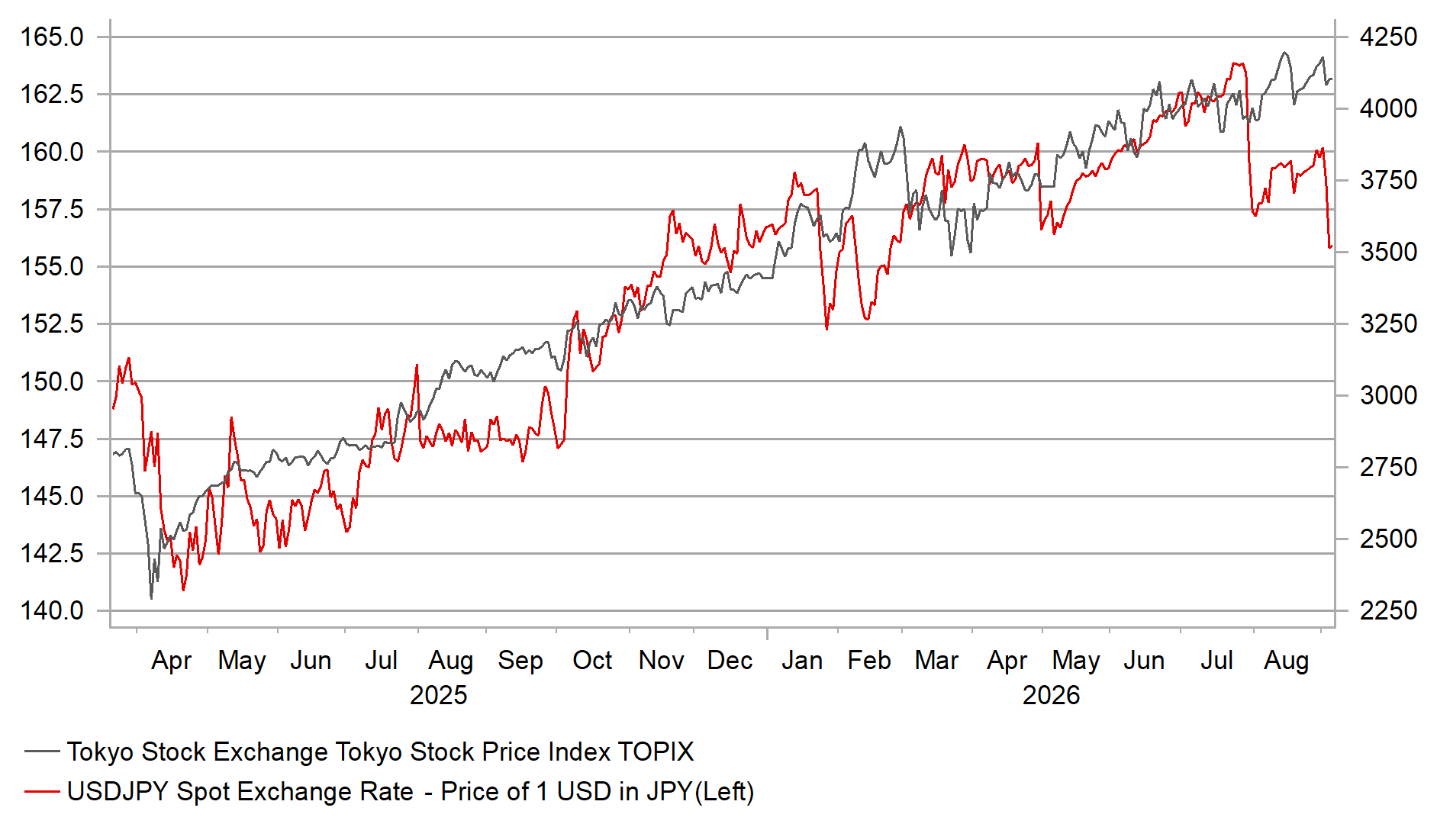
Source: Bloomberg, Macrobond & MUFG GMR
EUR/USD: Holding up better than expected ahead of ECB meeting
The EUR has rebounded against the USD over the past week. After falling to a low of 1.1566 earlier in the week, EUR/USD rebounded towards pre-Jackson Hole levels at around 1.1640 prior to today’s stronger NFP print. Recent price action in the pair has been driven primarily by the USD leg. The USD initially strengthened following Jackson Hole in response to hawkish comments from Kevin Warsh, who indicated that the Fed would still have work to do if policymakers were not confident that underlying inflation was moving towards target clearly and at a sufficient pace. He also downplayed the stronger-than-expected PCE and CPI readings over the summer, stating that they “do not tell me that underlying trends have meaningfully improved”. While the comments were not intended as forward guidance to prepare the market for a hike, they have nevertheless contributed to rising expectations that the Fed could hike in September.
However, a hike as early as this month is far from a done deal. Dovish comments from New York Fed President John Williams and Fed Governor Christopher Waller, both influential members of the Fed leadership team, have since helped to temper rate hike expectations and weighed on the USD. President Williams described recent inflation data as “encouraging” and said he sees “the trend in inflation moving slowly down as some of the effects of the tariffs move into the rear-view mirror”. Governor Waller also signalled that he is in no rush to raise rates this month. While acknowledging that inflation remains “meaningfully” above the Fed’s target, he noted that recent data points to some cooling in price pressures. He stated that, “If this continues in the data due over the next two weeks, I would be inclined to support holding the target for the fed funds rate at its current setting.” As a result, the release of the August CPI report on 11th September is becoming increasingly pivotal in determining whether the Fed hikes ahead of the mid-term elections in November.
In contrast, the ECB is expected to deliver its second hike since the start of the US-Iran conflict in the week ahead. Another 25bp increase is already fully priced in ahead of the upcoming policy meeting. As a result, the performance of both the EUR and euro-zone rate markets is likely to be driven more by the ECB’s updated policy guidance than by the rate decision itself. The rates market has moved to price a more hawkish policy outlook over the summer, supported by a renewed surge in natural gas prices, which have climbed to fresh highs since the conflict began. At the same time, the euro-zone economy has proven more resilient than expected in the face of the energy price shock. Growth accelerated to 0.4% QoQ in Q2, while business confidence surveys have fully reversed the declines recorded immediately after the conflict erupted. Market participants now expect the ECB to deliver three additional rate hikes by the middle of next year, with almost two further hikes fully priced in by year-end.
NARROWING YIELD SPREAD HAS SUPPORTED EUR
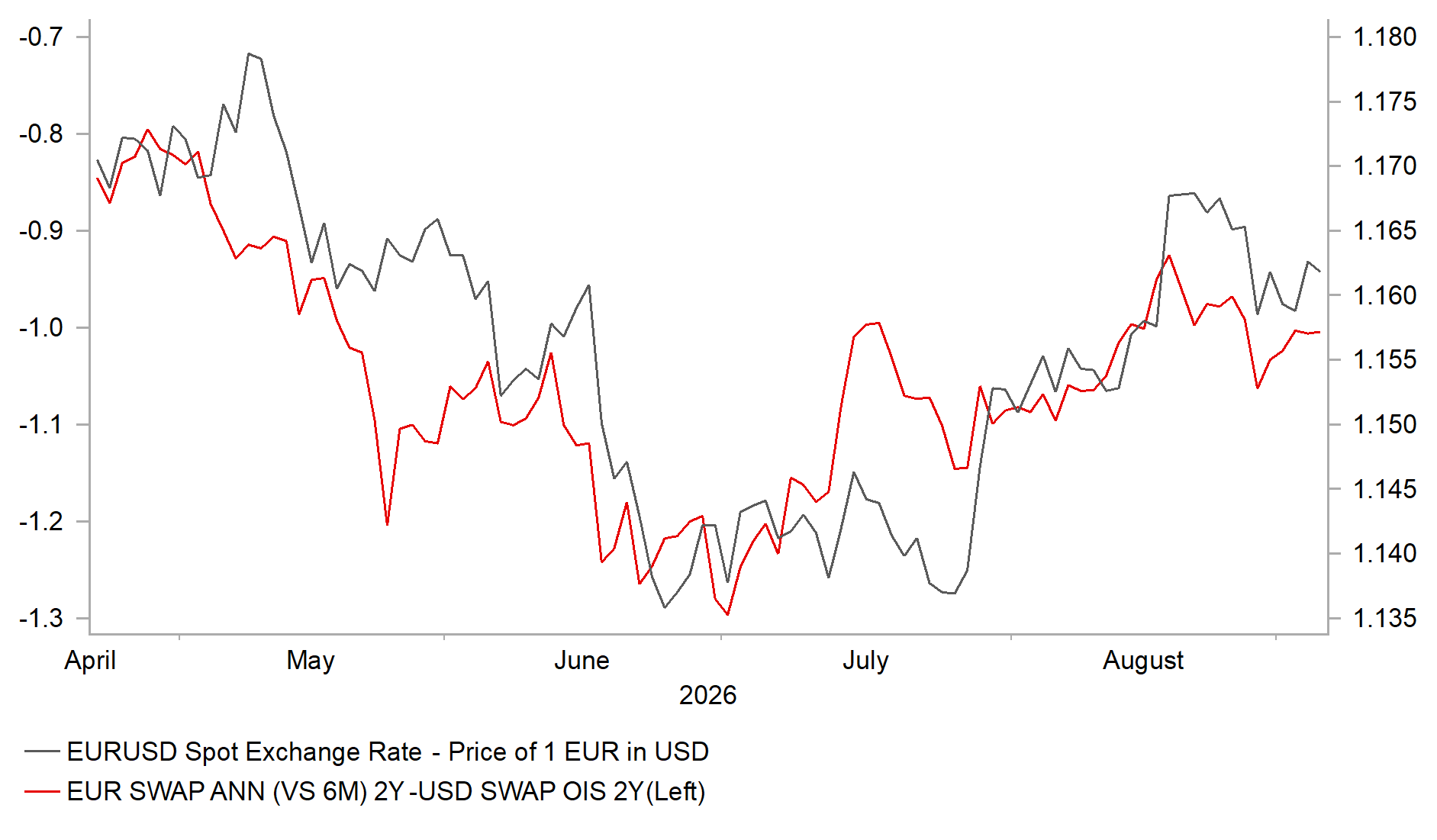
Source: Bloomberg, Macrobond & MUFG
EUR & EURO-ZONE ECONOMY PROVING RESILIENT
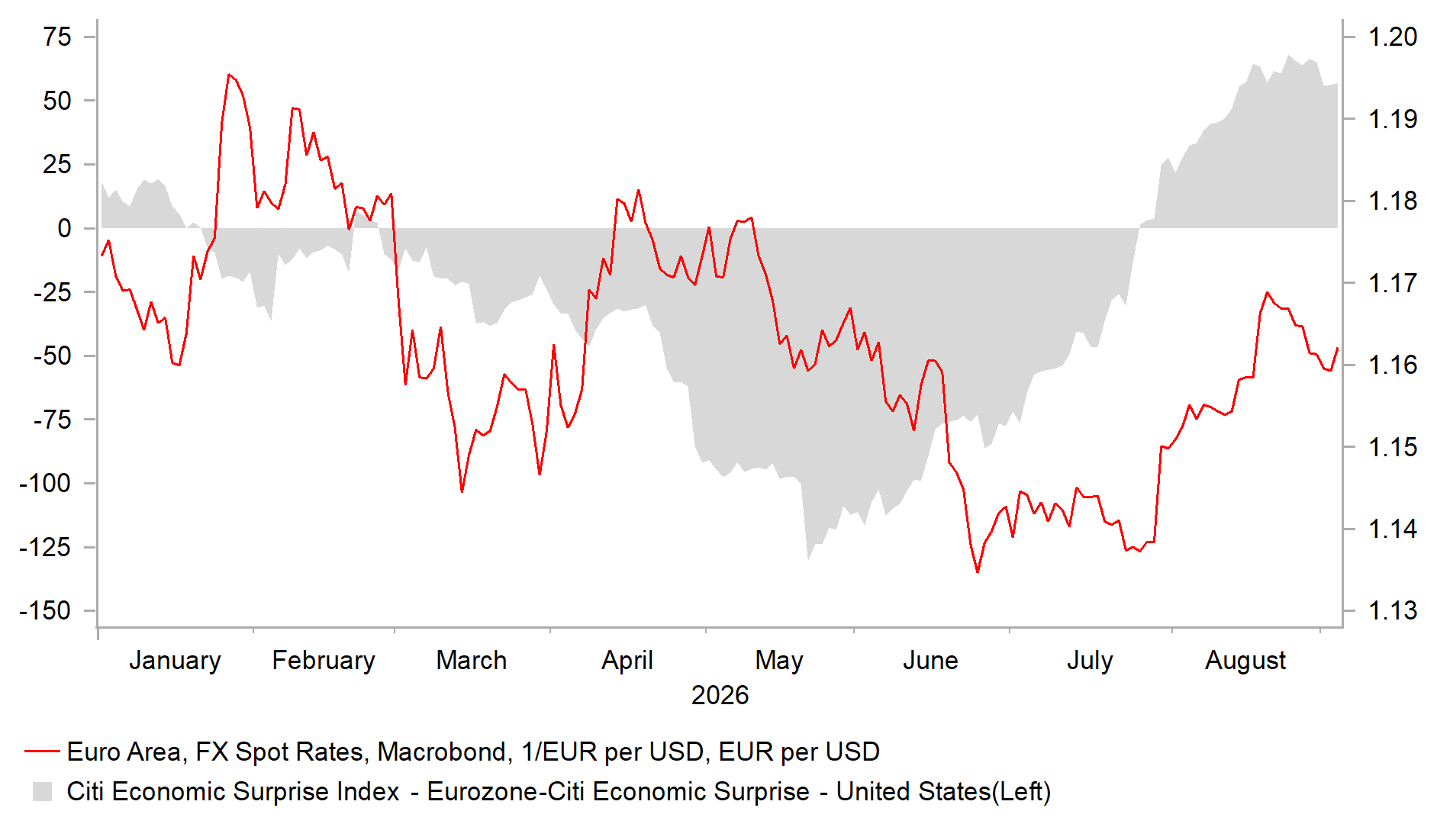
Source: Bloomberg, Macrobond & MUFG
If delivered, the hikes would lift the ECB’s policy rate to 3.00%. Such a move would also take the policy rate back into restrictive territory. In a speech in June, ECB Chief Economist Philip Lane indicated that the upper end of the ECB’s estimated neutral rate range may have risen to 2.50%. Our baseline view has been that the ECB would raise rates to the top of the neutral range with a final hike at the upcoming meeting. Moving rates further into restrictive territory would require a greater degree of concern about upside risks to the inflation outlook. Given the limited evidence so far of significant second-round effects stemming from higher energy prices, we remain sceptical that the ECB will commit to a third rate hike before year-end. On the other hand, we do not expect the ECB to signal that its tightening cycle has come to an end. We are maintaining our forecast (click here) for one final hike, while acknowledging a higher risk that rates may need to rise further if second-round inflation effects emerge.
The EUR has strengthened against the USD over the past couple of months alongside a narrowing in short-term yield spreads. However, with the euro-zone rates market now almost fully pricing in 75bps of additional ECB tightening, the bar for a further hawkish policy surprise has risen significantly. The greater risk is that the ECB falls short of these expectations by delivering less tightening than markets currently anticipate. The EUR could weaken modestly next week if President Lagarde does not endorse market expectations for another rate hike before year-end. Nevertheless, the near-term direction of EUR/USD is still likely to be driven primarily by developments on the USD side of the equation. Based on short-term fundamental drivers, including energy prices, we would expect EUR/USD to be trading closer to the lower end of its recent 1.1400 to 1.1800 range. This suggests that the recent bout of USD weakness reflects market participants pricing in a bigger US policy risk premium. USD debasement (click here) fears re-emerged after the US Treasury took steps to suppress long-term yields.
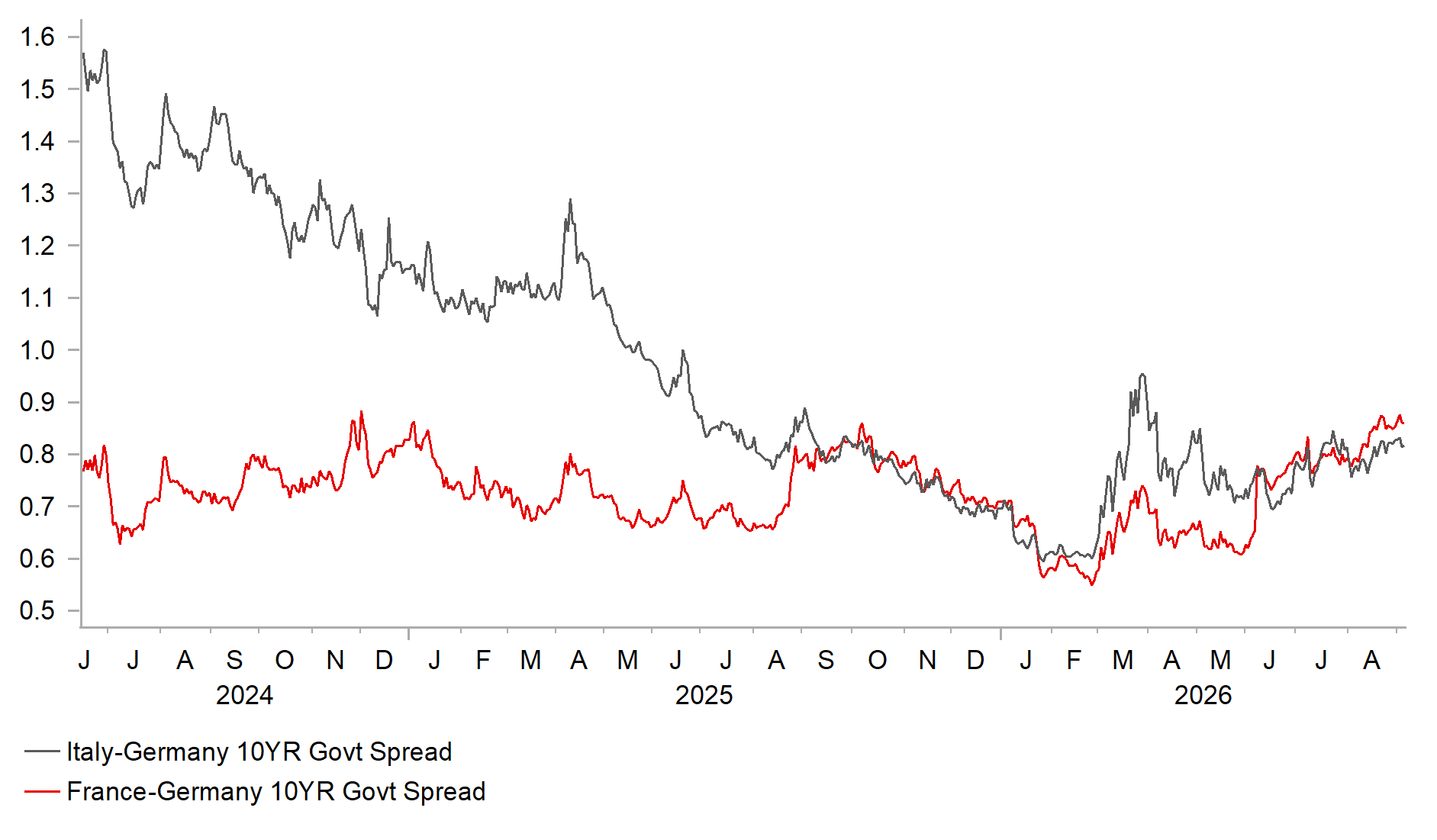
Downside risks for the EUR would increase if European natural gas prices continue to rise heading into the winter, particularly if accompanied by signs that the euro-zone economy is becoming less resilient to higher energy costs. Political risks in Europe are also likely to attract greater attention as next year’s elections in France and Italy draw closer. In the near term, attention will focus on upcoming state elections in Germany. Elections are scheduled to take place in Saxony-Anhalt (6 September), Mecklenburg-Western Pomerania, and Berlin (20 September). The far-right Alternative for Germany (AfD) party currently holds a comfortable lead in polls in Saxony-Anhalt, raising the possibility that it could become the first German state to be governed by a far-right party in the post-war era. While we do not expect these state elections to result in significant changes to government policy or undermine support for growth through an accommodative fiscal stance, a poor showing by the governing parties could nevertheless add to political uncertainty.
BIGGER US POLICY RISK PREMIUM PRICED INTO USD?
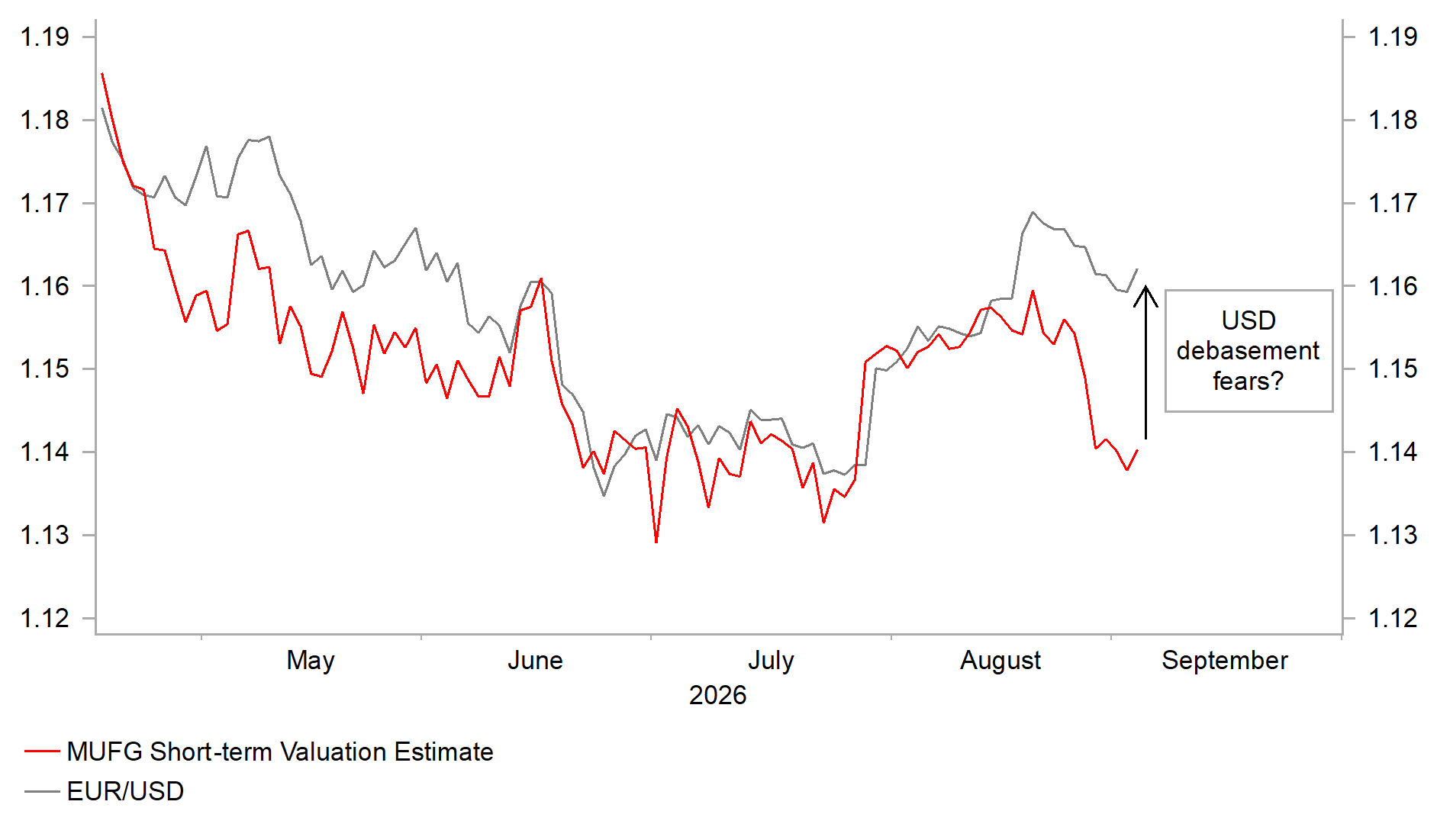
Source: Bloomberg, Macrobond & MUFG
FRENCH GOVERNMENT BONDS UNDERPERFORMING
Source: Bloomberg, Macrobond & MUFG
Weekly Calendar
Ccy | Date | BST | Indicator/Event | Period | Consensus | Previous | Mkt Moving |
EUR | 06/09/2026 | Saxony-Anhalt State Election in Germany | !!! | ||||
SEK | 07/09/2026 | 07:00 | CPI YoY | Aug P | -- | 0.2% | !! |
EUR | 07/09/2026 | 07:00 | Germany Industrial Production SA MoM | Jul | -- | 0.2% | !! |
EUR | 07/09/2026 | 09:30 | Sentix Investor Confidence | Sep | -- | 90.0% | !! |
EUR | 07/09/2026 | 10:00 | GDP SA QoQ | 2Q T | -- | 0.4% | !! |
EUR | 07/09/2026 | 10:00 | Employment QoQ | 2Q F | -- | 0.1% | !! |
JPY | 08/09/2026 | 00:30 | Labor Cash Earnings YoY | Jul | 3.8% | 4.0% | !! |
JPY | 08/09/2026 | 00:50 | GDP SA QoQ | 2Q F | 0.4% | 0.3% | !! |
JPY | 08/09/2026 | 00:50 | BoP Current Account Balance | Jul | ¥2800.0b | -¥92.3b | !! |
EUR | 08/09/2026 | 07:00 | Germany Trade Balance SA | Jul | -- | 15.3b | !! |
USD | 08/09/2026 | 11:00 | NFIB Small Business Optimism | Aug | -- | 99.8 | !! |
EUR | 09/09/2026 | 07:45 | France Industrial Production MoM | Jul | -- | 0.1% | !! |
GBP | 10/09/2026 | 00:01 | RICS House Price Balance | Aug | -- | -30% | !! |
SEK | 10/09/2026 | 07:00 | GDP Indicator SA MoM | Jul | -- | -0.2% | !! |
EUR | 10/09/2026 | 07:00 | Germany CPI YoY | Aug F | -- | 2.9% | !! |
SEK | 10/09/2026 | 07:00 | Industrial Orders MoM | Jul | -- | 32% | !! |
NOK | 10/09/2026 | 07:00 | CPI YoY | Aug | -- | 3.0% | !! |
EUR | 10/09/2026 | 09:00 | Italy Industrial Production MoM | Jul | -- | -1.0% | !! |
EUR | 10/09/2026 | 13:15 | ECB Deposit Facility Rate | 2.50% | 2.25% | !!! | |
USD | 10/09/2026 | 13:30 | Initial Jobless Claims | -- | -- | !! | |
USD | 10/09/2026 | 13:30 | PPI Final Demand MoM | Aug | 0.4% | 0.0% | !! |
EUR | 10/09/2026 | 13:45 | ECB President Lagarde Press Conference | !!! | |||
USD | 10/09/2026 | 15:00 | Existing Home Sales | Aug | 3.99m | 4.06m | !! |
GBP | 11/09/2026 | 07:00 | Monthly GDP (MoM) | Jul | -- | 0.3% | !! |
GBP | 11/09/2026 | 07:00 | Trade Balance GBP/Mn | Jul | -- | -£5537m | !! |
USD | 11/09/2026 | 13:30 | CPI YoY | Aug | 3.4% | 3.4% | !!! |
USD | 11/09/2026 | 15:00 | U. of Mich. Sentiment | Sep P | -- | 51.7 | !! |
EUR | 11/09/2026 | 18:00 | ECB's Lane Speaks | !!! |
Source: Bloomberg & MUFG GMR
Key Events:
The main economic release in the week ahead will be the US CPI report for August, due on Friday. The report is increasingly viewed as pivotal in determining whether the Fed will raise rates later this month, ahead of the US mid-term elections in November. Comments from Kevin Warsh at Jackson Hole suggested that policymakers would need to see convincing evidence of softer underlying inflation to rule out a rate hike, particularly with oil prices having moved back towards USD100/barrel. However, subsequent comments from New York Fed President Williams and Governor Waller have indicated that the Fed’s more dovish leadership remains inclined to keep rates on hold, provided the August CPI report shows further moderation in inflation pressures. As a result, the upcoming CPI release is likely to play a decisive role in shaping market expectations for the September FOMC meeting.
The ECB is widely expected to deliver a second 25bp rate hike in response to the energy price shock. We expect policymakers to express greater concern about recent developments in the Middle East, which have pushed European natural gas prices to their highest levels since the start of the US-Iran conflict. The combination of rising gas prices and the euro-zone's resilience in the face of higher energy costs is likely to reinforce the case for further policy tightening. We expect the ECB’s updated guidance to leave the door open to additional rate hikes, while stopping short of signaling a strong commitment to another move. Such a stance would allow policymakers to retain flexibility as they assess the persistence of inflation pressures and the impact of higher energy prices on growth and inflation dynamics.
German politics are likely to attract greater market attention at the start of next week. The German state of Saxony-Anhalt will hold a regional parliament election this weekend. Recent polling indicates that the right-wing AfD holds a clear lead over the governing coalition parties in the state, namely the CDU, SPD, and FDP. The party could secure a sufficiently large share of the vote to become the dominant force in the state parliament. While a weak performance by the governing coalition parties could contribute to greater political uncertainty in Germany, the immediate policy implications are likely to be limited. We do not expect the election outcome to materially alter the national policy outlook. Fiscal policy is still expected to remain supportive, continuing to provide a tailwind for economic growth.