

To read the full report, please download PDF.
Softer run of US data weighs on USD
FX View:
The performance of G10 currencies has been mixed over the past week. The oil-linked currencies of the NOK and CAD have outperformed, while the low-yielding CHF and JPY have lagged behind. The JPY has already given back around half of the intervention-driven gains it recorded at the end of last month. This price action highlights that intervention can provide only temporary support for the JPY in the absence of a meaningful shift in underlying fundamentals. The JPY has weakened again even as yield spreads between the US and Japan have narrowed. US yields have continued to move lower as market participants scale back expectations for Fed rate hikes. The recent run of softer US employment, wage, and retail sales data, together with limited evidence that higher energy prices are feeding through into core inflation, has given the Fed greater scope to keep rates on hold in September. The next key focus for markets will be Fed Chair Kevin Warsh’s address at the Jackson Hole symposium on 28th August. In the meantime, the USD remains vulnerable to further weakness.
MIXED G10 FX PERFORMANCE
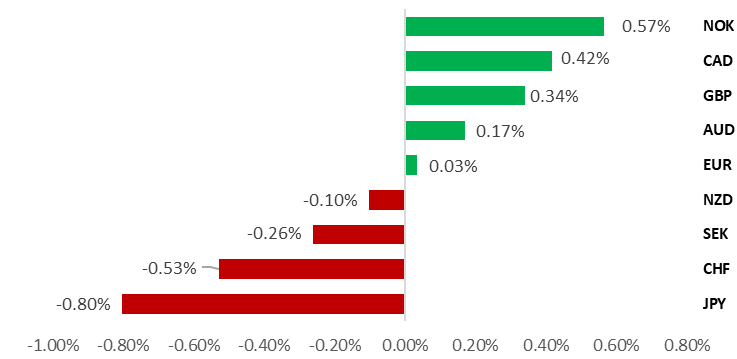
Source: Bloomberg, 14th August 2026 (Weekly % Change vs. USD)
Trade Ideas:
We are maintaining a long AUD/JPY trade idea and closing a short USD/BRL trade idea.
IMM FX Positioning:
Joint intervention by Japan and the US triggered the largest liquidation of short JPY positions since August 2024, when a disorderly unwinding of JPY-funded carry trades took place.
US Macro Risk Monitor :
Our analysis flags macro risks remain concentrated in sectors of the economy that have historically been most sensitive to higher rates. Housing has emerged as the most significant area of concern, with additional signs of vulnerability appearing across credit and solvency indicators.
FX Views
G10 FX: Scaling back of Fed rate hike expectations dampens USD strength
It has been a mixed week for G10 FX performance. The best-performing currencies have been the oil-related NOK and CAD, while the low-yielding JPY and CHF have underperformed. NOK and CAD have benefited from higher energy prices, reflecting the lack of progress in reopening the Strait of Hormuz. The International Energy Agency (IEA) released its latest monthly oil market report earlier this week, warning that the global oil market is now expected to record a deficit of 1.8 mb/d in Q3, more than double its initial estimate of around 800 kb/d in July's report. The IEA noted that regional oil exports, including flows via routes bypassing the Strait of Hormuz, fell sharply by 2.1 mb/d to 15 mb/d after the Strait was effectively closed again in early July. With an agreement to reopen the Strait of Hormuz and allow unhindered transit through the Bab el-Mandeb Strait still proving elusive, the IEA has revised its supply projections lower once again. Global oil supply is now expected to fall by 4.3 mb/d to 102 mb/d. By contrast, the forecast for global oil demand in the second half of 2026 has been lowered by roughly 550 kb/d, reflecting demand destruction caused by higher prices. Demand is now expected to contract by 2 mb/d in Q3. The tightening oil market continues to pose upside risks to global inflation in the near term.
However, the ongoing disruption to global energy supplies has not prevented global equity markets from reaching fresh record highs over the past week. MSCI's ACWI Global Equity Index has risen by around 6.5% from last month's low, extending its year-to-date gain to approximately 14.5%. Following the sell-off in July, AI-related equities have staged a strong rebound, helping to propel global equity markets to new record highs. At the same time, copper prices have climbed to fresh record highs, supported by renewed investor optimism over the boost to global demand from continued investment in AI-related infrastructure (click here) and capacity expansion. The tailwind to global growth from the AI buildout is helping to offset investor concerns about the negative impact of the recent energy price shock. This more constructive view has been reinforced by recent economic data, which suggest that growth in both Europe and the US has been more resilient than expected during the first half of 2026. Data released this week showed that both the euro area and UK economies expanded by a solid 0.4% in Q2, broadly matching the pace of growth recorded in the US.
In the foreign exchange market, AI-related equity inflows into the US continue to provide support for the USD, even as short-term yield spreads between the US and other major economies have narrowed. As a result, the dollar has been resilient, avoiding what otherwise could have been a more pronounced correction lower. Yield differentials have continued to move against the USD over the past week following softer-than-expected US employment and wage growth data for July. In addition, there has so far been limited evidence that higher energy prices are feeding through into core inflation, prompting market participants to scale back expectations for further Fed hikes. This shift has weighed on front-end US yields and reduced part of the USD's rate advantage. Elsewhere, commodity-linked currencies have continued to benefit from the global AI investment boom. The AUD, in particular, has been supported by the favourable terms of trade impact of rising industrial metal prices, including copper, which has recently climbed to fresh record highs. Strong demand for commodities associated with AI infrastructure and electrification has provided an important tailwind for the AUD which has been one of the best-performing G10 currencies so far this year.
CAD & NOK SUPPORTED BY HIGHER ENERGY PRICES
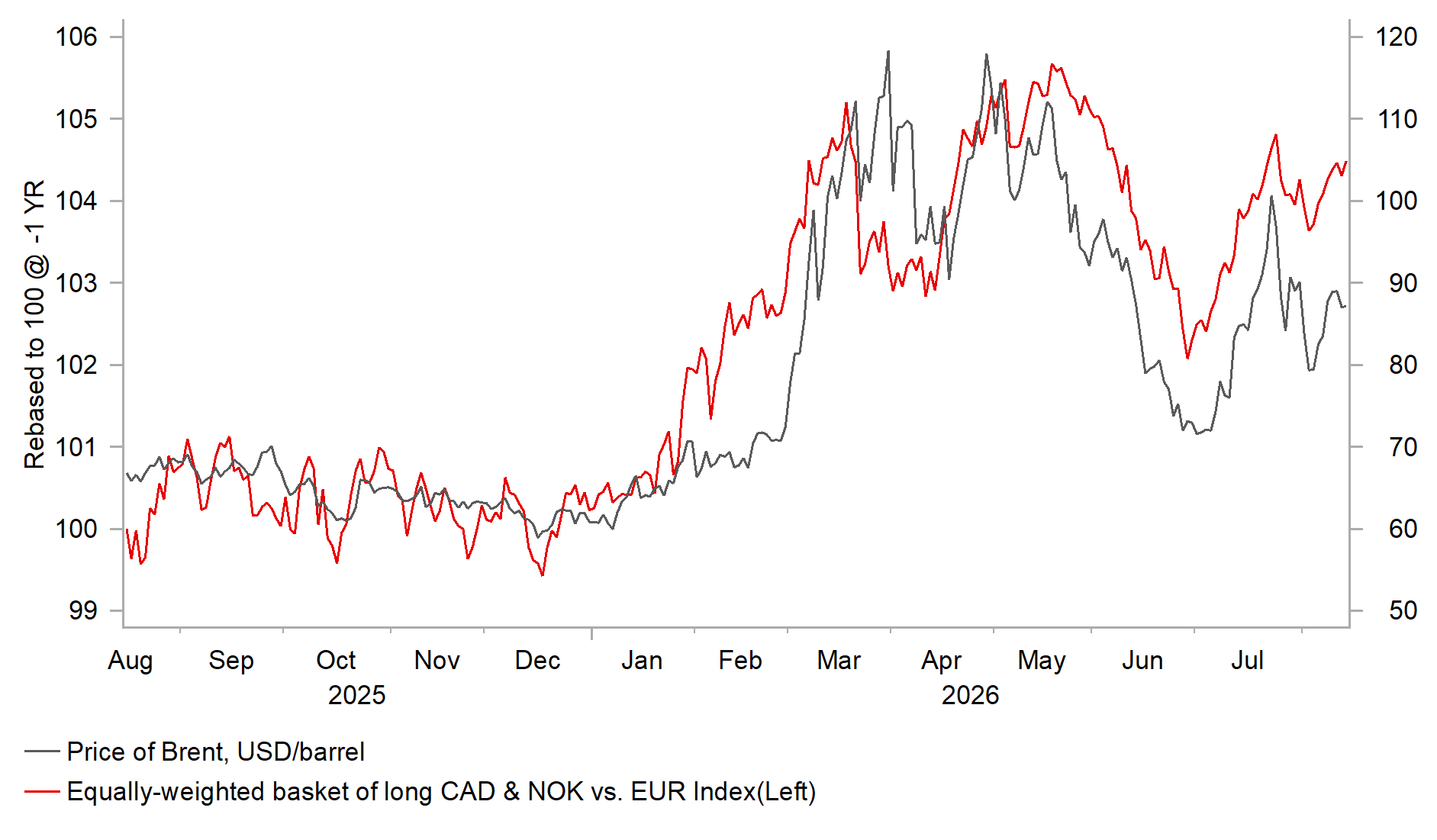
Source: Bloomberg, Macrobond & MUFG GMR
US EQUITIES OUTPERFORMING DURING CONFLICT
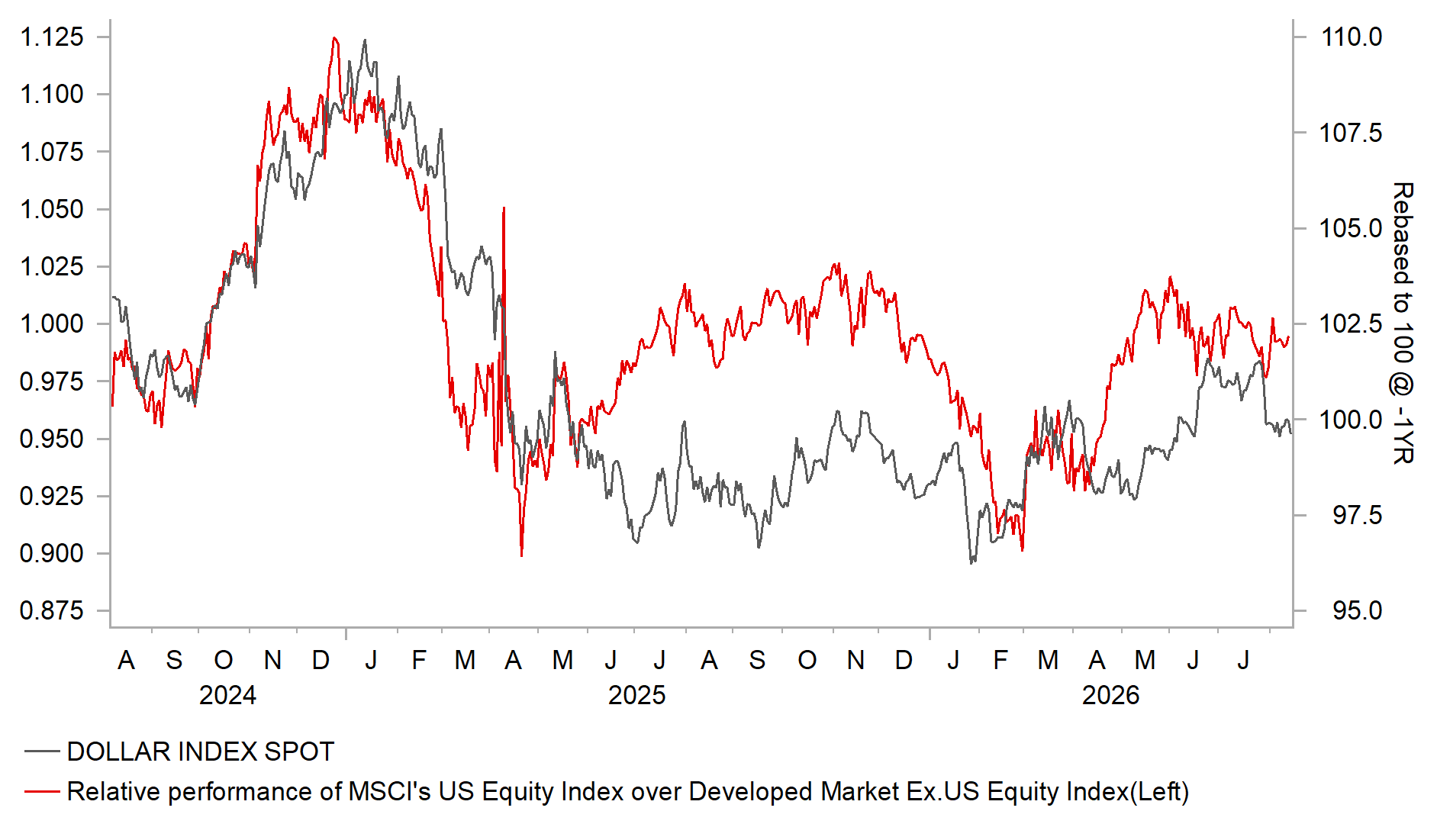
Source: Bloomberg, Macrobond & MUFG GMR
In contrast, the low-yielding funding currencies of the CHF and JPY have underperformed over the past week. The JPY has already given back around half of the gains it recorded following the intervention at the end of last month. The latest CFTC data, covering the period through the end of last week, revealed that the joint intervention triggered the largest weekly liquidation of leveraged funds' short JPY positions since the summer of 2024. However, the rebound in the JPY has so far proved more short-lived than in the summer of 2024, when a more disorderly unwinding of JPY-funded carry trades drove USD/JPY sharply lower from around 162.00 in early July to a low of 140.71 in early August. The current external backdrop remains unfavourable for the JPY, reflecting both the negative impact of higher energy prices and generally supportive conditions for carry trades. Measures of financial market volatility across both equity and FX markets are at, or close to, their lowest levels of the year. With seasonal trading conditions likely to keep volatility subdued through the remainder of the summer, the environment remains conducive to carry strategies. The next major event risk on the calendar is not until 28th August when Fed Chair Kevin Warsh delivers his keynote address at the annual Jackson Hole Economic Policy Symposium. Historically, Jackson Hole has often been used as a platform to prepare markets for significant shifts in monetary policy.
The JPY has weakened again over the past week despite a further narrowing in US-Japan yield spreads, which would normally dampen the appeal of JPY-funded carry trades. The move in yield differentials has reflected both lower US yields and higher Japanese yields. In Japan, yields have been pushed higher by a hawkish repricing of BoJ rate hike expectations. Japanese rate markets have moved to price a faster pace of policy tightening in response to recent hawkish rhetoric from BoJ officials, including Governor Ueda, as well as media reports suggesting that the Japanese government supports the case for another rate hike in the near term. A greater willingness on the part of Japanese policymakers to accept tighter monetary policy may also have helped secure US participation in the recent joint intervention operation, while reducing concerns in Washington about the potential implications for the US Treasury market. There are now around 20bps of additional tightening priced in by September, which could leave the BoJ facing a difficult choice. Failing to deliver another rate hike would risk triggering renewed JPY weakness and could undermine the effectiveness of the recent intervention efforts. As a result, the bar for the BoJ to disappoint current market expectations appears relatively high.
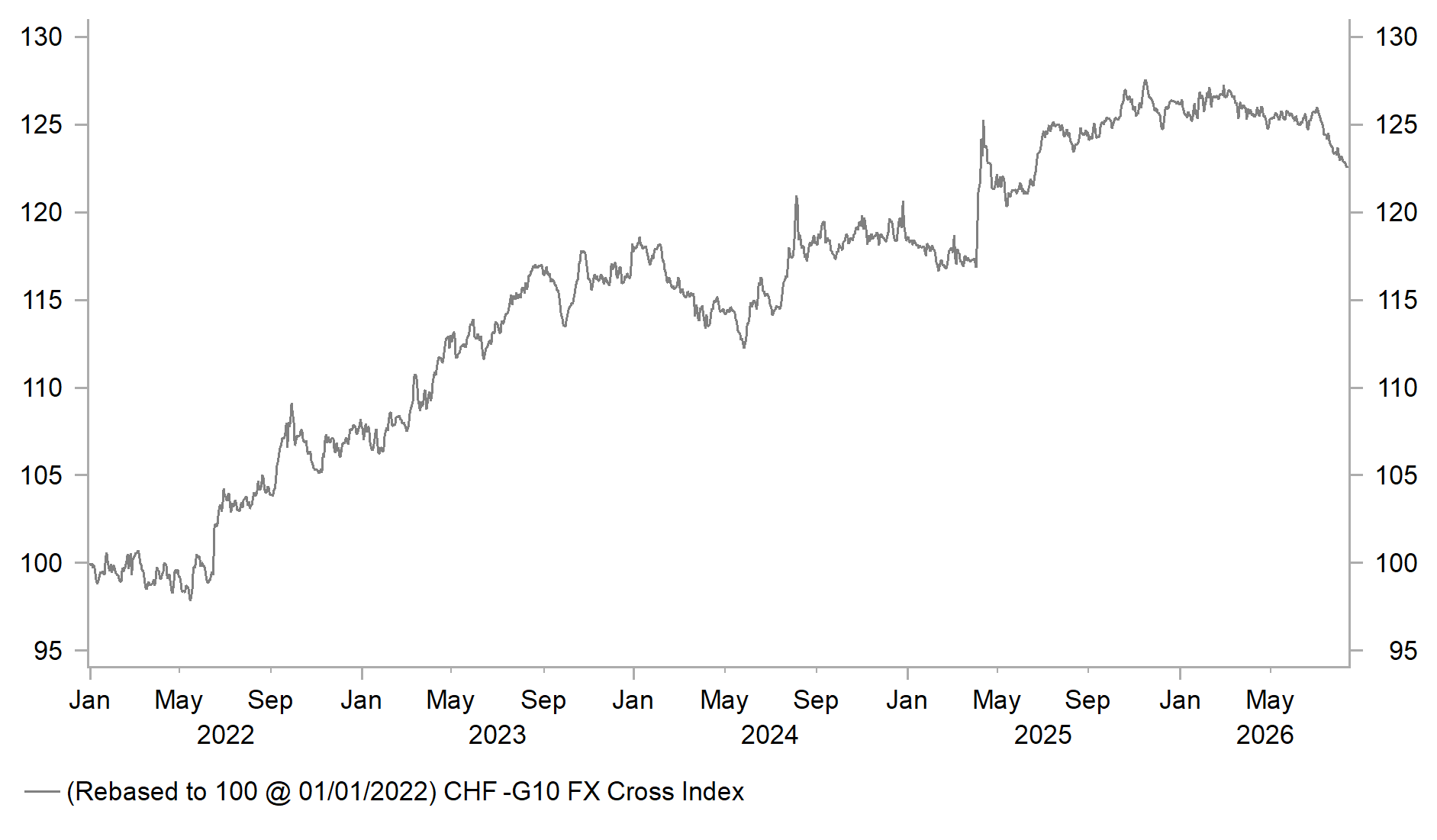
The other low-yielding G10 funding currency, the CHF, has also come under increased selling pressure in recent weeks as the risk of disruption to carry trades has diminished. This has helped to lift EUR/CHF back above 0.9400 for the first time in almost a year. In contrast to the BoJ, the SNB is expected to maintain a more accommodative policy stance, with reports suggesting that rates are likely to remain on hold until at least the end of 2027. This policy divergence has made the CHF relatively more attractive as a funding currency and contributed to its recent underperformance. The SNB remains concerned that the heightened geopolitical risks will contribute to a stronger CHF but that has not proven to the case so far this year.
SPECULATIVE JPY SHORTS CUT BACK SHARPLY
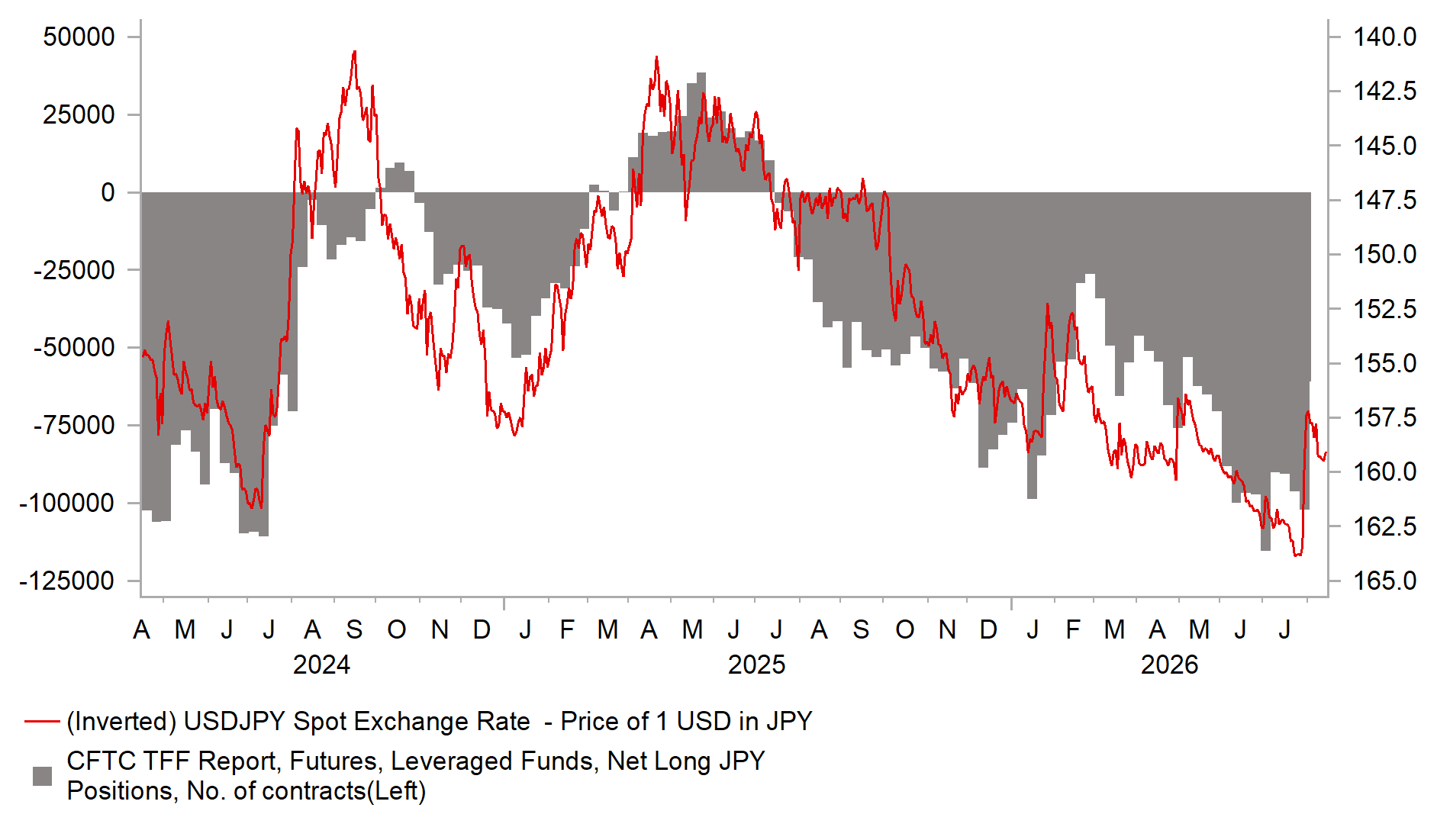
Source: Bloomberg, Macrobond & MUFG GMR
CHF SELLING PRESSURE HAS INCREASED
Source: Bloomberg, Macrobond & MUFG GMR
Weekly Calendar
Ccy | Date | BST | Indicator/Event | Period | Consensus | Previous | Mkt Moving |
JPY | 17/08/2026 | 00:50 | GDP Annualized SA QoQ | 2Q P | 2.0% | 1.8% | !!! |
NOK | 17/08/2026 | 07:00 | Trade Balance | Jul | -- | 61.9b | !!! |
EUR | 17/08/2026 | 10:30 | ECB's Lane Speaks in Dublin | !! | |||
CAD | 17/08/2026 | 13:30 | CPI YoY | Jul | 2.9% | 2.8% | !!! |
GBP | 18/08/2026 | 07:00 | Average Weekly Earnings 3M/YoY | Jun | -- | 4.3% | !!! |
GBP | 18/08/2026 | 07:00 | Payrolled Employees Monthly Change | Jul | -- | -4k | !!! |
EUR | 18/08/2026 | 10:00 | Germany ZEW Survey Expectations | Aug | 28.0 | 26.3 | !! |
USD | 18/08/2026 | 13:30 | Import Price Index MoM | Jul | 0.1% | 0.3% | !! |
USD | 18/08/2026 | 13:30 | Housing Starts | Jul | 1350k | 1427k | !! |
USD | 18/08/2026 | 14:15 | Industrial Production MoM | Jul | 0.3% | 0.1% | !! |
GBP | 19/08/2026 | 07:00 | CPI YoY | Jul | 2.9% | 2.6% | !!! |
EUR | 19/08/2026 | 10:00 | Labour Costs YoY | 2Q P | -- | 3.2% | !! |
EUR | 19/08/2026 | 10:00 | CPI YoY | Jul F | 2.9% | 2.9% | !! |
USD | 19/08/2026 | 19:00 | FOMC Meeting Minutes | -- | -- | !!! | |
JPY | 20/08/2026 | 00:50 | Trade Balance | Jul | -¥689.3b | -¥409.9b | !! |
AUD | 20/08/2026 | 02:30 | Employment Change | Jul | 10.0k | 76.3k | !! |
SEK | 20/08/2026 | 08:30 | Riksbank Policy Rate | 1.75% | 1.75% | !!! | |
USD | 20/08/2026 | 13:30 | Initial Jobless Claims | -- | -- | !! | |
JPY | 21/08/2026 | 00:30 | Natl CPI YoY | Jul | 1.9% | 1.6% | !!! |
GBP | 21/08/2026 | 07:00 | Public Sector Net Borrowing | Jul | -- | 16.0b | !! |
GBP | 21/08/2026 | 07:00 | Retail Sales Inc Auto Fuel MoM | Jul | -- | 1.0% | !! |
EUR | 21/08/2026 | 09:00 | S&P Global Eurozone Manufacturing PMI | Aug P | 51.4 | 51.9 | !! |
EUR | 21/08/2026 | 09:00 | S&P Global Eurozone Services PMI | Aug P | 51.4 | 51.7 | !! |
GBP | 21/08/2026 | 09:30 | S&P Global UK Manufacturing PMI | Aug P | 51.8 | 51.9 | !! |
GBP | 21/08/2026 | 09:30 | S&P Global UK Services PMI | Aug P | 51.5 | 52.1 | !! |
CAD | 21/08/2026 | 13:30 | Retail Sales MoM | Jun | -- | 1.0% | !! |
USD | 21/08/2026 | 14:45 | S&P Global US Composite PMI | Aug P | -- | 54.5 | !! |
Source: Bloomberg & MUFG GMR
Key Events:
The main economic data releases in the week ahead will come from the UK, including the latest labour market report, CPI data, and retail sales figures for July. The UK economy has proven more resilient than expected to the energy price shock during the first half of this year. It was confirmed this week that the UK economy expanded by 0.4% in Q2, following growth of 0.6% in Q1. The economy is entering Q3 with solid momentum, supported by encouraging signs for retail spending. While economic growth has been stronger than anticipated, the labour market has remained relatively weak, providing the BoE with scope to keep interest rates on hold. At the same time, inflation has surprised on the downside in recent months. The upcoming data releases will therefore be closely scrutinised to assess whether these trends have continued.
The main economic release from the US in the week ahead will be the publication of the FOMC minutes from the July meeting. Fed Chair Kevin Warsh has faced criticism for failing to clearly communicate how the Fed assessed recent economic developments and policy risks during the accompanying press conference. This contributed to a sharp steepening of the US yield curve, reflecting heightened policy uncertainty and reduced confidence that the Fed will raise rates as early as September. The minutes may provide greater insight into the Fed’s policy thinking. Expectations for further Fed rate hikes have already been scaled back since the July FOMC meeting, following softer-than-expected non-farm payrolls and CPI reports for July.
The Riksbank is widely expected to leave rates unchanged in the week ahead. Unlike many other G10 central banks, the Riksbank is under less pressure to tighten policy given that inflation remains well below target. The annual rates of headline inflation and core inflation (CPIF excluding energy) stood at just 0.2% and 0.6%, respectively, in July. At the same time, there has been further encouraging evidence of stronger economic growth in Q2 after the economy contracted modestly by 0.2% in Q1. We expect the Riksbank to reiterate that the policy rate could be raised later this year, although this is not our base-case scenario.