

How AI Is Reshaping FX Markets
AI is evolving from a technology-equity theme into a broader macro and FX driver through six key channels: capital investment, trade flows, productivity, central bank policy, capital flows, and terms of trade. The USD has been the main beneficiary so far, supported by the concentration of AI-related investment in the US and strong foreign demand for US AI-linked assets.
Taiwan and South Korea have been among the largest trade beneficiaries of the AI hardware boom, generating exceptionally large trade surpluses that would normally support much stronger currencies. However, heavy overseas investment by residents and foreign selling of domestic equities have recycled much of the export windfall abroad, limiting appreciation of the TWD and KRW despite sharply improved external balances.
The AI buildout is also creating potential winners among commodity-exporting currencies by boosting demand for copper, energy and other critical inputs. The strongest beneficiaries are likely to be the CLP and PEN through higher copper prices, while the AUD, CAD and BRL should benefit from the broader positive terms of trade shock associated with AI-driven infrastructure investment.
What are the main channels through which AI impacts the FX market?
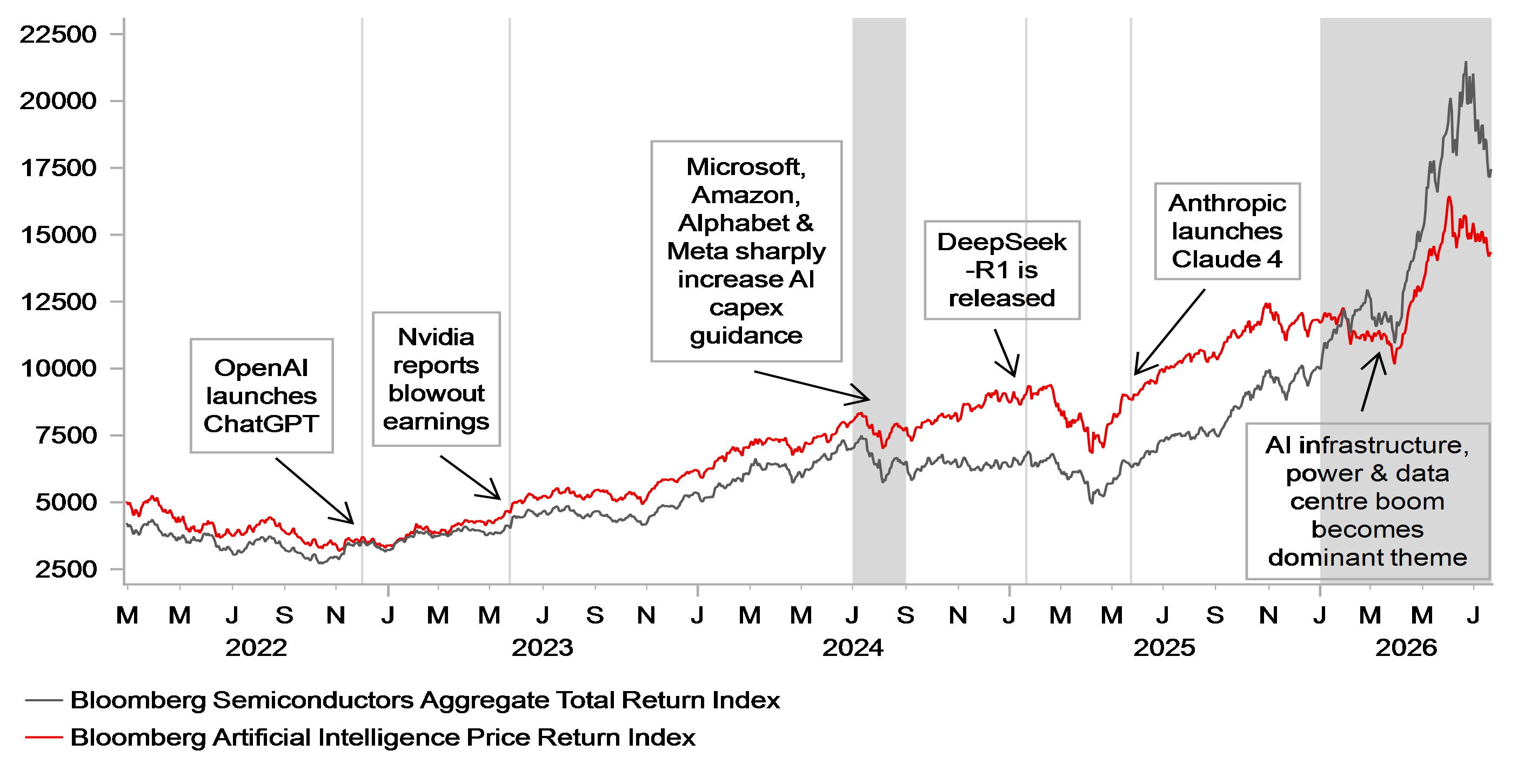
Artificial intelligence (AI) has been a major driver of equity market performance since OpenAI launched ChatGPT in November 2022. The technology has already fuelled an exceptional rally in technology stocks. Since ChatGPT’s debut, the Nasdaq index has risen by approximately 180%. The strengthening tailwind from the AI-driven investment boom has helped to support global economic activity providing an offset to the negative shocks from the US-Iran conflict and US tariffs. As AI adoption accelerates, its influence is extending well beyond equity markets and is increasingly shaping broader macroeconomic and financial market trends. In this report, we examine in greater detail how AI is affecting foreign exchange markets and consider the potential implications for currencies going forward. We identify six main transmission channels through which AI is influencing FX markets: (i) capital investment, (ii) trade flows, (iii) productivity, (iv) central bank policy and rates, (v) capital flows, and (vi) terms of trade.
AI INVESTMENT BOOM IS A MAJOR DRIVER OF FINANCIAL MARKETS
Source: Bloomberg, Macrobond & MUFG GMR
AI-related capital investment has been concentrated in the US
AI build-out driving surge in capital investment.
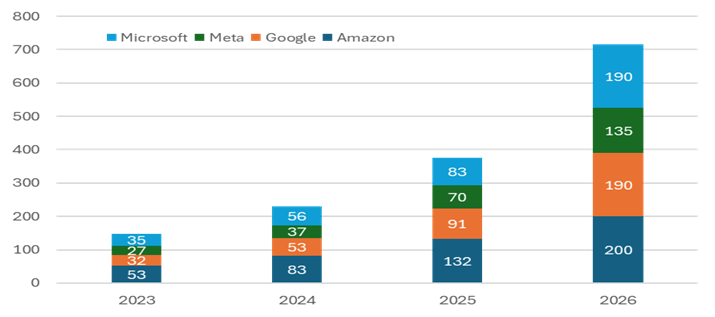
The World Economic Forum noted (click here) that “we are in the middle of the largest physical infrastructure buildout in modern history.” According to recent projections from McKinsey & Company, investment in data centres through 2030 is expected to total USD 7.0 trillion, with USD 5.2 trillion dedicated to AI workloads alone. The big four largest US cloud and AI infrastructure companies have already committed just over USD 700 billion in capital expenditure for 2026, which is almost double 2025 levels. This would lift US technology capex to almost 2% of GDP. The scale of these investments underscores the highly capital-intensive nature of AI. Frontier AI models require vast computing power, driving demand for semiconductors, high-bandwidth memory, servers, data-centre infrastructure, liquid-cooling systems, networking equipment, power supply and backup generation, as well as land. As a result, the investment boom extends well beyond the technology sector.
AI “picks & shovels” providers have been main beneficiaries so far from capital investment.
The initial beneficiaries of this wave of spending have been the AI “picks and shovels” providers, including semiconductor equipment manufacturers, GPU and accelerator producers, high-bandwidth memory suppliers, advanced packaging companies, data-centre construction firms, cooling and power-management equipment providers, fibre-network operators, networking vendors, and broader electrical infrastructure companies. The next phase of investment is likely to be driven by enterprise adoption. Second-round effects should emerge through increased corporate spending on software, automation, process redesign, cybersecurity, data architecture, and robotics. Reflecting this trend, a recent McKinsey survey found that 92% of companies plan to increase their AI investments over the next three years.
US is leading the way for AI capital investment
The US has seen by far the largest increase in AI-related capital spending. It dominates global AI capex through hyperscalers, AI start-ups, and data centres. According to Stanford University’s AI Index Report 2026 (click here), the US continues to lead global private AI investment, committing 23 times more capital than China in 2025. However, the report notes that private investment figures understate China’s total AI spending, as government-backed funds deployed an estimated USD 184 billion into AI firms between 2000 and 2023. More recently, China announced a USD 47.5 billion state-led semiconductor fund.
US HYPERSCALERS ARE RAMPING UP CAPITAL INVESTMENT
Source: Bloomberg & company filings
Private AI investment has been highly concentrated with the US well ahead of other major economies
The AI Index Report 2026 also highlighted that private AI investment remains highly concentrated among a small number of countries. In 2025, the US led globally, with total private AI investment of nearly USD 285.9 billion, followed by China at USD 12.4 billion and the UK at USD 5.9 billion. Europe has announced plans to significantly step up investment in AI, including the European Commission’s AI Continent Action Plan, which aims to mobilise EUR 200 billion of investment. At the national level, governments are increasingly competing to attract AI-related investment. French President Emmanuel Macron has pledged to make France a major hub for data centres, a strategy that is gaining traction. Annual Choose France investment commitments reached a record EUR 93 billion in 2026, more than double the total recorded in 2025, underscoring growing investor interest in France as a destination for technology and digital infrastructure projects.
AI buildout has significantly boosted demand for North Asian exports
AI demand has contributed to Taiwan recording an outsized trade surplus of roughly 20% of GDP.
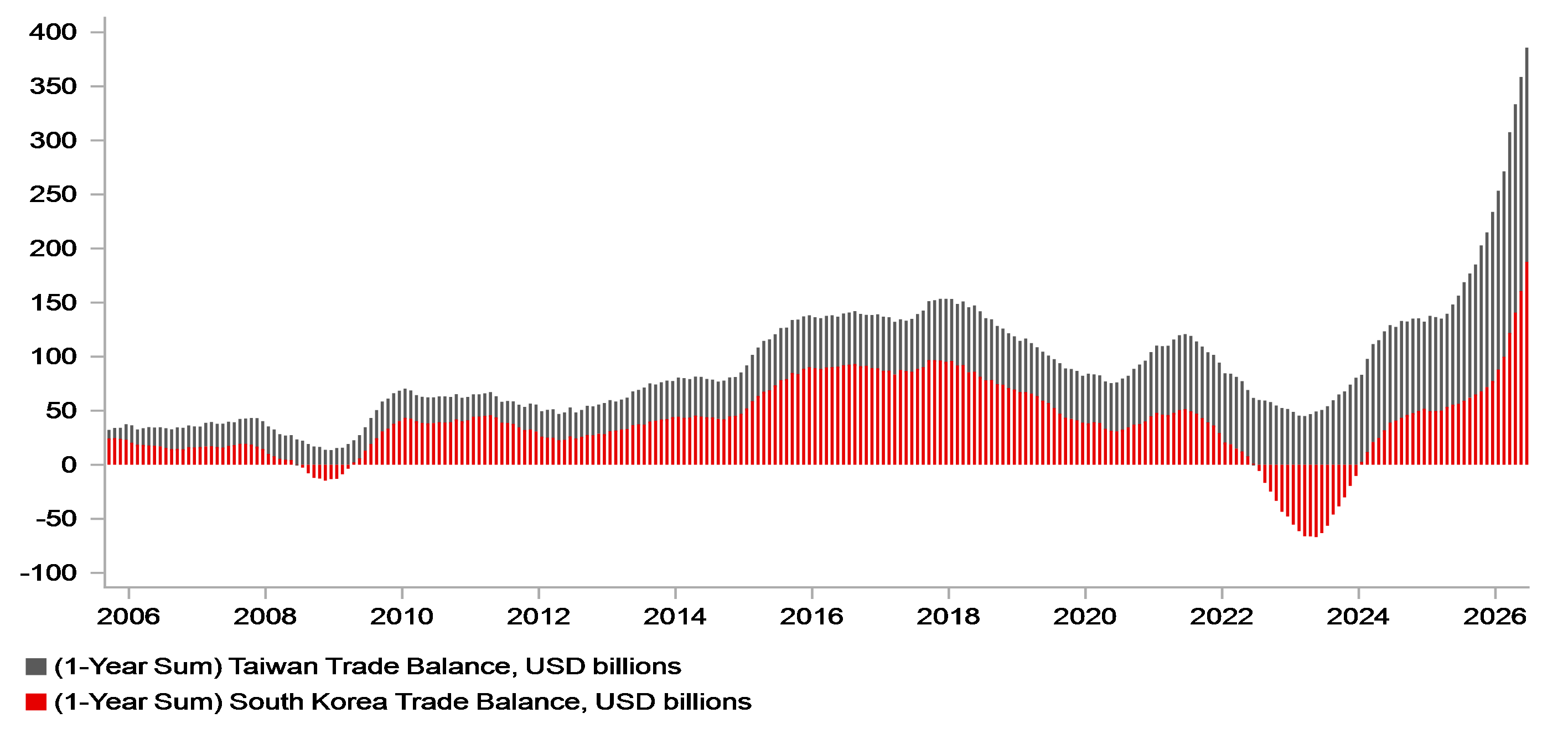
One positive spillover to the global economy from the surge in capital investment has come through international trade. The main beneficiaries of rising demand for AI hardware have been economies in North Asia, as well as selected near-shoring hubs, including Taiwan, South Korea, China, Japan, Malaysia, Thailand, Mexico, and the Netherlands. Taiwan has experienced the broadest and most significant export boost, reflecting its central role in the production of advanced logic chips, AI servers, and data centre hardware. The country occupies a pivotal position in the global semiconductor supply chain and dominates leading-edge foundry production through Taiwan Semiconductor Manufacturing Company (TSMC). The value of Taiwan's exports has risen sharply, increasing by 45% year-on-year in the 12 months to June to reach USD 773 billion. A country-level breakdown shows that exports to the US accounted for just under half of the increase in total exports, while around 40% of the gain was driven by exports to other Asian economies. As a result, Taiwan's trade surplus has nearly doubled, rising to USD 198 billion from around USD 100 billion in the preceding 12-month period. The trade surplus is now equivalent to roughly 20% of GDP, an exceptionally large figure by international standards. It is expected to push Taiwan's GDP growth close to double digits in 2026, following growth of 8.8% in 2025. The recent acceleration highlights the extent to which Taiwan has become a key transmission channel through which the AI investment cycle is influencing global trade flows and economic activity.
SOUTH KOREA & TAIWAN ARE BIG TRADE WINNERS FROM AI
Source: Bloomberg, Macrobond & MUFG GMR
South Korea’s trade surplus has increased by almost four times over the past year.
It has been a similar story in South Korea, which has benefited from its dominant position in the production of memory semiconductors, including high-bandwidth memory (HBM) and dynamic random-access memory (DRAM), through companies such as SK Hynix and Samsung. The country is also a major producer of NAND flash memory used in solid-state drives (SSDs). The value of South Korea's exports has risen sharply, increasing by 27% year-on-year in the 12 months to June to reach USD 871 billion. A country-level breakdown shows that exports to the US accounted for around 15% of the increase in total exports, while roughly 70% of the gain was driven by exports to other Asian economies. This reflects South Korea's position within the AI supply chain, as many of its semiconductor exports are shipped to manufacturing hubs across Asia, where they are incorporated into servers, AI accelerators, and other electronic equipment before being re-exported. In contrast, a larger share of Taiwan's AI-related exports is shipped directly to support AI infrastructure investment in the US. The export surge helped drive South Korea's trade surplus to a record USD 188 billion in the 12 months to June, almost four times larger than the USD 56 billion surplus recorded in the preceding 12-month period. While similar in nominal terms to Taiwan's USD 198 billion trade surplus, South Korea's surplus is smaller relative to the size of its economy, amounting to around 10% of GDP. Nevertheless, it remains exceptionally large by international standards. The boost from AI-related demand is helping to lift GDP growth in South Korea closer to 4% in 2026.
AI impact on other countries exports is less dramatic. AI demand provides partial offset to energy price shock for Japan.
In comparison, the positive impact of AI-related exports has been much less dramatic for the other countries highlighted above. Japan, for example, is a major supplier of semiconductor manufacturing equipment, chip testing equipment, semiconductor materials, and electronic components used in AI servers and data centres. Japan's semiconductor equipment industry expects sales of Japanese-made equipment to increase by 26% in FY2026, driven by investment in AI servers, advanced logic chips, and high-bandwidth memory (HBM) production. Recent trade data from Japan show that the value of semiconductor exports increased by 27% over the twelve months to June, reaching JPY 7.8 trillion. This has contributed to a pickup in overall exports, which rose by around 8.1% over the same period to JPY 118 trillion in June, and helped narrow Japan's trade deficit to approximately JPY 1.3 trillion. The modest improvement in Japan's trade balance provides a partial offset to investor concerns that the US-Iran energy price shock could lead to a significant re-widening of the deficit. The value of mineral fuel imports surprisingly declined during the first three months of the US-Iran conflict despite higher energy prices, as import volumes fell even more sharply. Disruptions to Middle Eastern supply routes led to a collapse in crude oil import volumes, while Japan was able to offset part of the shortfall through alternative suppliers and existing inventories. However, the value of mineral fuel imports has since jumped in June by 31% taking the twelve month total up to JPY 21.8 trillion. The relative scale of mineral fuel imports compared with AI-related exports highlights that the negative impact of the energy price shock on Japan's trade balance is still expected to outweigh the positive boost from AI-related demand.
AI DEMAND DRAWS IN MORE IMPORTS INTO THE US
Source: Bloomberg, Macrobond & MUFG GMR
AI build out boosts US import growth resulting significant widening of trade deficits with Taiwan and Mexico
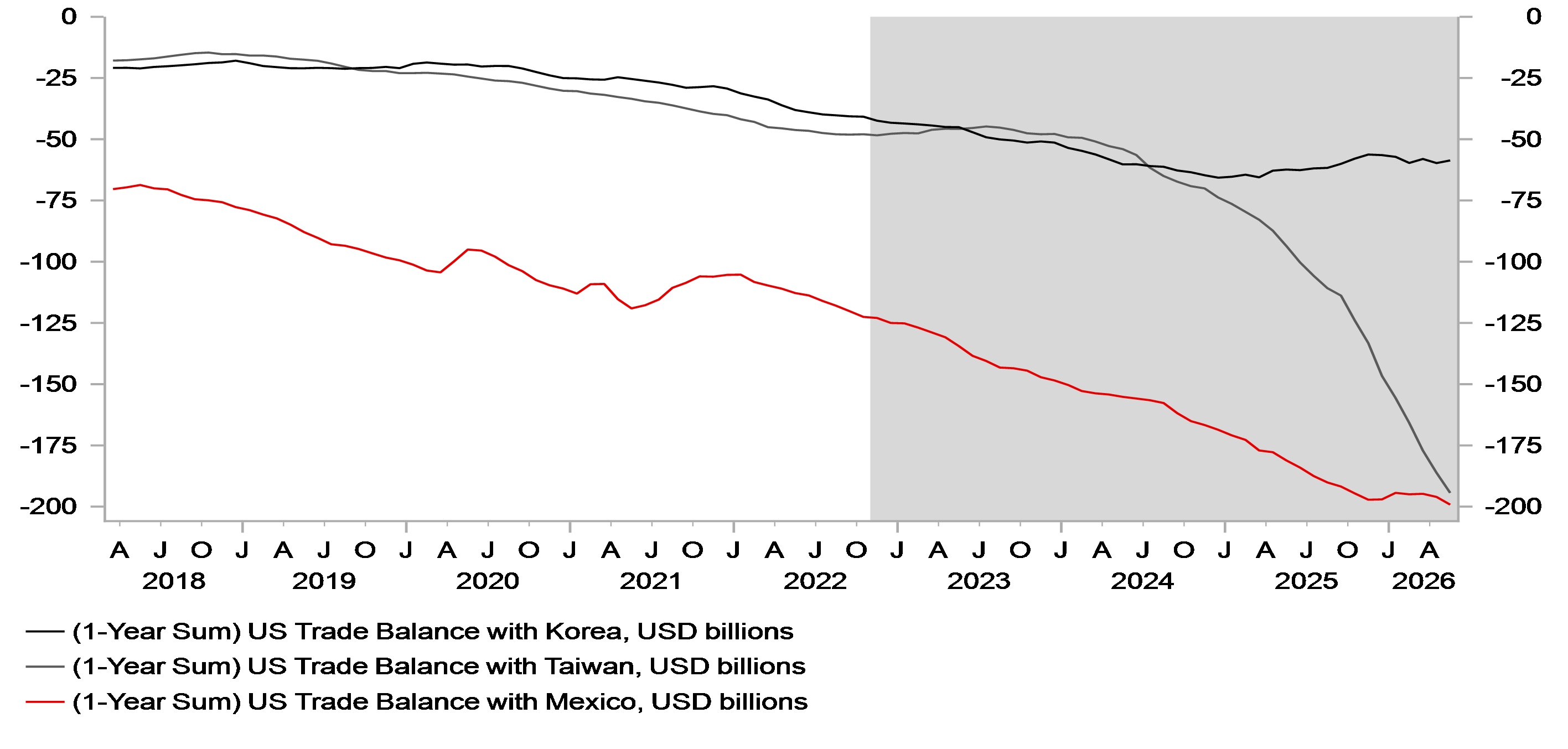
On the other hand, the buildout of AI infrastructure in the US is helping to drive the trade deficit to wider levels. The US has significantly increased spending on AI data centres, servers, networking equipment, storage systems, and power and cooling infrastructure. A substantial share of this hardware is assembled outside the US, increasingly through Mexico-based manufacturing operations and Taiwan-led supply chains. Mexico has emerged as a major assembly hub for servers and advanced computing equipment destined for US hyperscalers. This helps explain why the US trade deficit with Mexico has continued to widen sharply, increasing by around 10% in the year to May and reaching a record high of almost USD 200 billion. The increase is even more pronounced in the case of Taiwan, where the US trade deficit has widened by 108% over the past year to approximately USD 194 billion, almost matching the size of the deficit with Mexico. Evidence of rising AI-related import demand is apparent in the breakdown by product category. The value of imports of semiconductors, telecommunications equipment, and computer accessories increased by around 33% in the year to May, reaching roughly USD 400 billion. This suggests that the rapid buildout of AI infrastructure is not only boosting capital expenditure in the US but is also contributing to stronger import growth and a wider goods trade deficit.
Inflationary impact from AI supply bottlenecks
Initial AI buildout is likely to be inflationary as surge in demand creates supply bottlenecks.
The initial buildout phase can be inflationary for the global economy as the surge in capital investment boosts demand in several areas where supply remains relatively constrained. The most obvious bottleneck is in semiconductors particularly advanced AI chips, high-bandwidth memory (HBM) and advanced packaging capacity where demand has risen more rapidly than the industry’s ability to expand supply. A second important area is electrical equipment and power infrastructure. AI data centres require enormous amounts of electricity thereby creating strong demand for transformers, back-up power systems and grid connections. The thirst for electricity to power AI data centres may contribute to higher wholesale electricity prices. The buildout is also boosting demand for certain industrial and raw materials such as copper, aluminium, silver and specialised electronic materials.
INFLATION PRESSURES ARE EMERGING FROM AI DEMAND
Source:Bloomberg, Macrobond & MUFG GMR
It will take time for supply to respond surge in investment demand. Data centre boom is lifting demand for electricity.
In response, the semiconductor industry is expanding capacity aggressively for AI chips, HBM, and advanced packaging. However, it will take several years for new facilities to be built and ramped up to full production, meaning that supply constraints are unlikely to ease meaningfully until 2027-28. Power infrastructure is potentially the most persistent source of inflationary pressure. While manufacturing capacity for some equipment can be expanded within a few years, the development of transmission networks and power-generation assets typically takes much longer. Supply chains for critical energy technologies, including gas turbines and transformers, are already under strain. The AI boom has triggered a step change in electricity demand. In regions where data centres are heavily concentrated, supply constraints could persist for several years. The International Energy Agency (click here) expects electricity consumption from data centres to double by 2030, while electricity demand from AI-focused data centres is projected to triple. This increase is expected despite the rapid decline in power consumption per AI task, with efficiency improvements occurring at an unprecedented pace.
Stronger wage growth for workers in construction and AI-related industries. AI buildout is also boosting demand for industrial metals such as copper.
Rising demand for construction workers and skilled labour in AI-related industries is likely to contribute to faster wage growth in the years ahead, particularly for engineers, electricians, and other specialised technical professionals. In addition, the AI buildout is boosting demand for industrial metals, placing upward pressure on prices. Copper is arguably the most important commodity to monitor because it sits at the intersection of virtually every major bottleneck in the AI infrastructure supply chain. Every stage of the power system required to support data centres, from electricity generation and transmission to distribution networks and grid connections, depends heavily on copper. AI servers themselves also contain significantly more copper than conventional computing equipment due to their greater power consumption and more intensive cooling requirements. At the same time, supply is likely to respond only gradually. New copper mines typically take five to ten years, and in some cases even longer, to progress from development to commercial production.
AI IS EXPECTED TO LIFT PRODUCTIVITY GROWTH OVER TIME
Source: Bloomberg, Macrobond & MUFG GMR
Positive AI supply shock to boost productivity allowing faster economic growth without creating inflation pressures.
However, if AI ultimately enables workers and firms to produce more output with the same resources, it will act as a positive supply shock, boosting productivity, increasing potential GDP, and allowing stronger economic growth with less inflation than would otherwise be possible. AI is widely regarded as a general-purpose technology, similar to electricity, computers, and the internet, with the potential to deliver broad-based productivity gains across the global economy. Looking at the adoption of previous general-purpose technologies, however, productivity improvements have typically emerged only several years after the initial investment boom. For example, although electrification began spreading during the 1880s and 1890s, the most significant productivity gains did not materialise until the 1920s. Similarly, investment in computers accelerated during the 1980s and internet adoption surged throughout the 1990s, yet the strongest productivity growth was not observed until the second half of the 1990s and the early 2000s.
Disinflationary effects of AI to become more evident over time
The productivity benefits from AI could emerge more quickly than in previous technological revolutions because the technology can be deployed using existing digital infrastructure and adoption costs are relatively low. Unlike earlier innovations that required the construction of entirely new physical networks, AI tools can often be integrated rapidly into existing software and business processes. Nevertheless, history suggests that organisational adaptation frequently takes longer than technological deployment. Firms must redesign workflows, retrain employees, and rethink operating models before the full productivity benefits can be realised. As a result, the inflationary effects of AI-related investment are likely to dominate in the near term. Over time, as AI becomes more deeply embedded across the economy and productivity gains broaden, the disinflationary effects should become increasingly apparent. This suggests that the current phase of the AI cycle will be characterised primarily by investment-driven inflationary pressures, while stronger supply-side benefits are more likely to emerge later in the decade.
FX market impact from AI
USD is one of main beneficiaries from AI buildout. Jump in capital investment has helped Us economy to remain resilient in face of negative shocks.
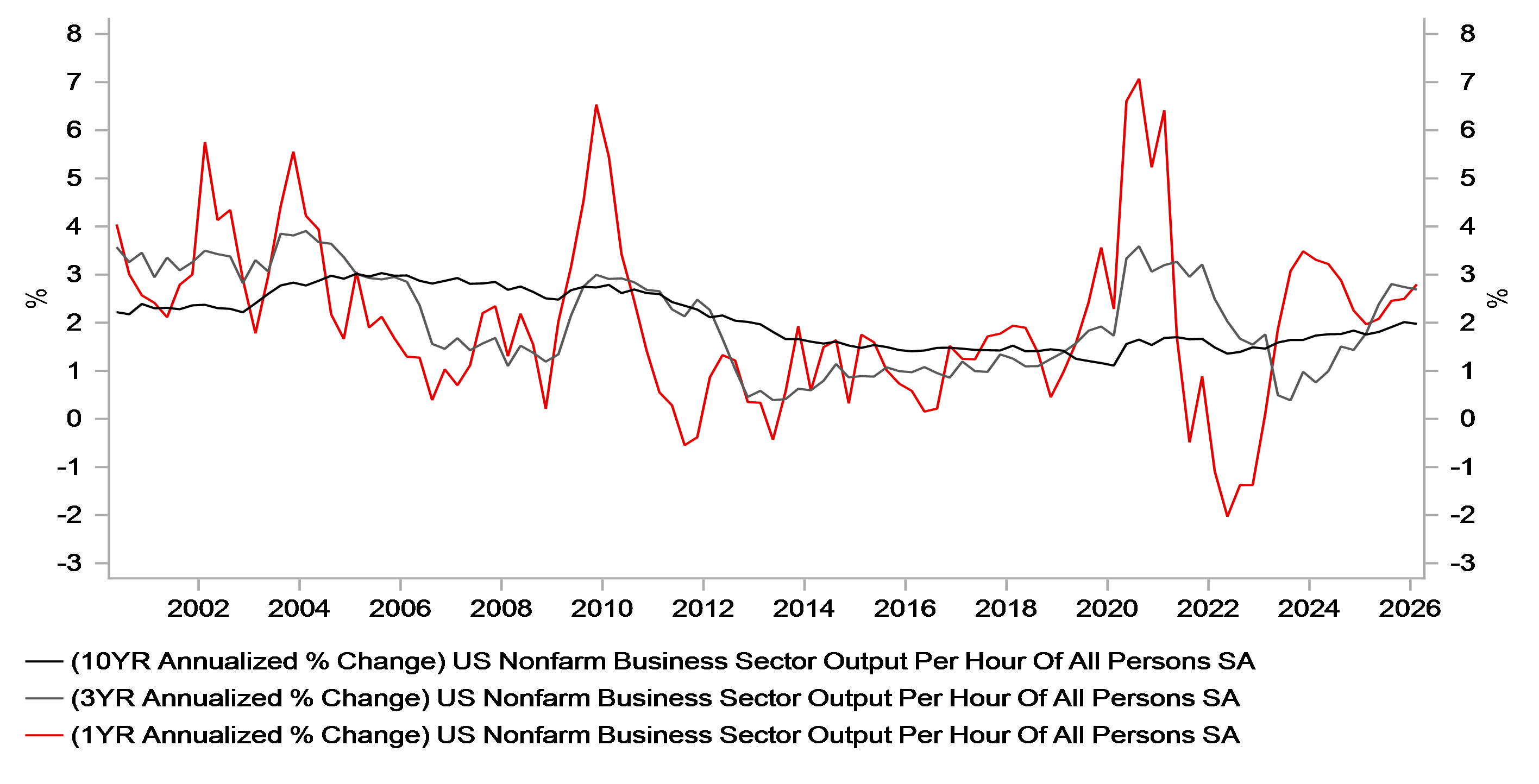
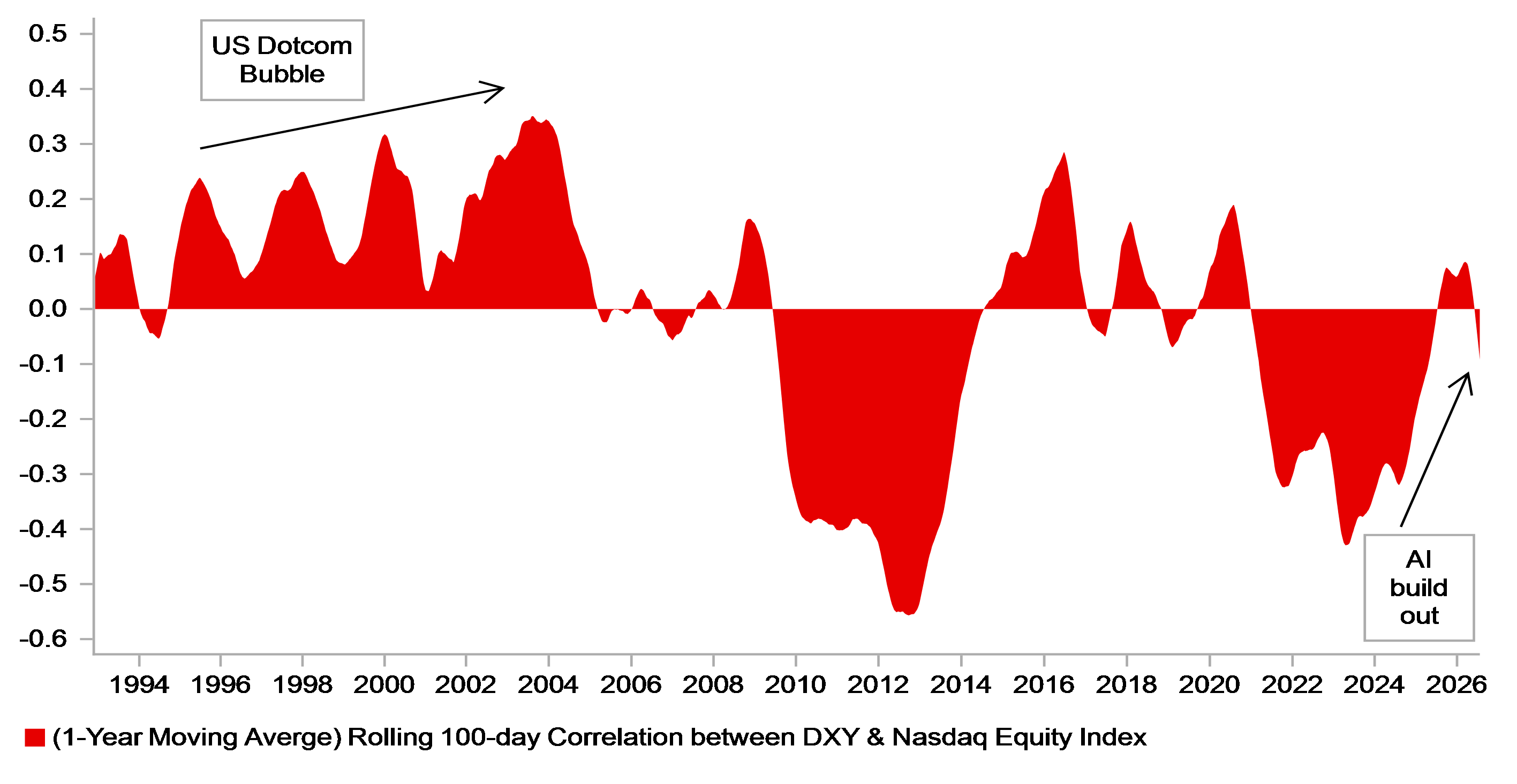
The USD has been one of the main beneficiaries of the AI buildout with the US leading the way. As highlighted earlier, the US has seen by far the largest increase in AI-related capital spending. Furthermore, the scale of planned investment by major US hyperscalers is extraordinary and continues to rise. Amazon, Microsoft, Alphabet, and Meta plan to spend just over USD 700 billion in 2026. According to Bloomberg Intelligence, AI has already contributed 0.38 percentage points to GDP growth in 2024 and 0.53 percentage points in 2025 (click here). The tailwind from the AI buildout has helped support the resilience of the US economy despite the headwinds to growth from negative trade and energy price shocks. The US economy has slowed but only modestly in recent years. There has also been evidence of stronger productivity growth. Output per hour in the nonfarm business sector has increased at an annualized rate of around 2.8% in recent years, marking a clear step up from an average of closer to 2.0% over the last decade. However, it could be premature to attribute the recent improvement in productivity solely to AI adoption.
USD CORRELATION WITH US TECH STOCKS HAS BECOME LESS NEGATIVE
Source: Bloomberg, Macrobond & MUFG GMR
USD supported by record inflows into US equities by foreign investors.
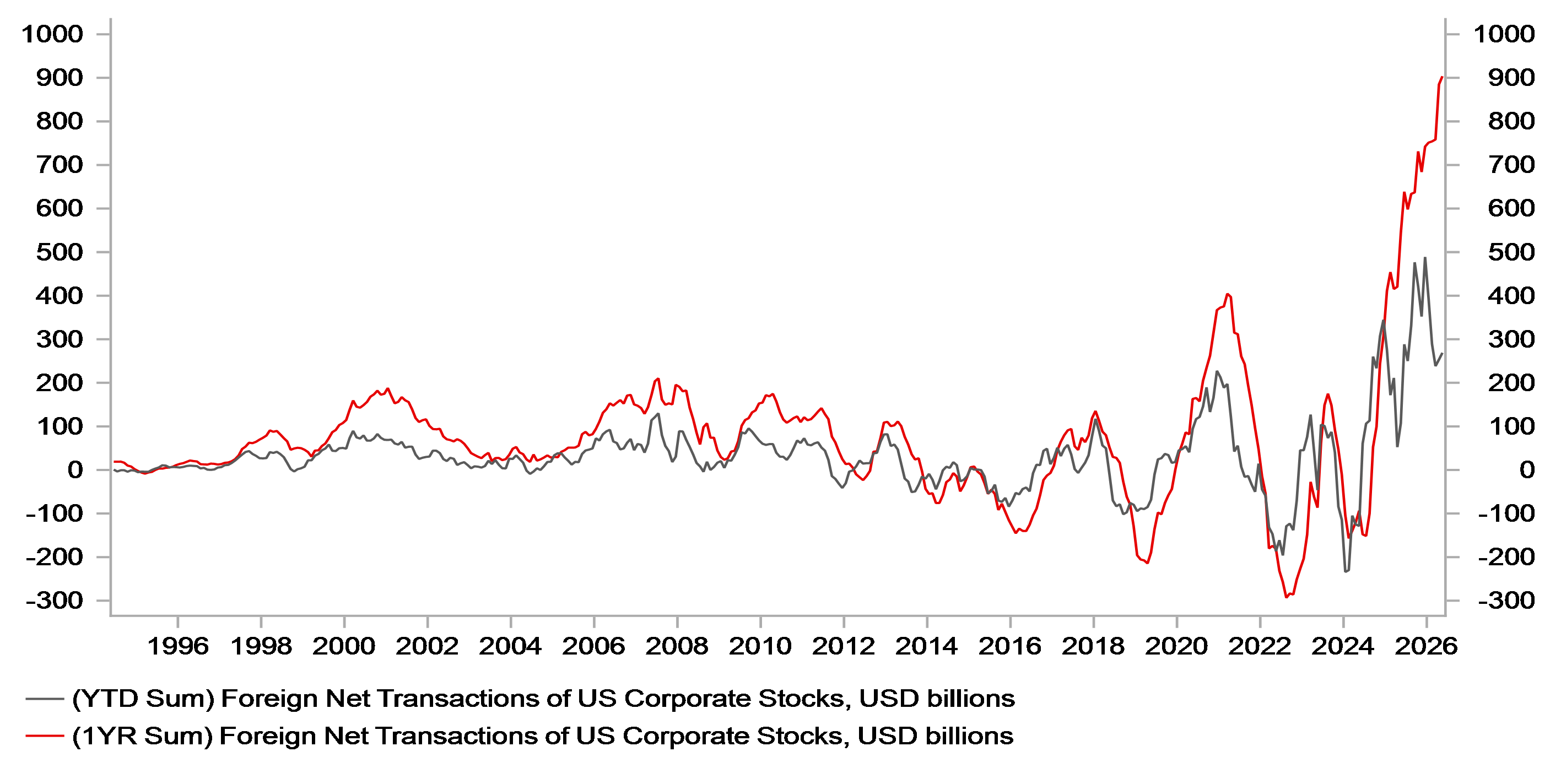
The surge in capital investment has forced US hyperscalers to rely increasingly on external funding, shifting financing needs away from internal cash flows towards debt markets and private credit. Leading AI firms such as OpenAI and Anthropic have also reportedly explored potential IPOs that could reach valuations of up to USD 1 trillion. The sustainability of the AI boom will ultimately depend on whether revenue growth and productivity gains can justify increasingly demanding earnings expectations. For now, however, the latest Treasury International Capital (TIC) data suggest that enthusiasm for AI continues to support the USD through robust capital inflows into US financial markets. Record inflows into US equities reflect investors' desire to increase exposure to AI-related companies, with foreign investors continuing to add to US equity positions even during the period of heightened geopolitical tensions associated with the US-Iran conflict. Net foreign purchases of US equities totalled USD 244 billion in April and May alone, lifting total purchases over the past 12 months to USD 904 billion. The bulk of these inflows has been driven by private investors, who accounted for USD 781 billion of net purchases, while official investors contributed a comparatively modest USD 123 billion. This pattern highlights the extent to which private-sector demand for US assets, particularly AI-related equities, has become an important source of support for both US asset prices and the USD.
The “age of the profit USD” leaves it vulnerable should investor sentiment towards AI sour
Record inflows into the US equity market in search of higher returns are helping to finance the US current account deficit at a time when foreign official demand for US government debt has weakened. Foreign official investors sold a net USD 34 billion of long-term US Treasury bonds and notes in the 12 months to May, with net selling recorded in seven of those months. In contrast, private foreign demand for long-term US Treasuries has been considerably stronger over the past four years, although it too moderated over the last 12 months, with net purchases totalling USD 324 billion. This shift in the composition of capital inflows to fund the US current account deficit has prompted some observers to describe the current environment as the "age of the profit US dollar" (click here). The idea is that support for the USD is increasingly being driven by investors seeking exposure to the superior returns available in US assets, particularly AI-related equities, rather than by demand for safety during periods of global uncertainty. While strong equity inflows are currently providing an important source of support for the USD, they also leave the currency more exposed to changes in investor sentiment. A significant deterioration in sentiment towards AI-related stocks undermined by a downgrade to expectations for future returns could prompt foreign investors to cut back exposure to US assets. Such a scenario could emerge if the profits generated by the rapid AI buildout ultimately fall short of the lofty expectations currently embedded in market valuations.
RECORD INFLOWS INTO US EQUITIES BY FOREIGN INVESTORS
Source: Bloomberg, Macrobond & MUFG GMR
Upside inflation risks from surge in AI-related demand is attracting more attention from Fed
One other channel through which the USD could be affected by the AI buildout is Fed policy. With US inflation still running well above the Fed's target, the near-term inflationary effects of surging capital investment and emerging supply bottlenecks are attracting increasing attention among Fed policymakers. New York Fed President John Williams recently described AI-driven demand as his primary inflation concern. He stated that if AI investment creates a sustained imbalance between demand and supply, it is not the type of inflation shock that the Fed would simply "look through". While Williams remains confident that AI-related investment will support stronger productivity growth in the years ahead, he emphasized that, for now, "we're in a race between available supply and surging demand". He noted that the supply-demand imbalances stemming from AI-related investment should gradually ease as additional capacity comes online but stressed that both the magnitude and duration of these imbalances remain highly uncertain. Overall, Williams remains optimistic that inflation will slow to around 3.25% by year-end before eventually returning to the Fed's 2.0% target by 2028. This outlook is supported by lower energy prices, the fading effects of last year's tariff increases, and further moderation in shelter inflation. Against that backdrop, he remains comfortable with the Fed's current policy stance.
New Fed Chair Warsh indicates willing to look through temporary price increases if supply responds. He is optimistic that AI will deliver positive supply shock leading to disinflation.
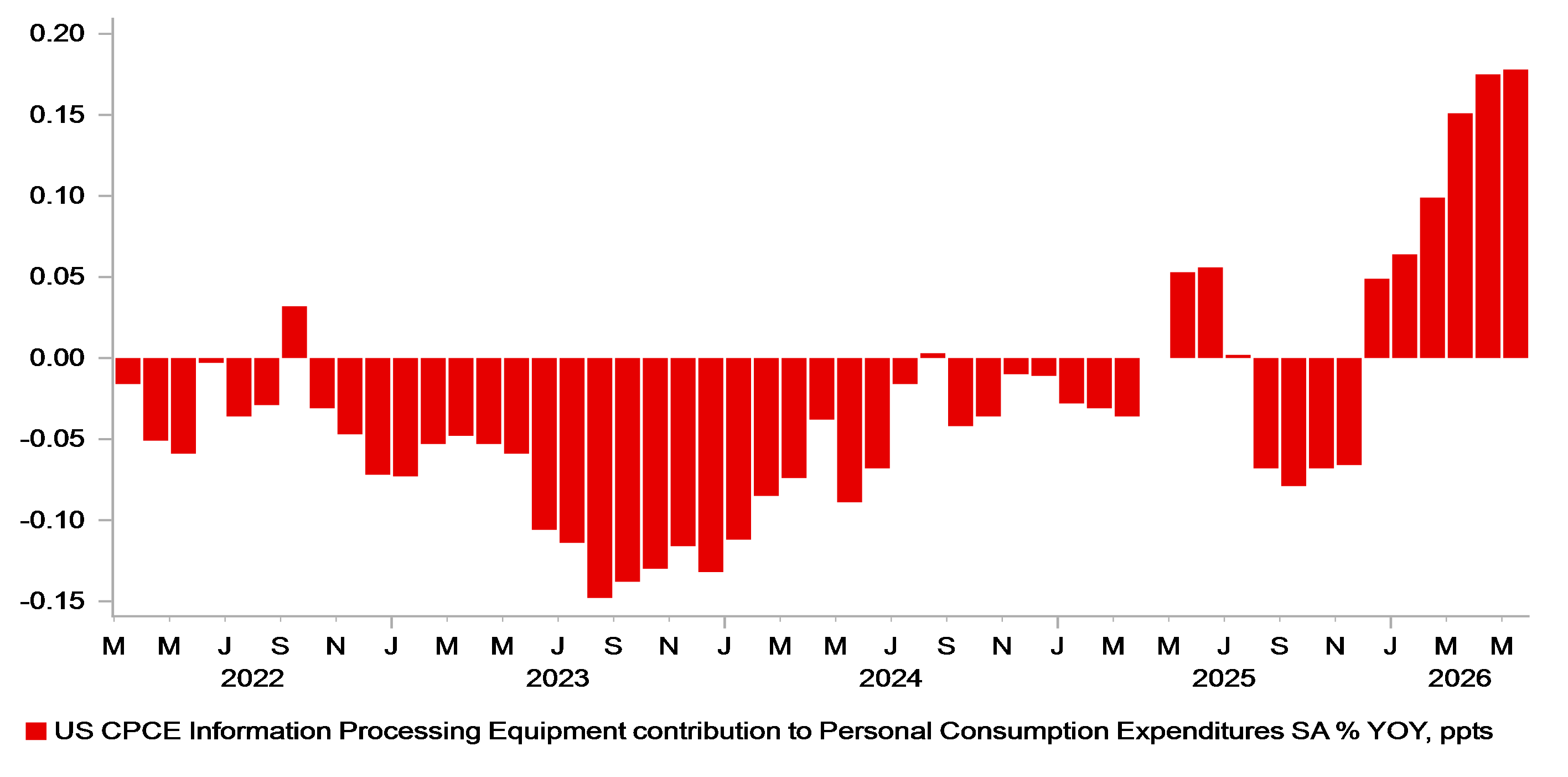
New Fed Chair Kevin Warsh has also expressed a relatively dovish view on the inflationary implications of AI. When speaking before Congress last week, he acknowledged that AI-related investment is already pushing up the prices of certain goods but argued that higher prices in the near term are not necessarily inflationary if they trigger a corresponding increase in supply. He remains optimistic that AI will ultimately prove disinflationary by boosting productivity growth and expanding the economy's productive capacity. It suggests that Fed Chair Warsh is leaning more towards leaving rates on hold this year. We do not believe that AI-related inflation risks have yet reached the point where they would justify the Fed raising rates. However, they could become a more important consideration if inflation pressures continue to build. Evidence of AI-related price pressures is already emerging in the inflation data. Looking at the breakdown of the latest core PCE deflator reading for May, information processing equipment contributed 0.18 percentage points to the annual core PCE inflation rate of 3.4%. This represents a notable increase compared with its broadly flat contribution over the previous five years and is consistent with rising demand for AI-related hardware and technology infrastructure.
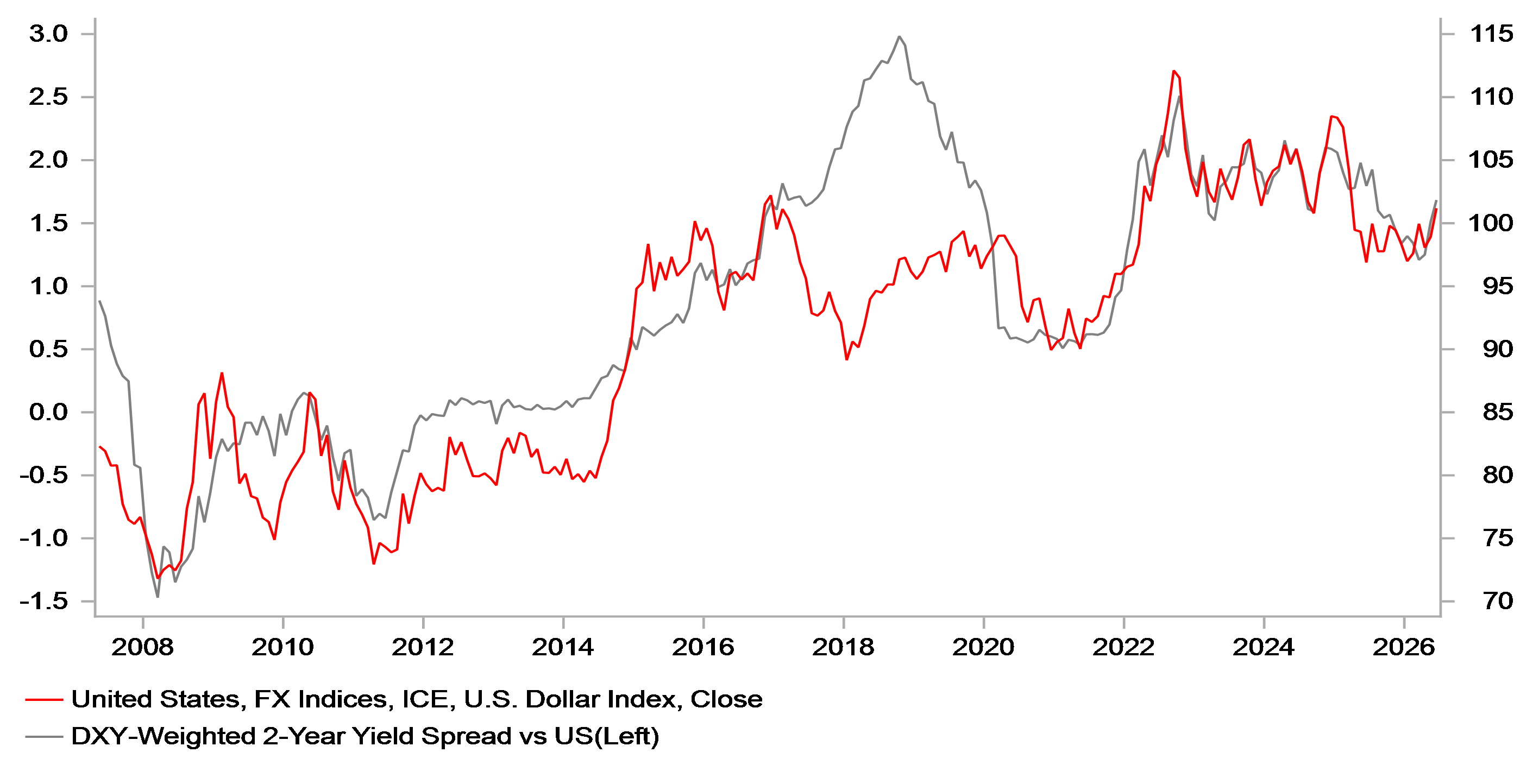
HIGHER US YIELDS HAVE ENCOURAGED A STRONGER USD
Source: Bloomberg, Macrobond & MUFG GMR
Fed policy response to AI is far from clear-cut. A credible case can be made for either higher or lower US interest rates, with each scenario having very different implications for the USD. We lean more towards lower US rates and a weaker USD based on comments from Fed Chair Warsh.
If the Fed were to raise rates in response to AI-related inflation pressures in the near term, higher US interest rates would encourage a stronger USD. At the same time, if policymakers become increasingly confident that AI is delivering a sustained boost to productivity growth, they may begin to revise higher their estimate of the neutral policy rate for the US economy. The median longer-run projection for the federal funds rate among FOMC participants remained unchanged at 3.1% in June. Future upward revisions to that estimate would reinforce market expectations that both US interest rates and the USD will remain higher for longer. On the other hand, the Fed could choose to look through the near-term inflationary effects of the AI investment boom and place greater emphasis on the medium-term disinflationary benefits arising from the positive supply shock. Stronger productivity growth would eventually help to ease inflation pressures, providing scope for the Fed to lower interest rates in the years ahead. Such an outcome could encourage a further reversal of USD strength. Our forecasts (click here) for a weaker USD in 2027 is broadly consistent with this view. However, we acknowledge the risks to that outlook. In particular, if the Fed places greater weight on the near-term inflationary consequences of the surge in AI-related capital investment and adopts a more restrictive policy stance, the USD would likely remain stronger than we currently anticipate.
Sharp widening of trade surpluses for Taiwan and South Korea would normally encourage stronger domestic currencies
Other currencies that are fundamentally well positioned to benefit from the AI buildout are the KRW and TWD. As highlighted earlier in this report, South Korea and Taiwan have been among the biggest beneficiaries of the positive spillover effects from rising global demand for AI hardware. Taiwan's trade surplus has nearly doubled, increasing to USD 198 billion from around USD 100 billion in the preceding 12-month period. At roughly 20% of GDP, Taiwan's trade surplus is now exceptionally large by international standards. South Korea's trade surplus has also risen sharply to almost USD 188 billion, although this represents a smaller share of the economy at around 10% of GDP. Under normal circumstances, such a significant widening in trade surpluses would be expected to generate substantial appreciation pressure on both the KRW and TWD. However, the response of both currencies has been more muted than their external positions alone would suggest, reflecting the offsetting influence of large capital outflows and portfolio reallocation towards overseas assets.
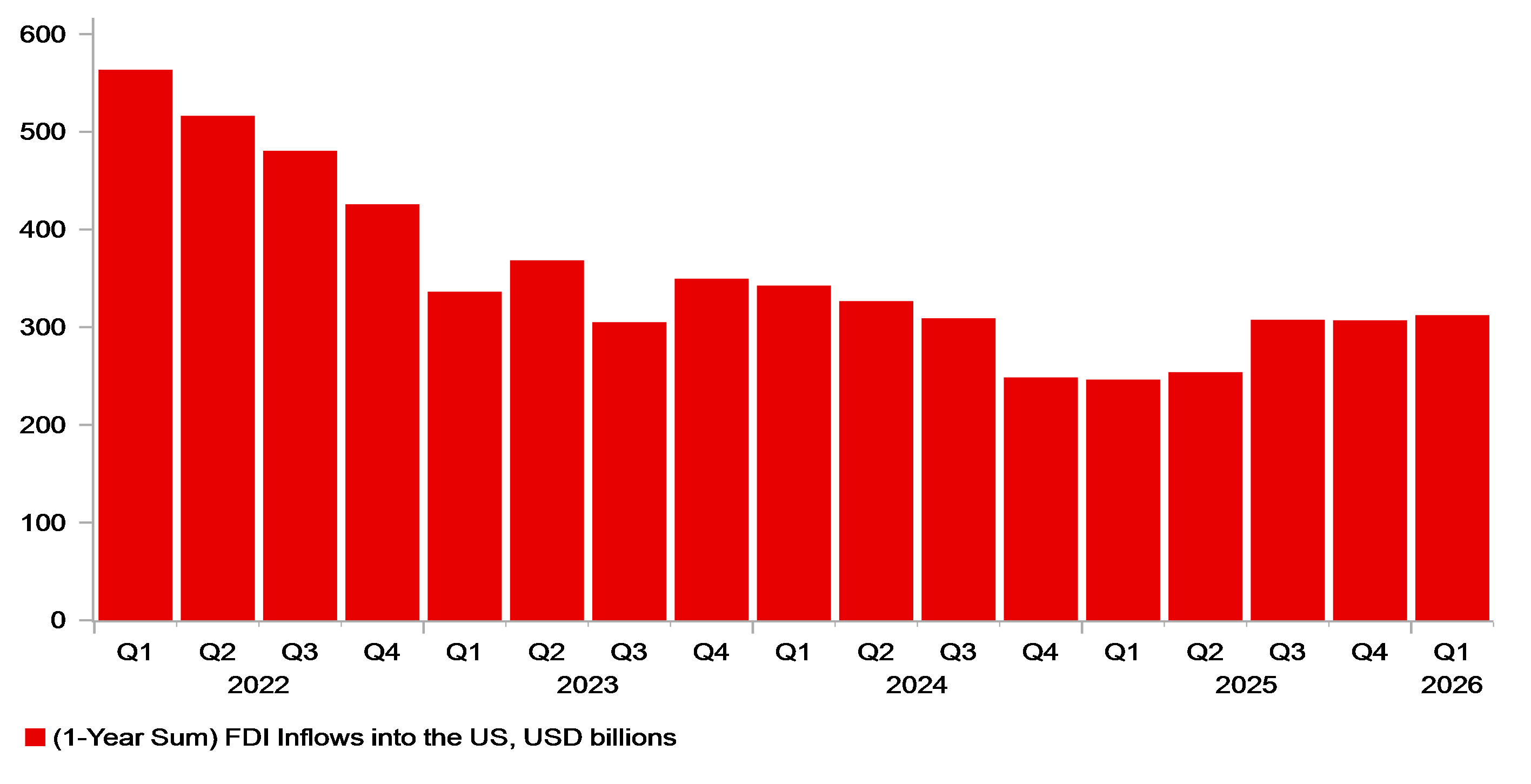
US FDI INFLOWS HAVE NOT PICKED UP YET IN RESPONSE TO AI
Source: Bloomberg, Macrobond & MUFG GMR
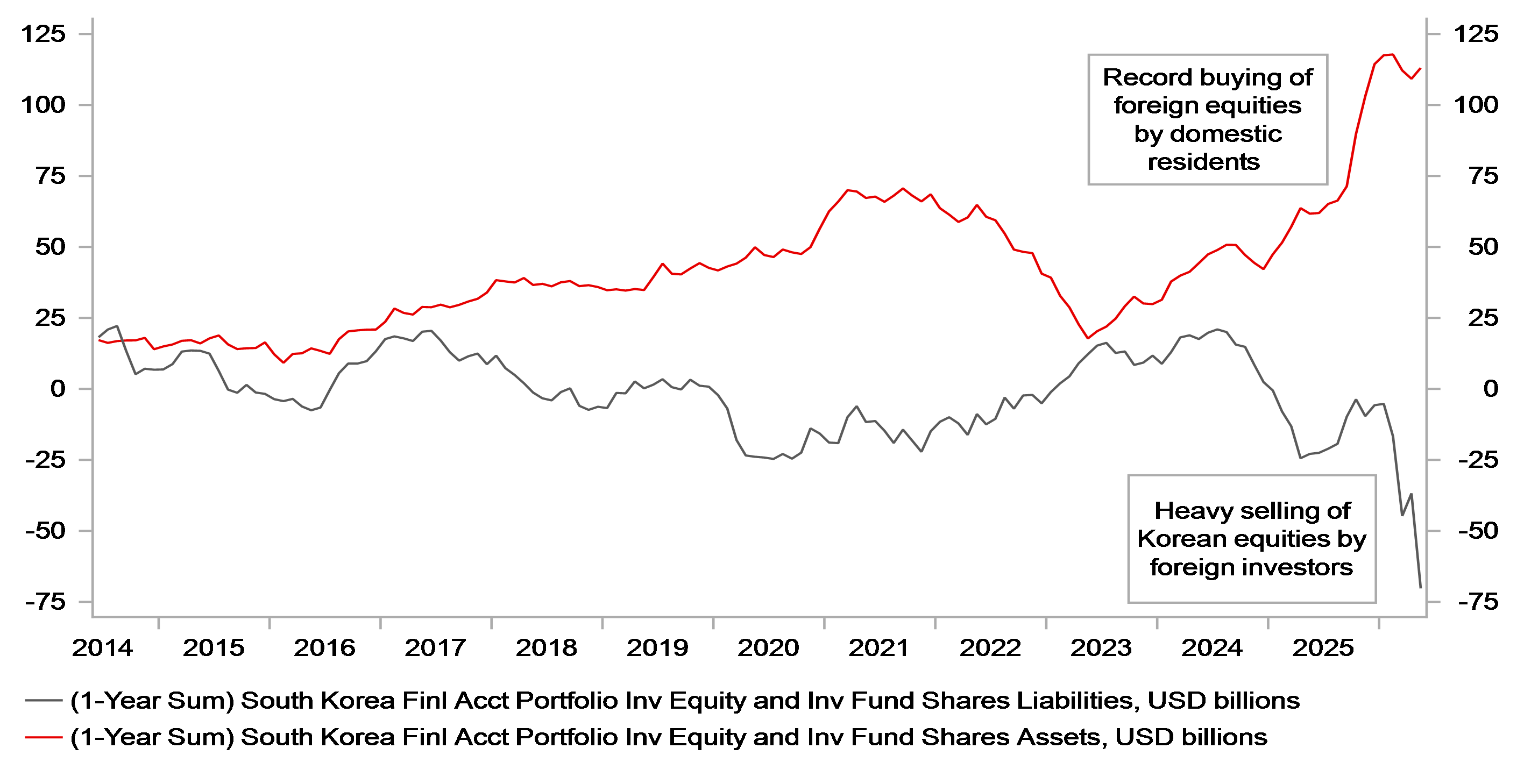
Heavy capital outflows have prevented the KRW & TWD from strengthening. AI export revenues are being recycled overseas. Foreign investors have also been heavily sellers of South Korean equities this year.
The KRW and TWD have both weakened significantly against the USD over the past year, declining by around 6% and 9%, respectively. The lack of appreciation pressure on either currency, despite a sharp improvement in their external balances, suggests that a substantial portion of the export windfall is being recycled abroad through capital outflows. In South Korea, residents purchased a record USD 114 billion of overseas equities in 2025, well above the previous record of USD 68.5 billion set in 2021. Of this total, USD 73.6 billion was invested in US equities. At the same time, foreign investors have become heavy sellers of South Korean equities since late last year. Net sales have totalled roughly USD 127 billion year-to-date, contributing significantly to downward pressure on the KRW. The selling appears to have been driven primarily by portfolio rebalancing and profit-taking following the sharp AI-led rally in Korean technology stocks. The KOSPI rose by almost 130% between January and June before correcting lower by just over 30% from its 19th June peak. Recent selling has been concentrated in AI beneficiaries, particularly Samsung Electronics and SK Hynix.
FDI outflows from Taiwan have increased significantly
A similar dynamic has been evident in Taiwan. Foreign investors have also been heavy sellers of Taiwanese equities this year, with net sales approaching USD 39 billion, according to data from the Taiwan Stock Exchange (TWSE) and Taipei Exchange (TPEx). At the same time, Taiwanese residents purchased almost USD 23 billion of foreign equities in the year to Q1 2026. There has also been a significant increase in outward foreign direct investment, which totalled nearly USD 48 billion in the 12 months to Q1 2026. These outflows provide another channel through which the extraordinary revenues generated by Taiwan's export sector are being recycled overseas. Rather than being fully converted back into TWD, a growing share of these revenues is being directed towards foreign equity purchases and overseas investment projects. As a result, the positive impact of Taiwan's exceptionally large trade surplus on the currency has been partially offset, helping to contain appreciation pressure on the TWD despite the strong improvement in the country's external balance.
HEAVY CAPITAL OUTFLOWS HAVE PREVENTED A STRONGER KRW
Source: Bloomberg, Macrobond & MUFG GMR
Will the KRW & TWD strengthen with a lag if capital outflows begin slow?
As long as the exceptionally large trade surpluses in South Korea and Taiwan persist, the recent weakness of the KRW and TWD is unlikely to be sustainable indefinitely and represents an important medium-term upside risk for both currencies. To date, appreciation pressure has been offset by unusually large capital outflows, including record overseas portfolio investment by domestic residents and substantial foreign selling of local equity markets. However, if these offsetting flows begin to fade while AI-driven export surpluses remain intact, both currencies would be well positioned to strengthen. The case appears particularly compelling for the TWD given Taiwan's trade surplus of around 20% of GDP, a level that would typically be associated with much stronger currency appreciation. One potential catalyst for such a shift would be a moderation in the relative performance of US technology stocks. If returns from US technology and AI-related investments become less exceptional relative to opportunities in Asia, domestic investors in South Korea and Taiwan may become less inclined to recycle export earnings into overseas assets.
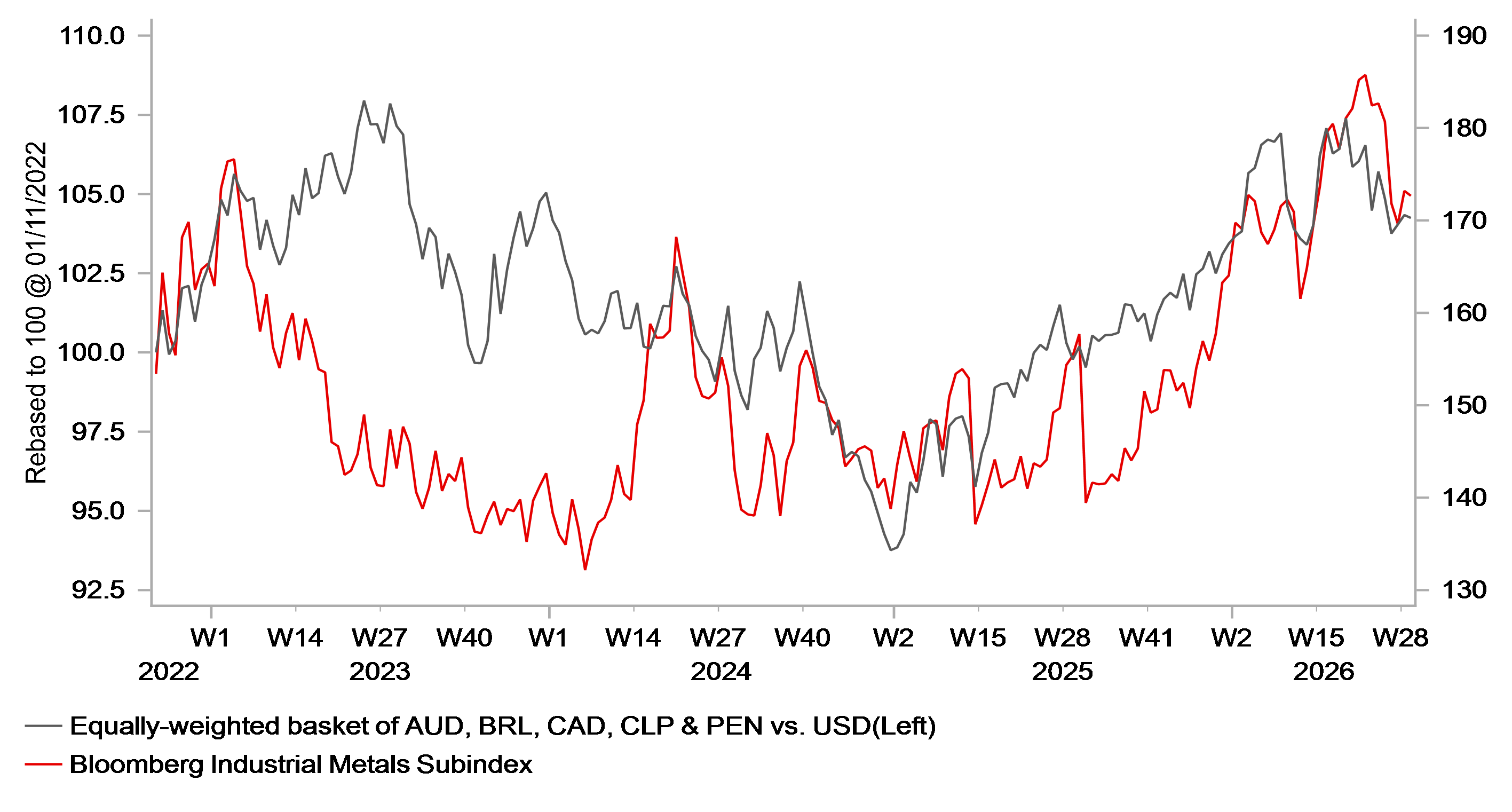
Commodity currencies of CLP, PEN, AUD, CAD and BRL benefit from positive terms of trade impact related to AI build out as well as USD.
One other group of currencies that is well placed to benefit from the AI buildout are those from countries that export industrial metals. Rising investment in AI infrastructure is increasing demand for a range of raw materials, placing upward pressure on industrial metals prices and generating a positive terms of trade shock for commodity-exporting economies. As highlighted earlier in this report, copper is arguably the single largest commodity beneficiary of the AI boom. S&P Global has identified AI, electrification and data-centre expansion as major structural drivers of future copper demand. Their analysis (click here) points to a transformative increase in global copper consumption, with demand projected to rise from around 28 million metric tonnes in 2025 to 42 million metric tonnes by 2040. Without a significant expansion in supply, this would imply a potential supply shortfall of around 10 million metric tonnes by 2040. Copper prices have already responded to this improving demand outlook, rising by around 70% since late 2022, when ChatGPT was first launched and the current wave of AI investment began. If the AI buildout continues at its current pace, further gains in copper prices appear likely, particularly if supply struggles to keep pace with rising demand. Two currencies that are especially well positioned to benefit from higher copper prices are the CLP and PEN, given the importance of copper exports to both economies. More broadly, several other commodity-exporting currencies should also benefit indirectly from rising AI-related demand for industrial metals, energy and critical minerals. These include the AUD, CAD and BRL, while the USD stands to gain from the United States' growing role as a producer of energy and other key inputs required to support data-centre expansion.
POSITIVE TERMS OF TRADE IMPACT FROM AI BUILDOUT
Source: Bloomberg, Macrobond & MUFG GMR