

ECB Review: Neutral no longer looks enough
Macro view: The ECB hiked the deposit rate by 25bp to 2.50%, as expected, taking policy to the upper end of its estimated neutral range. While retaining the standard meeting-by-meeting guidance, the ECB delivered a hawkish set of projection revisions and warned more forcefully that the Middle East conflict continues to generate inflation pressures. With gas and oil prices having moved sharply higher since the 19 August projection cut-off date, the ECB’s adverse scenario already looks more relevant than the baseline. Although Lagarde remained non-committal on future policy, we think the combination of rising energy prices, resilient activity and stickier medium-term inflation projections has strengthened the case for further tightening. If the threshold for an additional hike is duly reached, we would then expect the same arguments to prevail for another move. Two hikes would create some daylight to the neutral threshold. We have therefore changed our call. We now expect two additional 25bp rate hikes at the next meetings in October and December, taking the deposit rate to 3.00% by year-end.
Markets view: The ECB’s hawkish response to the worsening energy price shock has accelerated the repricing of eurozone rate expectations, pushing front-end yields to their highest levels since 2023. We expect further ECB tightening in October and December, which should keep upward pressure on short-dated yields if energy prices remain at higher levels. While higher ECB rate expectations offer near-term support for the EUR especially if the Fed stays on hold, we continue to believe that an intensifying energy price shock will ultimately favour the USD over the EUR.
Macro view: ECB leaves door open to further tightening as energy risks mount
The deposit rate has been lifted to the upper end of the neutral range
The ECB hiked rates as expected, for the second time since the start of the US-Iran conflict. The deposit rate has been lifted to 2.50%, the upper end of the ECB’s own neutral range estimate. In the press conference Lagarde said that today’s decision was a “no brainer”. Otherwise, she was non-committal about the direction of future policy. The broad message from the ECB president was one of heightened vigilance. She noted the ECB will “monitor closely” the impact of energy price increases, particularly in gas, and that the shock could intensify further.
Changes to the statement and projections were hawkish. The core guidance was left unchanged (meeting-by-meeting, data dependent, no pre-commitment) but inflation risks were highlighted more forcibly. It was noted that “the conflict in the Middle East continues to generate inflation pressures, and inflation is set to remain well above target for an extended period”.
That comment reflected upward revisions to the inflation projections. Headline inflation in the baseline scenario was left unchanged in 2026 but revised higher in 2027 and 2028 (to 2.5% and 2.1%, +0.2pp and +0.1pp respectively). This is mildly higher than we expected. Core inflation was revised higher too, to 2.6% in 2027 and 2.3% in 2028 (both +0.1pp). The growth projections were lifted as well, “reflecting the greater than expected resilience of the euro area economy”.
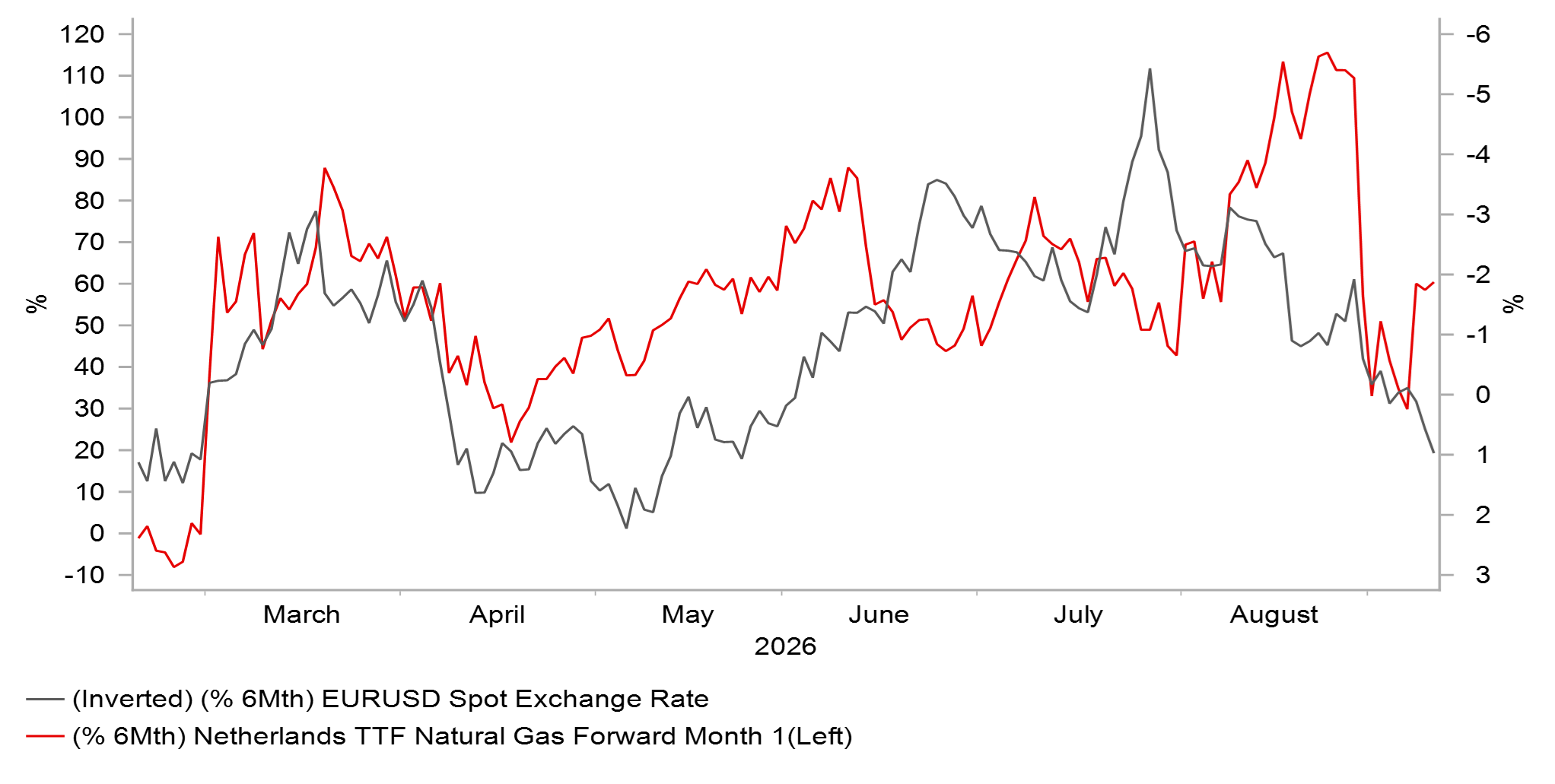
The cut-off date for the projections (see here) was 19 August. The numbers are stale given what has happened to energy pricing since then. Front-month TTF has increased by almost 20 EUR/MWh to above the 80 mark and Brent is currently around 105 USD/bbl.
Against that backdrop the alternative scenarios certainly feel more instructive as things stand. In the updated ‘adverse’ scenario, “oil prices increase to around USD 100 per barrel and gas prices to €75 per MWh in the fourth quarter of 2026” which is not far from the current reality. In this scenario, headline inflation averages 3.2% in 2027 (baseline: 2.5%) and core averages 2.8% (baseline: 2.6%).
We now expect two further ECB rate hikes
In terms of our call, we had seen 2.50% as the terminal rate. That was conditioned on the assumption of US-Iran progress ahead of the mid-terms, and our conviction around that has certainly waned over the summer. The Middle East situation looks no less intractable, with little sign of meaningful engagement and Iran still appearing prepared for a prolonged conflict.
We would continue to stress that there are few signs of broadening inflation pressures as yet, as we set out in our preview here. But the burden of proof for further tightening is falling. If gas pricing remains at current levels then we suspect policymakers would become increasingly uncomfortable waiting for more definitive evidence. The case would build for the ECB to be more proactive and go back-to-back with another hike at the next meeting in October.
If the threshold is indeed reached to push rates into restrictive territory, we assume that the same arguments would provide a basis to justify an additional hike – why wait? Lifting the deposit rate to 3.00% by year-end would create some daylight to the boundary with neutral and allow the ECB to lean more clearly against second-round risks. We have therefore added two hikes to our call: October and December.
Reflecting on the initial shock, we thought the ECB could go back-to-back with hikes immediately (see here). It has taken longer to raise the deposit rate to 2.50% than we expected, but we are there now. Six months later, we think the argument for urgency will be stronger given the current elevated level of inflation and increased risk that yet another bout of rising energy prices (at a time of year when these are more salient to households) could see inflation risks become unanchored. The demonstrable resilience of economic activity since the start of the shock, which is likely to have continued in Q3, further strengthens the case.
All that said, there are two obvious factors – geopolitics and weather – which could shift the energy backdrop materially between now and the October/December meetings. Credible diplomatic progress between US and Iran could take a significant geopolitical risk premium out of TTF and Brent. On weather, European gas storage levels are at seasonal lows of ~67% but the average winter drawdown is ~55pp and a mild October would ease some concerns. Either factor could warrant a reassessment, as would a sharp slowdown in growth, but in the absence of these we expect further tightening will be required.
Markets view: ECB update reinforces hawkish rate repricing
EUR supported by ECB hikes so long as economy remains resilient
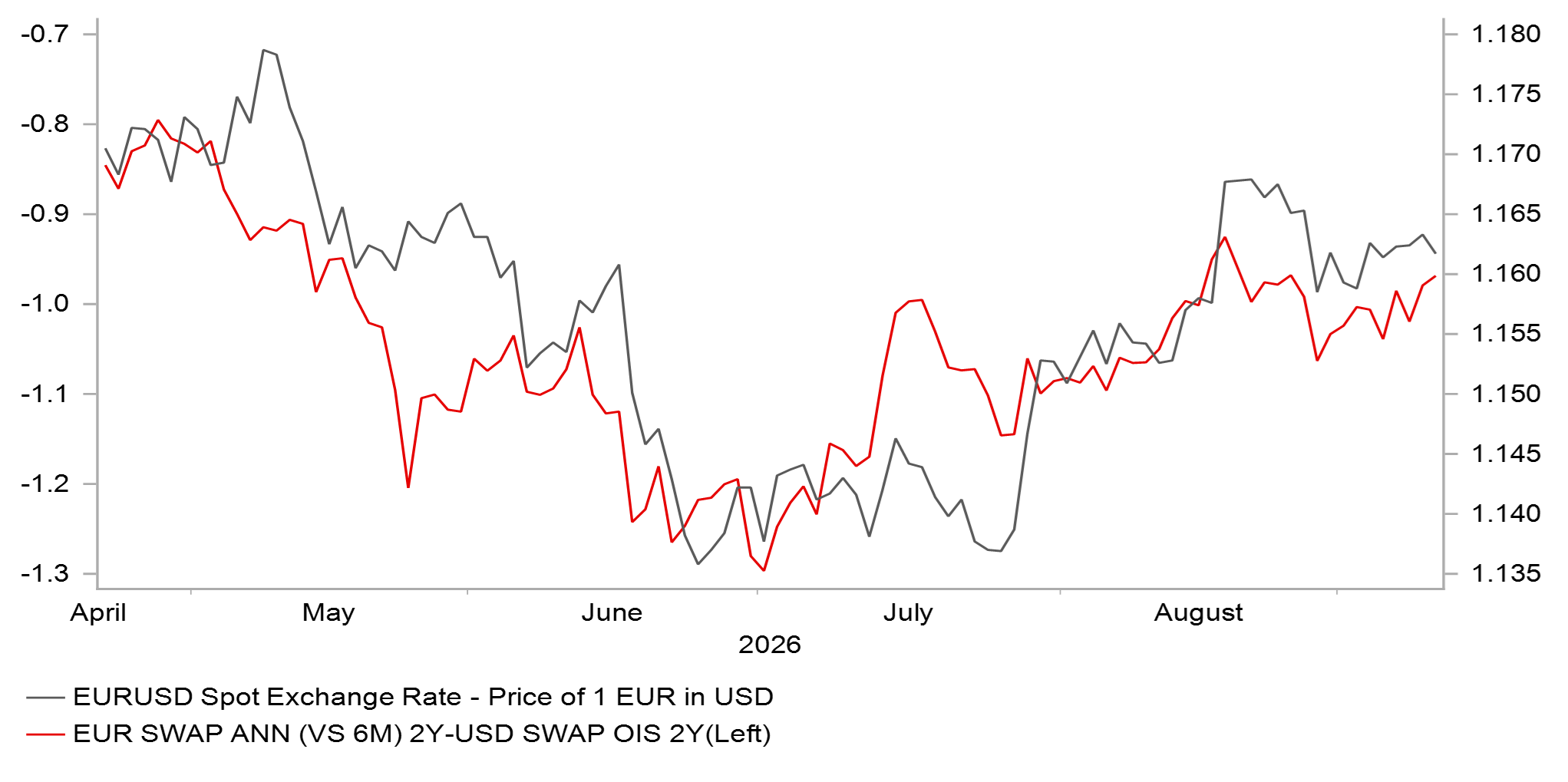
The sell-off in European fixed income markets has accelerated following today’s ECB policy update alongside the continued rise in energy prices. The two-year German government bond yield has climbed by around 15bps since the ECB’s policy update, reaching its highest level at 3.23% since autumn 2023. The next key resistance levels are the highs recorded in 2023 between 3.30% and 3.40%. Eurozone rate markets have moved to price in a faster pace of tightening, with around 24bps of additional hikes now priced in by the October meeting and roughly 44bps by December.
The ECB’s hawkish policy shift has sent a strong signal that further rate hikes will likely be required in response to the worsening energy price shock. If energy prices remain elevated through the remainder of this year, we now expect the ECB to deliver two additional back-to-back hikes in October and December. This scenario is not yet fully priced in and should keep upward pressure on the short end of the eurozone yield curve if energy prices remain at higher levels. Such a path would lift the policy rate into restrictive territory at 3.00% by year-end. President Lagarde indicated that the ECB is no longer placing significant emphasis on estimates of the neutral rate. The main risks to our updated outlook are: (i) the ECB waits until the release of updated staff forecasts in December before tightening again; (ii) energy prices correct lower into year-end, easing immediate pressure on the ECB to act again; and/or (iii) the euro-zone economy shows clear signs of slowing in response to the energy price shock.
In contrast, the EUR initially weakened following today’s ECB meeting, with EUR/USD briefly falling back below 1.1600. However, the move lower was primarily driven by USD strength after the release of the latest US PPI report for August. The report has increased upside risks to the core PCE deflator. Given that next week's FOMC meeting is viewed as finely balanced, the stronger PPI report has encouraged expectations that the Fed could also raise rates this month alongside the ECB. There are now around 18bps of hikes priced in ahead of next week’s FOMC meeting.
Nevertheless, the hawkish repricing of ECB rate expectations remains supportive for the EUR. We expect that support to persist as long as the euro-zone economy is still proving resilient to the energy price shock. The performance of EUR/USD may increasingly hinge on the Fed’s policy response. If the Fed leaves rates on hold while the ECB continues to tighten more actively, EUR/USD could break higher towards 1.2000. Conversely, if the Fed finally starts to hike rates this month, the pair could retreat towards the lower end of its current 1.1400-1.1800 trading range. Overall, we continue to believe that an intensifying energy price shock should ultimately favour a stronger USD and a weaker EUR.
YEILD SPREADS HAVE BEEN MOVING IN FAVOUR OF EUR
Source: Bloomberg, Macrobond & MUFG GMR
NEGATIVE TERMS OF TRADE SHOCK FOR EUR
Source: Bloomberg, Macrobond & MUFG GMR