

Rising energy prices spilling over into FX performance
EUR/USD: Higher energy prices have not yet triggered further strength
The US dollar has continued to trade on a softer footing after last week’s sell-off triggered by evidence of softer than expected US inflation in June. It has helped to at least temporarily dampen Fed rate hike expectations while the price of oil continues to rebound in response to the renewed military conflict in the Middle East. The price of Brent has risen back above USD90/barrel overnight for the first time in over a month and currently stands almost 30% higher than the low recorded at the start of July. Higher oil prices have been encouraged by the ninth consecutive day of tit-for-tat strikes between the US and Iran. Bloomberg has reported that the strikes have expanded beyond strictly military targets to include bridges, utilities and port facilities suggesting little prospect of a return to the fragile ceasefire signed last month. The renewed military strikes are disrupting energy supplies through the Strait of Hormuz. The IRGC Navy stated yesterday it had halted four unidentified vessels attempting to use an “unsafe route” after disregarding warnings. The unfavourable developments are leading to pick-up in global inflation risks and will put more pressure on central banks including the Fed to tighten policy this year.
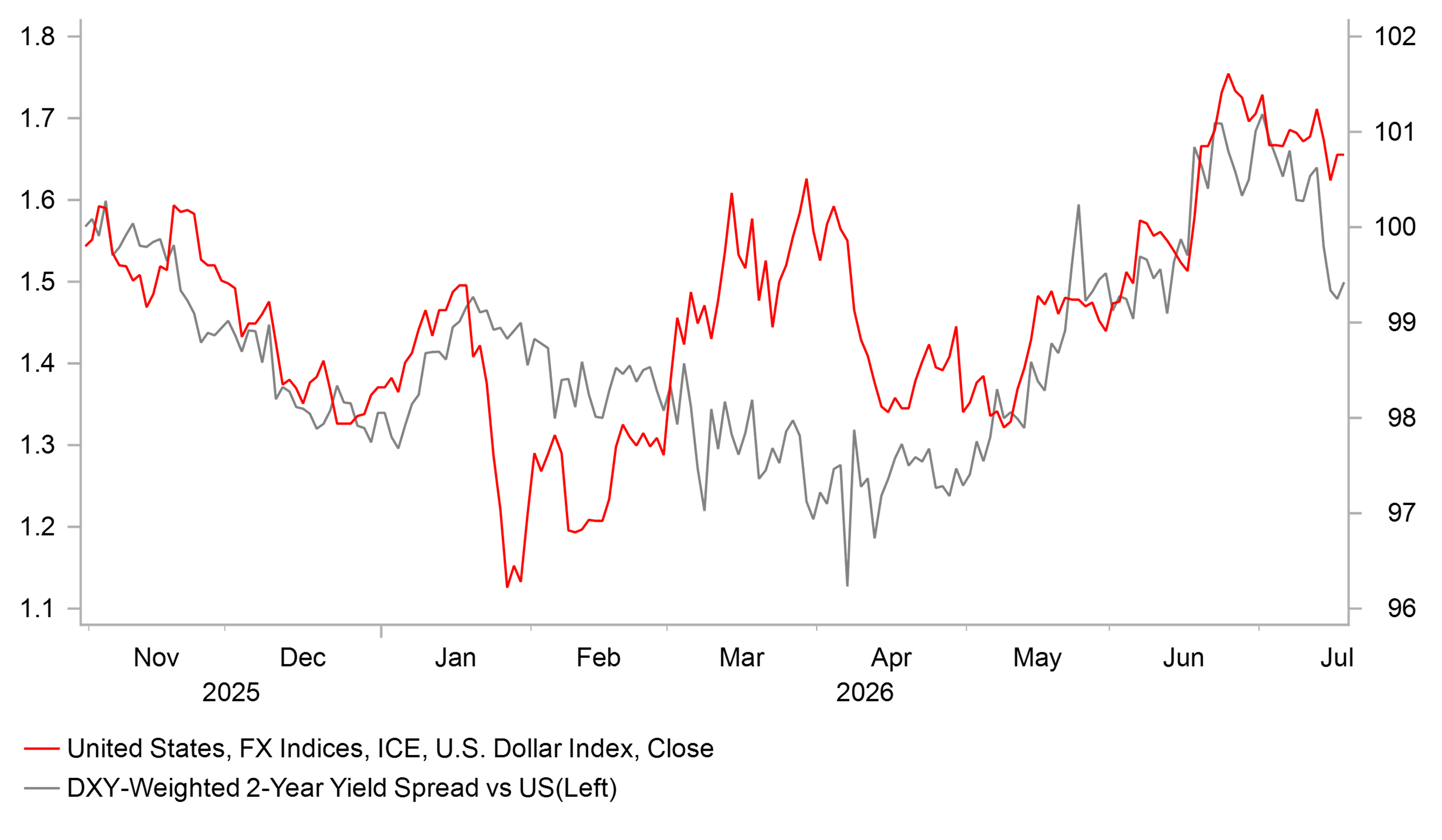
The ECB is the next major central bank to hold a policy update in the week ahead. At their last policy meeting in June, the ECB hiked rates by 25bps for the first time. Another back-to-back hike as soon as this week appears highly unlikely as even hawkish officials such as Bundesbank President Joachim Nagel has indicated that he favours leaving rates on hold. However, the ECB is likely to indicate that it is considering raising rates further after the summer. The recent rebound in energy prices if sustained supports our forecast for another 25bps hike in September. The euro-zone rate market has gone even further and is almost fully pricing in two further ECB hikes by year end. It has lifted short-term rates in the euro-zone back within touching distance of the year-to-date highs. At the same time, the recent softer US inflation data has initially dampened the impact of higher energy prices on Fed rate hike expectations. It has contributed to yield spreads moving in favour of a stronger euro and a weaker US dollar in the run up to this week’s ECB policy meeting. It helps to explain why the US dollar has not yet strengthened further on the back of higher energy prices in recent weeks. The best performing G10 currencies over the last couple of weeks have been the commodity currencies of the New Zealand dollar, Norwegian krone and Canadian dollar while the Swedish krona, Swiss franc and Japanese yen have underperformed.
YIELDS SPREADS HAVE MOVED AGAINST USD RECENTLY
Source: Bloomberg, Macrobond & MUFG Research
GBP: Pound is outperforming as Andy Burhan is set to become Prime Minister
The pound has been the best performing major currency over the past couple of weeks highlighting that it remains resilient to the negative energy price shock. The pound has been outperforming alongside the US dollar since the US-Iran conflict started in late February. In our latest FX Weekly report (click here) released on Friday we assessed in more detail why the pound has strengthened recently. We have found that pound has been supported by a jump in UK real yields which has made it relatively more attractive and provided adequate compensation for the pick-up in UK political risks. At the same time, the higher yields on offer in the UK come at a time when financial market conditions are supportive for carry trades given FX volatility is close to year-to-date lows. The recent rebound in energy prices and the correction lower for AI-related equities has not yet threatened current stable financial market conditions, although they are two obvious risks that could trigger an unwind of popular FX carry trades if they intensify further.
At the same time, market participants have been scaling back initial concerns over fiscal and political risks in the UK related to Andy Burnham becoming prime minister. He was confirmed as the new leader of the Labour party on Friday and will be confirmed as the new prime minister today. In his first speech as Labour leader on Friday he stated that “I will be a pro-business leader” and has previously pledged to be fiscally responsible. He is expected to announce his cabinet picks early this week. Media reports have already indicated that he is likely to pick Home Secretary Shabana Mahmood as his chancellor to help further reassure market concerns over fiscal policy. After recent strong gains, we believe that a lot of good news is now priced into the pound which should curtail further upside.
KEY RELEASES AND EVENTS
Country | BST | Indicator/Event | Period | Consensus | Previous | Mkt Moving |
EC | 10:00 | Construction Output MoM | May | -- | 0.0 | !! |
CA | 13:30 | CPI YoY | Jun | 2.9% | 0.0 | !!! |
NZ | 23:45 | CPI YoY | 2Q | 4.0% | 0.0 | !!! |
Source: Bloomberg & Investing.com