
Week Ahead FX outlook:
Key FX views:
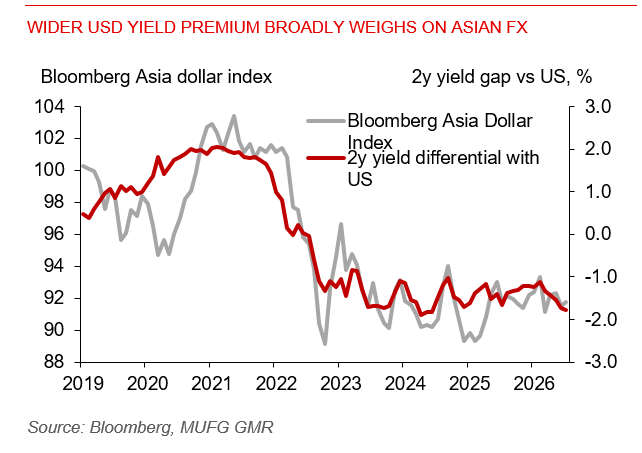
This week, market participants remain focused on three interconnected themes: geopolitics, inflation and central-bank policy. Concerns on the renewed disruptions to ship routes in both the Strait of Hormuz and the Red Sea push Brent crude to above US$100/bbl. Higher oil price are challenging the recent narrative of easing global inflation trend and resulting some rise in global bond yields. In the US, 10-year treasury yields increase to 4.68%, and help strengthen the dollar DXY index by about 0.6% this week. Asian markets have largely reflected these global developments through the FX channel. The Japanese yen has remained under pressure, with USDJPY pushing higher even as BOJ officials continue to signal gradual policy normalization. Rising US yields and elevated energy prices remain a challenging combination for Japan given its reliance on imported energy and its sensitivity to US and Japan yield spread. More broadly, Asian currencies have traded defensively against a firmer dollar as investors reassess global rate expectations and the implications of higher oil prices for regional inflation and external balances. KRW is an exception this week.
Looking ahead, near term, Asia FX markets will be focused on several key areas. 1) the FOMC meeting. Markets participants would hope to gain clarity on whether Chair Kevin Warsh will endorse or push back against market expectations for further policy tightening. We expect no change on Fed’s policy rate. 2) The development and the expectation of the development of Iran-US conflict. Fed’s decision hinges on it too. A sustained oil and inflation shock would likely mean a stronger US dollar and higher US yields, which would pressure on Asian currencies, particular Asia’s net energy importers. 3), regional policy decisions, particularly rate decisions of BOJ and the Monetary Authority of Singapore, where markets will assess the balance between growth support and inflation control. We expect both to hold. 4) a busy economic calendar—including SK PMIs, JP & AU inflation, and trade indicators across major Asian economies—will provide clues on whether higher energy costs are beginning to dampen growth momentum. For Asia FX, the key question remains whether domestic fundamentals and policy support can offset the twin headwinds of a stronger US dollar and rising commodity prices.
Wider USD Yield Premium broadly weighs on Asian FX