

Ahead Today
G3: US PMI, Eurozone PMI, ECB 1y CPI expectations
Asia: Thailand trade, India PMI
Market Highlights
Brent prices jumped a further 7% yesterday, reclaiming the US$100/bbl level, as escalating tensions in the Middle East disrupted shipping flows through both the Strait of Hormuz and the Red Sea following renewed attacks on tankers. While US headline inflation moderated in June, the sharp rise in energy prices raises the risk of a renewed pickup in inflationary pressures in the months ahead.
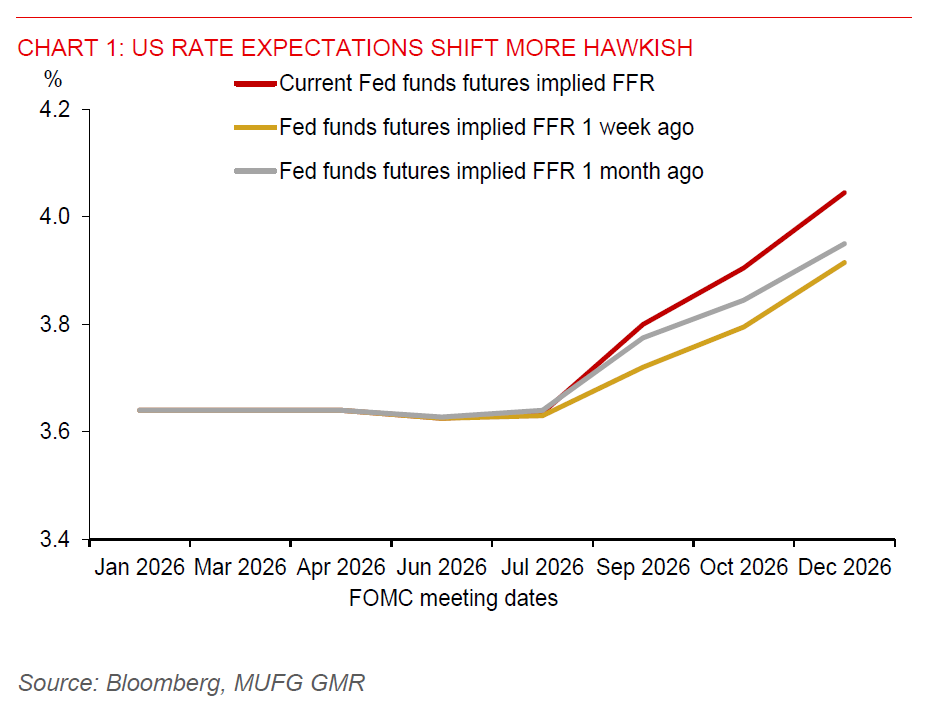
US rate expectations have remained volatile. Markets are now pricing around 44 bps of cumulative Fed tightening this year, with a September 25bps rate hike fully priced, after briefly scaling back hawkish expectations following softer-than-expected June CPI data. Treasury yields have continued to move higher, with the 2-year yield rising 5bps to 4.35%, its highest level since early 2025, while the 10-year yield has climbed 4bps to 4.69%. The rise in yields has supported the US dollar, with the DXY index gaining 0.3% to 101.44. Next week’s FOMC meeting will be pivotal, as investors look to Fed Chair Kevin Warsh for guidance on whether the Fed will validate the market’s hawkish repricing or push back against expectations of tightening.
In the FX market, the yen has remained under pressure, with USDJPY rising further by 0.4% to 163.83. BOJ officials have signalled openness to a faster pace of policy normalization, as yen weakness continues to fuel imported inflation.
Meanwhile, Singapore’s June inflation data remained broadly benign, with headline CPI edging up to 1.9%yoy from 1.8%yoy and core inflation rising to 1.6%yoy from 1.4%yoy. While food and services inflation firmed during the month, overall price pressures remain contained. Our base case remains for MAS to leave policy settings unchanged in July while maintaining a clear tightening bias. That said, Singapore’s growth momentum remains strong, while inflation risks are skewed to the upside, so there is a risk of a pre-emptive tightening move next week. Nonetheless, whether MAS delivers a hawkish hold or a modest tightening, its already restrictive policy stance should continue to underpin SGD’s relative resilience against the dollar.
In Indonesia, BI continues to roll out measures to attract capital inflows and support the rupiah. Notably, it has reduced the premium on portfolio-investment hedging swaps by 12.5% and on hedging DNDFs by 15%, lowering hedging costs for foreign investors. These measures could help improve dollar liquidity conditions onshore and provide more support for the rupiah amid a challenging external environment.