
Ahead Today
G3: US ISM Services
Asia: China RatingDog PMI, Vietnam macro data, India PMI
Market Highlights
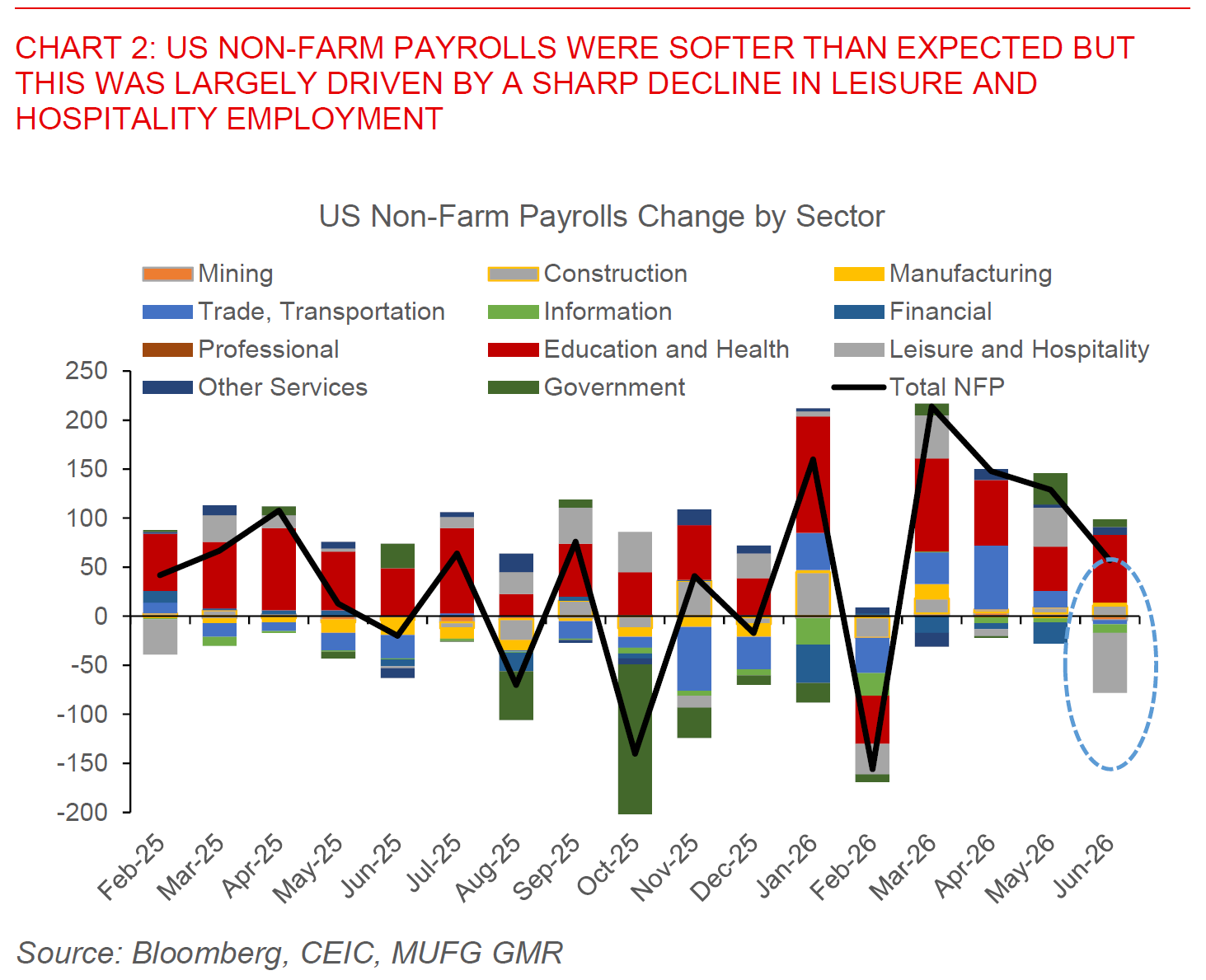
Overnight the Dollar was generally weaker and the Japanese Yen strengthened from 162.83 to as much as 160.64, before trading at 161.28 at the time of writing. This was driven by softer than expected US non-farm payrolls data, coupled with suspected FX intervention by Japanese authorities. In particular, payrolls rose by 57k, less than consensus expectations for a 113k rise, coupled with some downward revisions to the previous months. The details were somewhat more mixed for the forward-looking implications – household survey employment was weak and labour supply softened leading to a decline in the unemployment rate, but the reported softness in payrolls was concentrated in a 61k decline in leisure and hospitality employment, which may be revised up in time to come given low response rates.
The overall implications for the Fed seems to be one where the payrolls report lowers the chance of a rate hike in the near-term, but has not ultimately clarified the health of the labour market and more importantly the path ahead for inflation. With the FOMC and Kevin Warsh stating that inflation has become the binding concern, the CPI and PCE inflation numbers are likely to become more important moving forward.
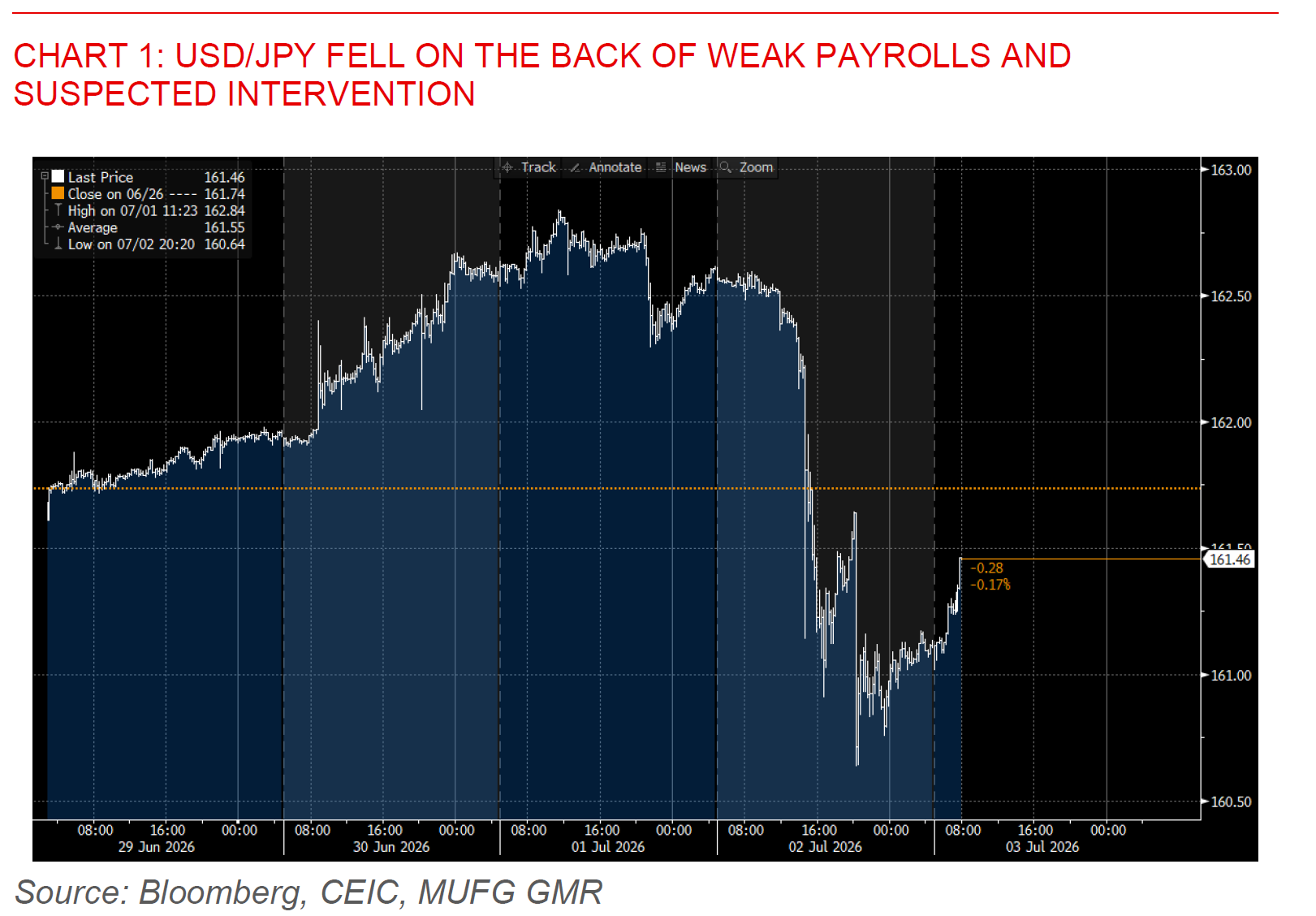
Meanwhile, the market remains alert on further FX intervention risks by Japanese authorities moving forward. As noted by news reports, the price action in USD/JPY yesterday might be suggestive of the Ministry of Finance stepping in to sell Dollars to curb Yen weakness, but this was not officially confirmed. Reuters news reported that Japanese officials may now abandon telegraphing their intentions to the market, which would be unlike the case with intervention that happened on 30 April following ample warnings. Such a new tactic could be viewed as effective in wiping out speculative bets against the currency, with Japan’s top currency official Atsushi Mimura also refraining from spelling out the MOF’s standard currency stance in a Bloomberg interview.
Overall as we noted yesterday, with the key US holidays upcoming and as such a period of low liquidity, coupled with US data and non-farm payrolls supportive of a weaker Dollar in the near-term, we would be quite wary of intervention risks in the near-term (see Asia FX Talk – JPY intervention risks ahead). While it was not officially confirmed whether Japanese authorities intervened yesterday to bring USD/JPY lower, our bias is as such that intervention if it has indeed started may continue for a while more in order to help flush out speculative positions.
Meanwhile we also had comments from South Korea officials saying that the government is closely monitoring currency moves and that South Korean authorities are closely exchanging information with the US and Japan regarding the FX market. Nonetheless, the government isn’t planning on imposing any sanctions on NDF market (unlike perhaps what was seen in some Asian markets previously such as India), but the government is also mulling measures to draw NDF trading into onshore spot markets.