

Ahead Today
G3: US CPI
Asia: India CPI
Market Highlights
Oil prices gyrated but overall in the US$80-85/bbl range, as markets remained uncertain about the prospects of a Middle East deal. In particular, Pakistan’s defence minister said the US and Iran are “close to some sort of arrangement” over the Strait of Hormuz, even after both sides appeared to toughen their positions in deadlocked negotiations. These came after US President Trump said Iran should pay reparations for those killed in attacks linked to Iran as well as in domestic protests and on the flipside a series of demands laid out by Iran over the weekend including compensation for US violations of the earlier agreement. It’s important to however state that overall markets remain reasonably buoyant despite all the noise.
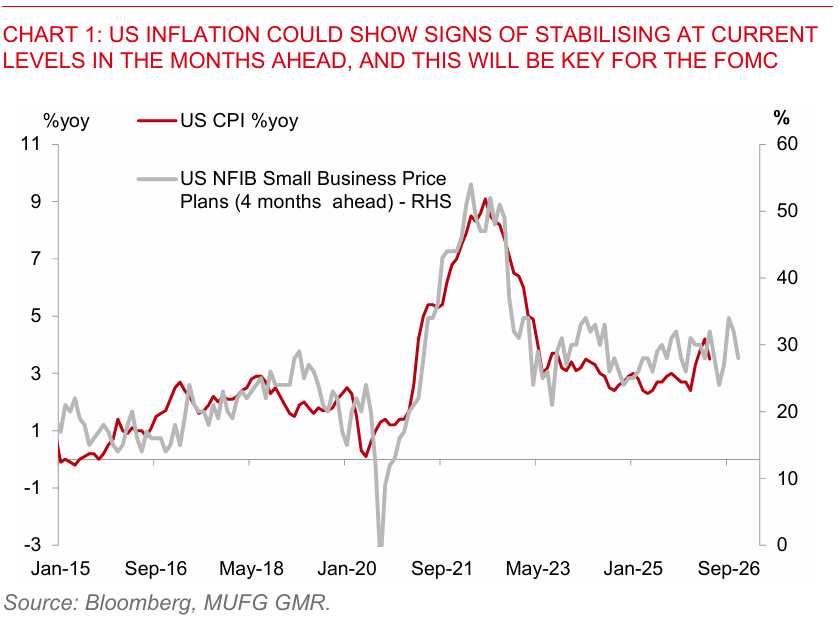
The focus later today will be on US CPI inflation. More so than the labour market, the FOMC’s focus has shifted more towards the inflation side of the mandate, and as such while the weaker than expected non-farm payrolls numbers last week help, the CPI numbers later today are arguably more important. The base case from our global team is some stabilization in core inflation at 0.17%mom, and if this is right this should provide some space for US yields to stabilize from here.
The Reserve Bank of Australia (RBA) kept its policy rate at 4.35% yesterday in a unanimous decision. The AUD/USD initially dipped after the policy statement release; however it later rebounded when RBA Governor Michele Bullock reiterated hawkish statements, by warning of persistent inflation risks and stated during her press conference that future rate hikes remain on the table if inflation stays sticky. The RBA nonetheless remained cautious about other key external risks, such as larger or more persistent negative effects of the Middle East conflict. The RBA also highlighted a softer property market including through weaker wealth effects, rising interest rates, and tighter investment property tax rules as an important transmission mechanism to aid its mandate of bringing down inflation, with the RBA’s consumption forecast also seeing a downward revision by year end from 1.9% to 1.6%. Overall, our global team thinks that AUD/USD is likely to move gradually higher above the 0.70 levels but less so because of further rate hikes by RBA, but driven more by risk sentiment, Fed rate cuts, and a weaker Dollar moving forward.
In Asia, we will have India’s CPI inflation, which is expected to inch higher towards 4.4%yoy from 4.3%yoy previously. RBI Governor Sanjay Malhotra said at an event yesterday that inflation is “more or less under check”, and reinforcing expectations from the last policy meeting that interest rates will stay on hold for now. We continue to see policy rates heading higher in India, but we have pushed out the timing of our 50bps rate hikes to start from the December 2026 meeting instead (see India: Waiting on the world to change). Nonetheless, with domestic growth in India remaining quite robust, credit growth accelerating, the lagged impact from earlier oil price increases, fiscal policy supportive with a likely wider fiscal deficit, coupled with possible interaction with adverse weather events, we think the bias of risks tilt towards the RBI repo rate moving higher from here.