
RBI’s INR measures may help spot FX, but for how long?
Ahead Today
G3: US NFIB Small Business Optimism, Germany CPI, US Existing home sales
Asia: -
Market Highlights
Amidst a general environment of a stronger Dollar and somewhat weaker risk sentiment, the big move in the Asian currencies has been the Indian Rupee, with spot onshore INR strengthening by 1% against the US dollar over the past day. While the S&P500 overall was somewhat stable, this masked some weakness underneath the hood with underperformance in semiconductor stocks, which has also spilled over to Asia equities with South Korea equities down more than 4% this morning. Our overall sense is that the lead indicators such as copper prices remain strong, but there are some signs that positive global economic surprises are coming off the boil, while US bond yields are stabilising, and as such could be an important leading indicator for the path of risk sentiment moving forward.
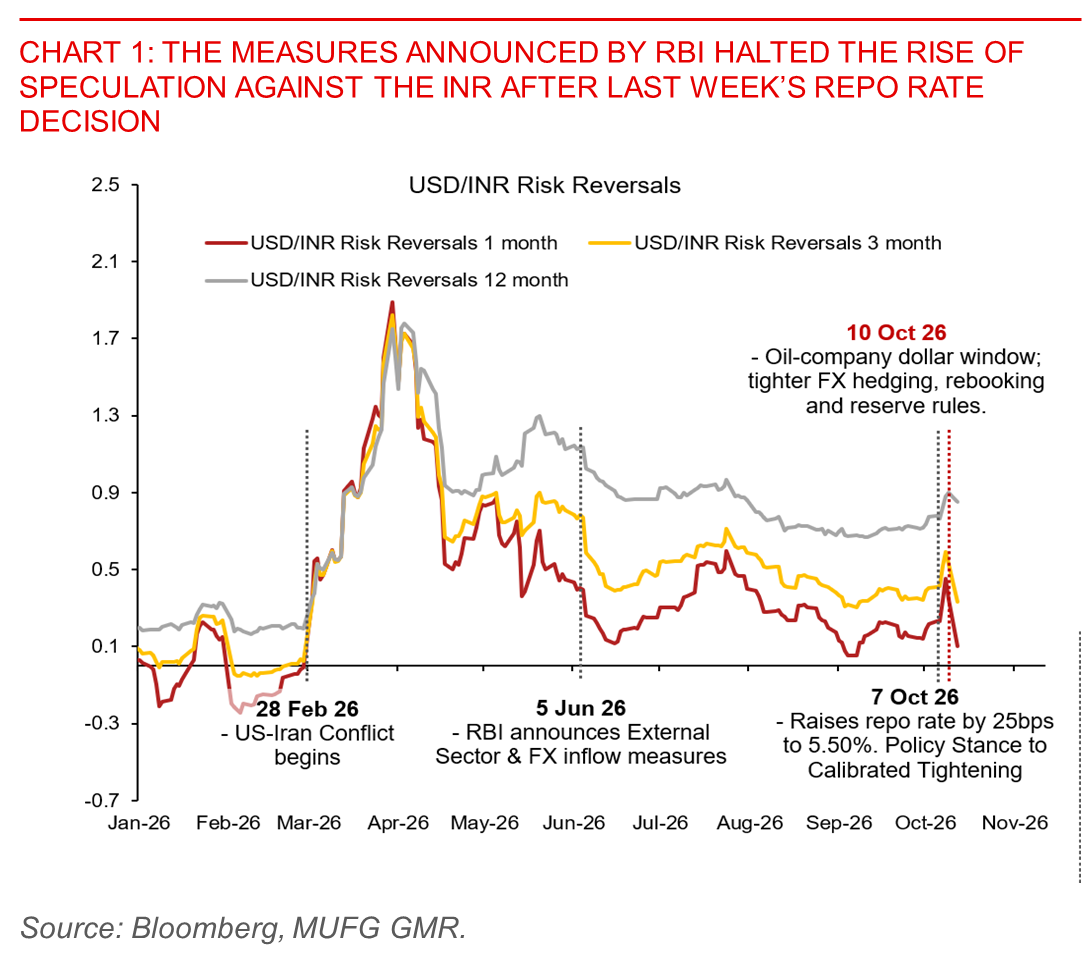
The key driver for the INR move was yet another round of FX measures by the RBI to curb weakness in the Indian Rupee announced over the weekend. Key measures included: 1) a newly imposed 20% Foreign Exchange Risk Reserve (FERR) charge for RHS USD/INR forward transactions exceeding US$2million, 2) a prohibition of rebooking of INR derivatives after cancellation, 3) lowering the threshold from US$100 million to US$5 million without the establishment of underlying for derivatives, and 4) requiring an undertaking by users confirming the same underlying exposure has not been hedged with another authorised dealer. In addition, RBI also opened a special dollar window for the 3 state-owned oil market companies, while also announcing INR liquidity tightening measures including open-market sales of bonds together with an increase in daily minimum CRR maintenance requirement to 99% from 90%.
The 20% Foreign Exchange Risk Reserve charge on FX derivatives to hedge current account exposures in particular is somewhat akin to similar measures undertaken by China in the past to manage the pace of RMB depreciation. Nonetheless, based on news reports including by Reuters, it also left market participants in India unsure about the impact to rupee liquidity in banks’ treasury operations, with also a lack of clarity around whether the 20% deposit requirement applies to hedges against interest payments on foreign currency loans.
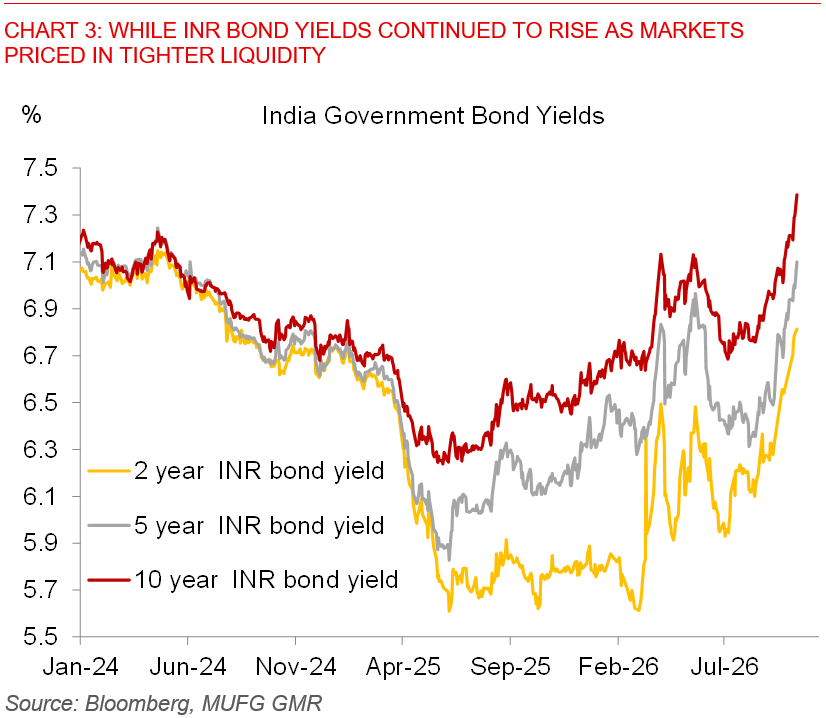
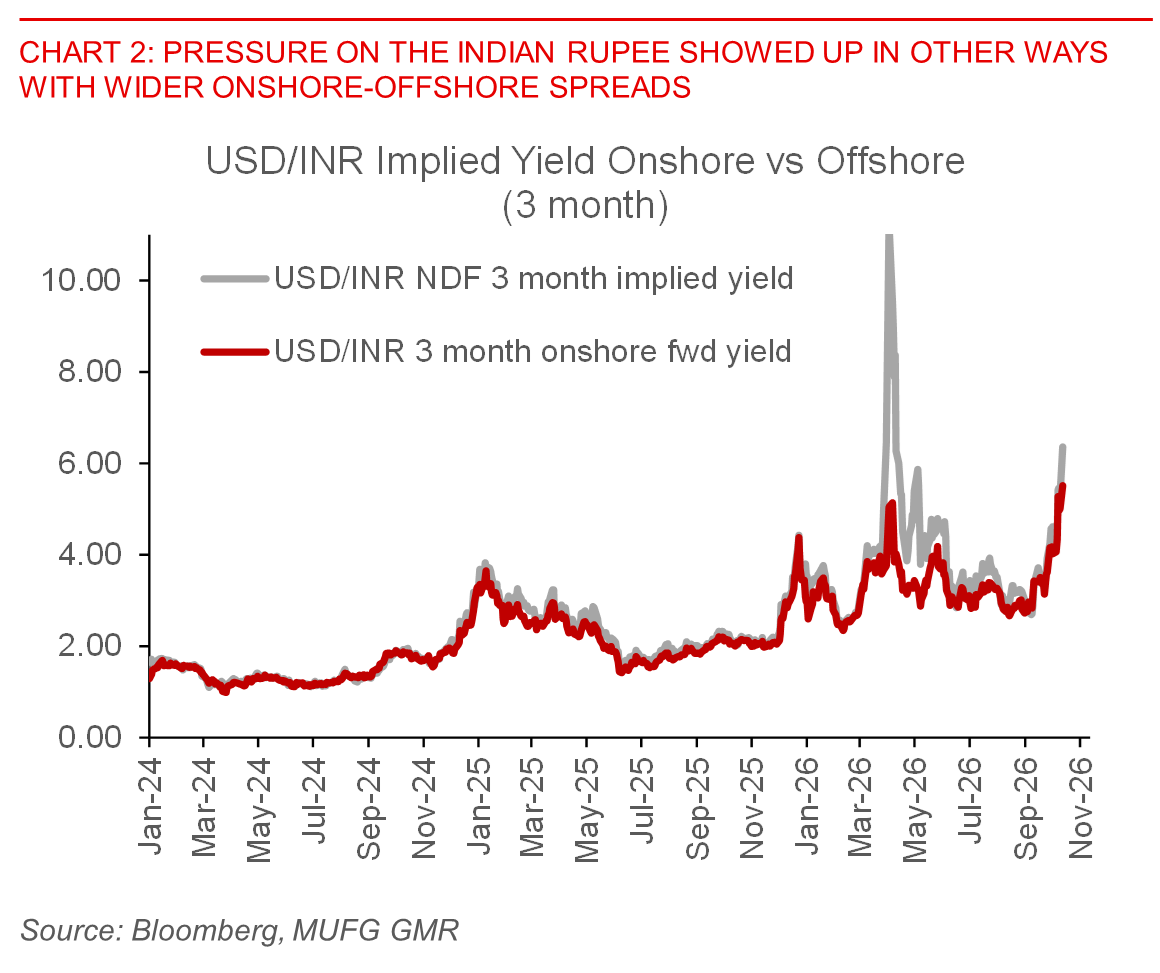
Overall, while spot USD/INR went down sharply, the pressure showed up in other areas of the market, including some rise in onshore forward premias reflecting some incorporation of the 20% charge amidst likely lower liquidity, wider INR NDF offshore spreads reflecting a shift in hedging demand and positioning adjustments near-term, coupled with higher INR bond yields with the 10-year rising closer to 7.4% now. All these pressures have also come despite the substantial US$140bn FCNR(B) inflows after the June 2026 measures from RBI (see India: Too much of a good thing).
Ultimately for the underlying pressure on INR to ease, this would require changes in underlying fundamental flows in India. Certainly a change in trend of global oil prices would help, but it is not clear that this would be a sufficient condition. As we wrote in our flagship thematic report, the Indian Rupee continues to face a capital inflow problem, with a sharp drop in net FDI causing INR to be far more dependent on volatile foreign portfolio inflows than in the past (see India: Flows before growth – this time is different for INR). Higher rates are one way to resolve the fundamental imbalance and is one key reason why we are forecasting RBI to hike rates further. In addition, the PE/VC exit cycle reflecting higher valuation gap vis-à-vis other markets has also been crucial.
We are forecasting USD/INR to gradually rise higher to 97.50 by the September quarter next year, with RBI likely to take more measures if INR were to weaken further from here.