
Saudi Arabia has approved its 2027 budget, expecting another fiscal deficit
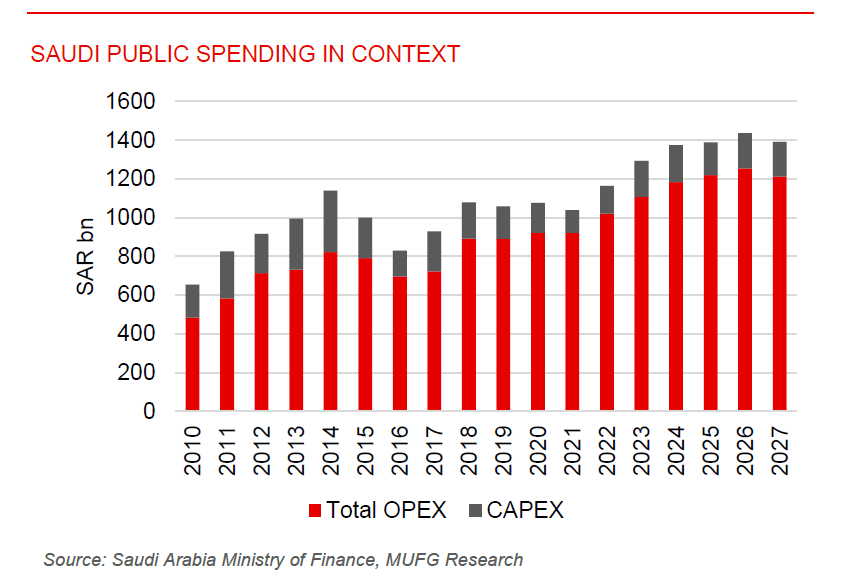
Planned spending is due to unwind the increase prompted by the war this year which may act as a drag on overall consumption in the non-oil economy
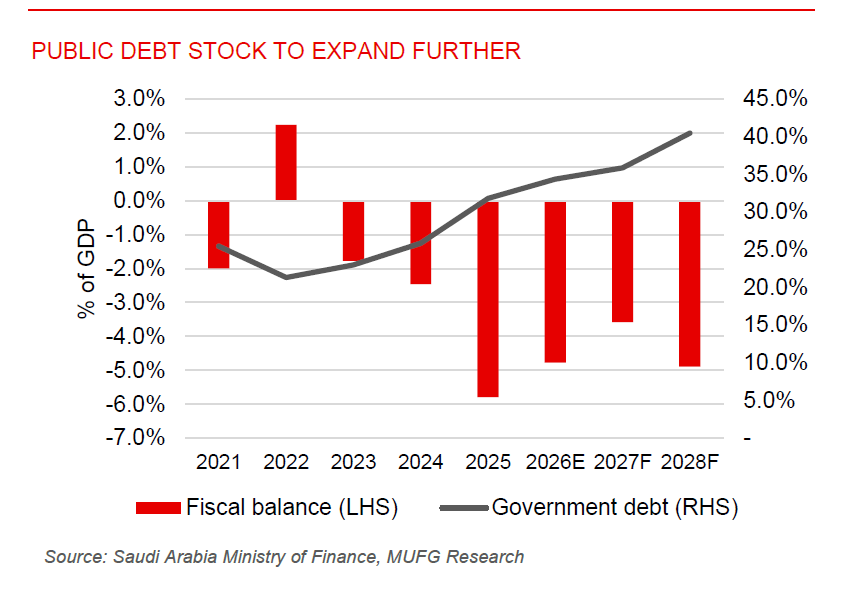
Public debt levels remain moderate in comparison with peer economies across the G20 but debt servicing will take up a growing share of government expenditure
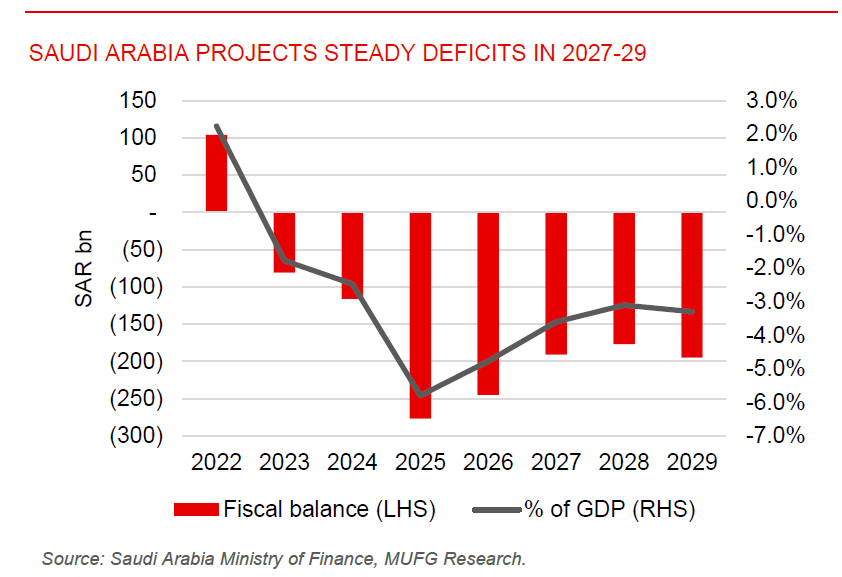
Saudi Arabia projects fiscal deficits into the medium term
Saudi Arabia has approved its 2027 fiscal budget, anticipating another year of fiscal deficit, the fifth consecutive annual shortfall with medium-term projections also implying a steady deficit.
Expenditure to unwind 2026 increase
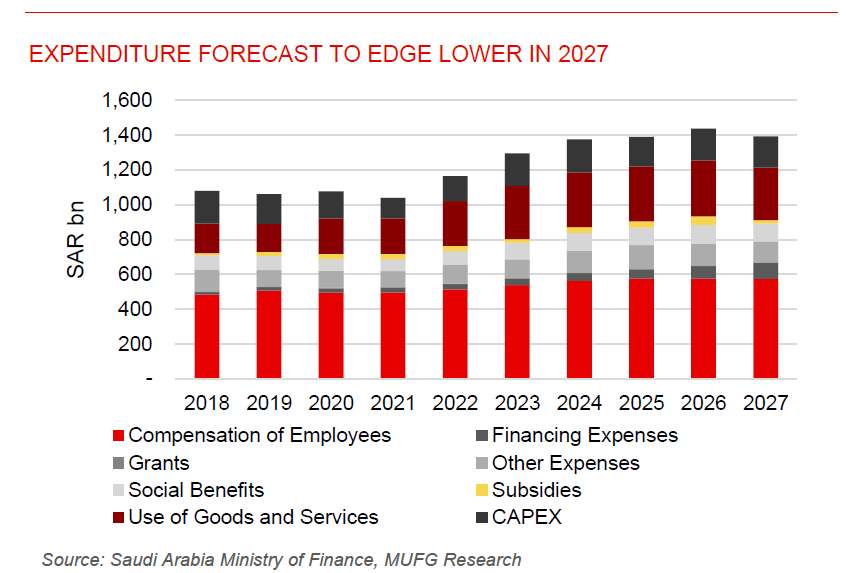
Total expenditure is forecast to unwind this year’s increase with a 3% decline in overall spending to SAR 1.39trn before expanding again in 2028-29 to reach a long-term expenditure target of SAR 1.5trn. Among the fastest growing elements of the government’s planned spending is debt servicing, which is due to increase by 31% y/y in 2027 to SAR 93bn as Saudi Arabia’s sovereign debt position has expanded steadily since 2022. The MoF is due to release its 2027 borrowing plan where it will outline its expected international and domestic currency issuances and also what markets it intends to access in 2027. In 2026, the government planned to increase the use of alternatives to public bond markets such as export credit agencies and project finance.
Spending on wages, social benefits and subsidies are all due to decline in 2027 while non-capital government consumption will also move lower which will likely act as a drag on private consumption as government spending on salaries alone represents roughly 12% of GDP.
Capital spending is forecast to drop by 2% y/y in 2027 compared with the MoF’s estimate for the 2026 level. Capex levels have been choppy and are estimated to have risen by 8% in 2026 after a near 12% drop in 2025. According to the budget, Saudi Arabia will reallocate some spending away from projects after needing to increase military spending this year while the budget also noted that the government intends to complete “certain giga projects.”
Revenue projected to increase modestly in 2027
On the revenue side, the budget projects a modest increase of 1% y/y to SAR 1.2trn. Tax incomes are set to increase by 4.5% while other revenues, which includes oil revenue and income from state owned enterprises will drop by about 1%. Earlier this week Saudi Arabia announced that it would implement a top-up tax in 2027 of 15% on multinational companies operating in the Kingdom that have global revenue of EUR 750m, as part of its alignment with the OECD’s Pillar 2 tax framework.
Saudi Arabia doesn’t publish a forecast for oil revenue in its budget but we estimate that in 2026 its break-even oil price increased to more than USD 110/b thanks to the drop in production volumes and increase in public spending. We project that it will stay above USD 100/b in 2027-28 as expenditure, while forecast to ease, remains high relative to historic levels and the increase in oil production expected for 2027 will cool off in 2028.
We project a widening deficit in 2028
The overall budget deficit is forecast to shrink to 3.6% of GDP in 2027 from an estimated 4.9% in 2026 and projected to remain in deficit in Saudi Arabia’s medium-term fiscal projections. We project a wider fiscal deficit emerging in 2028 of closer to 5% of GDP as oil prices decline further and capital expenditure levels pick up once the impact of the conflict has been abated. That will push total debt to GDP to 41% by the end of our forecast period, still well below peer averages among the G20 economies but increasing the proportion of debt servicing in overall government expenditure.