

Please download PDF from above for the following currencies.
Australian dollar // New Zealand dollar //Canadian dollar // Norwegian krone // Swedish Krona // Swiss franc // Czech koruna // Hungarian forint //Polish zloty // Romanian leu // Russian rouble // South African rand // Turkish lira // Indian rupee // Indonesian rupiah // Malaysian ringgit // Philippine peso //Singapore dollar // South Korean won // Taiwan dollar // Thai baht // Vietnamese dong // Argentine peso // Brazilian real // Chilean peso // Mexican peso // Saudi riyal // Egyptian pound
Monthly Foreign Exchange Outlook
DEREK HALPENNY
Head of Research, Global Markets EMEA and International Securities
Global Markets Research
Global Markets Division for EMEA
E: derek.halpenny@uk.mufg.jp
LEE HARDMAN
Senior Currency Analyst
Global Markets Research
Global Markets Division for EMEA
E: lee.hardman@uk.mufg.jp
LIN LI
Head of Global Markets Research Asia
Global Markets Research
Global Markets Division for Asia
E: lin_li@hk.mufg.jp
KHANG SEK LEE
Associate
Global Markets Research
Global Markets Division for Asia
E: khangsek_lee@hk.mufg.jp
MICHAEL WAN
Senior Currency Analyst
Global Markets Research
Global Markets Division for Asia
E: michael_wan@sg.mufg.jp
LLOYD CHAN
Senior Currency Analyst
Global Markets Research
Global Markets Division for Asia
E: lloyd_chan@sg.mufg.jp
EDWARD BELL
Head of Research - MENA
DIFC Branch – Dubai
E: edward.bell@ae.mufg.jp
SOOJIN KIM
Analyst, ESG and Emerging Markets Research – EMEA
DIFC Branch – Dubai
E: soojin.kim@ae.mufg.jp
MUFG Bank, Ltd.
A member of MUFG, a global financial group
October 2026
KEY EVENTS IN THE MONTH AHEAD
1) WILL FIXED INCOME SELL-OFF SPREAD?
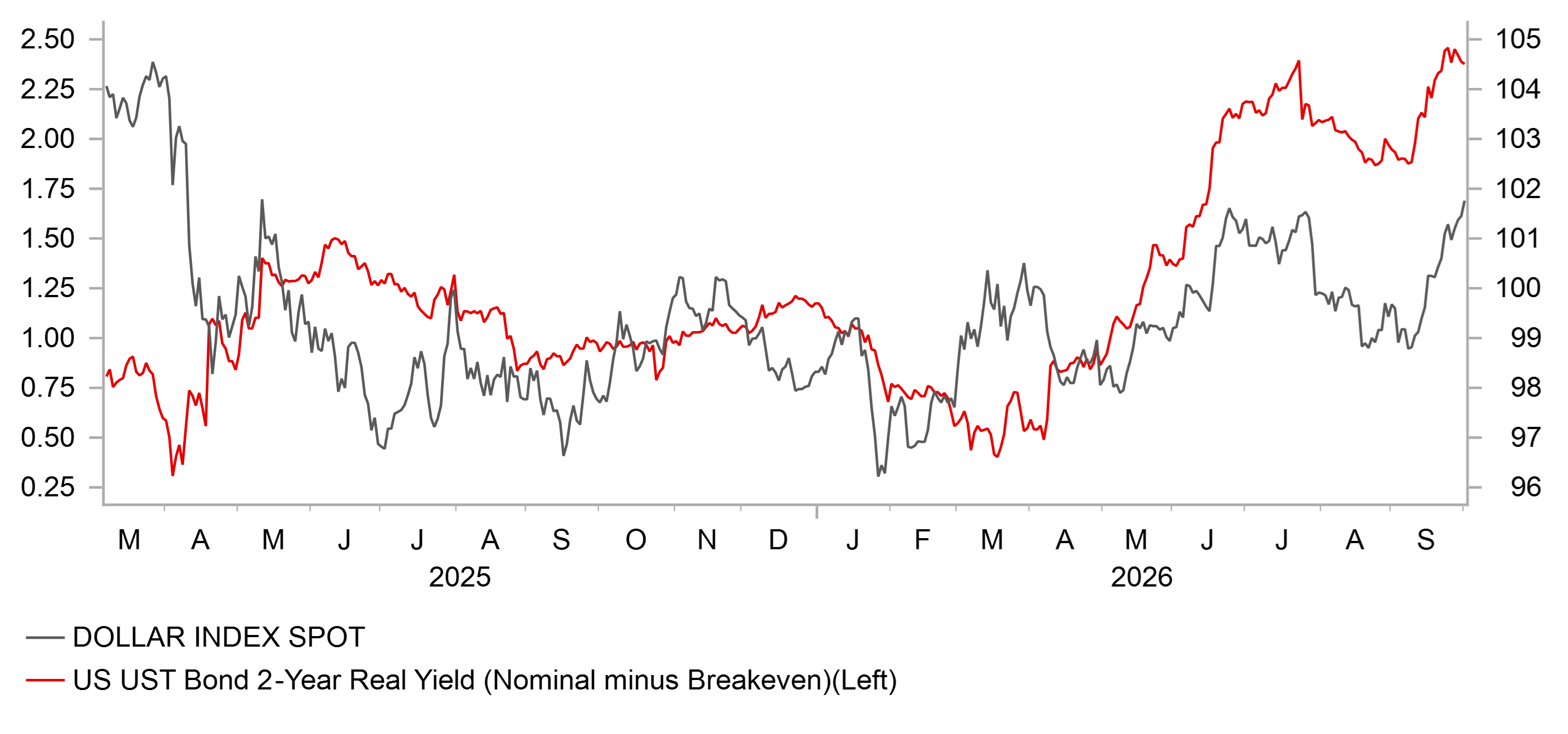
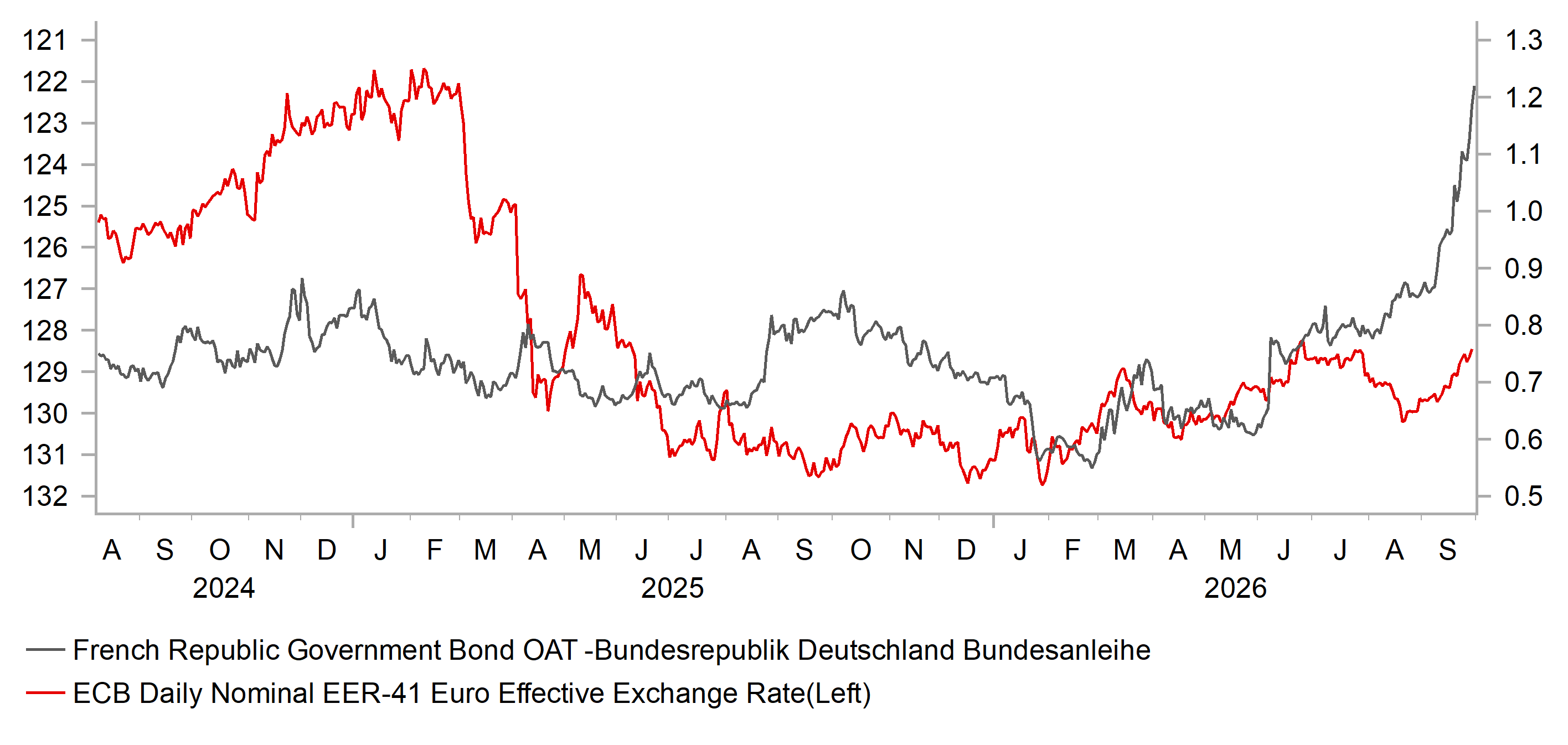
The US dollar (DXY basis) advanced by 2.0% in September with the US leading the way on a substantial sell-off in fixed income. The 10-year UST bond yield increased 53bps in September, the largest one-month increase since September 2022. The 2-year yield jumped by 55bps also the biggest gain since September 2022. Another month of no resolution to reopening the Strait of Hormuz led to a rethink on the timing of a normalisation of supplies of energy, the inflation risks associated with that. Six of the G10 central banks raised rates in September. That prompted a notable pick-up in bond market volatility and if that volatility persists there will be an increased risk of this spreading to other markets. EM FX volatility surged in September, rising toward the peak levels recorded after the start of the Middle East conflict in March. G10 FX volatility has increased much more modestly while the VIX index remains below its 12mth average. Further fixed income selling is the primary near-term risk for the markets and a broadening out of increased volatility would likely see the dollar extend gains. EUR downside risks will be reinforced by OAT selling. The poor fixed income sentiment has led to a sharp widening of the OAT/Bund spread – by 42bps in September. The details of the 2027 budget will be released on 1st October and concerns over an inability to pass the budget could see a further widening of the OAT/Bund spread that would extend EUR/USD further lower closer to the 1.1000-level.
2) IMF & CENTRAL BANK MEETINGS IN FOCUS
The IMF/World Bank gathering takes place between 12th-18th October in Bangkok, Thailand and we can assume that this meeting could be used by the US and Japan to reinforce their ongoing collaborations in curtailing yen depreciation. Rhetoric from the government in Japan has been more explicit of late and with the dollar strengthening more broadly, we can expect these meetings to be used to communicate the joint message further. G10 Central bank meetings are bunched close together toward the end of the month. The RBNZ, the Bank of Canada and the Fed all meet on 28th followed by the ECB on 29th and finally the BoJ on 30th. The RBNZ and the BoC is priced as most likely to hike amongst these meetings, followed by the Fed, the ECB and then the BoJ has the least priced. Recent communications point to the RBNZ and the BoC hiking. We now expect the ECB, the BoJ and the Fed to next hike in December.
3) MARKETS WATCH FOR CHINA’S BROADER FISCAL EASING
China's key near-term focus is whether policymakers follow September's targeted easing measures, including the mortgage subsidy, PSL rate cut and expanded relending quotas, with larger-scale fiscal stimulus. Markets will closely watch the late-October Politburo meeting and the Fifth Plenum of the 20th CPC Central Committee (26-29 October) for signals on additional growth support, fiscal expansion and the 2027 policy outlook.
Forecast rates against the US dollar - End-Q4 2026 to End-Q3 2027
Spot close 30.09.26 | Q4 2026 | Q1 2027 | Q2 2027 | Q3 2027 | |
DXY | 101.243 | 102.19 | 100.58 | 98.880 | 97.270 |
JPY | 157.15 | 155.00 | 153.00 | 151.00 | 149.00 |
EUR | 1.1360 | 1.1200 | 1.1400 | 1.1600 | 1.1800 |
GBP | 1.3276 | 1.3100 | 1.3180 | 1.3330 | 1.3490 |
CNY | 6.7037 | 6.6500 | 6.6000 | 6.5500 | 6.5000 |
AUD | 0.6957 | 0.7000 | 0.7100 | 0.7200 | 0.7300 |
NZD | 0.5645 | 0.5700 | 0.5800 | 0.5900 | 0.6000 |
CAD | 1.4196 | 1.4200 | 1.4000 | 1.3800 | 1.3600 |
NOK | 9.5892 | 9.7320 | 9.6490 | 9.5690 | 9.4070 |
SEK | 9.9813 | 10.179 | 9.9120 | 9.5690 | 9.3220 |
CHF | 0.8343 | 0.8480 | 0.8290 | 0.8060 | 0.7840 |
|
|
|
|
|
|
CZK | 21.501 | 21.790 | 21.230 | 20.690 | 20.170 |
HUF | 322.33 | 325.90 | 315.80 | 306.00 | 300.80 |
PLN | 3.8410 | 3.9020 | 3.8070 | 3.7070 | 3.6190 |
RON | 4.6396 | 4.7320 | 4.6750 | 4.6210 | 4.5680 |
RUB | 82.825 | 84.440 | 85.610 | 86.750 | 87.880 |
ZAR | 16.407 | 16.800 | 16.600 | 16.300 | 15.900 |
TRY | 49.016 | 51.500 | 53.500 | 55.500 | 57.000 |
|
|
|
|
|
|
INR | 95.823 | 96.000 | 96.500 | 97.000 | 97.500 |
IDR | 17890 | 18350 | 18500 | 18700 | 18600 |
MYR | 4.0785 | 4.0300 | 4.0000 | 4.0000 | 3.9800 |
PHP | 62.640 | 62.800 | 62.500 | 62.300 | 62.000 |
SGD | 1.2769 | 1.2750 | 1.2700 | 1.2700 | 1.2600 |
KRW | 1354.3 | 1350.0 | 1330.0 | 1315.0 | 1300.0 |
TWD | 31.852 | 31.800 | 31.500 | 31.200 | 30.900 |
THB | 33.587 | 34.100 | 34.000 | 33.800 | 33.500 |
VND | 25961 | 26100 | 26200 | 26300 | 26400 |
|
|
|
|
|
|
ARS | 1518.2 | 1575.0 | 1650.0 | 1700.0 | 1750.0 |
BRL | 5.1791 | 5.2500 | 5.1500 | 5.0000 | 4.9000 |
CLP | 972.66 | 980.00 | 960.00 | 940.00 | 900.00 |
MXN | 18.023 | 18.000 | 17.750 | 17.400 | 17.000 |
| |||||
SAR | 3.7547 | 3.7500 | 3.7500 | 3.7500 | 3.7500 |
EGP | 51.942 | 52.500 | 53.000 | 53.000 | 53.500 |
Notes: All FX rates are expressed as units of currency per US dollar bar EUR, GBP, AUD and NZD which are expressed as dollars per unit of currency. Data source spot close; Bloomberg closing rate as of 5:00pm London time, except VND which is local onshore closing rate. All consensus forecasts are Bloomberg sourced.
US dollar
Spot close 30.09.26 | Q4 2026 | Q1 2027 | Q2 2027 | Q3 2027 | |
USD/JPY | 157.15 | 155.00 | 153.00 | 151.00 | 149.00 |
EUR/USD | 1.1360 | 1.1200 | 1.1400 | 1.1600 | 1.1800 |
Consensus | Consensus | Consensus | Consensus | ||
USD/JPY | 156.00 | 154.00 | 152.00 | 150.50 | |
EUR/USD | 1.1600 | 1.1600 | 1.1700 | 1.1800 |
MARKET UPDATE
In September the US dollar strengthened against the euro in terms of London closing rates, from 1.1598 to 1.1360. However, the dollar weakened against the yen, from 160.03 to 157.15. The FOMC at its meeting in September raised the range for the federal funds by 25bps to 3.75%-4.00%. The FOMC ended QT last December with the Fed is no longer reducing UST bond holdings. MBS holdings continue to decline but are offset by buying of US T-bills, now running at around USD 25bn per month.
OUTLOOK
The US dollar strengthened in September helped primarily by the notable upturn in US yields as the Fed hiked rates and indicated the potential for more to come. The DXY closed September 2.0% higher and the highest monthly close since March 2025 just ahead of the Liberation Day drop the following month. The decision to hike was unanimous and the median dots profile indicates another hike this year and then rates remaining on hold in 2027. The skew of the dots was more aligned to the risk of another hike in 2027. Fed Chair Warsh was hawkish in the press conference, as you’d expect while numerous Fed officials indicated in the following days that they would support another hike. This was an important development for supporting the dollar given the previous month there had been renewed fears over USD debasement following the decision of Scott Bessent to announce a Treasury bond buy-back plan. President Trump criticised the hike, but the median dots and the communications suggested Warsh will not be influenced by President Trump.
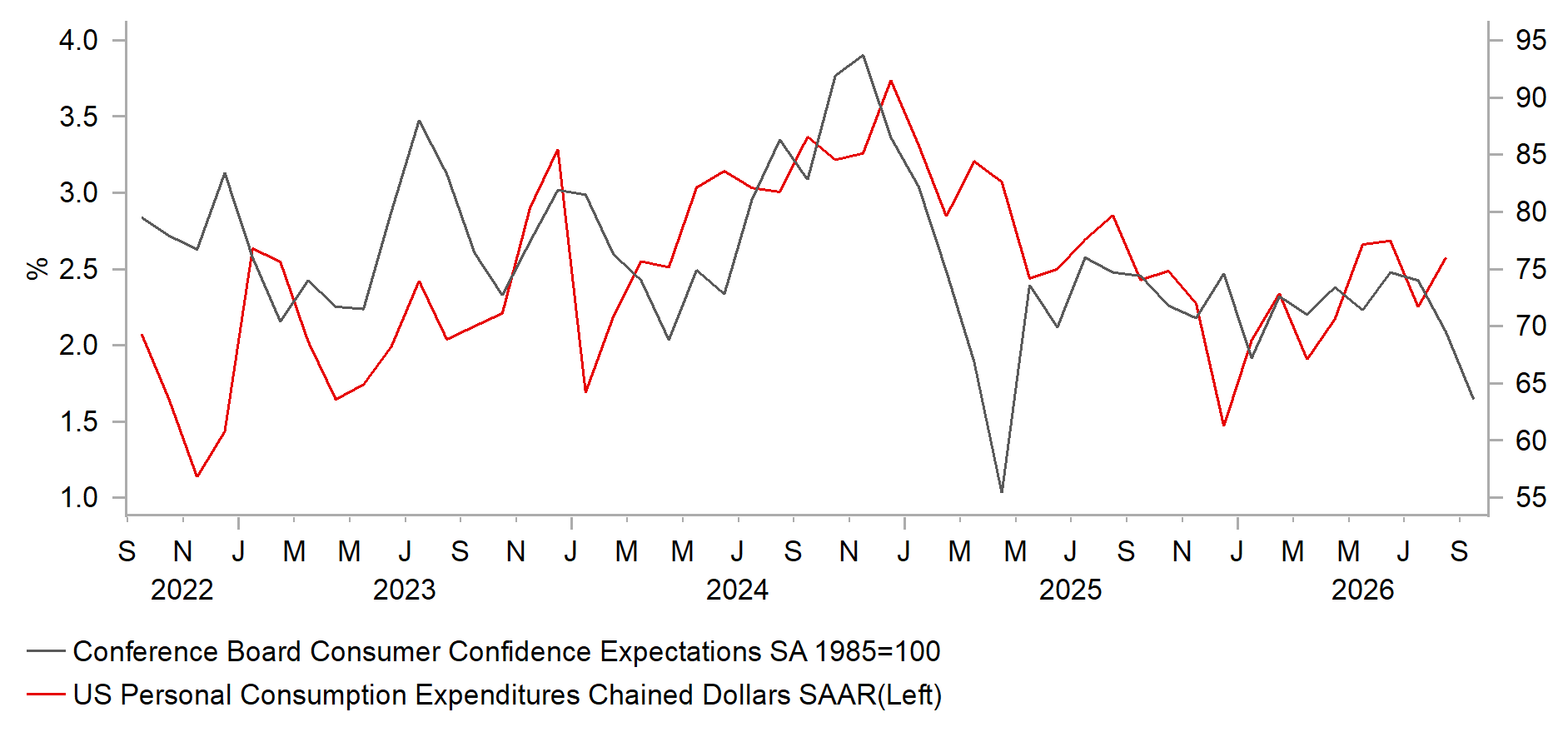
Projecting forward to the middle of 2027 using OIS and consensus for inflation, we estimate a real fed funds rate of 2.90%, similar to the peak real fed funds rate following the global inflation shock in 2022-23. We are sceptical that the US economy requires that degree of monetary tightening. Economic activity has shown resilience but there remain signs of a two-tier economy that highlights fragility. While equity markets remain close to all-time highs and the AI investment boom continues, consumer confidence plunged in September, remarkably hitting a level worse than during covid and the worst since 2014. The JOLTS report also showed a drop in job openings in August. AI momentum could also start to fade. The force majeure by Oracle to protect against delays to construction of a data centre in New Mexico underlines the rising opposition and risk of increased regulation slowing investment.
Our Fed view was incorrect and the hike in September plus another in December alters our US yield forecast profile. We see near-term risks of a further overshoot of yields that could see the dollar extend gains further. However, we have also raised our policy rate forecasts for the ECB, Riksbank, Norges bank, BoE, RBA, BoC, and BoJ, limiting relative yield changes. We still believe the US economy will see inflation come lower sooner than expected and hence the pricing of rate hikes in 2027 will be taken out. Our Q4 EUR/USD forecast has been lowered notably (1.1200 from 1.1800) but US yields should reverse course in 2027 and hence the dollar weakens.
INTEREST RATE OUTLOOK
Interest Rate Close | Q4 2026 | Q1 2027 | Q2 2027 | Q3 2027 | |
Policy Rate | 3.88% | 4.13% | 4.13% | 4.13% | 3.88% |
3-Month T-Bill | 4.11% | 4.18% | 4.18% | 4.18% | 3.93% |
10-Year Yield | 5.28% | 4.75% | 4.63% | 4.50% | 4.38% |
* Interest rate assumptions incorporated into MUFG foreign exchange forecasts.
Last month, the US team updated the US rates and Fed views (see link). From a US monetary policy perspective, if the Fed is to deliver an additional rate hike in 2026, it would make more sense to wait until December when they release the last set of SEPs for the year. Although inflation has proved to be sticky, with elevated pressure primarily coming from energy prices, given that the recent PCE data was less hot than expected has been a relief. That said, the rate of disinflation has proven to be slow, likely too slow for much of the FOMC not to at least deliver two total hikes in 2026. Furthermore, to achieve quicker declines in inflation would likely require a rapid conclusion of the war moreso than from being arrested by a modest hiking cycle (1-3 hikes) from the Fed. The overall term structure has shifted higher on the back of monetary policy expectations repricing. However, embedded in the midst of the recent move up in US rates, especially out the curve and distant forward rates, is the growing fiscal concerns (in the US and abroad), competition for capital from corporates issuers (esp. tech related) all resulting in higher real rates and elevated term premium and not just the anticipation of hikes. (George Goncalves)
DXY VS US 2YR REAL YIELD
Source: Bloomberg, Macrobond & MUFG GMR
US CONSUMER CONFIDENCE VS. US PERSONAL CONSUMPTION
Source: Bloomberg, Macrobond & MUFG GMR
Japanese yen
Spot close 30.09.26 | Q4 2026 | Q1 2027 | Q2 2027 | Q3 2027 | |
USD/JPY | 157.15 | 155.00 | 153.00 | 151.00 | 149.00 |
EUR/JPY | 178.52 | 173.60 | 174.40 | 175.20 | 175.80 |
Consensus | Consensus | Consensus | Consensus | ||
USD/JPY | 156.00 | 154.00 | 152.00 | 150.50 | |
EUR/JPY | 181.00 | 181.00 | 180.00 | 180.00 |
MARKET UPDATE
In September the yen strengthened versus the US dollar in terms of London closing rates from 160.03 to 157.15. In addition, the yen strengthened versus the euro from 185.60 to 178.52. The BoJ at its meeting in September raised the key policy rate by 25bps to 1.25%, the highest level since 1995 and the fourth 25bp hike since January 2025. The BoJ continues to cut JGB monthly purchases at a pace of reduction of JPY 200bn per quarter through to Q1 2027 and will then halt the reduction with monthly purchases from then stabilising at around JPY 2trn per month.
OUTLOOK
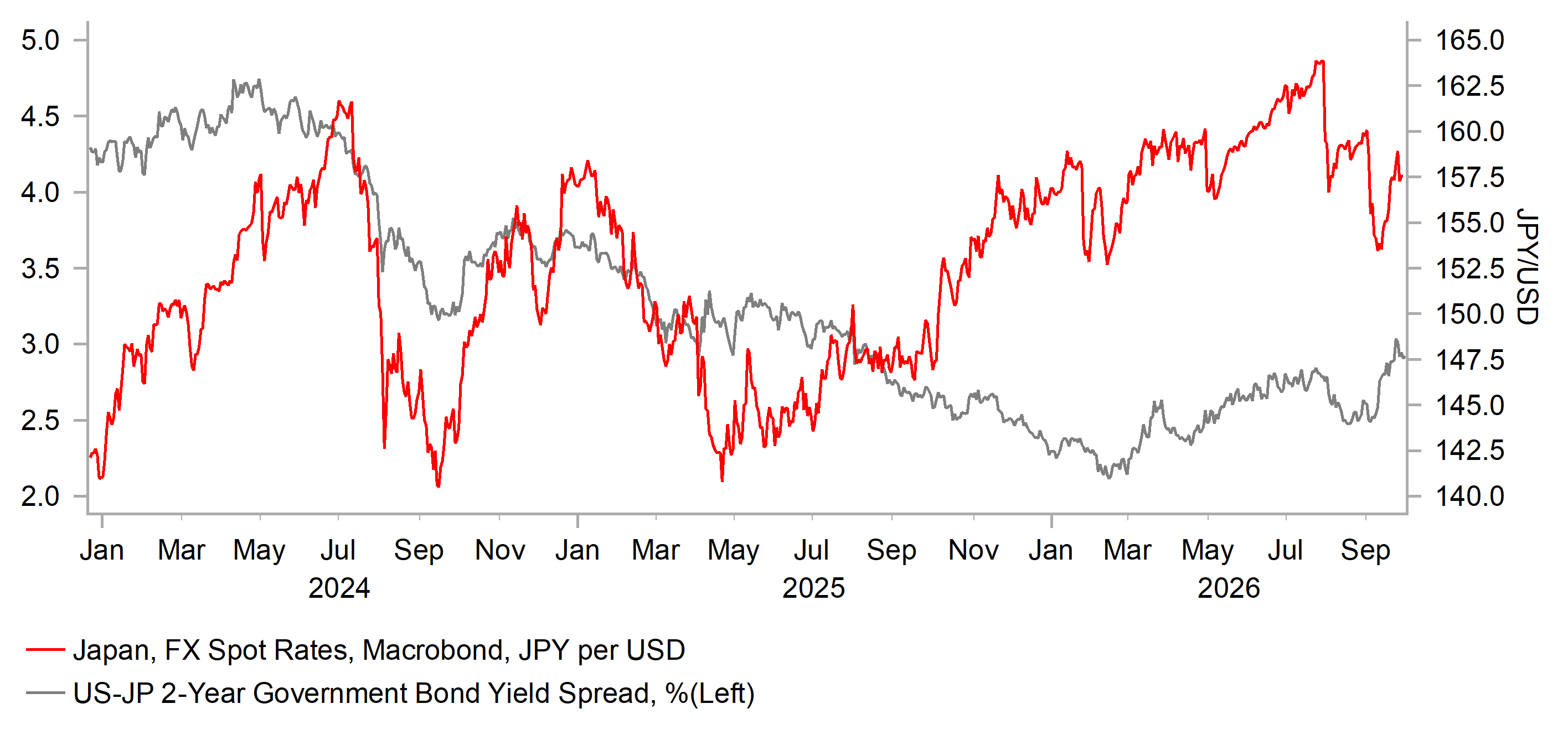
The yen was the top performing G10 currency in September and the only currency to outperform the US dollar. Following the yen buying intervention at the end of July/ beginning of August there was the usual retracement higher for USD/JPY on scepticism over intervention success but then at the start of September the yen surged again, this time on the back of increased speculation of more aggressive monetary tightening by the BoJ. A speech by policy board member Hajime Takata on 2nd September suggesting possible more aggressive tightening ahead prompted a rethink to the market consensus view that the BoJ would remain behind the curve. There were other notable developments as well suggesting a more concerted effort to weaken the yen. FM Katayama stated on 25th September that PM Takaichi “is not a reflationist” and that President Trump had expressed concerns over yen weakness to PM Takaichi. Growth Strategy Minister Miura stated that the “era of Abenomics-style reflationary policies” is over for Japan. Scott Bessent has also implied that a shift in policy direction is underway. These events in September have helped chip away at the perception that the government is pressuring the BoJ to take a softer stance on fighting inflation. Fiscal dominance fears have receded.
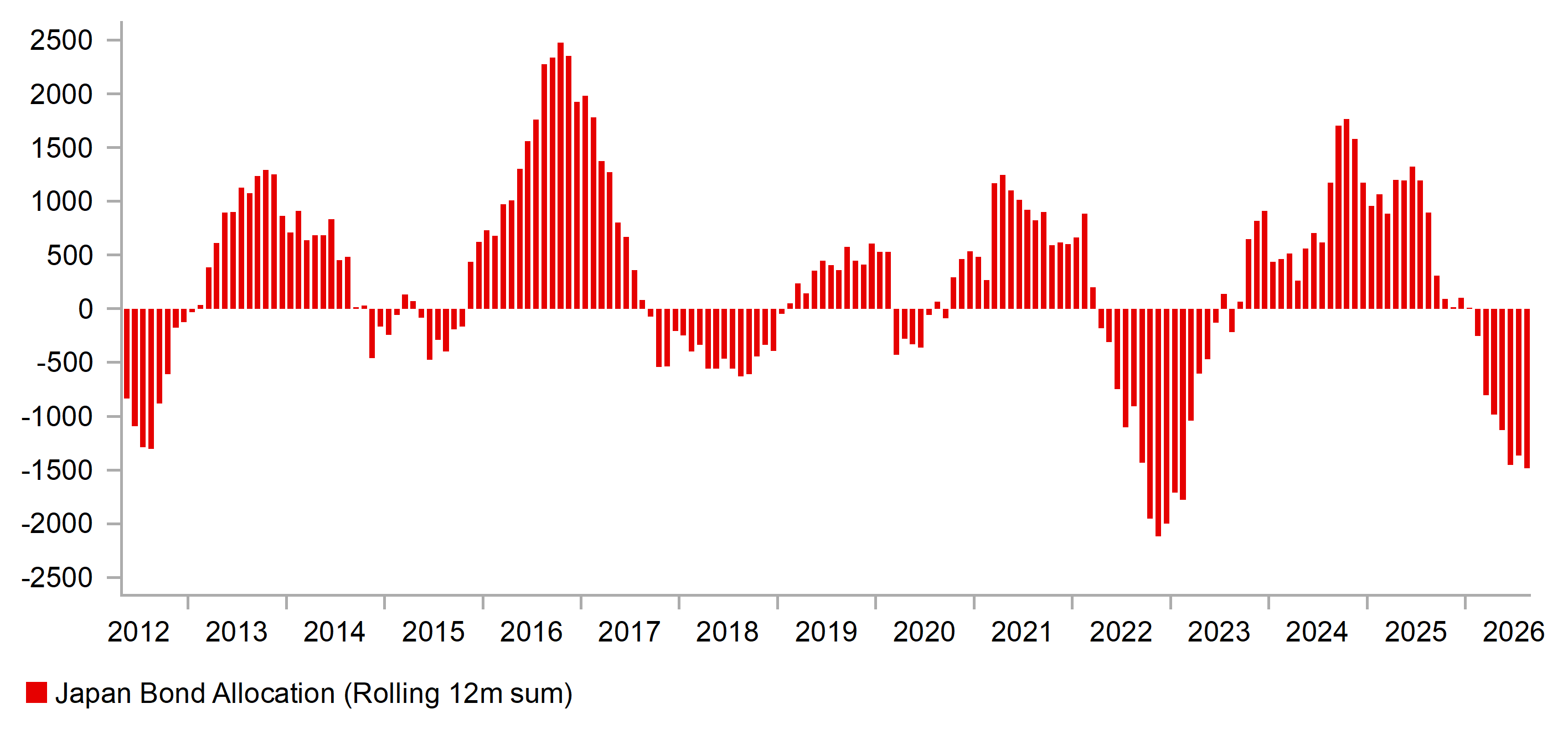
The comments above and the rate hike in September – the first to come just three months after the last – certainly signal to us a shift in policy strategy. We expect this new faster pace of monetary tightening to be maintained and now expect a 25bp hike in December and again in Q1 and Q2 next year, taking the key policy rate to 2.00%. The two most hawkish policy board members (Takata & Tamura) will leave in July 2027, and their departure may bring to an end to the tightening cycle given the policy rate at that level would be well within the range of neutral. Getting policy to at least a neutral setting is imperative for a sustainable improvement in sentiment toward the JGB market. That would open up the prospect of Japanese domestic investors investing in the JGB market to a greater degree than historically which would also help provide support for the yen.
These change of views come at the same time as changes in views to many other G10 central bank policy forecasts. That means from a spread perspective, the net change is not dramatic. We have tweaked (1 big figure) our USD/JPY forecast projections lower given our higher terminal rate outlook for BoJ policy.
INTEREST RATE OUTLOOK
Interest Rate Close | Q4 2026 | Q1 2027 | Q2 2027 | Q3 2027 | |
Policy Rate | 1.25% | 1.50% | 1.75% | 2.00% | 2.00% |
3-Month Bill | 1.24% | 1.60% | 1.80% | 2.10% | 2.20% |
10-Year Yield | 3.07% | 3.10% | 3.20% | 3.20% | 3.30% |
* Interest rate assumptions incorporated into MUFG foreign exchange forecasts.
The 10-year JGB yield increased again in September, by 11bps to close at 3.07%, the highest monthly close since 1997. The rate hike in September marks a shift to a faster pace of monetary tightening which we now assume will continue until the middle of next year – taking the key policy rate to 2.00%, instead of our previous forecast of 1.75%. Following the rate hike in September, the yen weakened and yields fell but we do not believe the communication from Governor Ueda was dovish. Market pricing on future BoJ action had become too aggressive but the general message from Governor Ueda was that more rate hikes are coming. The BoJ is now shifting its strategy from getting the inflation rate to the 2.0% target to maintaining inflation at the target rate. The current market pricing is roughly aligned to our view of reaching 2.00% by mid-2027 and hence we see longer-term rates starting to stabilise at these higher levels. There are some upside risks related to an overshoot of US rates but we now assume further modest gains in the 10-year forecast before stabilising as confidence in BoJ monetary policy improves demand for JGBs.
USD/JPY VS US-JAPAN 2YR YIELD SPREAD
Source: Bloomberg, Macrobond & MUFG GMR
NET JAPANESE FOREIGN BOND PURCHASES
Source: Bloomberg, Macrobond & MUFG GMR
Euro
Spot close 30.09.26 | Q4 2026 | Q1 2027 | Q2 2027 | Q3 2027 | |
EUR/USD | 1.1360 | 1.1200 | 1.1400 | 1.1600 | 1.1800 |
EUR/JPY | 178.52 | 173.60 | 174.40 | 175.20 | 175.80 |
Consensus | Consensus | Consensus | Consensus | ||
EUR/USD | 1.1600 | 1.1600 | 1.1700 | 1.1800 | |
EUR/JPY | 181.00 | 181.00 | 180.00 | 180.00 |
MARKET UPDATE
In September the euro weakened against the US dollar in terms of London closing rates from 1.1598 to 1.1360. The ECB at its meeting in September raised the deposit rate by 25bps to 2.50%, the second hike which followed a hike in June, the first since September 2023. Balance sheet reduction continues with the ECB’s projected maturities from both APP and PEPP expected to result in a EUR 500bn decline in balance sheet holdings in 2026.
OUTLOOK
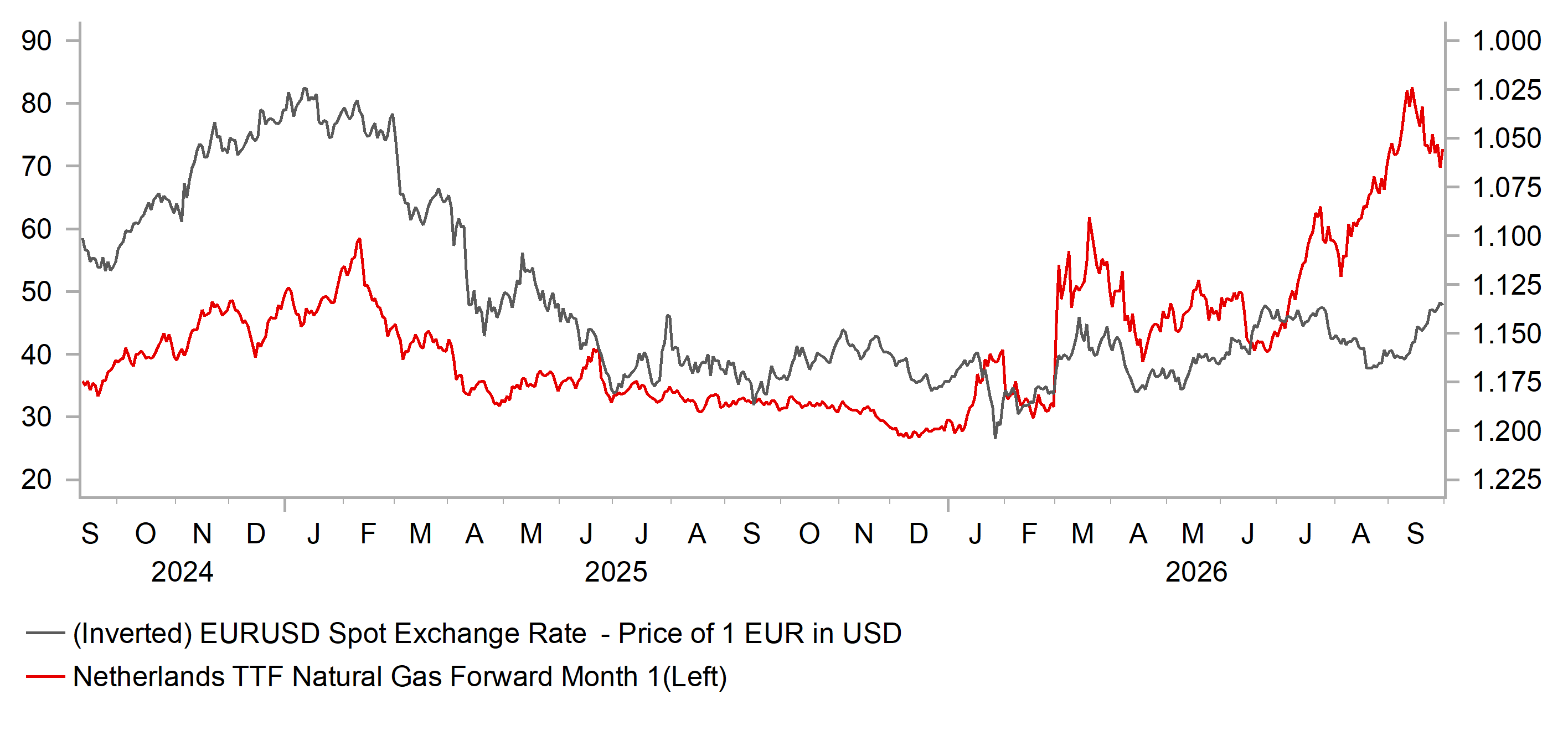
Like nearly every G10 currency, the euro weakened versus the US dollar in September as the Fed rate hike and hawkish rhetoric following the meeting triggered a further readjustment in rate expectations in the US and in many G10 countries. The ECB was also hawkish and front-end rates moved higher but by less than in the US. The sell-off in fixed income globally saw rates volatility surge but this has not yet translated to G10 FX and the appreciation of the US dollar was orderly. TTF natural gas prices also retraced from highs earlier in September to close just 5% higher. Still, risks remain elevated that a more disruptive move higher could unfold that would hurt growth expectations in Europe and likely see EUR sentiment deteriorate further. We have lowered our EUR/USD forecasts to reflect the change in view on the Fed and the assumption that the Middle East conflict will keep energy prices more elevated for longer than assumed previously. The euro drop in September would have been more but for the continued evidence of economic resilience. The advance PMIs for the euro-zone in September were stronger than expected with the Composite PMI increasing to 53.1, the highest level since May 2023. German factory orders surged by 2.5% in July following a 3.7% gain in June. As a result, the annual rate jumped to 13.1%, the biggest gain since July 2021. The strength was very much domestic as well with domestic orders gaining 9.1% and 9.0% MoM in July and June respectively.
With the US dollar strengthening, political uncertainty is adding to negative EUR sentiment. Weak fixed income fundamentals have seen the OAT/Bund spread widen out to levels not seen since the debt crisis in 2012. There have been no specific political developments in France but the OAT/Bund spread widening has highlighted the uncertain political outlook. The passing of the 2027 budget by year-end is not assured while the presidential election in April 2027 is getting closer and may well have an influence in weighing on EUR performance with bond market sentiment so bad. Ending political gridlock is one outcome of the election which may in fact be welcomed by investors, especially with RN continuing to tone down some of the more contentious fiscal policies.
Consequently, we are revising lower our EUR/USD projections substantially over the nearer-term (Q4 was previously 1.1800) but in 2027 we expect EUR/USD to recover after political risks recede and global yields, led by US yields start to retrace lower as current pricing on rate hikes recede as growth slows and inflation subsides.
INTEREST RATE OUTLOOK
Interest Rate Close | Q4 2026 | Q1 2027 | Q2 2027 | Q3 2027 | |
Policy Rate | 2.50% | 2.75% | 3.00% | 3.00% | 2.75% |
3-Month Bill | 2.70% | 2.85% | 3.05% | 2.95% | 2.70% |
10-Year Yield | 3.59% | 3.50% | 3.40% | 3.20% | 3.00% |
* Interest rate assumptions incorporated into MUFG foreign exchange forecasts.
The 10-year German bund yield jumped sharply again in September by a substantial 27bps to close at 3.59%, the highest close since 2009. The month-end close was 29bps above our end-Q3 published at the end of August and hence we have raised our forecast projections for the 10-year bund yield. This change coincides with a change of view on the ECB as well. We previously assumed the ECB would halt its tightening cycle at 2.50% but the extension of the closure of the Strait of Hormuz and hence higher energy prices mean the ECB has more work to do. We now assume the ECB hikes twice more before the end of Q1 next year to 3.00%. That’s fully priced by the markets with a consensus now that the ECB will want to act to take the policy stance into mild restrictive terruitory in order to counter the risk of energy inflation pass-through becoming more widespread. The resilience of the economy in Europe is also a factor here. Q2 GDP growth was revised up to 0.6% Q/Q due to an Ireland revision but even excluding that, growth gives the ECB confidence that the economy can withstand further rate increases. The market still expects more than that and hence we see scope for a moderate decline in 10-year yields going forward.
EUR EER VS OAT-BUND SPREAD
Source: : Bloomberg, Macrobond & MUFG GMR
EUR/USD VS. TTF NATURAL GAS
Source:: Bloomberg, Macrobond & MUFG GMR
Pound Sterling
Spot close 30.09.26 | Q4 2026 | Q1 2027 | Q2 2027 | Q3 2027 | |
EUR/GBP | 0.8557 | 0.8550 | 0.8650 | 0.8700 | 0.8750 |
GBP/USD | 1.3276 | 1.3100 | 1.3180 | 1.3330 | 1.3490 |
GBP/JPY | 208.63 | 203.00 | 201.60 | 201.30 | 200.90 |
Consensus | Consensus | Consensus | Consensus | ||
Consensus | Consensus | Consensus | Consensus | ||
GBP/USD | 1.3500 | 1.3400 | 1.3500 | 1.3600 |
MARKET UPDATE
In September the pound weakened versus the dollar in terms of London closing rates, moving from 1.3556 to 1.3276. The pound was basically stable versus the euro, moving only 1 pip from 0.8556 to 0.8557. The MPC at its meeting in September left the key policy rate unchanged at 3.75%, after six 25bp cuts since August 2024.
OUTLOOK
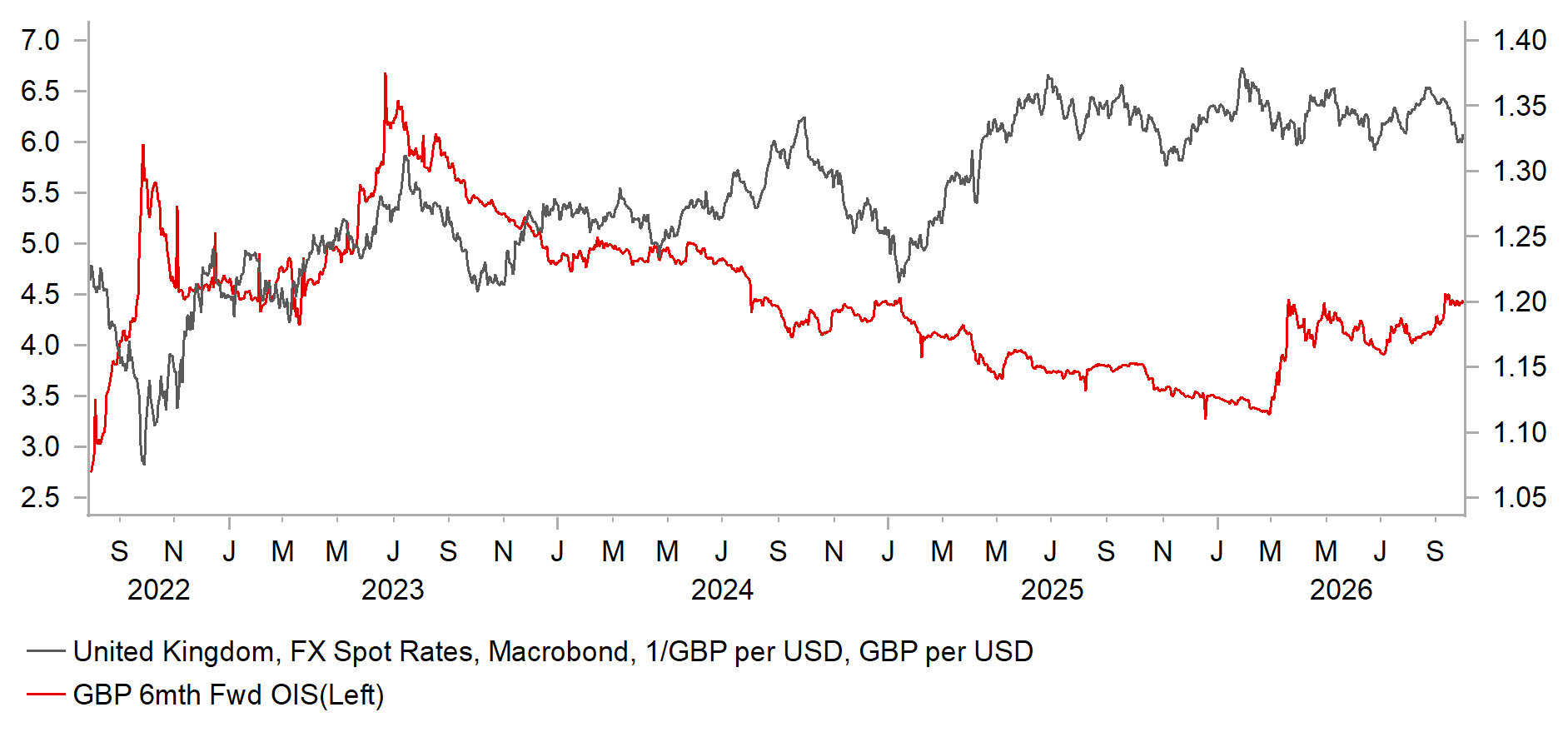
The pound weakened versus the US dollar in September. However, after the yen and the dollar, the pound was the next best performing G10 currency in September. Despite the BoE not hiking in September there was a notable jump in rate hike expectations by the middle of next year – the market now expects 100bps of hikes by July 2027. At the end of August, the market expected 64bps. We don’t see what unfolded in September as justifying such an increase and doubt the BoE will deliver hikes of that extent.
The 6-3 vote to leave the policy rate unchanged in September was no surprise but of the six members who voted for no change, four indicated a possible need for hiking due to energy inflation risks. A rate hike in November is now close to fully priced and some of the other data suggests a resilience that we believe will require scope for two hikes to counter energy inflation feed-through risks. GDP in July expanded by 0.4% MoM after a 0.3% gain in June. The market expected no change in July. Manufacturing activity strengthened while retail sales were stronger than expected in August. Natural gas prices advanced by 75% in the three months to September. Still, while BoE action looks justified, the need to 100bps of hikes over the next 12mths is less clear. The labour market remains a key channel for pass-through of energy to the wider economy via wage growth, but the labour market remains weak. Payrolled employment fell 26k in August after a 19k drop in July. Private sector, ex-bonus wage growth remains close to a level consistent with price stability (2.9%).
The budget takes place on 28th October and it’s like Groundhog Day! Headroom has shrunk from GBP 23.6bn to possibly around GBP 12bn and hence Chancellor Healey will be constrained by what he can offer. Healey stated at the Labour Party Conference that fiscal discipline would be at the core of the budget. That would suggest Healey will try and restore some of that lost headroom and hence the budget will likely contain limited giveaways. The BoE QT announcement (see below) and the DMO possibly announcing a plan to increase issuance of T-bills in order to alleviate Gilt supply concerns are supportive for the long end, and for the pound at the margin.
The notable pick-up in rate hike expectations can act to support the pound over the short-term as the BoE delivers (two hikes in our view). But four rate hikes is excessive and that should see EUR/GBP drift higher in 2027. If Chancellor Healey presents a credible budget in October and the Gilt market stabilises it could help limit downside risks and keep EUR/GBP rangebound.
INTEREST RATE OUTLOOK
Interest Rate Close | Q4 2026 | Q1 2027 | Q2 2027 | Q3 2027 | |
Policy Rate | 3.75% | 4.00% | 4.25% | 4.25% | 4.00% |
3-Month Bill | 4.04% | 4.15% | 4.35% | 4.20% | 3.95% |
10-Year Yield | 5.42% | 5.40% | 5.20% | 5.00% | 4.70% |
* Interest rate assumptions incorporated into MUFG foreign exchange forecasts.
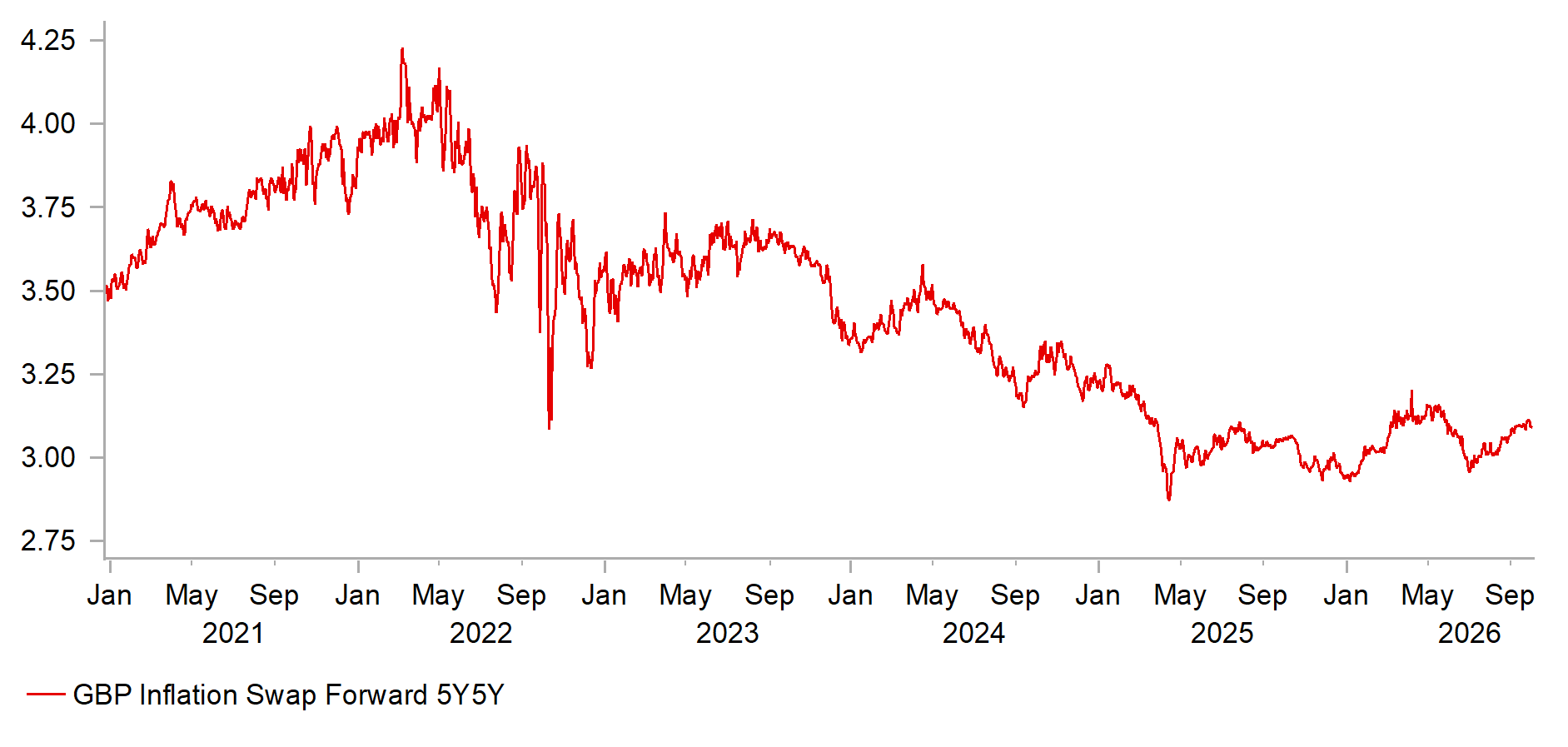
The 10-year Gilt yield jumped in September, by 35bps to close at 5.41%, the biggest monthly jump since March after the US-Iran war began and the highest monthly close since June 2007. The UK government paid its highest yield at a 10-year auction since 1999. The fixed income sell-off was global and led by the US with the shift in monetary policy expectations the primary driver. Fiscal risks linger but were not the driver while inflation expectations (5y5y inflation swap) only increased marginally. Supply concerns have impacted fixed income sentiment and hence the potential for the DMO increase issuance of T-bills to alleviate supply concerns in the Gilt market would certainly help contain yields. The BoE’s announcement at the September meeting of changes to its QT plans will also be supportive. The BoE will now hold onto GBP 120bn worth of longer-dated Gilts (maturing 2049 or later), let bonds maturing by 2035 roll off the balance sheet and sell GBP 146bn of Gilts maturing between 2035 and 2049 to the DMO rather than to the market. These factors should help restore some confidence in Gilts and given these steps and the overpricing of rate hikes we expect the 10-year yield to grind lower.
GBP/USD VS. 6M OIS
Source: : Bloomberg, Macrobond & MUFG GMR
5Y5Y FORWARD INFLATION SWAP
Source: : Bloomberg, Macrobond & MUFG GMR
Chinese renminbi
Spot close 30.09.26 | Q4 2026 | Q1 2027 | Q2 2027 | Q3 2027 | |
USD/CNY | 6.7037 | 6.6500 | 6.6000 | 6.5500 | 6.5000 |
USD/HKD | 7.8468 | 7.8500 | 7.8300 | 7.8200 | 7.8000 |
Consensus | Consensus | Consensus | Consensus | ||
USD/CNY | 6.6900 | 6.6700 | 6.6500 | 6.6200 | |
USD/HKD | 7.8300 | 7.8200 | 7.8200 | 7.8100 |
MARKET UPDATE
In September, USD/CNY moved from 6.7272 to 6.7037. On 29th September, the PBoC lowered the 1Y Pledged Supplementary Lending (PSL) rate for the second time in the year, by 25bps to 1.50% while keeping other interest rates (e.g., LPR and reverse repo) unchanged.
OUTLOOK
While August data remained disappointing and continued to point to K-shaped dynamics, we are starting to see early signs of growth bottoming out as policy measures gradually take effect. The official manufacturing PMI print edged higher and returned to expansionary territory in September benefited from stronger production, with the new orders remaining resilient though employment deteriorated somewhat. While the official services PMI also returned to slightly above the 50-level, the main highlight was the relatively strong improvement in construction PMI at 50.3, marking its first expansionary reading of the year. Such a reading is consistent with the sequential pick-up in the weekly cement shipment rate we tracked in September, and the business expectation PMI for construction also jumped by 3.6ppts to 55.4. We think it is linked to the official launch of the new RMB 800bn policy-based financial instrument in early September and a likely accelerated pace of government bond issuance, supporting infrastructure work including “Six Network”. From the State Council executive meeting chaired by Premier Li Qiang on 28th September, it clearly signalled a higher urgency to enhance counter-cyclical adjustments of macro policies to meet the annual growth target. Not only it emphasized a faster pace of implementation of existing policies but also mentioned to introduce “practical” incremental policies, which implies a targeted approach rather than broad-based.
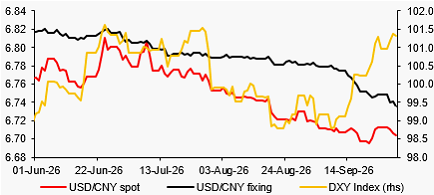
On 29th September, a comprehensive set of stimulus packages was announced: 1% mortgage subsidy for first-time home buyers (up to 5 years), 25bps rate cut on 1Y PSL rate with the expanded scope including “Six Network”, increased relending quota for tech and equipment upgrade (by RMB 200bn),agricultural and small businesses (by RMB 500bn) which includes private enterprises (by RMB 300bn). In particular, the share of tech and equipment upgrade loan eligible for the facility funding was raised from 60% to 100%. While the mortgage subsidy is supportive, its impact is likely to be limited as eligibility is restricted to smaller units (up to 120 sqm) and lower-priced homes (up to RMB1.5mn), primarily benefiting lower-tier cities. Overall, we view the packages as providing incremental support to growth and increasing the likelihood of achieving the government's annual target, albeit near the lower end of the 4.5-5.0% range.For the RMB, a still large trade surplus should remain supportive in Q4. However, elevated US Treasury yields and continued dollar strength likely limit the room of CNY’s strengthening. Recent USD/CNY fixings suggest the PBoC remains committed to RMB stability. By setting fixings stronger than market expectations amid dollar-driven RMB weakness, policymakers have signaled a clear intention to resist one-sided depreciation pressures.
INTEREST RATE OUTLOOK
Interest Rate Close | Q4 2026 | Q1 2027 | Q2 2027 | Q3 2027 | |
LPR 1Y | 3.00% | 3.00% | 3.00% | 3.00% | 3.00% |
7-Day Reverse Repo Rate | 1.40% | 1.40% | 1.40% | 1.40% | 1.40% |
10-Year Yield | 1.67% | 1.75% | 1.80% | 1.85% | 1.85% |
* Interest rate assumptions incorporated into MUFG foreign exchange forecasts.
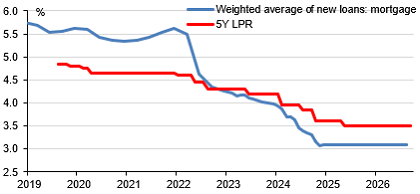
The PBoC delievered a targeted easing through structural monetary policy tools as we previously expected, on both price (25bps cut to 1Y PSL rate) and quantity (expanded relending quotas). Enhancing the fiscal-financial coordination policy, the newly announced 1% mortgage subsidy is not insigificant as the new mortgage rate is at 3.1%, with the 10Y CGB yield retracing part of its earlier (small) decline. However, the fact that only first-time homebuyers purchasing a small unit in lower tier city can enjoy this policy disappointed the market, implies that this new policy is at the lower end of the market’s expectation range of potential property stimulus policies. The PBoC is likely to keep the 7-day reverse repo rate unchanged toward end of year, barring any significant downside growth surprise, to protect bank profitability and RMB stability. We expect bond yields to edge slightly higher as growth stabilizes and bond issuance picks up. That said, the upside in yields should be capped by still-subdued inflation, lingering property-sector weakness, PBoC's accommodative policy stance and banks’ demand for government bond, suggesting that any bond sell-off is likely to be gradual rather than disorderly.
USD/CNY SPOT IS GUIDED LOWER BY THE PBOC USD/CNY FIXING
Source: Bloomberg, MUFG GMR
NEW MORTGAGE RATE HAS BEEN STEADY AT AROUND 3.1%
Source: CEIC, MUFG GMR