
Key Points
We maintain a sanguine outlook for the ringgit. Higher oil prices and subsidy-related fiscal concerns may generate bouts of ringgit weakness. But notably, Malaysia's electronics trade surplus has been able to offset the higher oil import bill. Coupled with still resilient macro fundamentals, attractive sovereign bond and ringgit valuations, and the prospect of an eventual weakening of the US dollar, we see scope for ringgit strength despite these headwinds. We have a USD/MYR forecast of 4.0300 by end-2026.
Fiscal pressures are rising but remaining manageable. Malaysia’s strong nominal GDP growth, stable sovereign credit ratings, continued market access, and fuel subsidies acting as an inflation shock absorber should help prevent fiscal concerns from becoming a material threat to Malaysia's medium-term growth outlook. Government debt to GDP ratio has been stable at around 65%.
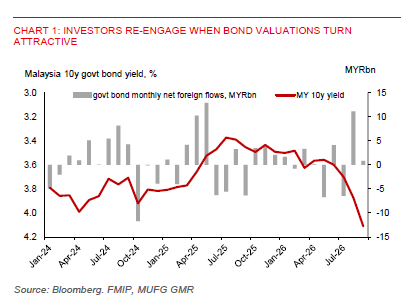
Attractive bond valuations are drawing foreign investors back. The sell-off in Malaysian government bonds has improved risk-reward dynamics, with the 10-year yield currently fairly valued based on our estimates. Renewed foreign bond inflows in August and strong demand for recent sovereign issuances suggest investor confidence in Malaysia’s government bonds remains intact.
Malaysia's equity market could become a larger source of MYR support. Improving corporate earnings, planned KLCI expansion from 30 to 50 constituent members by end year, and Malaysia's low weight in the MSCI EM index create scope for greater foreign equity participation and portfolio inflows over time.
The prospects of an eventual weakening of the US dollar will also matter. While long-end US treasury yields are rising, the dollar is softening, possibly reflecting fiscal concerns. Combined this with Malaysia's resilient electronics-driven trade surplus, anchored inflation expectations, and policy credibility, this supports further USDMYR downside in our view.