
Key Points
The pace of rupiah depreciation might moderate, but the broader depreciation trend is unlikely to be over. USDIDR has retraced nearly 500 points from its peak as crowded long USDIDR positioning unwinds and some foreign inflows return. However, headwinds from elevated US yields and higher oil prices remain in place. We maintain our forecast for USDIDR at 18,350 by end-2026.
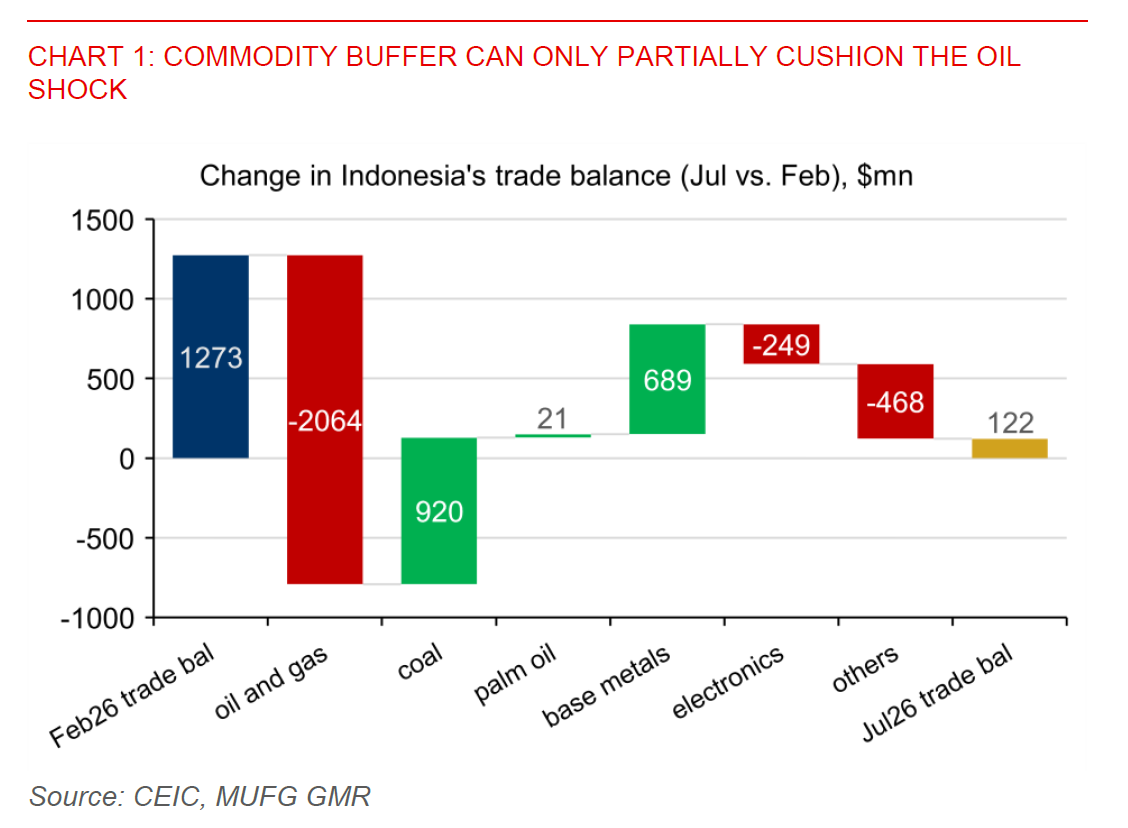
Indonesia's trade balance remains under pressure. While the goods trade balance returned to a modest surplus in July after deficits in the prior two months, it remains well below the monthly average surplus recorded in 2025. Surpluses in coal, palm oil, and base metals are only partially offsetting the oil shock impact. Our estimates suggest Indonesia's commodity trade balance is negatively impacted once Brent rises above US$82/bbl. With Brent currently above US$90/bbl, trade-balance pressures are likely to persist, limiting the scope for sustained rupiah appreciation.
The government’s B50 biodiesel programme is primarily an energy-security strategy rather than a near-term trade-balance windfall. While lower diesel imports could save roughly US$1.5-2.0bn in H2, much of the benefit is offset by palm oil being diverted from exports towards biodiesel production. The key test is whether Indonesia can raise CPO production sufficiently to support both domestic biodiesel demand and exports.
The stronger support for IDR in the near term is portfolio inflows, but this buffer may be approaching maturity. Foreign ownership of SRBI has risen back to around 27%, close to late-2024 highs, while SRBI yields have started to moderate from their June peak. BI's strategy of raising the return on portfolio capital has been effective in stabilising USDIDR, but its ability to drive further sustained rupiah gains may be diminishing amidst rising US yields and oil prices.
Several macro and market risks continue to argue against a structurally bullish rupiah view. MSCI's removal of GoTo from the Indonesia index highlights ongoing concerns around market accessibility and liquidity, while uncertainty remains over the future direction of state-led commodity export reforms under Danantara Sumber Daya Indonesia (DSI). At the same time, headline inflation has accelerated to 3.19%yoy and core inflation continues to trend higher, raising the possibility of further BI rate hikes if energy and food price pressures persist.