

To read the full report, please download PDF.
Fundamentals aligned for a stronger USD
FX View:
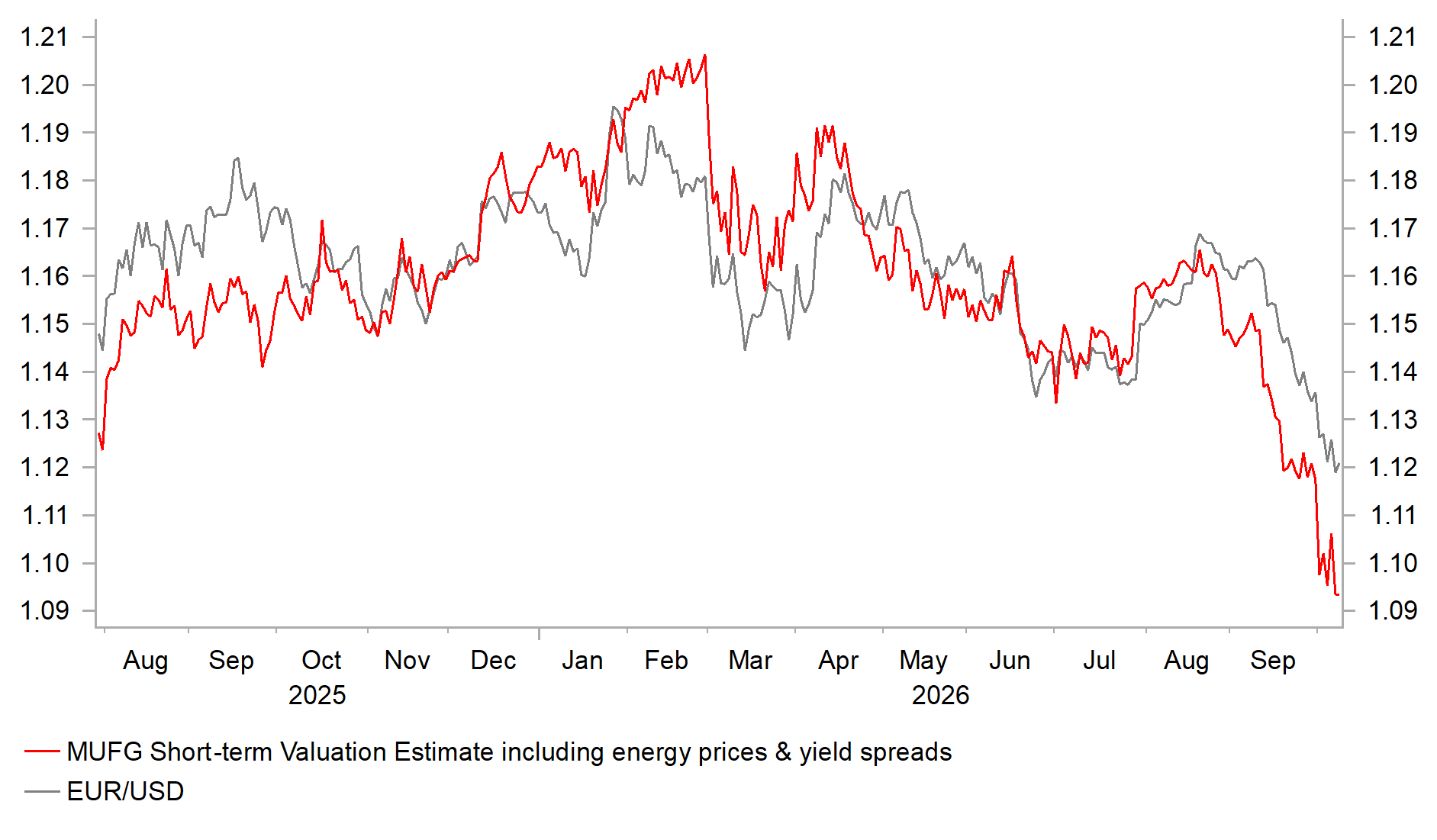
The USD continues to trade close to year-to-date highs although it has lost some upward momentum over the past week. Absent a significant upside surprise from the US CPI report for September in the week ahead, the Fed is likely to leave rates on hold this month. Fed Chair Kevin Warsh is scheduled to speak at the IMF Annual meetings in Thailand for the first time since the September FOMC meeting. Recently the stronger USD has been driven increasingly by negative developments overseas. Building concerns over the negative fallout for the euro area from a more prolonged energy price shock and higher borrowing costs particularly for France have reinforced the USD’s upward momentum. The French government’s latest budget plans have failed to restore investor confidence, and there is no clear near-term catalyst to trigger a turnaround in bearish sentiment. It leaves the EUR vulnerable to further weakness in the week ahead.
MIXED G10 FX PERFORMANCE
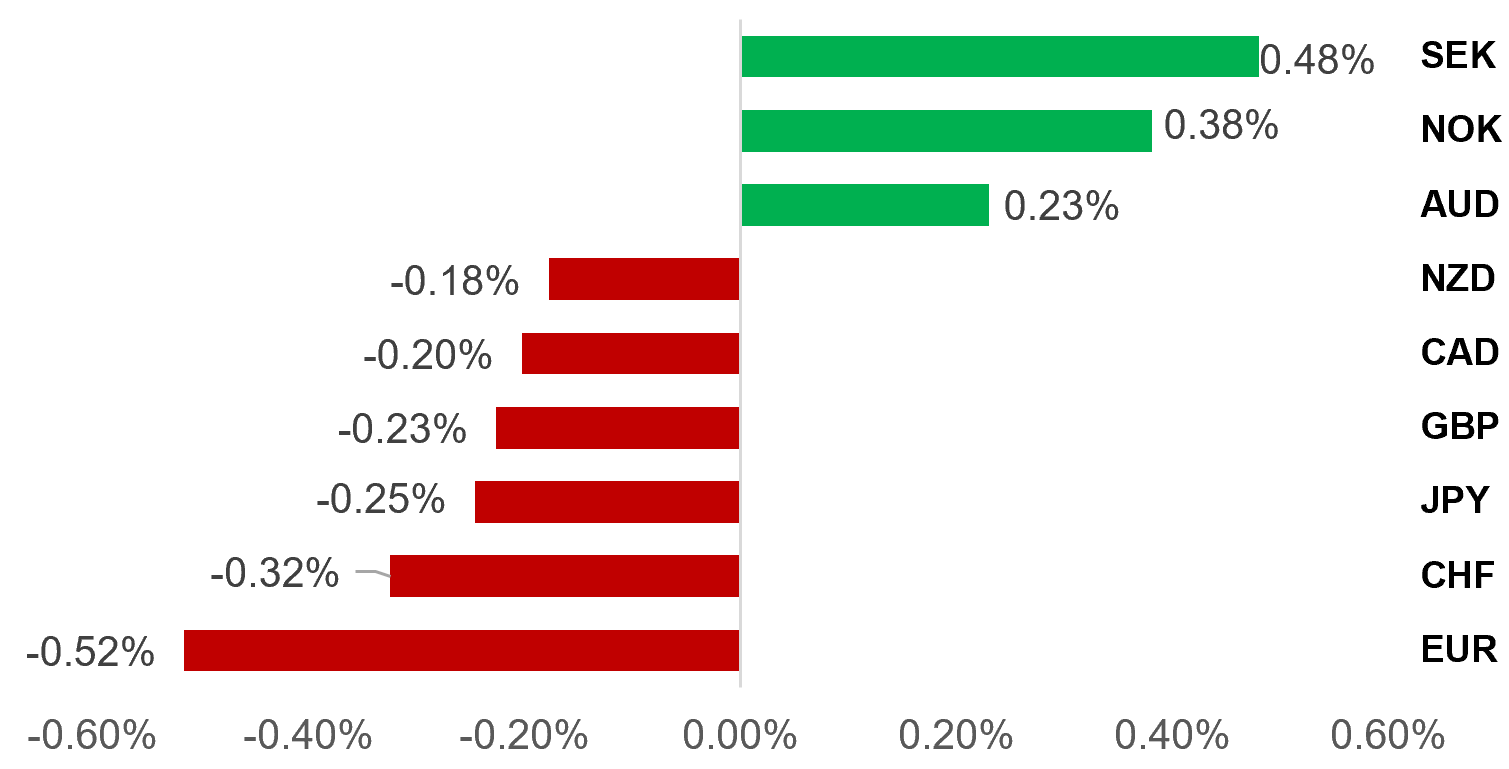
Source: Bloomberg, close on 9th October (Weekly % Change vs. USD
Trade Ideas:
We are maintaining long USD/SEK and short EUR/JPY trade ideas.
JPY Flows - Portfolio securities:
The MoF Transactions in International Securities data for the month of September was released yesterday and unsurprisingly, Japanese investors were sellers of foreign bonds. Lifers were sellers of foreign bonds by the largest amount since March. Perhaps the most persistent yen negative flow has been Investment Trust purchases of foreign equities. -
EUR price action analysis during periods of weakness:
Our analysis highlights that the CHF tends to outperform during periods of EUR weakness reflecting its role as a regional safe haven currency. In contrast, the HUF and NOK have tended to underperform during periods of EUR weakness.
FX Views
FX: Lacking a clear catalyst to turnaround bearish EUR sentiment
The USD has been consolidating at higher levels over the past week with the dollar index trading at close to year-to-date highs. It has been a similar story in global bond markets where the sell-off has lost some momentum over the past week. At the same time, the US equity markets hit fresh year-to-date highs driven by AI/tech related stocks. After hitting a low in late July, the Nasdaq equity index has since risen by around 13% despite the sharp adjustment higher in global bond yields. The tentative improvement in global investor risk sentiment has encouraged a relief rebound for the high beta G10 commodity currencies of the AUD and CAD over the past while the SEK has partially reversed sustained in September.
The pick-up in bond market volatility has not yet spilled over into the US equity where the VIX index measure of equity market volatility remains close to year-to-date lows. FX market volatility has picked up more particularly for emerging market currencies as the USD has strengthened. However, it is still at relatively low levels which helped to curtail the risk of a bigger unwind of FX carry trades. The biggest loser amongst emerging market currencies since the start of September has been the MXN (-6.5% vs. USD) while other high yielding emerging market currencies such as the BRL (+2.5%) have held up much better boosted by favourable domestic political developments. Flavio Bolosnaro’s victory in the first round of the presidential election has triggered a significant positive reassessment of the outlook for Brazilian assets and the real. A shift to more market friendly policies including plans for tighter fiscal policy carries even more weight given building market concerns over debt sustainability triggered by rising borrowing costs.
The French government bond market is currently the focal point for building fiscal concerns which has reinforced downward pressure for the EUR from the ongoing energy price shock and the Fed’s recent decision to begin rising rates. As we highlighted in our latest FX Focus report (click here), the French government bond have suffered their biggest sell-off in recent months since the autumn of 2022 during the last energy price shock triggered by Russia invading Ukraine. It has widened the yield spread between Frech and German government bonds to the highest levels since the euro-zone sovereign debt crisis between 2011 and 2012. Borrowing costs for France have risen to the highest level since 2022 reinforcing market pressure on the government to adopt credible fiscal tightening measures to restore investor confidence.
However, the recent unveiling of the government’s budget plans for next year failed to restore investor confidence. Market participants remain sceptical over whether the minority government will be able to implement fiscal tightening as planned ahead of next year’s presidential elections, and the plans are based on overly optimistic growth forecasts similar to this year. Higher borrowing costs and energy prices alongside heightened political uncertainty will put a dampener on growth in 2027. On the other hand, it has been reassuring that RN leader Le Pen who is the current front runner to be next president is calling for tighter fiscal policy and has outlined a shadow budget and long-term fiscal calling to burnish her deficit-cutting credentials which include holding a referendum to introduce a German-style debt brake. The true test of her ability and willingness to implement more aggressive fiscal tightening will only come after the presidential elections, and until then market participants are understandably likely to remain sceptical.
LIMITED SPILLOVER FROM BOND MARKET VOLATILITY
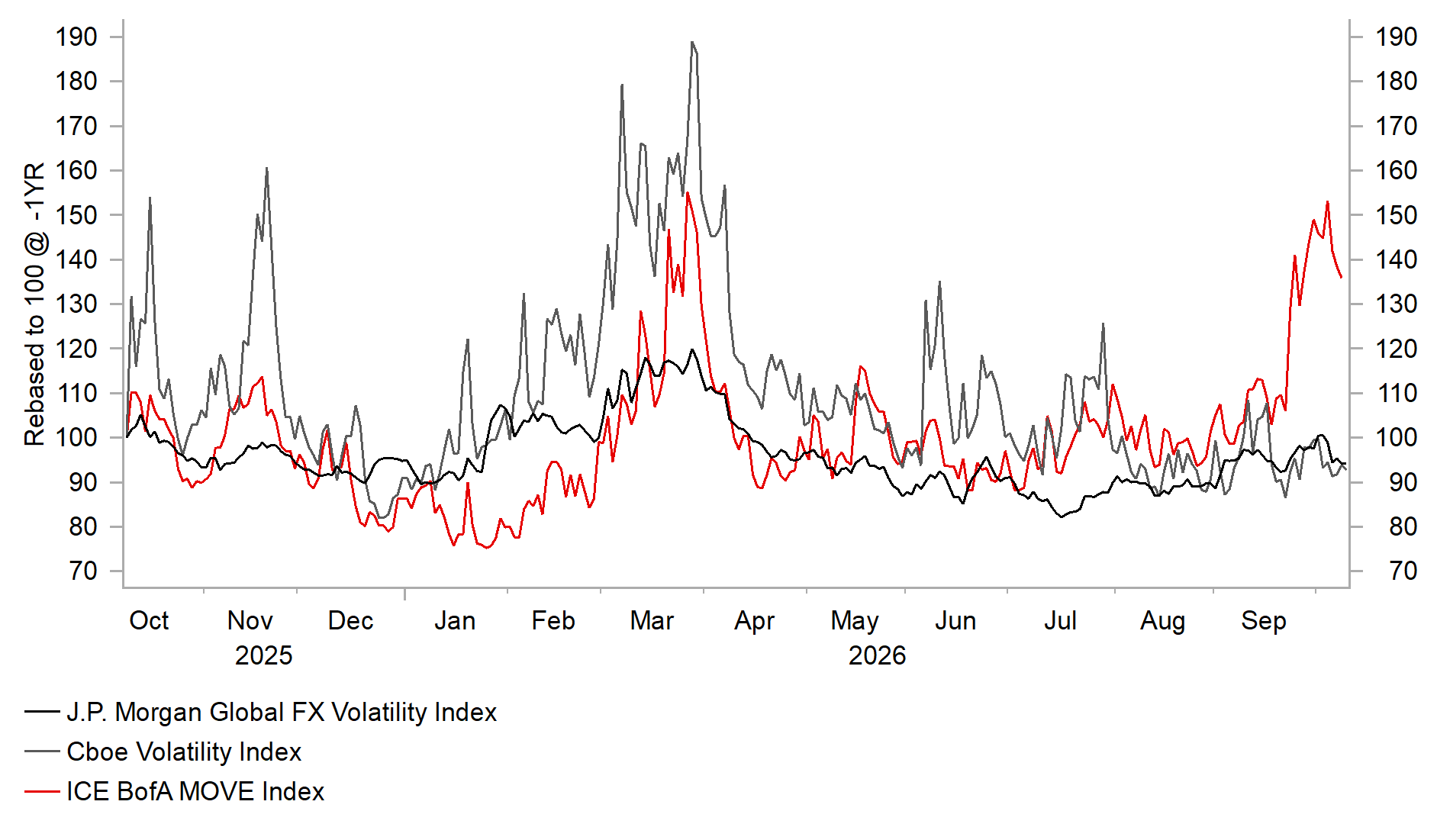
Source: Bloomberg, Macrobond & MUFG GMR
FX CARRY HAS PROVEN RESILIENT SO FAR
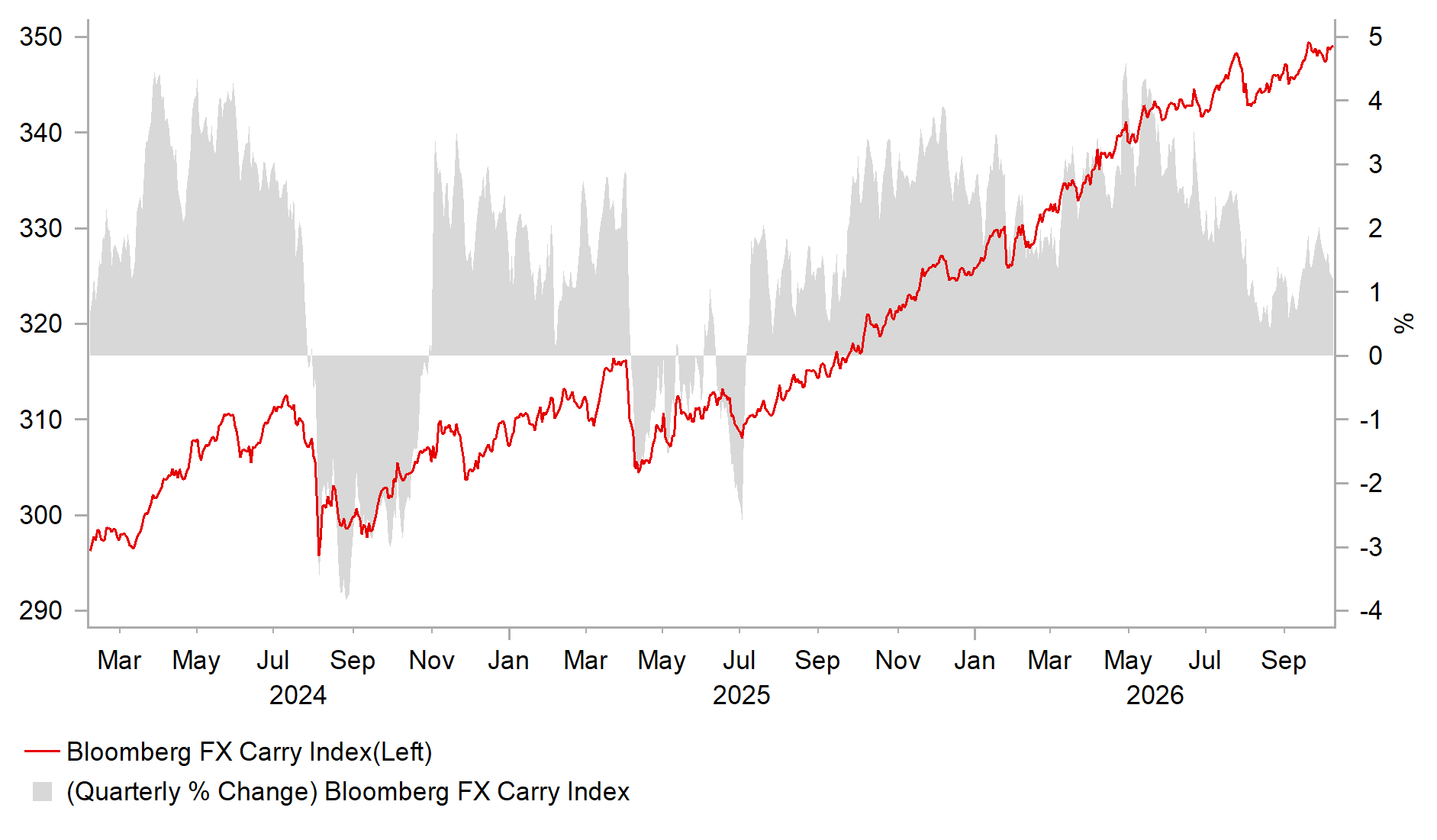
Source: Bloomberg, Macrobond & MUFG GMR
It leaves the EUR on fragile ground heading into year end without a clear catalyst to trigger a turnaround in sentiment. One potential external catalyst would be deal to end the conflict between the US and Iran, and help ease the risk of a more prolonged energy price shock. The price of natural gas in Europe has rien back up towards year-date highs over the past week after the run up over the summer highlighting that market participants have grown increasingly pessimistic over a breakthrough in peace talks. Rising borrowing costs complicates the ECB’s job in setting monetary policy for the euro area. The unwanted tightening in financial conditions is a headwind for economic growth and will help ease upside inflation risks so could curtail the need for further ECB rate hikes. It has already encouraged euro-zone rate market participants to pare back expectations for more aggressive ECB hikes including another hike as soon as this month. The ECB’s biggest concern though if yield spreads continue to widen out sharply between euro area members will be the potential for disruption to the smooth transmission of monetary policy. According to Bloomberg, President Lagarde reassured euro area finance ministers at a behind closed door meeting this week that the ECB has the instruments to counter warranted, disorderly market dynamic such as the Transmission Protection Instrument (TPI). However, there was no indication that they are currently considering any form of imminent market intervention.
Rising government borrowing costs are also increasing pressure on the UK government to adopt a more cautious approach when laying out their fiscal plans in the upcoming Budget scheduled to be released on 28th October. It will be crucial for new Labour leader Andy Burham to lay out credible fiscal policy plans preserving the government’s fiscal headroom in order to maintain market confidence. A less risky budget that delays bigger fiscal policy changes until a later date would help to dampen downside risks for the GBP. The GBP has risen to fresh-year to-date highs against the EUR over the past week as the market’s focus has shifted towards risk in the euro area.
EUR SELL-OFF BROADENS OUT
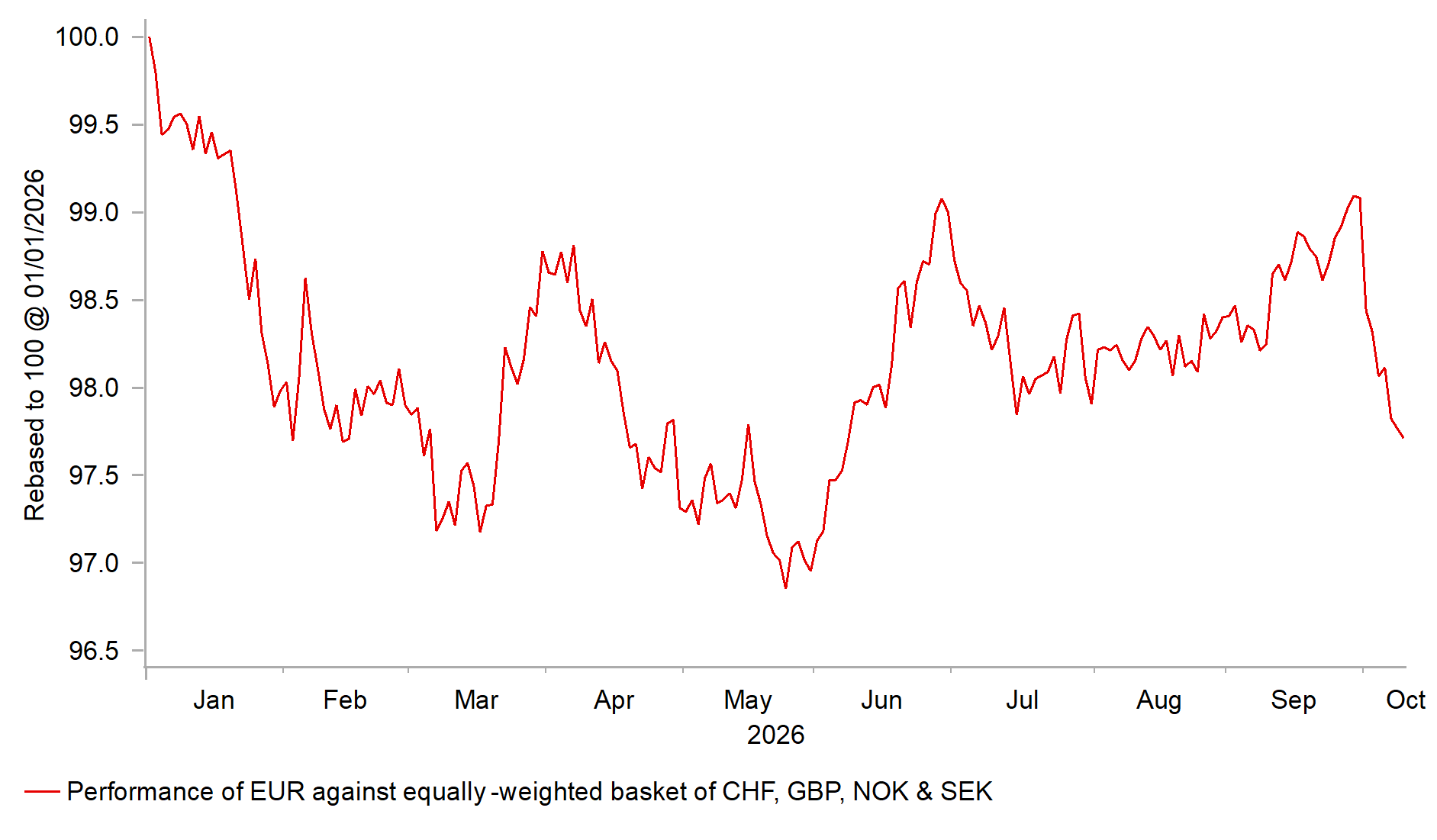
Source: Bloomberg, Macrobond & MUFG GMR
RISKS SKEWED TO DOWNSIDE FOR EUR
Source: Bloomberg, Macrobond & MUFG GMR
Weekly Calendar
Ccy | Date | BST | Indicator/Event | Period | Consensus | Previous | Mkt Moving |
USD | 12/10/2026 | 17:10 | Fed's Hammack Speaks | !! | |||
AUD | 13/10/2026 | 01:30 | RBA Minutes of Sept. Policy Meeting | !! | |||
EUR | 13/10/2026 | 07:00 | Germany CPI YoY | Sep F | -- | 3.3% | !! |
USD | 13/10/2026 | 08:45 | Fed's Waller Speaks | !!! | |||
USD | 13/10/2026 | 11:00 | NFIB Small Business Optimism | Sep | 98.0 | 98.7 | !! |
USD | 13/10/2026 | 15:00 | Existing Home Sales | Sep | 3.96m | 3.98m | !! |
EUR | 14/10/2026 | 04:45 | ECB's Moulin Speaks | !! | |||
SEK | 14/10/2026 | 07:00 | CPI YoY | Sep F | -- | 1.1% | !! |
USD | 14/10/2026 | 10:40 | Fed Governor Bowman Speaks | !!! | |||
USD | 14/10/2026 | 13:30 | Core CPI MoM | Sep | 0.2% | 0.3% | !!! |
USD | 14/10/2026 | 19:00 | Fed Releases Beige Book | !! | |||
CAD | 14/10/2026 | Tbc | BoC’S Macklem Joins Fireside Chat | !!! | |||
AUD | 15/10/2026 | 01:30 | Employment Change | Sep | 20.0k | 39.5k | !!! |
JPY | 15/10/2026 | 05:30 | Industrial Production MoM | Aug F | -- | -1.7% | !! |
GBP | 15/10/2026 | 07:00 | Monthly GDP (MoM) | Aug | -- | 0.4% | !! |
CHF | 15/10/2026 | 07:30 | Producer & Import Prices MoM | Sep | -- | 0.7% | !! |
EUR | 15/10/2026 | 07:45 | France CPI YoY | Sep F | -- | 3.00% | !! |
EUR | 15/10/2026 | 10:00 | Industrial Production SA MoM | Aug | -- | -0.1% | !! |
USD | 15/10/2026 | 13:30 | Retail Sales Advance MoM | Sep | 0.3% | 1.1% | !!! |
USD | 15/10/2026 | 13:30 | Initial Jobless Claims | -- | -- | !! | |
USD | 15/10/2026 | 13:30 | PPI Final Demand MoM | Sep | 0.5% | 0.4% | !! |
GBP | 16/10/2026 | 03:00 | BoE's Bailey in Fireside Chat | !!! | |||
USD | 16/10/2026 | 04:30 | Fed's Warsh in Fireside Chat | !!! | |||
SEK | 16/10/2026 | 07:00 | Unemployment Rate | Sep | -- | 8.5% | !! |
EUR | 16/10/2026 | 10:00 | Trade Balance SA | Aug | -- | 5.0b | !! |
EUR | 16/10/2026 | 10:00 | CPI YoY | Sep F | -- | 3.8% | !! |
USD | 16/10/2026 | 13:30 | Import Price Index MoM | Sep | -- | 0.7% | !! |
Source: Bloomberg & MUFG GMR
Key Events:
The main economic data release in the week ahead will be the latest US CPI report for September. The report is expected to show that headline inflation picked up to 3.6% in September. The rise in headline inflation since the start of the US-Iran conflict has been driven almost entirely by higher energy prices. Market participants and the Fed will be watching the core inflation reading closely for any tentative signs that inflation pressures are broadening. Core inflation picked up in August, driven by the services sector, increasing by 0.3% m/m, although it is expected to ease back to 0.2% m/m in September. Another upside surprise would likely be required to revive market expectations of a back-to-back Fed rate hike as soon as this month. The release of the latest US retail sales report for September is also expected to provide confirmation that consumer spending continued to grow strongly in Q3.
Toward the end of the week, Fed Chair Warsh is scheduled to participate in a fireside chat at the IMF Annual Meetings in Thailand. He has not spoken publicly since the September FOMC meeting, so his comments will be watched closely for further guidance on the policy outlook ahead of the October meeting.
Other central bank speakers around the IMF’s Annual meetings in Thailand include BoE MPC members Bailey, Pill, Greene and Breeden. The comments will be watched closely to see if the BoE sends a clear signal that they are planning to hike rates from next month. The close proximity of the UK government’s upcoming budget on 28th October may still discourage the BoE from sending a definitive signal over a November hike until uncertainty over the fiscal policy outlook has cleared. While higher government borrowing costs are contributing to tighter financial conditions, we still expect the BoE to raise rates next month.