

To read the full report, please download PDF.
FX performance tightly linked to risk sentiment
FX View:
The USD has corrected modestly lower over the past week following a sharp strengthening over the month as a whole, which lifted it to its strongest level against other major currencies since President Trump’s ‘Liberation Day’ tariff announcement in April 2025. Swings in global investor risk sentiment have been the main driver of FX market performance over the past week. Global equity markets are finishing the week on a firmer footing, although sentiment remains fragile. Expectations for faster Fed rate hikes have created a more challenging backdrop for risk assets, compounded by the loss of investor confidence in AI-related investments. The EUR has held up better over the past week but remains close to year-to-date lows below 1.1000. In this week’s report, we take a closer look at the outlook for the EUR in 2027. With a lot of bad news already priced in, we believe the balance of risks could begin to gradually turn more supportive.
MIXED G10 FX PERFORMANCE AS USD RALLY STALLS
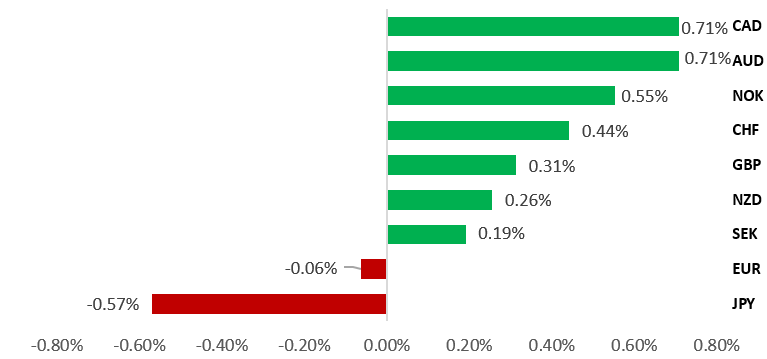
Source: Bloomberg, as of 27th November 2026 14.55 GMT (Weekly % Change vs. USD)
Trade Ideas:
We are maintaining a short USD/CHF trade recommendation.
JPY Flows:
The Balance of Payments data for September revealed a worsening trade deficit, in part due to energy and selling of US bonds by Japanese investors.
Seasonality Bias in FX:
December seasonality favours long SEK and CHF positions against USD heading into year-end, with the strongest effects concentrated in select currencies rather than across the broader G10. The USD has the clearest negative seasonal. It has underperformed by 0.65% on average and has been negative in approximately 75% of historical December observations, with an even stronger negative tendency in recent periods.
FX Views
EUR: Will the balance of risks for EUR/USD begin to shift in 2027?
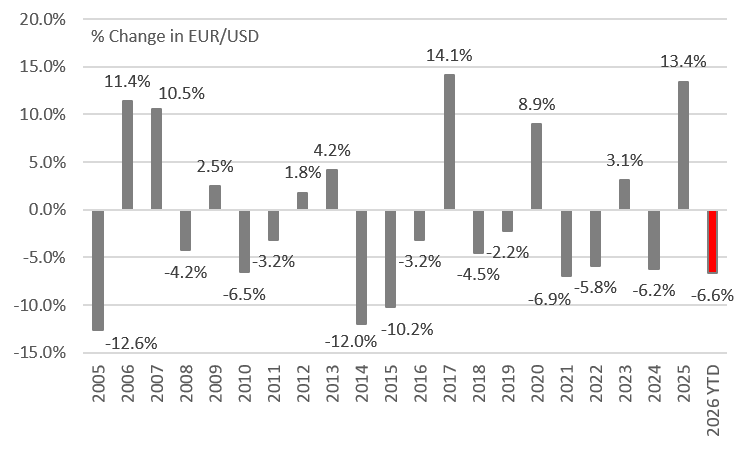
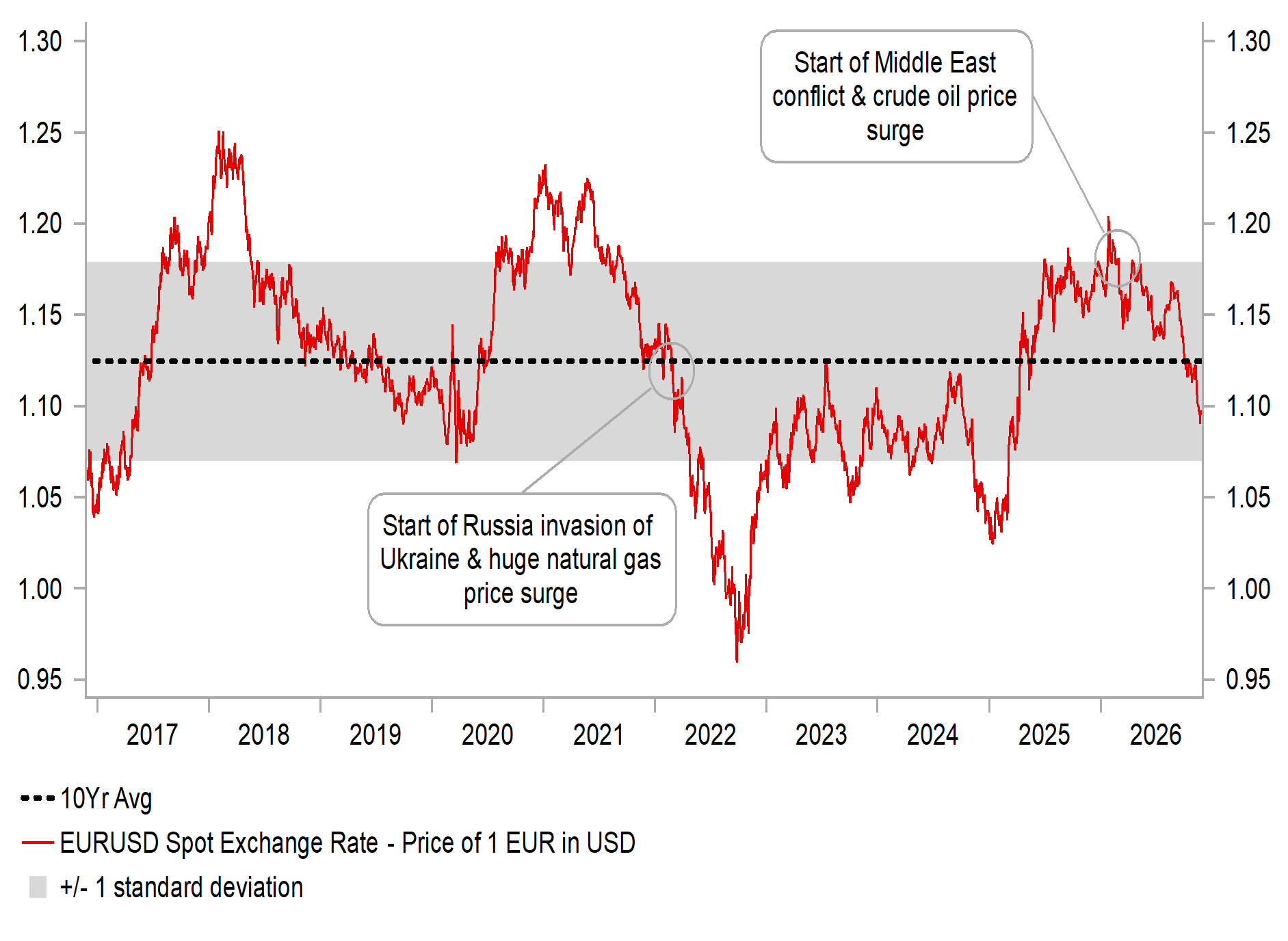
The EUR has remained under pressure over the past week, trading close to year-to-date lows after EUR/USD fell to 1.0881 on 23rd November. The pair has dropped below 1.1000 for the first time since President Trump’s ‘Liberation Day’ tariff announcement in April of last year, marking a sharp reversal from last year’s 13.4% surge from around 1.0350 to 1.1750. The EUR is now down 6.6% this year, broadly in line with the scale of the calendar-year sell-offs in 2022 and 2024. The 2022 episode provides the closest fundamental comparison, given that the EUR was similarly undermined by an energy price shock. The EUR had proved surprisingly resilient for much of this year, holding between 1.1400 and 1.1800, but that resilience broke down in late September as the Fed turned more hawkish and investor confidence in French government debt deteriorated. Together, these developments have compounded the negative impact of the energy price shock on the EUR.
Looking ahead, our base case assumes that the energy price shock will gradually fade, although the adjustment is unlikely to be smooth given the risk of further periods of re-escalation in Middle East tensions. The IEA struck a more optimistic tone in its latest monthly report, noting an improving balance between oil demand and supply and expecting excess supply to build in 2027. This is consistent with our own outlook for modestly lower oil prices next year (click here). If this view proves correct, we expect the EUR’s downward momentum to fade in 2027. Absent another negative shock, we do not expect EUR/USD to retest the 2022 lows, when the pair briefly fell below parity. Instead, we expect EUR/USD initially to stabilise within a lower 1.0500-1.1000 range before staging a rebound later in 2027. The experience following the 2022 energy price shock offers some encouragement. The EUR rebounded modestly against the USD in 2023, strengthening by 3.1%, before EUR/USD settled into a 1.0500-1.1000 range for the next couple of years.
Our forecast for a gradual EUR recovery assumes that the euro-area economy remains relatively resilient to the energy price shock, allowing the ECB to deliver two more rate hikes by early next year. Recent ECB communication suggests that officials are still preparing to raise rates in December and remain open to further tightening in 2027. Two additional hikes would lift the policy rate to 3.00%, taking it into modestly restrictive territory at a time when headline inflation is expected to remain more than double the ECB’s target. Recent reports that former Bank of Spain Governor Pablo Hernández de Cos (click here) will succeed Christine Lagarde as ECB President in February have not changed our expectation for another hike in early 2027. The main downside risks to our rate outlook are a sharper fall in energy prices and/or an unwanted tightening in financial conditions that reduces the need for further ECB tightening. Two further ECB hikes should also help limit the extent of monetary policy divergence with the Fed. We expect the Fed to deliver at least two more hikes, in December and early 2027, fully reversing the rate cuts delivered in 2025 and pushing its policy rate further into restrictive territory. Provided significant second-round inflation effects do not materialise, we expect the pressure on both central banks to continue tightening to ease as energy inflation slows sharply from Q2 next year. By the second half of 2027, we expect market expectations increasingly to shift towards the prospect of rate cuts from late 2027.
EUR SET TO END THE YEAR WEAKER
Source: Bloomberg, Macrobond & MUFG GMR
ENERGY PRICE SHOCK WEIGHING ON EUR
Source: Bloomberg, Macrobond & MUFG GMR
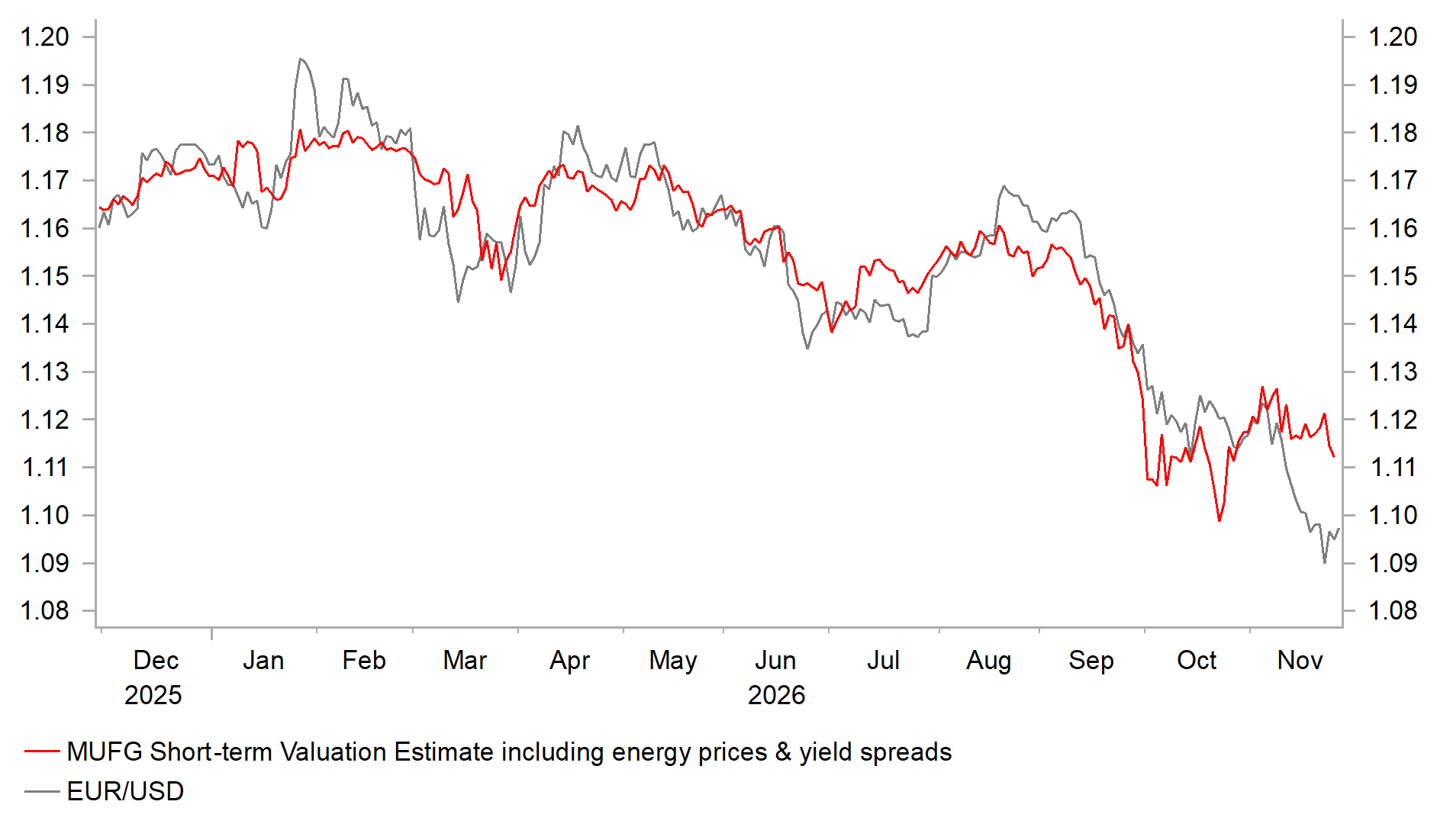
One of the main known downside risks for the EUR heading into 2027 is the potential for an intensification of fiscal and political risks in the euro area. Spain will hold an early election this weekend, ahead of important elections in France and Italy next year. The French presidential election will take place in two rounds on 18th April and 2nd May, after which the new president could quickly dissolve parliament in an attempt to break the political deadlock. Under Article 12 of the French Constitution, legislative elections would then have to take place within 20 to 40 days. Italy is also planning to hold its next general election in October. However, the EUR and euro-area government bonds have already weakened since the summer in anticipation of these political risks. The 10-year French-German government bond yield spread has doubled since the middle of this year and is now trading at its widest level since the worst phase of the euro-area debt crisis in 2011. With a significant amount of bad news already priced in, the bar is high for political developments to trigger another meaningful leg lower for the EUR in 2027.
The fiscal and political risk premium priced into French government bonds has eased this week, helped by reports that President Macron is considering introducing a so-called fiscal golden rule. The proposal would require future governments to set out a multi-year path towards balanced public finances. A constitutional amendment would need the support of a three-fifths majority of lawmakers from the National Assembly and Senate, requiring Macron to secure backing from across the political spectrum. Encouragingly, RN leader Marine Le Pen has publicly backed the idea, having previously advocated a referendum on a constitutional mechanism to bind governments to medium-term fiscal consolidation. Former President Nicolas Sarkozy attempted, but failed, to introduce a similar constitutional amendment during the euro-area debt crisis in 2011. If fiscal and political risks in France ease further following next year’s elections, it would strengthen the case for a relief rebound in the EUR as the energy price shock also fades.
EUR IS ALREADY PRICING IN A LOT OF BAD NEWS
Source: Bloomberg, Macrobond & MUFG GMR
SPECULATIVE EURO SHORTS AT MULTI-YEAR HIGHS
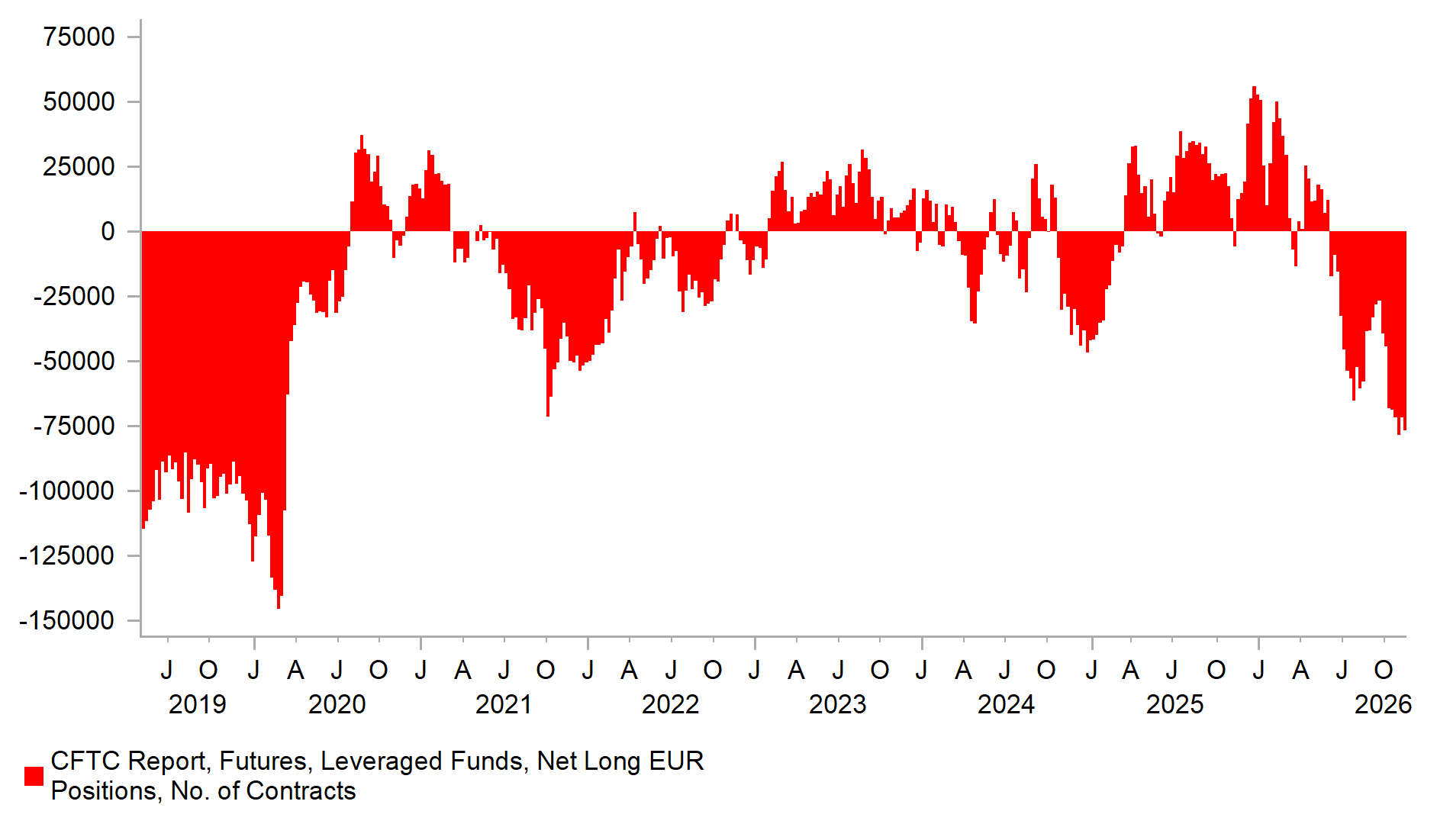
Source: Bloomberg, Macrobond & MUFG GMR
Weekly Calendar
Ccy | Date | GMT | Indicator/Event | Period | Consensus | Previous | Mkt Moving |
JPY | 29/11/2026 | 23:50 | Retail Sales MoM | Oct | 1.2% | -0.6% | !! |
CHF | 30/11/2026 | 08:00 | Sport Event adjusted GDP QoQ | 3Q F | 0.2% | 0.2% | !! |
EUR | 30/11/2026 | 13:00 | Germany CPI YoY | Nov P | 2.8% | 2.8% | !!! |
CAD | 30/11/2026 | 13:30 | GDP MoM | Sep | -0.1% | 0.0% | !! |
EUR | 30/11/2026 | 14:30 | ECB's Lagarde Speaks | !! | |||
JPY | 30/11/2026 | 23:50 | Capital Spending YoY | 3Q | -- | 1.6% | !! |
AUD | 01/12/2026 | 08:15 | RBA's Bullock-Fireside Chat | !! | |||
EUR | 01/12/2026 | 09:00 | Italy GDP WDA QoQ | 3Q F | -- | 0.0% | !! |
EUR | 01/12/2026 | 09:00 | S&P Global Eurozone Manufacturing PMI | Nov F | -- | 52.9 | !! |
GBP | 01/12/2026 | 09:30 | S&P Global UK Manufacturing PMI | Nov F | -- | 52.7 | !! |
EUR | 01/12/2026 | 10:00 | CPI Estimate YoY | Nov P | 4.0% | 4.0% | !!! |
USD | 01/12/2026 | 15:00 | JOLTS Job Openings | Oct | 7450k | 7523k | !! |
USD | 01/12/2026 | 15:00 | ISM Manufacturing | Nov | 55.0 | 55.5 | !! |
EUR | 01/12/2026 | 15:45 | ECB's Lane Moderates Panel | !! | |||
AUD | 02/12/2026 | 00:30 | GDP SA QoQ | 3Q | 0.5% | 0.4% | !!! |
CHF | 02/12/2026 | 07:30 | CPI YoY | Nov | 1.4% | 1.5% | !! |
EUR | 02/12/2026 | 08:40 | ECB's Lagarde Speaks | !! | |||
EUR | 02/12/2026 | 10:00 | Unemployment Rate | Oct | 6.5% | 6.5% | !! |
USD | 02/12/2026 | 13:15 | ADP Employment Change | Nov | 80k | 86k | !! |
EUR | 02/12/2026 | 16:30 | ECB's Moulin Speaks | !! | |||
EUR | 03/12/2026 | 09:00 | S&P Global Eurozone Services PMI | Nov F | -- | 51.2 | !! |
GBP | 03/12/2026 | 09:30 | S&P Global UK Services PMI | Nov F | -- | 52.0 | !! |
CAD | 03/12/2026 | 13:30 | Labor Productivity QoQ | 3Q | -- | 1.0% | !! |
USD | 03/12/2026 | 13:30 | Initial Jobless Claims | 193k | 189k | !! | |
USD | 03/12/2026 | 15:00 | ISM Services Index | Nov | 54.5 | 54.5 | !! |
SEK | 04/12/2026 | 07:00 | CPI YoY | Nov P | -- | 0.9% | !! |
EUR | 04/12/2026 | 10:00 | Retail Sales MoM | Oct | 0.5% | -0.7% | !! |
USD | 04/12/2026 | 13:30 | Change in Nonfarm Payrolls | Nov | 90k | 165k | !!! |
CAD | 04/12/2026 | 13:30 | Net Change in Employment | Nov | 20.0k | -4.7k | !!! |
Source: Bloomberg & MUFG GMR
Key Events:
There is a busy calendar of economic releases in the week ahead. The main highlight will be the release of the latest nonfarm payrolls report for November on Friday. Market participants will be looking to see whether there is further evidence of a pick-up in labour demand heading into year-end, following the significant upside surprise in October. Employment growth has strengthened over the three months to October, averaging 137k/month. In the first ten months of this year, employment growth has averaged 86k/month, representing a clear step up from last year, when the average was just 10k/month. The unemployment rate has held at just above 4% in recent months, even as employment growth has picked up, with the increase offset by stronger labour force growth. This has helped to ease upside risks to the inflation outlook from a tighter labour market, with average hourly earnings growth slowing back towards 3%. We expect the November nonfarm payrolls report to support market expectations for the Fed to hike rates by 25bps in December.
The release of the latest euro-area CPI report for November is expected to reveal that headline inflation remained around twice as high as the ECB’s inflation target. It is expected to keep pressure on the ECB to tighten policy further in December. The minutes from the last meeting in October revealed that members largely agreed that the inflation outlook had deteriorated and supported a continuation of the measured policy response, while noting that further tightening was likely to be necessary. The tightening of financial conditions from higher government borrowing costs in the euro area and the recent decline in energy prices are not yet sufficient to prevent further rate hikes. There is also a heavy schedule of ECB speakers in the week ahead, including President Lagarde and Chief Economist Lane, who could help fine-tune market expectations ahead of the December policy meeting.