

To read the full report, please download PDF.
USD debasement fears are back
FX View:
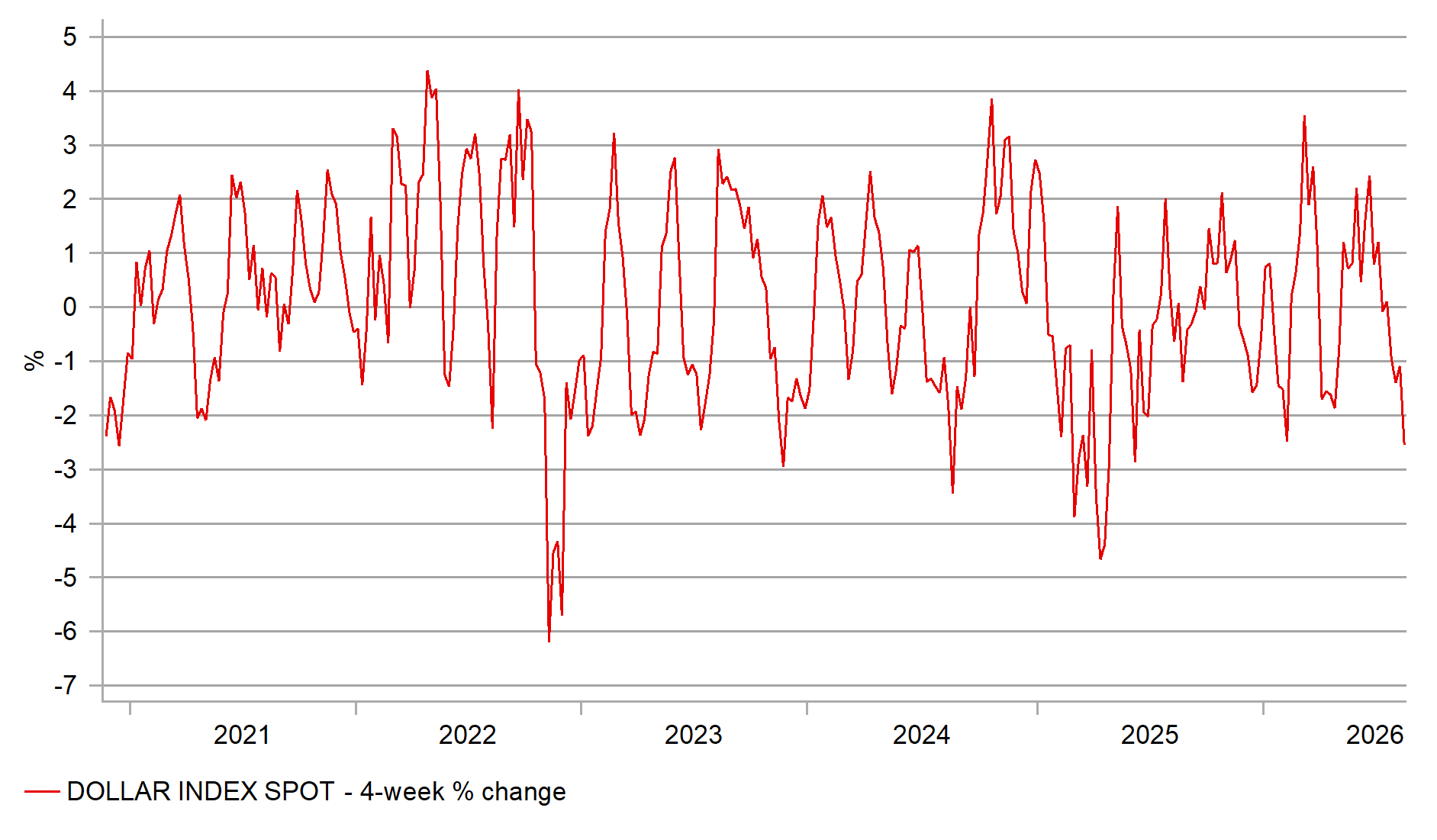
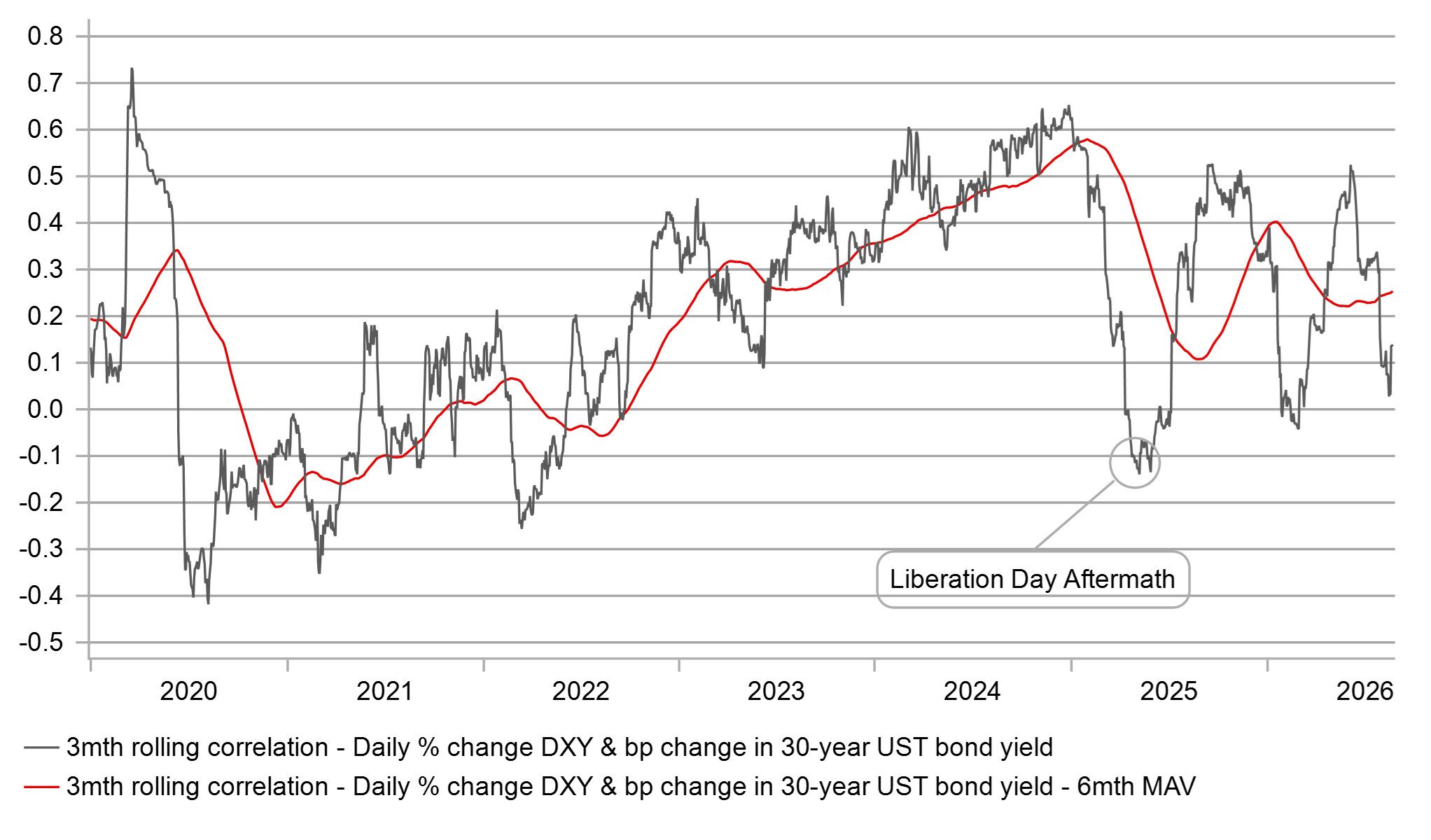
We await US Treasury Secretary Scott Bessent’s details on addressing concerns over the fiscal outlook in the US but we along with market participants are very sceptical of anything meaningful coming from an announcement. The focus is more likely to be on attempting to contain longer-term yields without meaningful policy changes that raise risks of a negative reaction in the market. A failure to cap yields would be viewed as a policy misstep that would undermine investor confidence and hurt the dollar while steps to cap yields (further buybacks, tenor changes to funding plans) would also likely undermine the dollar. The US dollar is down close to 3% in the last four weeks, the worst performance since the period following the Liberation Day announcements. Both these periods have a common feature – FX moves instigated by policies in Washington that points to an underlying wish to engineer a weaker US dollar. The only risk holding back further US dollar depreciation is a renewed jump in energy prices that hits Europe and many countries in Asia with another negative terms of trade shock.
BROAD USD WEAKNESS ACROSS G10
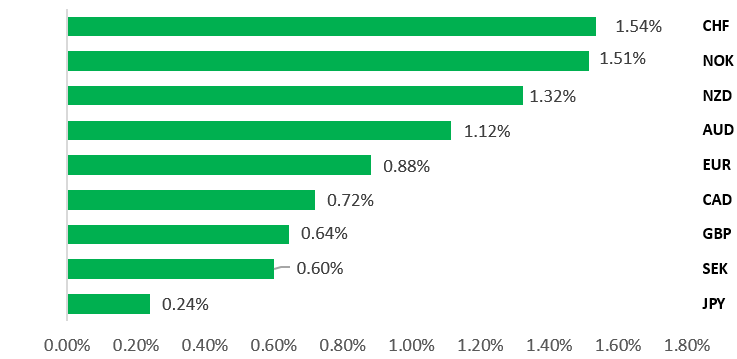
Source: Bloomberg, close on 21st August 2026 (Weekly % Change vs. USD)
Trade Ideas:
We are maintaining a long AUD/JPY trade idea.
IMM FX Positioning:
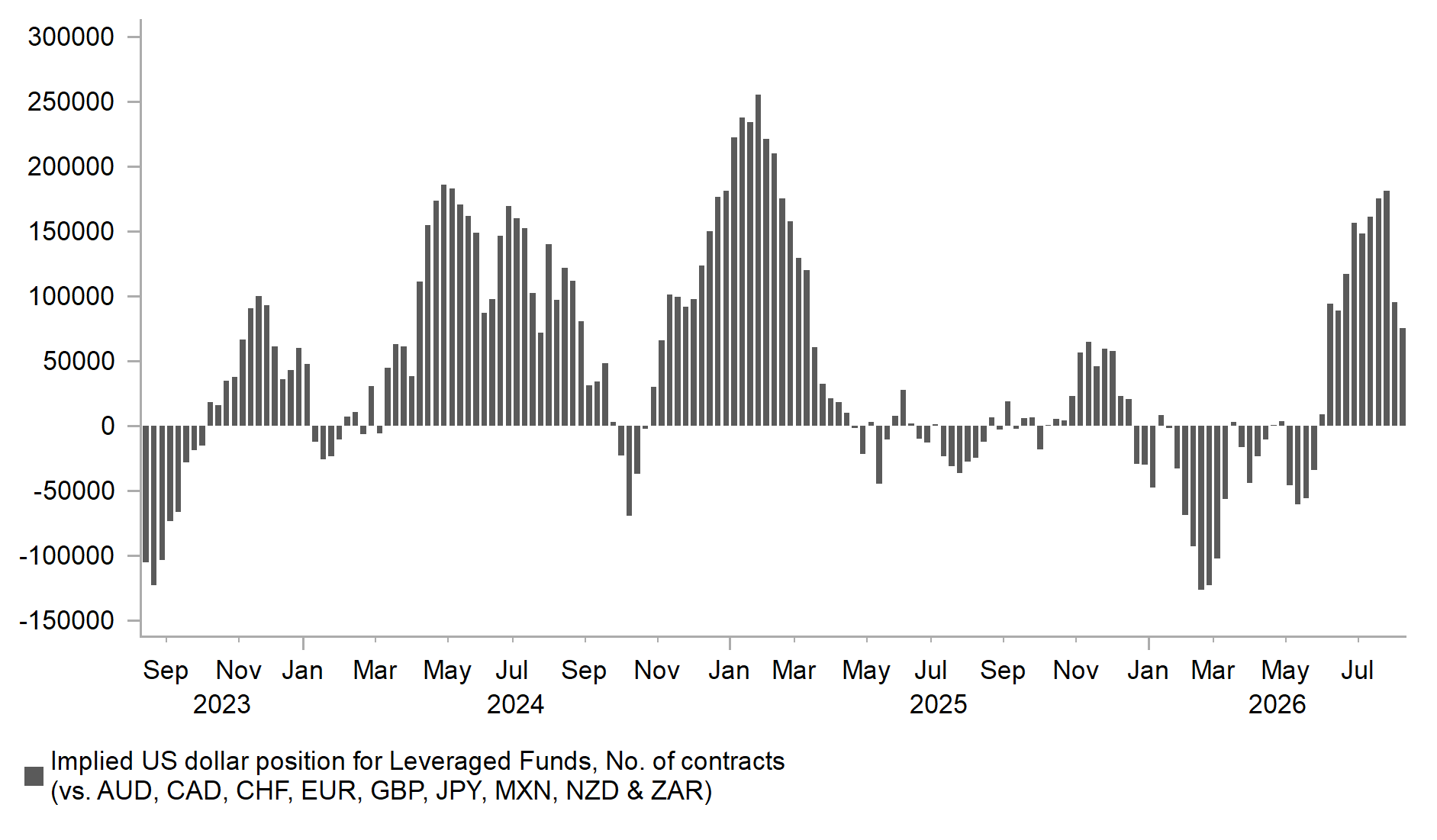
Joint intervention by Japan and the US has seen a further liquidation of yen shorts while NZD shorts have a new record in data back to 2006 suggesting scepticism that the RBNZ will deliver the near 100bps.
JPY Flows:
This week we analyse the monthly International Transactions in Securities that showed strong NISA-related foreign equity buying and continued foreign asset switching from equities to bonds by Japan Trusts.
The Return of US Duration Risk:
In the QE era Treasuries functioned primarily as insurance assets, today, investors increasingly require compensation to hold long-duration debt due to inflation and fiscal risks.
FX Views
USD: Is the dollar debasement trade returning?
The US dollar was having a bad week and was down just over 1.0% before reversing the drop. The dollar is still weaker over recent weeks and the turn in performance started really after Japan sold the dollar for yen and the US played a role in portraying the action as joint – although relative to historical examples that wasn’t really the case. But as UST Secretary Scott Bessent has stated – these actions are about signalling, and it appears to have played a role in signalling that the Trump administration are concerned about US dollar strength. The US dollar is down around 2.5% over the last four weeks since intervention took place. That’s the worst performance for the US dollar since the markets fallout following the Liberation Day tariff announcements in April last year. The common thread we would conclude in these two periods is that it was market moves triggered by policy actions in Washington. The more often these episodes occur with Washington policy involvement, the more market participants will believe that the US administration want a weaker US dollar. That has always been our view given Trump’s dislike of trade deficits. There is an ideological focus on reducing trade deficits and key policy advisors advocate this and whether publicly stated or not, the want for a weaker US dollar is entirely consistent with achieving that.
We were led to believe yesterday that the US Treasury will follow up this week’s surprise announcement on increased UST bond buy-back plans of an imminent policy announcement addressing fiscal concerns. The prospect of the Trump administration delivering anything meaningful on fiscal consolidation is incredibly slim. The appetite for fiscal consolidation that would move the dial will be very limited ahead of the mid-term elections in November when Trump’s popularity has been on the slide. Fiscal consolidation would be seen as necessary due to the cost of an increasingly unpopular war in the Middle East. In any case, the Republicans do not have a big enough majority to get anything of note passed in Congress. The Republicans have 218 seats versus 212 for the Democrats with 4 vacancies and 1 independent. A small number of rebels could scupper any potential legislation.
What might Bessent announce? Tinkering at the edges in tackling a budget deficit in the region of USD 2 trillion is the most we can probably expect. The administration could look at agency spending freezes, a federal hiring suspension, procurement reviews, tackling fraudulent activities and DOGE-style efficiency savings are potential initiatives that could be announced. There could be plans announced to sell-off some state assets, but that would only be one-off rather than structural. Bessent will no doubt highlight some increased tariff revenues that will be incoming and may hint at further buybacks and potential issuance changes in November (the next scheduled funding update). Bessent is also likely to use stronger economic growth as part of the plan to reduce the deficit. This of course has been used numerous times to justify Trump’s fiscal spending and has failed to materialise at a level that brings the deficit down. Expectations are understandably low for anything of real substance to be announced.
4-WEEK % CHANGE IN USD – WORST SINCE APRIL 2025
Source: Bloomberg, Macrobond & MUFG GMR
LEVERAGED FUNDS HAVE BEEN CUTTING $ LONGS
Source: Bloomberg, Macrobond & MUFG GMR
We mentioned the 4-week drop for the US dollar since the Japan intervention weakened the dollar but the starting point of the turn for the US dollar was just as much from the day before when the FOMC met. Market participants were disappointed with the communication from Chair Warsh and sensed a possible reluctance to take the decision to raise rates and tackle near-term inflation risks. That then coupled with uncertainty over the Fed’s reaction function and how the Fed may address reducing the size of the balance sheet all added together to fuel a steeper yield curve and US dollar selling. In that context and given the UST bond buyback announcement, Warsh’s Jackson Hole appearance next week will be key. Warsh must avoid a post-speech sell-off of UST bonds but equally can’t pivot too much from his communicated strategy as that would be viewed as Warsh being beholden to the US Treasury and trying to lend support to the efforts to bring down long-term yields. Getting the balance correct will be difficult and hence risks are high of a negative bond market reaction.
The last time we had a period where the “debasement trade” was in focus was in January. The US dollar intra-day high-to-low fell 4% and only started to recover in February when Kevin Warsh was confirmed as Fed Chair. Then the Middle East conflict drove the dollar stronger still. We could well be on the cusp of another period of dollar selling as market participants see reason to up the scale of hedging US dollar exposures. One factor that argues against that is the risk to energy prices related to supply from the Strait of Hormuz. Are energy prices set to spike if the status quo persists? Crude oil and natural gas prices have moved higher this month but not yet to levels that are concerning. Further notable gains in natural gas prices would certainly have a negative impact on sentiment. Storage rates are very low in Europe and prices could well move further higher. But there have been reports that tankers getting through the SoH is picking up as the US takes more control of the key channel. If that’s correct and energy prices remain more contained than the downside risk to EUR/USD is more contained.
The policy implementation approach by the US administration – the “joint” intervention and the UST bond buyback announcement certainly increases the risk of another period, like January, of USD debasement fears and increased US dollar hedging. The Middle East and a renewed surge in energy prices remains a risk that could curtail a repeat of the scale of dollar selling we saw in January.
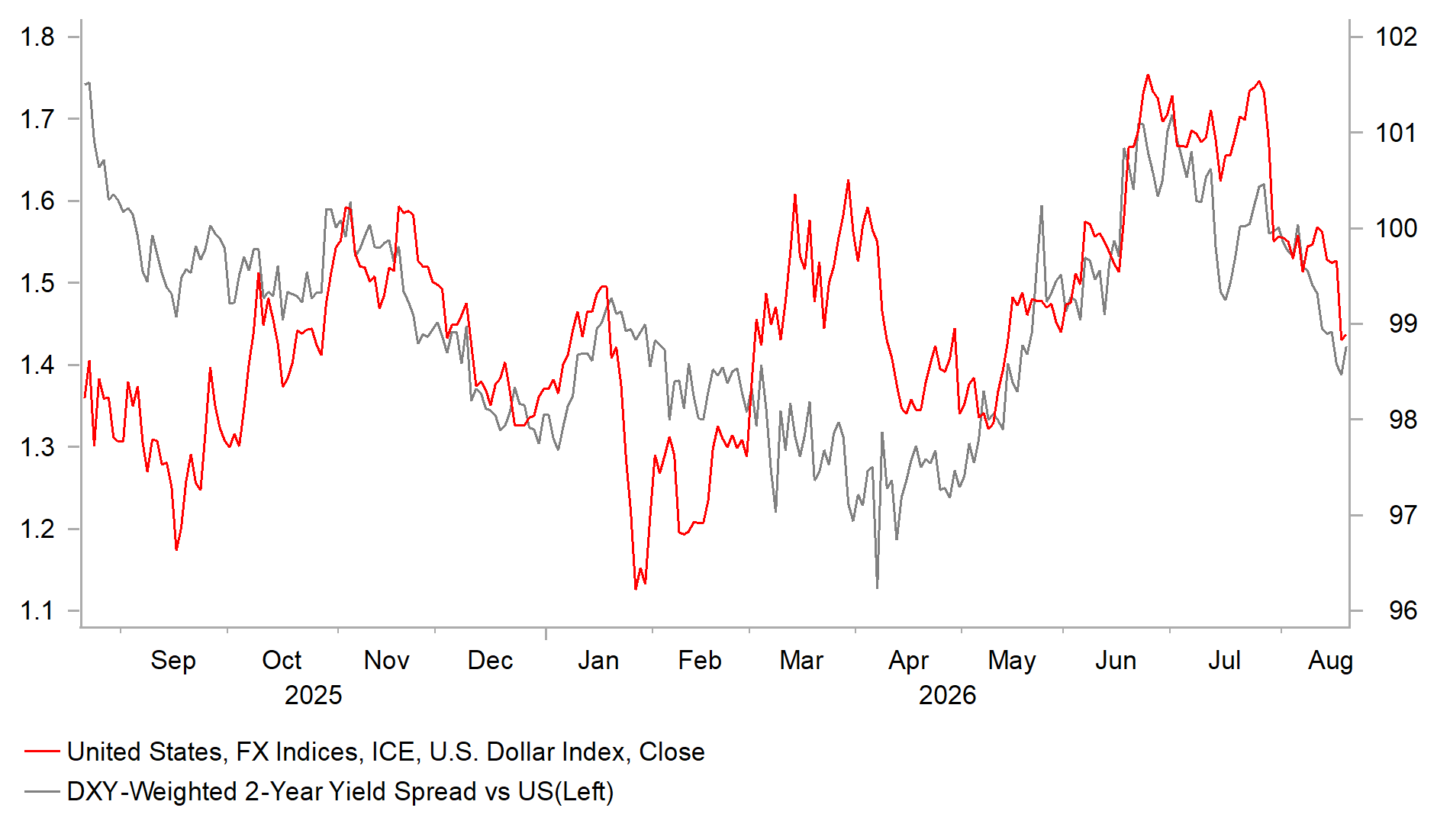
SHORT-TERM SPREADS FAVOUR WEAKER USD AS WELL
Source: Bloomberg, Macrobond & MUFG GMR
30Y YIELD / USD CORRELATION IS WEAKENING AGAIN
Source: Bloomberg, Macrobond & MUFG GMR
Weekly Calendar
Ccy | Date | BST | Indicator/Event | Period | Consensus | Previous | Mkt Moving |
EUR | 25/08/2026 | 07:00 | German GDP SA QoQ | 2Q F | -- | 0.2% | !! |
EUR | 25/08/2026 | 07:00 | German GDP WDA YoY | 2Q F | -- | 0.9% | ! |
EUR | 25/08/2026 | 09:00 | GermanIFO Business Climate | Aug | -- | 86.6 | !! |
USD | 25/08/2026 | 15:00 | New Home Sales | Jul | 620k | 628k | !! |
USD | 25/08/2026 | 15:00 | Conf. Board Consumer Confidence | Aug | 90.2 | 90.8 | !!! |
USD | 26/08/2026 | 13:30 | Personal Spending | Jul | 0.2% | 0.3% | !! |
USD | 26/08/2026 | 13:30 | Real Personal Spending | Jul | 0.1% | 0.4% | !! |
USD | 26/08/2026 | 13:30 | Core PCE Price Index MoM | Jul | 0.2% | 0.1% | !!!! |
USD | 26/08/2026 | 13:30 | Core PCE Price Index YoY | Jul | 3.3% | 3.3% | !!! |
USD | 26/08/2026 | 13:30 | Durable Goods Orders | Jul P | 0.5% | 0.5% | !! |
USD | 26/08/2026 | 13:30 | Cap Goods Orders Nondef Ex Air | Jul P | 0.9% | 1.2% | !! |
USD | 26/08/2026 | 13:30 | GDP Annualized QoQ | 2Q S | 1.50% | 1.5% | !!! |
USD | 26/08/2026 | 13:30 | Personal Consumption | 2Q S | 3.2% | 3.2% | !! |
USD | 26/08/2026 | 13:30 | Core PCE Price Index QoQ | 2Q S | -- | 3.4% | !! |
USD | 27/08/2026 | Jackson Hole Symposium 27th-29th Aug | !!!!! | ||||
EUR | 27/08/2026 | 07:00 | GfK German Consumer Confidence | Sep | -- | -29.6 | !! |
USD | 27/08/2026 | 13:30 | Advance Goods Trade Balance | Jul | -$99.7b | -$101.5b | !! |
JPY | 28/08/2026 | tbc | Speech by BoJ Deputy Gov Himino | !!!! | |||
JPY | 28/08/2026 | 00:30 | Tokyo CPI YoY | Aug | 1.9% | 2.0% | !!! |
JPY | 28/08/2026 | 00:30 | Tokyo CPI Ex-Fresh Food YoY | Aug | 1.7% | 1.9% | !!! |
JPY | 28/08/2026 | 00:30 | Tokyo CPI Ex-Fresh Food, Energy YoY | Aug | 2.0% | 2.0% | !!! |
EUR | 28/08/2026 | 07:45 | France CPI EU Harmonized MoM | Aug P | -- | 0.6% | !! |
EUR | 28/08/2026 | 07:45 | France CPI EU Harmonized YoY | Aug P | -- | 2.4% | !! |
EUR | 28/08/2026 | 07:45 | France GDP QoQ | 2Q F | -- | 0.2% | !! |
EUR | 28/08/2026 | 08:55 | German Unemployment Change (000's) | Aug | -- | 6.0k | !! |
EUR | 28/08/2026 | 08:55 | German Unemployment Claims Rate SA | Aug | -- | 6.4% | !! |
EUR | 28/08/2026 | 10:00 | Euro-zone Economic Confidence | Aug | -- | 96.9 | ! |
CAD | 28/08/2026 | 13:30 | Quarterly GDP Annualized | 2Q | 3.3% | -0.1% | !! |
CAD | 28/08/2026 | 08:55 | GDP MoM | Jun | -- | 0.3% | !! |
USD | 28/08/2026 | 10:00 | Prelim. Benchmark Payrolls Revision | 2026 | -- | -911k | !!! |
USD | 28/08/2026 | 10:00 | U. of Mich. Sentiment | Aug F | -- | 51.0 | !! |
USD | 28/08/2026 | 13:30 | U. of Mich. 1 Yr Inflation | Aug F | -- | 4.3% | !! |
USD | 28/08/2026 | 08:55 | U. of Mich. 5-10 Yr Inflation | Aug F | -- | 3.3% | !! |
Source: Bloomberg & MUFG GMR
Key Events:
The primary event in focus next week will be the Jackson Hole Symposium. The annual event is often used by the Fed Chair to send a policy message to the markets. Will that happen next week? The theme of this year’s symposium is “Financial Innovation: Implications for Payments and Policy” doesn’t sound like an easy segue into any explicit message on the outlook for monetary policy. Of course Warsh isn’t bound by the theme necessarily but in any case, Warsh has been clear that he wishes to move away from the use of forward guidance and in that context we might not get much. This speech has taken on greater importance after Wednesday’s US Treasury bond buyback announcement and Warsh will not want to speak and then see yields rise in response. Equally though after stating he’s not in favour of forward guidance any shift in that strategy to contain yields could see him as beholden to the Treasury.
Beyond Jackson Hole, there is very little in the way of public speeches and the only one scheduled is by BoJ Deputy Governor Himino on 28th August with the exact time to be confirmed. That could prove important given the pricing for a 25bp hike by the BoJ in September stands at 82%. That speech is also on the same day as the release of Tokyo CPI data for August and could also prove important. The preliminary estimate for the benchmark revision to nonfarm payrolls will be released next Friday and that’s a key release. A year ago, the figure was -911k, the largest ever one-year revision. That was revised to -898k in January 2026. The consensus market view is the data is over-reported and hence a negative print is expected.