

Japan retail margin FX traders were long yen ahead of intervention
JPY: Post-intervention – retail margin traders now likely USD/JPY buyers
USD/JPY continues to stabilise at levels significantly lower than where we were prior to the intervention last Thursday and Friday. We remain around 6 big figures blow the level when intervention probably began on Thursday, having rebounded two big figures from the intra-day low on Monday. If intervention did not take place on Monday (we can’t be sure but BoJ data suggests possibly not) the impact of this intervention has been more powerful than the intervention that took place in April/May this year or indeed any of the four previous episodes in 2022 and 2024. The price action certainly highlights the favourable impact of having the US directly involved in yen buying intervention for the first time.
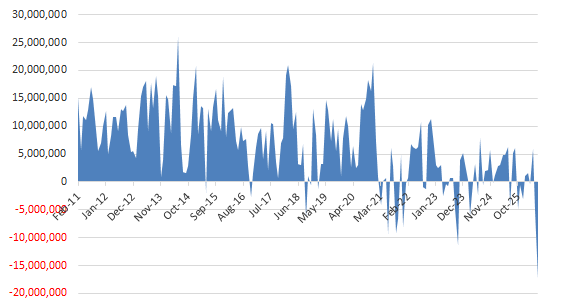
Looking at IMM data there is a general consensus that the FX market was short yen going into the intervention last week given the total reported short yen position amongst Asset Managers, Institutional Investors and Leveraged Funds was close to the record from 2024. Those positions being squeezed from the market could have helped reinforce the intervention. However, the positioning on the Japan retail side was not the same way round. The OTC FX margin retail positioning data for June ahead of the intervention revealed a swing from yen shorts against all currencies reported combined to yen long. The yen long position was the largest since October 2023. The primary currency pair explaining this shift on a combined basis was in fact USD/JPY. The USD/JPY short position increased in June to a record total. The implied short USD/JPY position was USD 17.65bn which as can be seen historically is an extreme position and by some distance a record. The position is larger than the probable total size of the intervention undertaken last week.
It would imply that USD/JPY grinding higher throughout June incentivised retail margin traders to build USD/JPY short positions further in anticipation of eventual intervention. The May position was also short but considerably smaller. We can also assume that following intervention Japanese retail traders were quick to liquidate and were likely active buyers given the historic short position that was in place. So Japan’s retail sector was likely a key buyer of USD/JPY on the decline during intervention, curtailing some of the impact of the MoF’s record yen buying intervention.
OTC RETAIL MARGIN FX POSITIONING INDICATES RECORD USD/JPY SHORT AHEAD OF INTERVENTION IN JUNE
Source: MUFG Research, MUFG Research, Financial Futures Association of Japan
USD: underperformance points to downside risks
Looking at our short-term regression models across all of G10 reveals an interesting consistency – the US dollar is undervalued versus eight of the nine currencies in the G10 space suggesting some additional risk premium is currently priced into FX that has prompted this underperformance of the dollar. Some factors may explain this. We could be once again on the cusp of a ceasefire deal in the Middle East that may mean the US dollar has priced this scenario more quickly than other markets that is showing up as US dollar undervaluation in our regression models. Some of the data of late indicates mixed economic conditions but the inflation fears associated with the conflict in the Middle East linger and the longer the risks linger, the greater the risk of some feed-through into underlying inflation. The ISM Services report yesterday revealed some evidence of that unfavourable mix. While the overall index was stable, the Prices Paid index jumped from 67.7 to 70.3 while the Employment index fell back notably from 51.2 to 47.4. Signs of more mixed economic conditions are not pushing yields lower given the inflation concerns, which is not a particularly favourable backdrop for the US dollar.
Another factor that could be starting to weigh on US dollar performance is the intervention that took place last week. This was much more meaningful of course due to US involvement and even though the US Treasury chose not to sell the US dollar, its strong support for Japan in attempting to strengthen the yen and weaken the US dollar is telling. Scott Bessent also cited the negative implications of an undervalued yen in dragging valuations lower for Asia FX more generally versus the US dollar. Bessent mentioned specifically that the renminbi also could be undervalued. The US Treasury looks to be subtly endorsing a US dollar devaluation versus Asia more generally. Investors are picking up on that, and it will certainly encourage investors to more actively sell the dollar when sentiment sours.
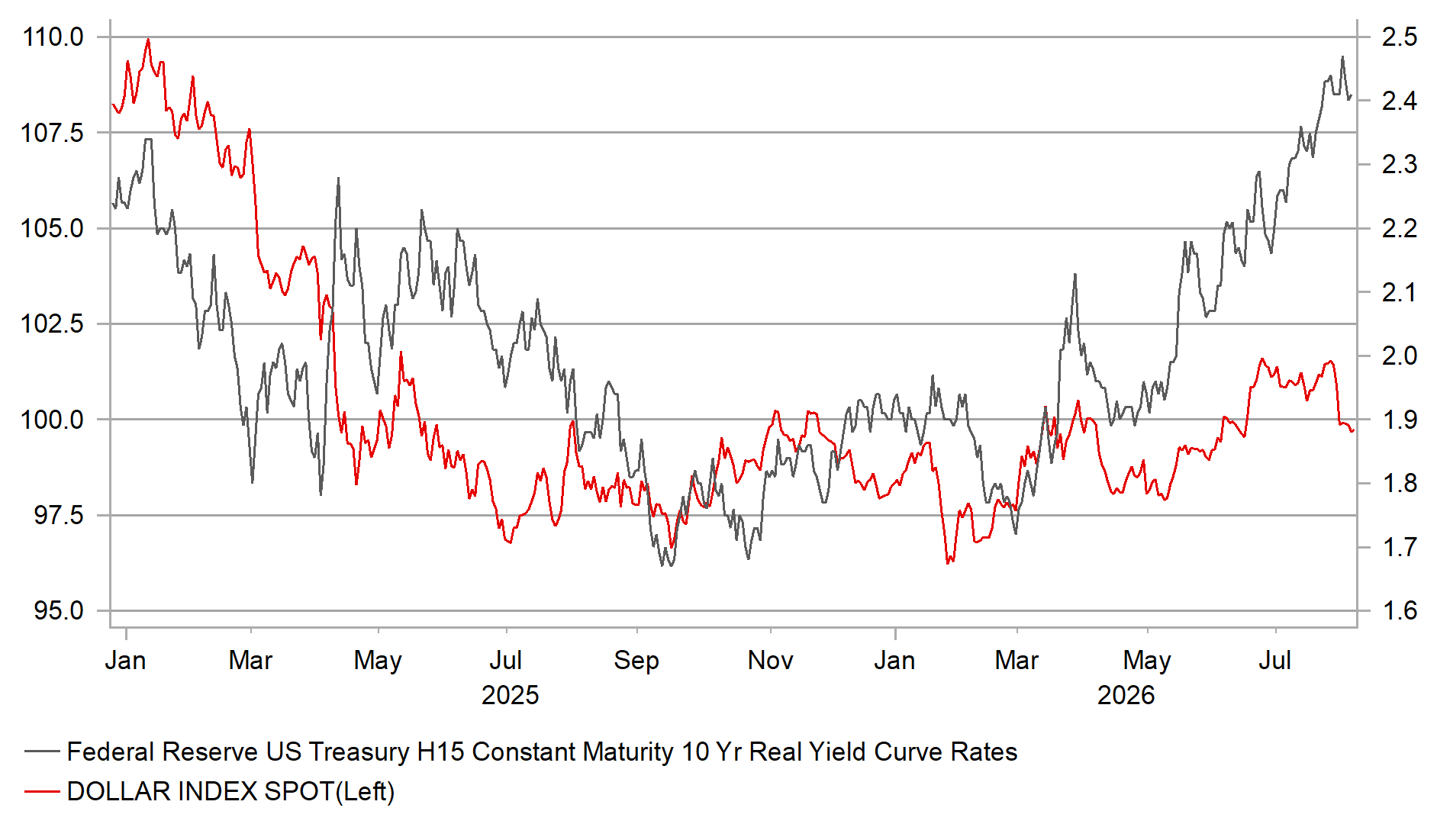
Finally, the Wall Street Journal is reporting today that President Trump has spoken to Fed Chair Warsh “repeatedly” since he took over at the Fed with “bursts” of calls “several times in a stretch of days” and this will only reinforce the impression of greater political influence undermining Fed independence. The underperformance of the dollar relative to our models likely captures some of those Fed-related risks and the uncertainty over the Fed’s reaction function going forward. That uncertainty is likely keeping yields higher without offering the dollar the usual support.
The rise in yields is at the root of US support for intervention to support the yen as the US Treasury want to reduce risks of UST bond sales – made clear by Bessent encouraging the use of FIMA. Concerns that emanate from Washington over financial market developments will hardly instil confidence in global investors in holding US assets and could herald another spell of increased US dollar hedging like January this year, which would be bad news for the dollar.
RISING 10-YEAR REAL YIELD IN THE US HAS FAILED TO LIFT THE US DOLLAR
Source: Bloomberg & MUFG Research
KEY RELEASES AND EVENTS
Country | BST | Indicator/Event | Period | Consensus | Previous | Mkt Moving |
UK | 09:30 | Construction PMI | (Jul) | 40.0 | 38.4 | !! |
EZ | 10:00 | Retail Sales (YoY) | (Jun) | 1.0% | 1.6% | ! |
EZ | 10:00 | Retail Sales (MoM) | (Jun) | 0.1% | 0.2% | ! |
US | 10:30 | Challenger Job Cuts (YoY) | - | - | -4.5% | ! |
US | 13:30 | Initial Jobless Claims | - | 203K | 197K | !! |
US | 13:30 | Unit Labor Costs (QoQ) | (Q2) | 2.2% | 1.8% | !!! |
US | 13:30 | Nonfarm Productivity (QoQ) | (Q2) | 0.6% | 0.3% | !! |
US | 15:00 | Wholesale Inventories (MoM) | (Jun) | 0.3% | 0.3% | ! |
US | 15:00 | Wholesale Trade Sales (MoM) | (Jun) | - | 3.4% | ! |
US | 22:30 | Fed's Musalem speaks | !! |
Source: Bloomberg & Investing.com