

JPY strengthens further on the back of joint intervention
JPY: Will joint intervention help to turn the yen weakening tide?
The yen has continued to strengthen at the start of this week after Japanese Finance Minister Katayama confirmed overnight the Japan intervened alongside the US to support the yen on Friday. The statement justified the joint action to counter excessive volatility and disorderly movement in the yen in recent months, and emphasized that “we will not hesitate to conduct further joint intervention”. It was the first joint intervention involving Japan and the US since 18th March 2011 when joint intervention was undertaken after the 11th March Tohoku earthquake and tsunami to weaken the yen. On that occasion the US sold USD 1 billion of yen. At the same time, the statement from Finance Minister Katayama revealed that Japan also plans to utilize the Federal Reserve’s Foreign and International Monetary Authorities (FIMA) Repo Facility in the future. The facility enables Japan to access up to USD60 billion per day without selling Treasuries for up to seven days. The facility allows Japan to borrow US dollar temporarily by pledging Treasuries as collateral. The potential use of the FIMA facility highlights that the US is concerned that ongoing intervention by Japan could prove disruptive for the Treasury market if it involves outright sales of Treasuries. It is also likely one of the reasons why the US has decided to become involved in joint intervention. With support from the US, intervention to support the yen will be viewed as more credible and if it proves more effective it could then mean that less intervention is ultimately required requiring less Treasury sales.
LAST JOINT INTERVENTION TO WEAKEN THE JPY IN MARCH 2011
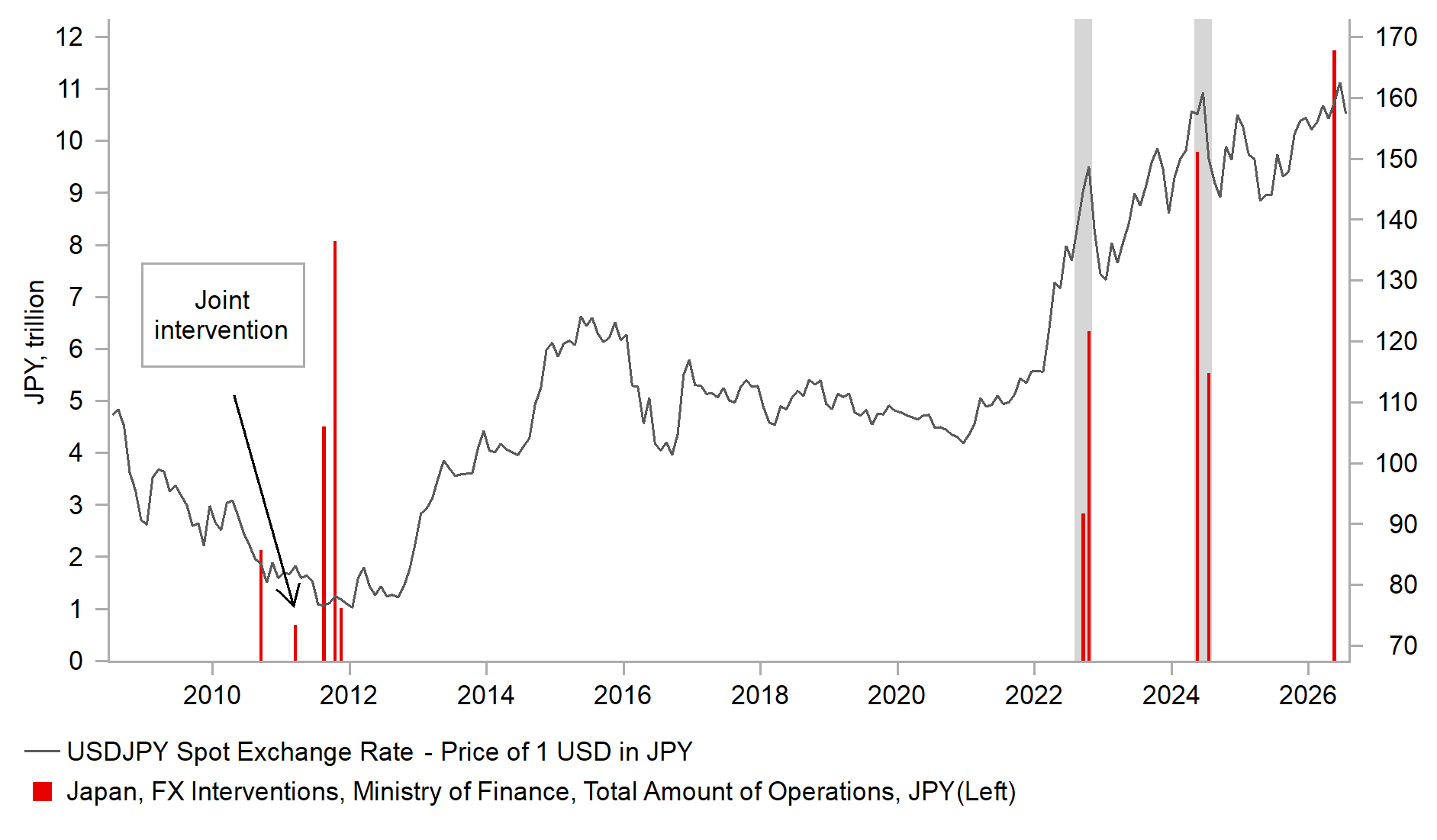
Source: Bloomberg, Macrobond & MUFG Research
In a post on X yesterday, US Treasury Secretary Scott Bessent stated that “we will not hesitate to participate in further joint intervention”, and that “we strongly support Japan’s decisive market and monetary steps to correct the substantial undervaluation of the yen”. He stated they stepped in to help fight “disorderly” movements. It has been backed publicly as well by President Trump who described joint intervention as a sign of friendship with Japan while saying he expects Washington to reap a financial benefit from helping the ally. Confirmation of joint intervention follows media reports at the end of last week speculation that the US had been involved. Reuters published a photograph showing a notepad in front of him at cabinet meeting with a commitment to “buy Japanese yen (JPY) USD5-10 billion”.
The FT has since reported that the US bought yen and sold the euro rather than US dollars. So instead of adding to the total value of FX reserves, it was more an allocation shift from euros into yen. The US Treasury Exchange Stabilization Fund (ESF) held USD13.131 billion of euros at the end of March, and the Federal Reserve System Open Market Account (SOMA) held USD13.152 billion of euros. When the US orders intervention it can be funded jointly by the ESF and SOMA. It had the capacity to sell euros for yen for up to USD26.283 billion, of which only USD13.131 billion (ESF) can be used by the Treasury alone without the Fed’s involvement. So media reports of USD5-10 billion make sense. The US decided against selling US dollars suggesting that they do not want to signal a desire for the US dollar to weaken more broadly at a time when inflation in the US is well above target. It is more about supporting the yen. The scale of intervention by the US is much smaller than by Japan who are estimated to have purchased around USD53 billion of yen on Thursday according to the BoJ’s daily current account balances. An estimate of the size of intervention on Friday is not yet available. Having the US on board is more about sending a stronger signal of support to market participants than the scale of yen purchases undertaken on their part. On the other hand, Japan still has plenty of capacity to intervene. At the end of June, the value of its foreign currency holdings totalled USD1.09 trillion of which USD929 billion were held in securities and USD162billion in deposits.
The US may also have secured an agreement with Japan to allow the BoJ to continue to normalize policy as part of the decision to take part in joint intervention. Japan’s Chief Currency official Atsushi Mimura stated overnight that we will respond to FX in coordination with monetary policy while adding that “I have shared understanding with the BoJ”. The comments imply that the BoJ should continue normalizing monetary policy to back up support for the yen from intervention. It was already evident at the BoJ’s policy meeting at the end of last week that policy guidance was noticeably more hawkish. Governor Ueda stated that he is seeing greater upside risk to the price outlook including from AI demand and the weaker yen. He emphasized that it was vital to make the price trend stable around their 2.0% goal, and they hold careful discussion at the next monetary policy meeting in September with risks of inflation overshooting more than in the past. The comments signal that the BoJ may hike rates as soon as the next policy meeting in line with our forecasts rather than wait until the end of this year.
Finally, the yen has derived support as well overnight by the sharp drop in energy prices with Brent trading back closer to USD80/barrel after President Trump called off a massive attack on Iran over the weekend, and has displayed more optimism over reaching a fresh deal with talks to begin today. The negative energy price shock has been the main reason the yen has weakened in recent months. Overall, the latest development give us more confidence in our forecasts that the yen is in the process of bottoming out. The threat of further joint intervention and a faster pace of BoJ hikes should provide more support for the yen, and discourage speculators from running elevated short yen positions.
THE JPY HAD BEEN VIEWED INCREASINGLY AS A ONE-WAY BET
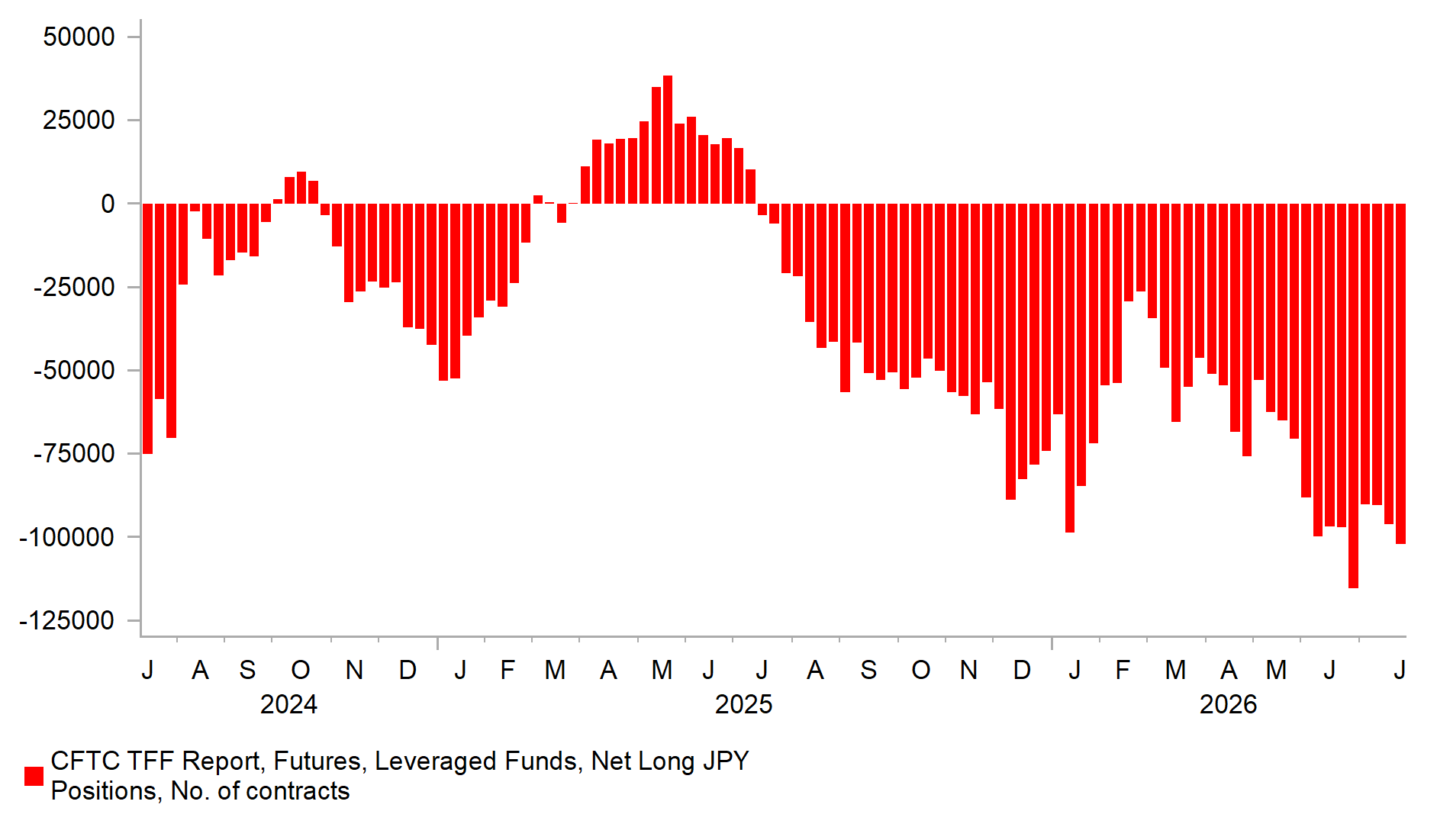
Source: Bloomberg & MUFG Research
KEY RELEASES AND EVENTS
Country | BST | Indicator/Event | Period | Consensus | Previous | Mkt Moving |
EU | 09:00 | Manufacturing PMI | (Jul) | 52.0 | 52.0 | !! |
US | 14:45 | Manufacturing PMI | (Jul) | 53.8 | 53.8 | !!! |
US | 15:00 | ISM Manufacturing PMI | (Jul) | 54.0 | 53.3 | !!! |
US | 15:00 | Construction Spending (MoM) | (Jun) | 0.2% | 0.1% | !! |
US | 19:00 | Loan Officer Survey | - | - | - | ! |
Source: Bloomberg & Investing.com