

JPY hits new lows with limited MoF rhetoric
JPY: Fundamental backdrop remains poor for yen in near-term
The US dollar gained against most G10 currencies yesterday with a focus on the continued deterioration in the Middle East and the diminishing prospects that a hoped-for 10-day ceasefire would become reality. Brent crude oil jumped to a new high since the ceasefire was announced in June and the influence in FX was clear – NOK was the top performing G10 currency and the yen was the worst performing. That momentum could continue with crude oil breaking further higher this morning and President Trump hinting at a further escalation in the conflict.
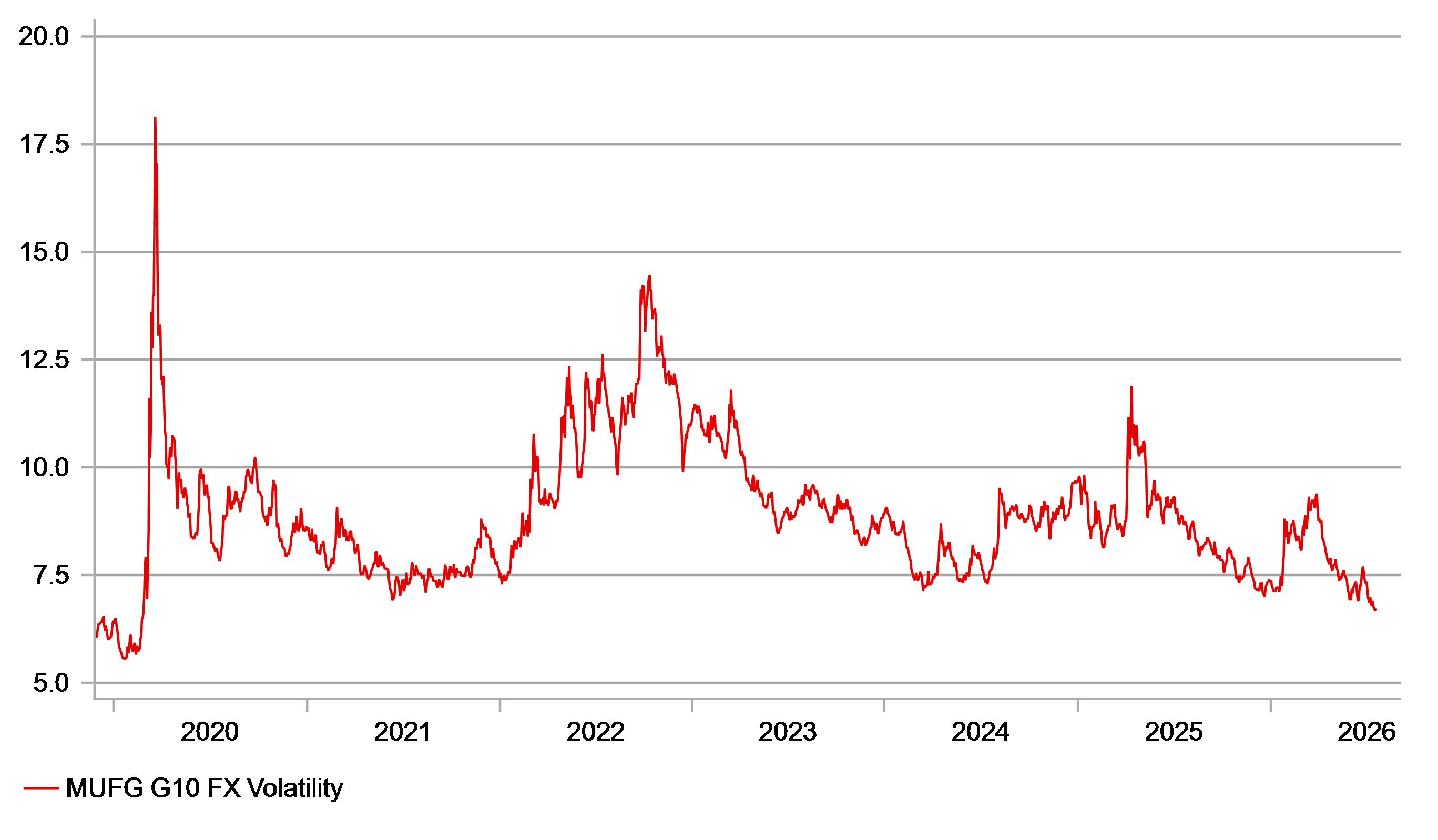
The USD/JPY rate has hit the highest level since December 1986 and what is noticeable about that is the lack of attention this is now getting. With the move a slow grind and with broader G10 and USD/JPY volatility levels so low the MoF’s justification for intervention is simply not there. The 1-month implied volatility in USD/JPY fell below 6% last week for the first time since February 2022. We did get a comment from Finance Minister Katayama who laid the blame for yen weakness solely on the worsening situation in the Middle East but added that “we will take appropriate and bold action at any time, should the need rise”. That’s an interesting caveat – “should the need arise” which clearly suggests a lower sense of urgency than at previous times when intervention took place. There is certainly a shift in urgency in Tokyo which may point to resignation and reluctant acceptance of allowing the yen to weaken as long as the pace of the move is gradual.
There is also as of now limited contagion to other areas of Japanese markets. The JGB market was helped today by a solid super-long JGB auction. A 40-year auction drew a bid-to-cover of 2.82, which was above the 12-month average of 2.55 and the best bid-to-cover since March 2025. Yields were modestly higher on the day with the super-long sector outperforming.
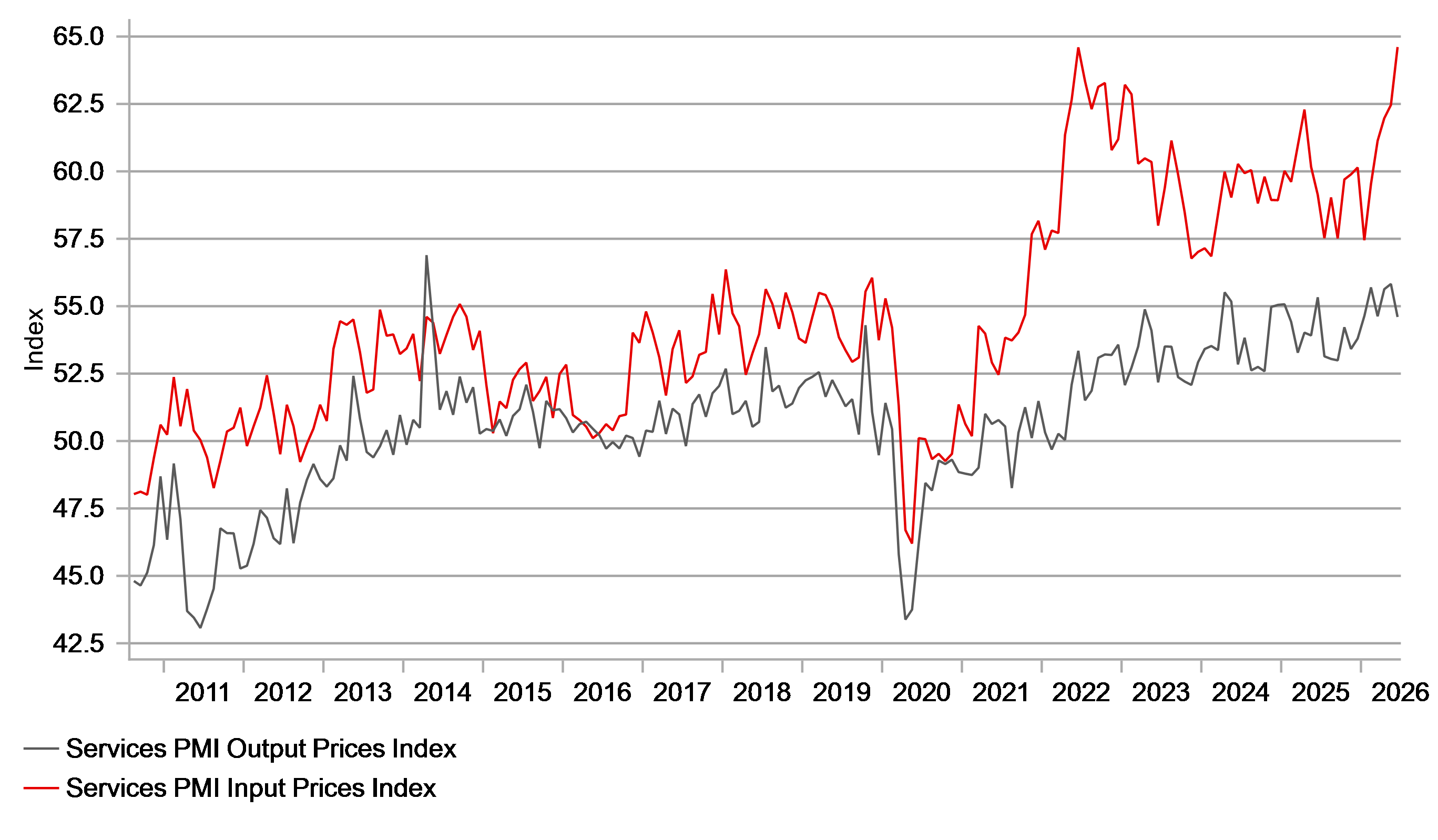
Inflation remains a key risk however (services input prices are growing strongly pointing to upside risks in the coming months) and hence JGBs and the yen are vulnerable to further selling on concerns enough is not being done to reduce inflation risks. This is becoming politically damaging as well. Three polls released in the last week have highlighted falling popularity of the government. A Jiji Press poll saw approval fall from 54.3% to 49%, below the 50% mark for the first time. Support from the over 60s collapsed from 63.7% to 39.9%. A Mainichi poll saw approval fall from 51% to 41% and an Asahi poll saw a drop from 60% to 53%. The Asahi poll revealed a negative net approval for policies to tackle the cost of living. Changes to the Imperial House Law were also to blame.
But the government could see this decline as showing the need to do more and hence points to the benefit of leaving the BoJ to act independently. A hike is needed with inflation pressures building again. A hike is not likely in July but there is only 6bps priced for September when we continue to see the BoJ acting. A more hawkish July communication would likely prompt a shift in expectations.
JAPAN PMI SERVICES IMPUT PRICES ARE SURGING AGAIN
Source: Bloomberg, Macrobond & MUFG Research
USD: Trade tariff uncertainty set to re-emerge
The consequence of the Supreme Court ruling against Liberation Day tariffs was for the Trump administration immediately to revert to Section 122 of the Trade Act of 1974 that allowed President Trump to impose temporary tariffs in order to protect the US from balance of payments risks. This was a 10% across-the-board tariff but allowed only for 150 days. The tariffs went live on 24th February and hence are due to expire on Friday. Broad-based tariffs like under Liberation Day (using IEEPA) is about to become more difficult but inevitably will be replaced. But without across-the-board actions, the approach is set to be much more uncertain. The US will use Section 301 and investigations have already been announced against most of the key trading partners of the US although when implemented and against what products remains unclear.
However, US Trade Representative Jamieson Greer spoke on CNBC yesterday and confirmed that 60 trading partners were being investigated over alleged failings related to forced labour and no doubt the conclusions will likely point to failings that will justify tariff action under Section 301. Greer added that there would be “some action soon”. Greer basically confirmed the new actions will cover the “vast majority” of US trade. Trump also confirmed a 25% tariff on certain Brazilian goods and a 50% tariff on Canadian goods effective 19th August. 16 other trading partners are being investigated for excess industrial capacity (again under Section 301).
The forced labour investigations are more widespread, and it appears likely that EM countries with looser labour laws are most vulnerable. Currencies like KRW, TWD, MYR, THB and CNY all look vulnerable given not just labour laws but of course current account surplus positions. But there is good reason to believe that the tariffs will be widespread in order to largely replace the expiring Section 122 tariffs.
The fact that these tariffs should broadly replicate the Section 122 tariffs, means the FX implications should be limited. However, the path to implementation is less predictable with greater potential differentiations that could see increased FX volatility. The fact this latest bout of trade policy uncertainty comes at a time when the rates curve in the US is priced for hikes and Middle East risks are higher could mean the FX reaction function is different and is more US dollar supportive. USD/Asia would perhaps be where you could see most upside where yield would be less of a counter to say the impact on USD/LatAm. G10 FX should be less impacted and if the uncertainty becomes more prolonged and pronounced, we could see US dollar selling re-emerge as investors grow more concerned over unpredictable policies from Washington and the damage to the US economy.
MUFG G10 FX VOL INDEX DROPS TO PRE-COVID LEVELS JUST AS TRUMP GETS SET FOR NEW TARIFF REGIMES
Source: Bloomberg & MUFG Research
KEY RELEASES AND EVENTS
Country | BST | Indicator/Event | Period | Consensus | Previous | Mkt Moving |
UK | 09:30 | House Price Index YoY | May | - | 3.8% | ! |
US | 12:00 | MBA Mortgage Application WoW | -2.7% | ! |
Source: Bloomberg & Investing.com