

Confidence in US assets could be questioned
USD: Bessent should remember his own words of advice
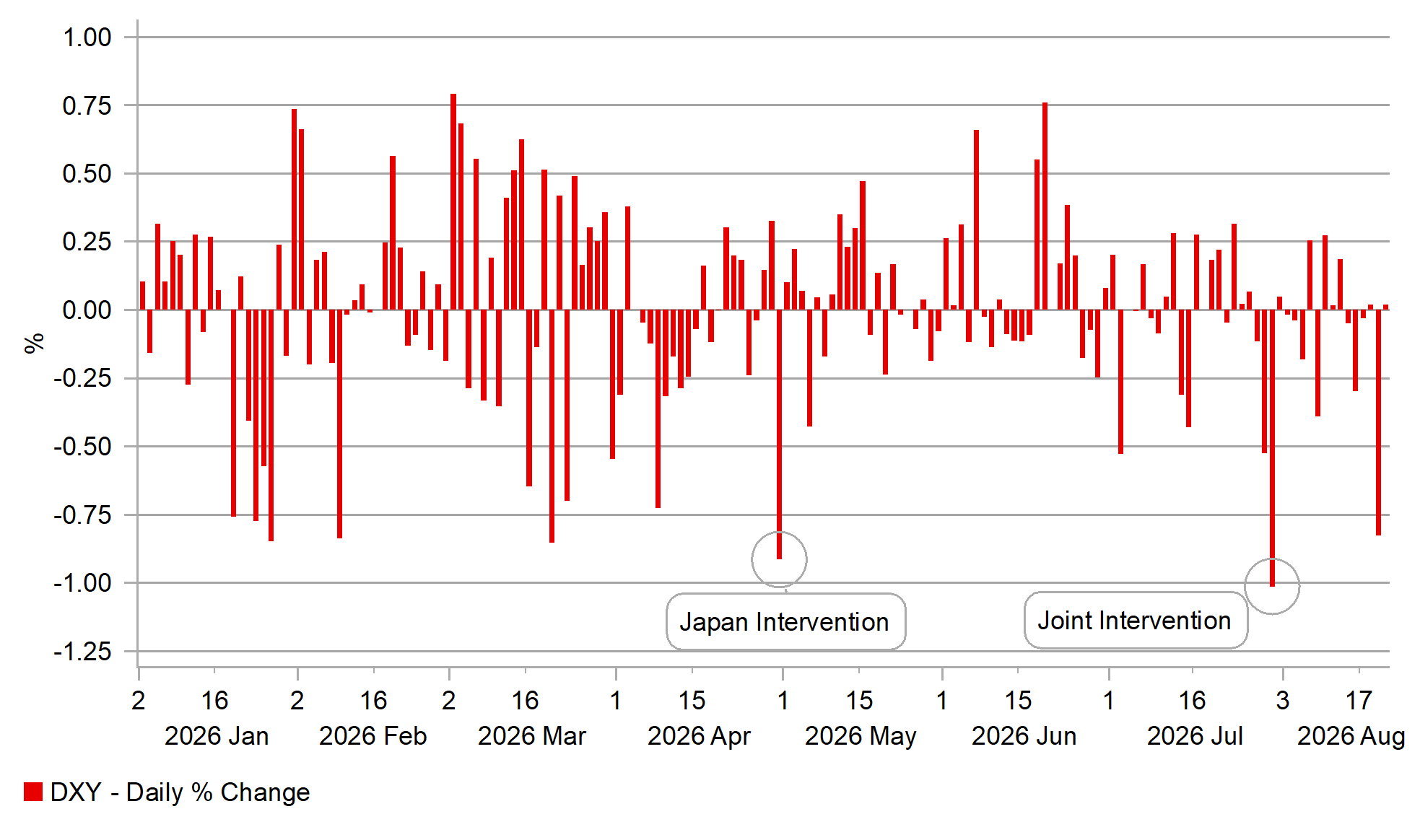
The US Treasury unscheduled announcement yesterday that it would increase US Treasury bond buybacks resulted in the biggest daily drop for the US dollar since March when you exclude the two episodes of USD selling intervention in April/May and July. The buyback announcement could more than double the total from the original plan of a “maximum” of USD 2bn to “at least” USD 4bn and will be focused on 10-year and longer. There was a shock element to this given how soon this came following the scheduled announcement and in that sense does come across as lacking a strategic plan. What prompted this now? Yields were rising notably since the FOMC but there have been similar periods of that scale of move. It therefore looks more like the level of yields was the factor. Whatever the specific trigger, the announcement coming so soon after Scott Bessent mentioned Japan using the FIMA repo facility to raise funds for intervention only reinforces the impression that the US administration is growing concerned over yield levels.
We would also argue that Scott Bessent is not following his own advice. Following the joint intervention at the end of July Bessent stated that “you can give market signals with intervention, but it’s policy that turns it”. He added that FX intervention “would need to be followed by Japanese policies addressing the forces driving the yen lower”.
Well, if Scott Bessent really believes that then the US Treasury could play a key role here by of course addressing the ever-expending fiscal deficit with fiscal consolidation. We all know that’s not going to happen and hence the danger now following this announcement (and the FIMA report comment to Japan following intervention) is that it proves counter-productive and leads to reduced appetite for either holding US assets (UST bond sales) or reduced appetite for exposure to the US dollar (dollar selling) or both. Even if the Treasury buy-back plan does contain yields, the US dollar now remains more vulnerable to the downside on the fact that yields are potentially lower.
What this buyback announcement does mean is that the Jackson Hole speech next week by Fed Chair Warsh has now become more important. There is no hiding the fact that the latest move higher in yields was triggered by the FOMC and Warsh’s press conference. I’d hazard a guess Trump is not too pleased with Warsh and he may need to use Jackson Hole to provide greater clarity on the Fed’s strategy and reaction function to play a role in containing the rise in longer-term yields. Warsh needs to avoid a scenario of a post-speech market sell-off in USTs but also ensure he doesn’t come across as beholden to the Treasury’s wishes.
Finally, we should also not ignore the prospect of inflation continuing to subside – that would be an important fundamental backdrop for helping contain yields. That could ease credibility risks related this announcement but of course then the markets would likely remove the tightening currently priced which would also weigh on US dollar performance. There appears to now be more avenues opening for US dollar weakness ahead rather than dollar strength.
EXLCUDING INTERVENTION THE LARGEST DAILY USD DROP SINCE MARCH
Source: MUFG Research, Macrobond, Bloomberg
USD: Analysing the Latest Fed Minutes Using AI Sentiment Analysis
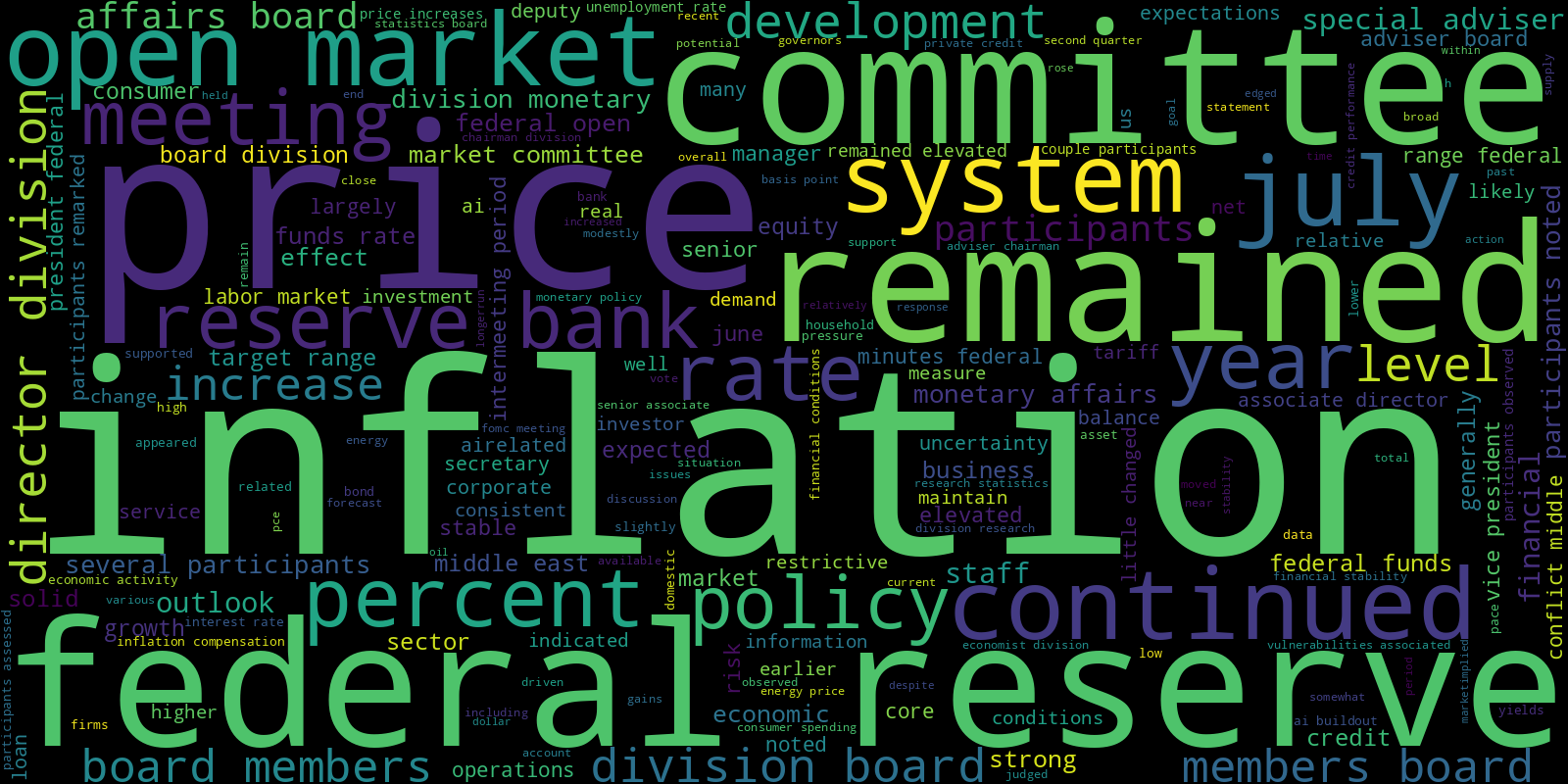
Our AI-driven sentiment analysis framework identifies the July FOMC minutes, released last night, as slightly more hawkish than expected, although not enough to generate a repricing of the Fed outlook. The key message is that policymakers remain concerned about inflation persistence and retain a bias towards further tightening. The textual analysis revealed support for a July rate increase extending beyond the three formal dissenters, with "several participants" favouring a 25bp hike, compared with the softer "a few participants" language used in the June minutes. This represents a meaningful shift in internal views and suggests hawkish sentiment was broader than implied by the July 9-3 vote.
The textual analysis also highlighted AI as an inflation driver. Several participants highlighted that AI-related investment was boosting aggregate demand contributing to broad price pressures, while others also acknowledged productivity gains associated with AI adoption should eventually lower costs and expand supply. The Committee therefore appears to view AI as a near-term inflation risk, while aware its longer-term effects could prove disinflationary.
The textual analysis also flagged the discussion around inflation expectations and second-round effects. The minutes stated that "many participants highlighted the possibility that, after several years of inflation above 2 percent, continued elevated inflation rates could begin to affect inflation expectations and wage- and price-setting decisions." The sentence received the highest score (strongly hawkish) in our hawkish-dovish analysis as it identified the committee’s inflation concern is moving away from current inflation and towards the risk of inflation becoming embedded in business and consumer expectations. We believe this makes policymakers wary of declaring victory on inflation prematurely and reinforces the Committee's tightening bias.
However, the minutes also contained a subtle dovish signal through the discussion of tariff pass-through. The sentence, “Several participants assessed that the pass-through of past increases in tariffs into the level of prices was now largely complete and that the effects of recently announced tariffs on measured inflation would likely be modest.” Received the lowest score (most dovish) in our hawkish-dovish analysis suggesting that policymakers increasingly view tariff-related inflation as a fading source of price pressure. It’s important to note this does not outweigh broader concerns about inflation persistence; however, it does imply that one of the key inflation drivers cited in previous sentiment analysis may become less important going forward.
The Committee refrained from providing any explicit signal towards a September move. Consistent with Chair Warsh's communication style, the minutes emphasised data dependence and offered little forward guidance. For this reason, much of the hawkish rhetoric broadly reinforces information already embedded in market pricing rather than introducing a genuinely new policy path.
The muted FX reaction to the minutes supports that interpretation. The Treasury buyback announcement earlier in the session appears to have dominated market attention, leaving major FX pairs largely unaffected by the minutes. So, while the minutes modestly strengthen the case for further tightening, they do not provide the explicit signal required to generate a sustained repricing of the Fed path or a durable reversal in the broader USD downtrend.
JULY FOMC MINUTES WORD CLOUD
Source: Federal Reserve and MUFG Research
KEY RELEASES AND EVENTS
Country | BST | Indicator/Event | Period | Consensus | Previous | Mkt Moving |
EU | 10:00 | Construction Output (MoM) | (Jun) | - | 0.38% | ! |
GB | 11:00 | CBI Industrial Trends Orders | (Aug) | -40 | -45 | ! |
EU | 12:30 | ECB Publishes Account of Monetary Policy Meeting | - | - | - | !!! |
US | 13:30 | Fed's Daly on Bloomberg TV | !!! | |||
US | 13:30 | Philadelphia Fed Manufacturing Index | (Aug) | 24.1 | 41.4 | !! |
US | 13:30 | Initial Jobless Claims | - | 210K | 209K | !! |
US | 13:30 | Continuing Jobless Claims | - | 1,790K | 1,777K | ! |
CA | 13:30 | New Housing Price Index (MoM) | (Jul) | 0.0% | -0.1% | !! |
CA | 13:30 | RMPI (MoM) | (Jul) | -1.8% | -6.9% | !! |
CA | 13:30 | RMPI (YoY) | (Jul) | - | 20.7% | ! |
CA | 13:30 | IPPI (YoY) | (Jul) | - | 12.4% | ! |
CA | 13:30 | IPPI (MoM) | (Jul) | -0.4% | -1.4% | ! |
US | 15:00 | US Leading Index (MoM) | (Jul) | 0.1% | -0.2% | !! |
US | 16:10 | Fed's Musalem speaks | !!! | |||
EZ | 20:00 | ECB's Sleijpen speaks | ! |
Source: Bloomberg & Investing.com