

Low FX volatility to persist as US earnings results impress again
USD: Equity market resilience & low FX vol
We are approaching the end of another US corporate earnings reporting season and again the outcome of this latest quarter is resoundingly positive and provides further support for sentiment over the coming months. Doubts continue to linger over the long-term sustainability of the equity market rally, but the stellar earnings growth provides the justification for continued equity market resilience. Equity market resilience in the face of global geopolitical uncertainties has helped to keep financial market volatility lower. FX volatility did pick up around the end of July, but this was primarily generated by the decision of the US and Japan to embark on joint intervention. With FX vol set to remain incredibly low, the outlook for carry in FX remains attractive. The yen was the big underperformer yesterday with carry conditions set to remain favourable.
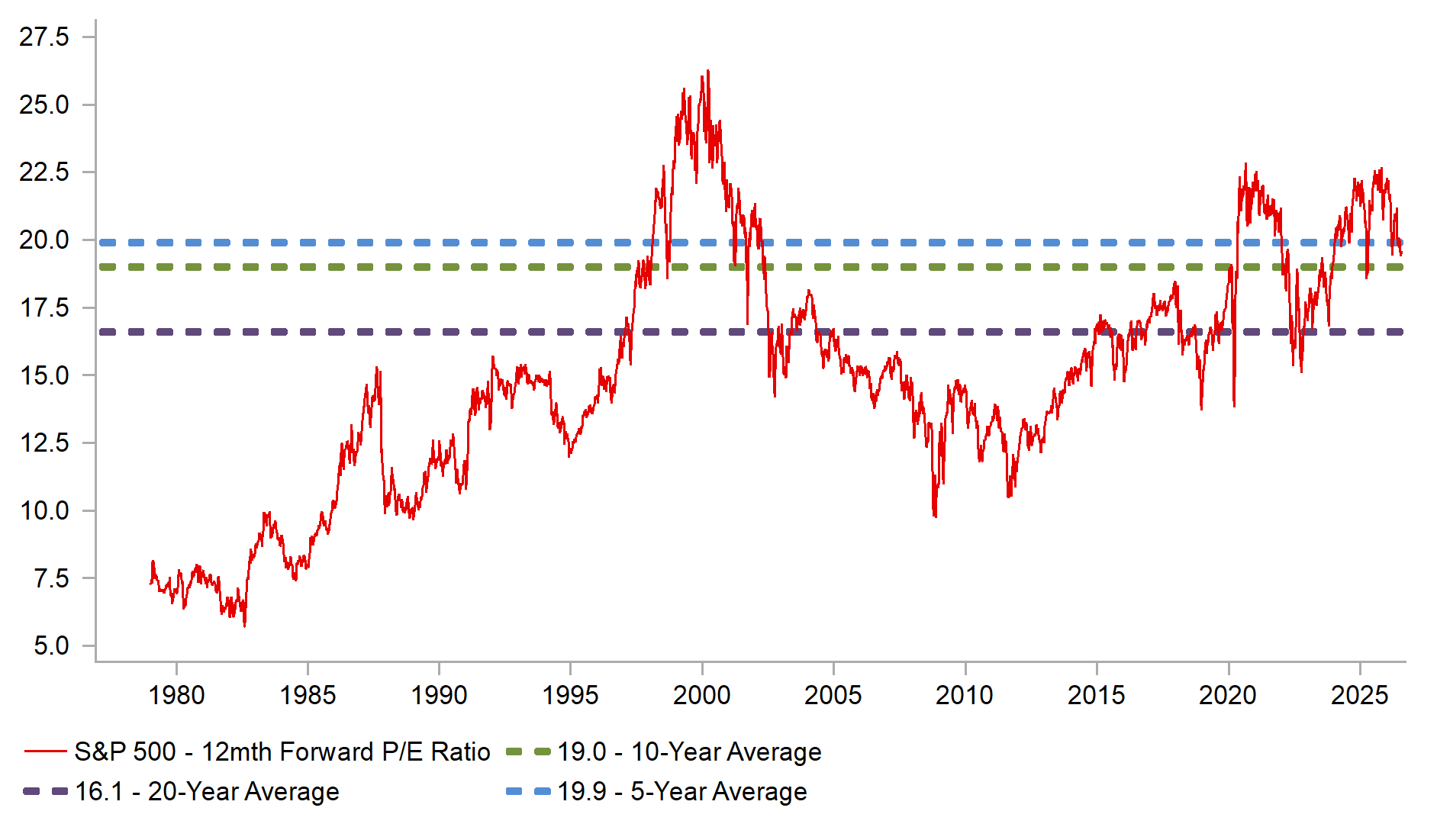
The latest updated summary of earnings provided by Factset shows another strong quarter for earnings growth in Q2. 88% of companies have reported for Q2 and 86% of those companies reported a positive EPS surprise. The blended earnings growth on a YoY basis is 50.4% and if that is the final figure when all companies have reported then it would be the largest since Q1 2021 when activity was rebounding after the bleak early period during covid. At the end of Q2, the market consensus for earnings growth was 23.1%. Based on forward P/E as a measure of valuation, the S&P 500 does not look particularly overvalued. The estimate is now 20.0, compared to a 5yr average of 19.9 and a 10-year average of 19.0. The energy sector was the top performing in terms of revenue growth followed by the IT sector.
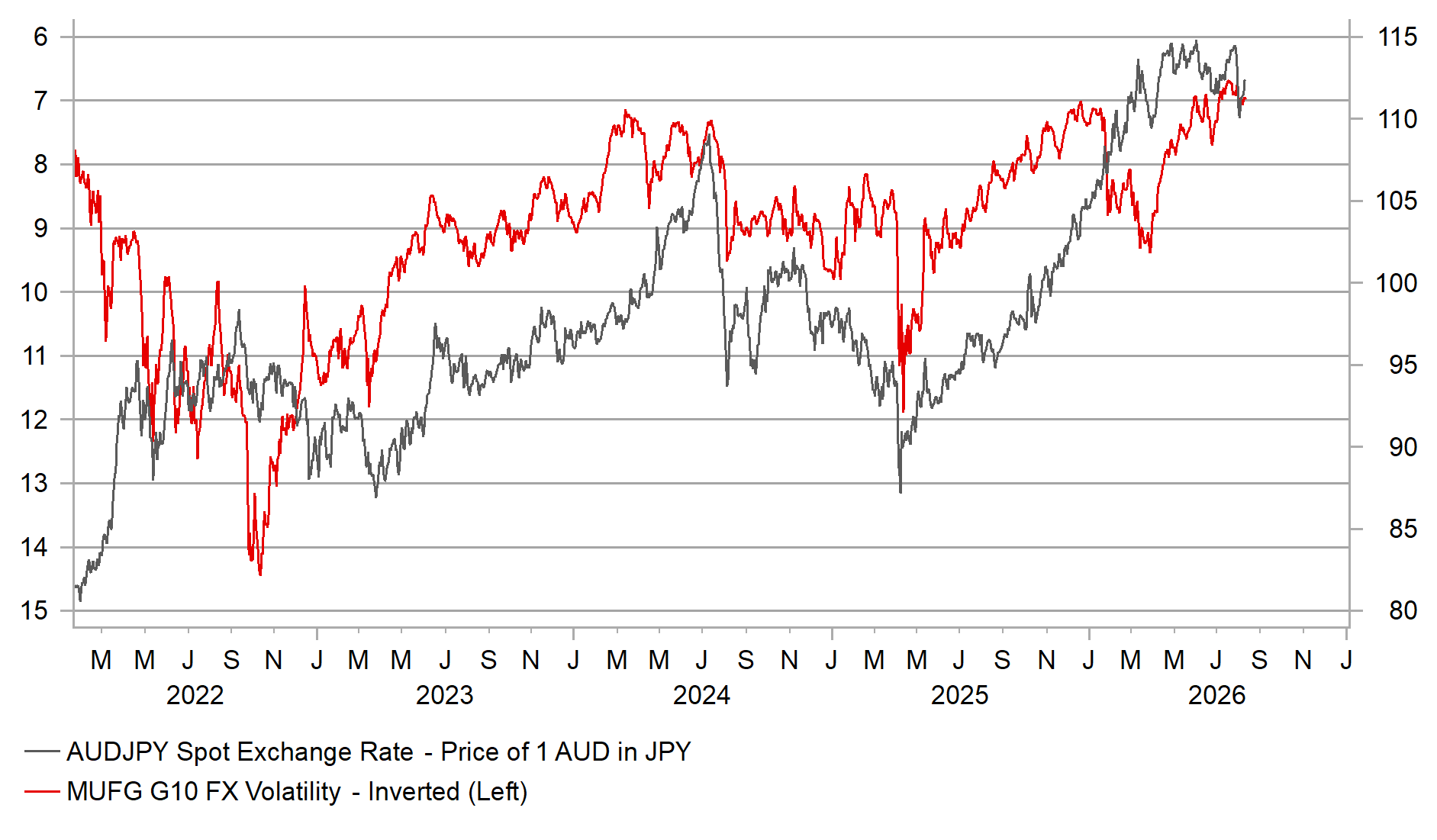
Our own G10 FX Volatility index jumped at the turn of the month after the latest JPY intervention, this time conducted by the MoF in Japan in conjunction with the US authorities, but we are already seeing volatility ebb back lower again. Even after another negative NFP print last Friday, the appetite for risk remains solid, helping to depress broader G10 FX volatility.
However, the earnings results do as always contain caveats and evidence that the breadth of earnings growth is narrow and that risks therefore lie ahead. The earnings surprise overall for the S&P is primarily down to just two stocks – Alphabet and Amazon – both of which recorded big positive surprises reflecting net unrealised gains in equity securities (Alphabet) and income due to investments in Anthropic (Amazon). Exclude those factors and the earnings surprise percentage would fall to 10.9% from 29.2%.
So just like the real economy, there is a narrow base to the Q2 earnings results that highlight the risks to that sector if yields continue to grind higher. US yields increased yesterday and 10-year and 30-year UST bond yields have more than retraced the drop on Friday due to the weaker jobs report. The steepening of the yield curve looks to be reflecting concerns over the Fed remaining on hold with core PCE YoY still elevated at 3.3%. The lack of confidence in how the Fed responds, created by Fed Chair Warsh’s communication style, remains a downside risk for the US dollar.
Q2 US EARNINGS SEASON DRAWS TOWARD A CLOSE WITH CURRENT FORWARD 12MTH P/E CLOSE TO 5YR & 10YR AVERAGES
Source: MUFG Research, Macrobond, Bloomberg
AUD: RBA signals a balanced view on rate policy outlook
The financial markets in Japan are closed for a holiday today and will be relatively quiet for the remainder of the week for the traditional Obon holiday period so without the lead from Japan Asian markets have also been relatively quiet with narrow trading ranges in equities and FX. USD/JPY did jump notably yesterday ahead of today’s holiday which has underlined the continued resilience in USD/JPY despite the first joint US-Japan intervention since 2011. The move was helped by a further increase in Brent crude oil prices with no sign of a break-through to open the Strait of Hormuz. President Trump’s stance has now hardened, rejecting Iran’s request for reparations arguing that Iran must pay for past aggressions across the region. Brent crude oil jumped over 7% yesterday and is back at levels not seen since the end of July.
So, the inflation risks associated with the conflict could be on the rise again and if energy prices continue to rise, September could turn out to be a busy month for central banks that may well feel compelled to hike rates. The RBA met today and while a hike in September would be possible if energy prices rise notably over the coming weeks, there was certainly no sense of urgency communicated by the RBA. The suggestion was that with monetary policy “somewhat restrictive”, the RBA has time to assess and must consider higher unemployment and a weakening property market in any decision to raise rates further.
However, Governor Bullock also state that it was “quite possible” that the RBA would have to raise rates again and hence, like other central banks, the RBA appears to be assessing the weaker domestic economic conditions against the backdrop of unpredictable upside inflation risks stemming from abroad. The RBA also released updated forecasts and headline and underlying inflation rates are not forecast to reach the 2.5% mid-point of the target range until early 2028. That forecast profile suggests to us that any worsening of inflation risks abroad would likely prompt the RBA to act again.
At this stage, our current assumption is that an escalation in the Middle East will be avoided and a deal ultimately done before the mid-term elections in November and hence we assume the RBA will not have to raise rates again. But it’s a close call as was highlighted by today’s communication. The 2-year yield in Australia drifted a little higher today (2-3bps) and one hike is nearly fully priced by next March. That’s certainly the risk to our view and stems entirely from external inflationary risks. That risk of tightening is likely to remain priced for some time and in circumstances of the low FX volatility environment highlighted above, AUD/JPY looks like it has scope to retrace more of the intervention-induced drop at the end of July.
LOW FX VOLATILITY FUELS CARRY – A POSITIVE OUTLOOK FOR AUD/JPY
Source: Bloomberg & MUFG Research
KEY RELEASES AND EVENTS
Country | BST | Indicator/Event | Period | Consensus | Previous | Mkt Moving |
US | 11:00 | NFIB Small Business Optimism | (Jul) | 97.8 | 97.4 | !! |
US | 15:00 | Existing Home Sales | (Jul) | 4.05M | 4.09M | !! |
US | 15:00 | Existing Home Sales (MoM) | (Jul) | - | -2.4% | !! |
US | 17:00 | EIA Short-Term Energy Outlook | - | - | - | !! |
US | 18:00 | 3-Year Note Auction | - | - | 4.179% | !! |
Source: Bloomberg & Investing.com