

JPY gives back some of recent gains after GPIF report
JPY: Modest sell-off triggered by GPIF report giving back recent strong gains
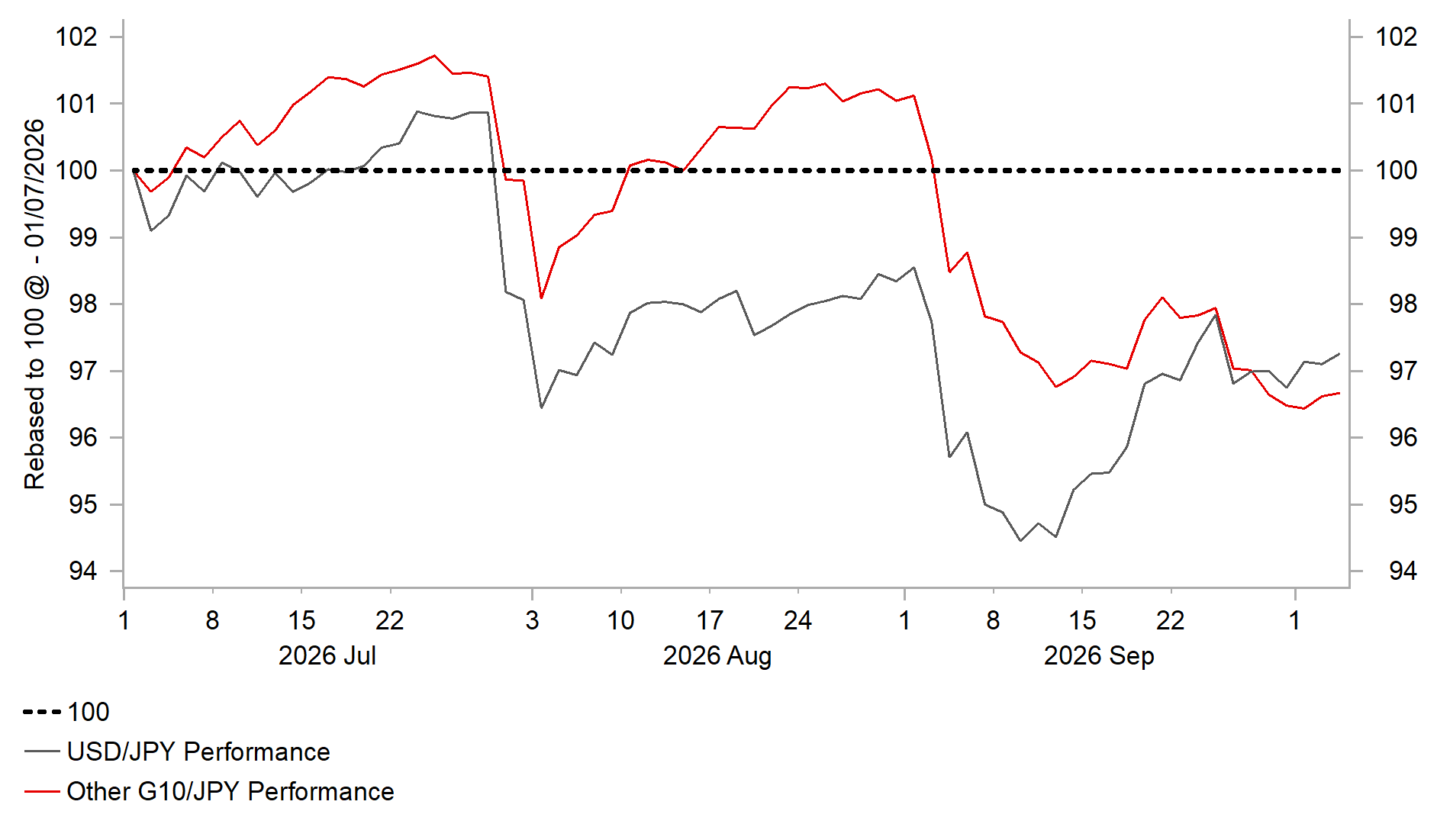
The major foreign exchange rates have stabilized overnight after the recent pick-up in volatility. After hitting a fresh year-to-date high yesterday at 102.54, the dollar index has lost upward momentum overnight. At the same time, the yen has continued to trade on softer footing after modest sell-off yesterday triggered by Bloomberg report that Japan’s Government Pension Investment Fund (GPIF) didn’t discuss portfolio allocation at a meeting last month. It has helped lift the USD/JPY back above the 158.00. Even after yesterday’s correction lower, the yen has still been the best performing G10 currency since the end of August as it has strengthened alongside the US dollar. As a result, the non-USD yen crosses have been trending lower. EUR/JPY has fallen by around 4.5% since the end of August. However, the Bloomberg report has put a dampener on the yen’s recent upward momentum. According to the agenda of the GPIF meeting in September posted on its website, the management committee did not receive a report from the team tasked with reviewing the GPIF’s portfolio. In the previous month in August it had received a report. The latest update will put a dampener on building expectations in the near-term that the GPIF is planning to shift assets towards domestic assets that would help to provide more support for JGBs and the yen.
It follows reassuring comments yesterday from Prime Minister Takaichi during the opening of an extraordinary session of parliament that investors could “rest assured” about her fiscal plans. She emphasized that “to ensure market confidence, we will secure funds without relying on [the issuance] deficit-covering bonds, so please rest assured”. She also added that “fiscal sustainability is obviously a prerequisite in pursuing our ‘responsible and proactive’ fiscal policy” while pledging to enhance market trust in her policies. Long-term borrowing costs in Japan have hit fresh highs overnight although the yields at the ultra-long end of the curve have been relatively more stable cover the summer compared to in other major bond markets. The 30-year JGB yield has increased by 11bps since the end of august compared to around 43bps in the US. The Japanese yield curve has flattened sharply as the BoJ has sped up plans for monetary tightening. Higher yields are helping to attract more demand as evident again in the latest 10-year JGB auction overnight which recorded a bid-to-cover ratio of 3.76 compared to the one-year average of 3.21.
Reuters has reported overnight that the BoJ may signal this month that underlying inflation has roughly hit its 2% target according to three sources familiar with its thinking, highlighting its readiness to raise rates again in the coming months. The report adds that any such announcement would be largely symbolic, but would reinforce dominant market expectations of a December hike and signal the BoJ’s readiness to keep raising rates in short intervals. Recent economic data releases including Tokyo inflation and the Tankan survey are likely heightening the BoJ’s conviction that underlying inflation has roughly reached its 2% target. The sources stressed though that the Tankan survey revealed that corporate inflation is moving sideways and not heightening in a way that requires an immediate policy response. Overall, the Reuters report is consistent with our view that the BoJ will stick to the faster pace of rate hikes and deliver another hike in December. An outcome which is almost fully priced into the Japanese rate market, it would be a bigger surprise if they hiked again this month although that appear unlikely based on recent communication. The faster pace of BoJ policy normalization has been helping to provide more support for the yen alongside the heightened threat of further intervention if required.
JPY REMAINS AT STRONGER LEVELS SINCE JOINT INTERVENTION
Source: MUFG Research, Macrobond, Bloomberg
EUR: Spanish snap election adds to political uncertainty in Europe
The euro continues to remain under selling pressure at the start of this week with EUR/USD testing support at the 1.1200-level overnight. The main development in the euro-zone yesterday was the announcement from Spanish Prime Minister Pedro Sanchez that he has decided to call an early election for 29th November. It comes after parliament rejected his minority government’s housing plan last week which had fuelled speculation over a snap election. The government’s current term began in 2023 and was due to run until July 2027. The latest opinion polls have been indicating that the centre-right People’s Party are well positioned to positioned to become the biggest party after the election although would require support from other parties without a majority. PP leader Alberto Nunez Feijoo has indicated that they could govern with the radical-right VoX party. While the snap election adds to political uncertainty in the euro-zone in the near-ter, we do not expect the outcome to materially add to downside risks for the euro.
The performance of the euro heading into year-end will depend more on the fallout from the French government bond market sell-off including evidence of contagion and how policymakers react with risks currently skewed towards further weakness (click here). Market attention is likely to focus today on Marine Le Pen who is scheduled to present her plans to cut government spending later today by EUR25 billion/year and laying out a 2027 shadow budget.
KEY RELEASES AND EVENTS
Country | BST | Indicator/Event | Period | Consensus | Previous | Mkt Moving |
GB | 09:30 | BoE MPC Member Mann | - | - | - | !! |
EU | 10:00 | Retail Sales (MoM) | (Aug) | 0.2% | -0.6% | ! |
US | 13:30 | Trade Balance | (Aug) | -100.80B | -88.60B | !! |
CA | 13:30 | Trade Balance | (Aug) | 1.50B | 0.77B | !! |
US | 14:05 | FOMC Member Williams Speaks | - | - | - | !! |
US | 15:45 | FOMC Member Bowman Speaks | - | - | - | !! |
US | 18:15 | Fed Schmid Speaks | - | - | - | ! |
Source: Bloomberg & Investing.com