
Week Ahead FX outlook:
Key FX views:
Asia’s calendar is quite packed, with the interaction between resilient technology-related exports, oil-driven inflation and the regional monetary-policy outlook likely to dominate. China’s RatingDog manufacturing and services PMIs, coupled with trade data for July will provide another read on China’s economic momentum thus far. This comes on the back of softer than expected official PMI numbers, and also a Politburo meeting readout which emphasised a faster rollout of existing stimulus plans with the option of perhaps doing more later this year. Outside of China, trade data from South Korea, Taiwan, and Vietnam should point to robust semiconductor and AI demand, while CPI releases across Korea, Indonesia, the Philippines, Thailand and Taiwan will show how far higher energy costs have passed through into core prices. The contrast may be important for regional rates and currencies: Korean core inflation is expected to firm even as headline CPI moderates, Philippine inflation could move further above the BSP’s target, and Thailand’s core inflation is projected to remain moderate.
Wednesday will be the main policy and domestic-demand focal point in our region. The Reserve Bank of India is expected to leave the repo rate unchanged at 5.25% with a likely neutral policy stance, with inflation still within its target band but policymakers facing upside risks from oil prices and weaker monsoon conditions. We still think the balance of risks tilt towards RBI hiking rates later this year even if a delayed cycle. Indonesia’s second-quarter GDP may show growth moderating as investment and government spending soften, while Philippine’s GDP is expected to show some marginal improvement on better government spending. In Japan, June labour cash earnings and the minutes of the Bank of Japan’s June meeting will be watched for evidence that stronger wages are supporting underlying inflation and the case for further policy normalization, and coming on the back of BOJ’s latest policy meeting where the BOJ kept rates on hold but with a hawkish tilt.
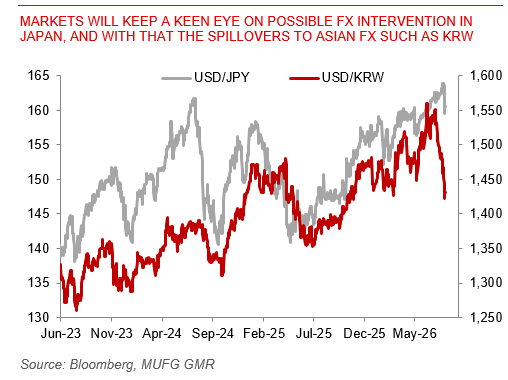
Markets will keep a keen eye on possible FX intervention in Japan, and with that the spillovers to Asian FX such as KRW