
Tariffs, tech outflows and labour data
Download the full PDF report using the link above.
Week Ahead FX outlook:
Asia FX enters next week facing renewed US tariff uncertainty, fragile technology sentiment and a heavy US labour calendar. With a December Fed hike largely priced in, November nonfarm payrolls, unemployment and ADP employment will be more important for the path of further tightening in 2027. Resilient labour data would keep US yields and the dollar supported, maintaining pressure on regional currencies, while material weakness could temper expectations for additional Fed hikes and provide some relief to Asia FX.
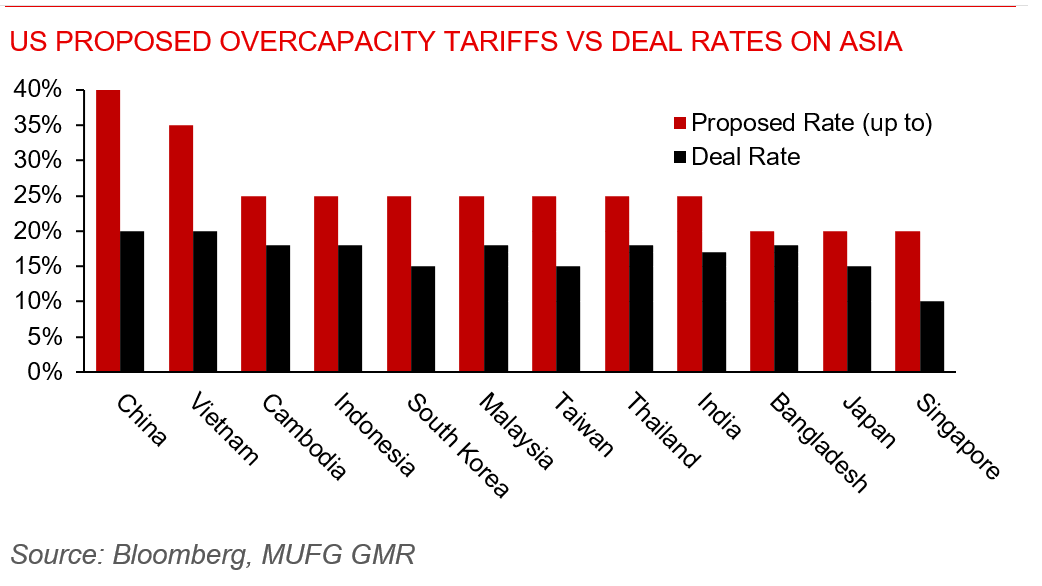
The US tariff announcement adds another layer of uncertainty for Asian exporters. USTR has issued Section 301 determinations and proposed tariff actions addressing structural excess capacity across 14 economies, covering most major Asian markets. The proposals remain subject to consultation, take account of certain existing or prospective bilateral trade arrangements, and generally credit the existing 10–12.5% forced-labour Section 301 tariffs rather than fully stacking the new duties on top. Together with the product exemptions, this should limit the immediate tariff shock, although higher final tariff rates and broader product coverage remain material downside risks.
Technology sentiment remains a key regional transmission channel. Jensen Huang’s reinstatement as Nvidia CEO initially triggered a rebound in technology equities, but the rally proved short-lived as concerns over the returns on AI investment persisted. The resulting reassessment of stretched technology valuations has weighed particularly heavily on the semiconductor-intensive markets of South Korea and Taiwan, reinforcing pressure on KRW and TWD through the portfolio-flow channel earlier this week. Today, KRW strengthens, looks primarily flow-driven, with the equity rebound doing most of the work, reinforced by exporter dollar selling and a supportive domestic macro backdrop
Meanwhile, IDR remains under pressure. USD/IDR broke above 18,300 and approached 18,400 despite Bank Indonesia’s recent rate hike and continued FX intervention, reflecting concerns over domestic policy credibility, a possible MSCI reclassification and associated capital outflows, as well as elevated month-end corporate dollar demand. By comparison, INR has surrendered part of its strong November gains since 25 November, driven mainly by the rebound in oil prices and renewed trade uncertainty following the latest US tariff proposal.
Next week’s data and policy decisions will test whether these regional divergences persist. US payrolls will shape 2027 Fed pricing and the external rates backdrop, while we expect the RBI to raise its repo rate by 25bps to 5.75%. China’s PMIs will offer a fresh read on the weakness in domestic demand, while Korea’s exports will test whether the semiconductor upcycle remains intact.
US proposed overcapacity tariffs vs deal rates on Asia