

Ahead Today
G3: US Durable Goods, Germany IFO
Asia: Singapore industrial production, China industrial profits
Market Highlights
Markets remain on the edge around the US-Iran conflict and the path of oil prices, and in Asia what all that could also imply for currencies and whether some central banks would have to tighten policy as a result. The key development over the weekend was a pause in strikes against Iran since late Friday without any explanation or announcement after striking Iran for 13 days. Iran’s army has also signaled that it was refraining from any retaliatory attacks for the time being. All these come as Iran has also expanded its attacks through the Houthis in Yemen, targeting the Red Sea and the Bab El-Mandeb Strait, and as such potentially targeting a key alternative route for oil supplies and in particular for Saudi Arabia through the East-West pipeline. The war also saw some possible concerning signs that it has expanded beyond the Strait of Hormuz to the Caspain Sea, with a Ukrainian attack on an Iranian merchant vessel drawing a sharp response from Iran.
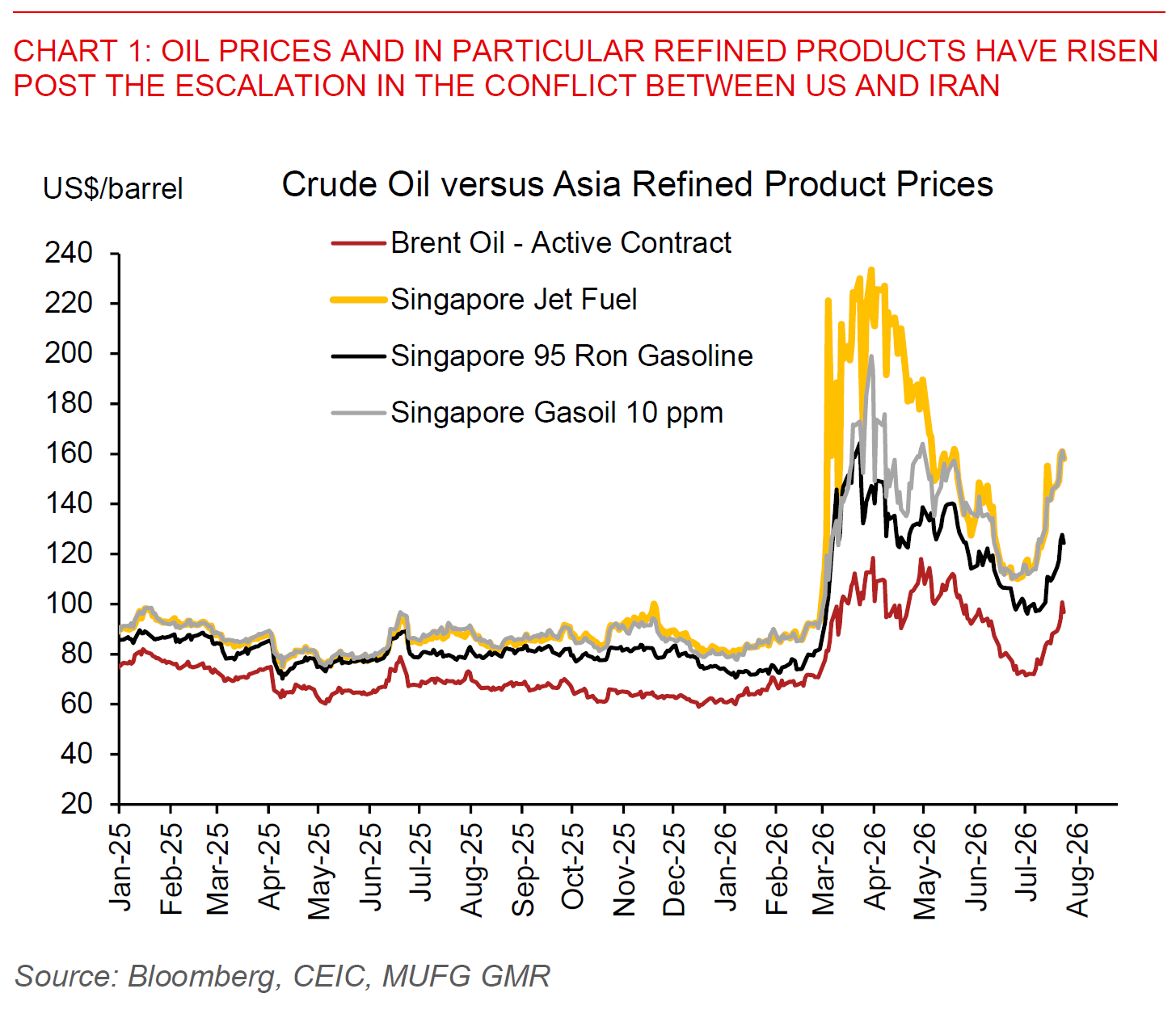
While it is difficult to know for sure how things will pan out, our base case remains for de-escalation over time for several reasons and as such for oil prices to decline from current US$100/bbl levels. First, the US military may currently lack adequate munitions to sustain an all-out war, with the New York Times reporting that Trump and his advisers have decided to hold off on plans to escalate strikes in part over concerns the war could drain already-diminished stores of Patriot anti-missile interceptors and other air defense weapons. Second, the mid-terms are also coming up and so it is not in Trump’s incentive to see oil prices sustain at current levels. Third, the Middle East and GCC countries while not homogenous, generally have an interest in seeing peace, with Oman seemingly taking a lead in negotiations over the weekend with Iran this time around. Fourth, there are also signs that China has been taking a larger role in negotiations this time over the weekend.
For Asian countries, the good news is that many have diversified their sourcing of oil since the initial Strait of Hormuz shock and as such we don’t expect the same blowout in premiums paid that we saw earlier during the year. Nonetheless, the key bottleneck continues to be in refined products and most acutely in diesel, and if the war is sustained this could add further upward pressure on inflation especially in the industrial sector and transportation.
This week will be an important one for markets, with the Fed FOMC policy meeting, the Bank of Japan, coupled with China’s Politburo meeting. While we think both the FOMC and BOJ will remain on hold, markets will look closely at the tone of the meeting and whether both signal any possibility of hikes in the next meeting in September. Meanwhile, with domestic demand remaining quite soft in China, some targeted fiscal policy easing could also be signalled post the Politburo meeting which will typically take place towards the end of July.