

Ahead Today
G3: Japan leading index
Asia: Thailand CPI, Singapore retail sales, Malaysia foreign reserves, China foreign reserves
Market Highlights
The US dollar ended last week on a firmer footing after a much stronger-than-expected August nonfarm payrolls report. Nonfarm payrolls rose by 162k in August, well above consensus expectations of 55k, while July employment was revised higher to a gain of 21k from an initially reported decline. The unemployment rate held steady at 4.1% and labour force participation improved to 61.6%, pointing to a labour market that remains resilient. Meanwhile, average hourly earnings slowed slightly to 3.1%yoy from 3.2%yoy, suggesting wage pressures continue to ease gradually.
Importantly, markets continue to price more than 60% probability of a 25bps Fed hike at the September FOMC meeting and approximately 35bps of cumulative tightening by December, equivalent to around 1.4 hikes by year-end. DXY gained 0.3% on Friday, though essentially unchanged since Fed Chair Warsh's Jackson Hole speech. This divergence suggests dollar bulls may not be convinced yet that higher yields can generate a sustained dollar rally. Renewed calls by President Trump for lower interest rates, together with his threat to stop trading with countries that the US has a trade deficit with, may also contribute to some negative policy premium on the dollar.
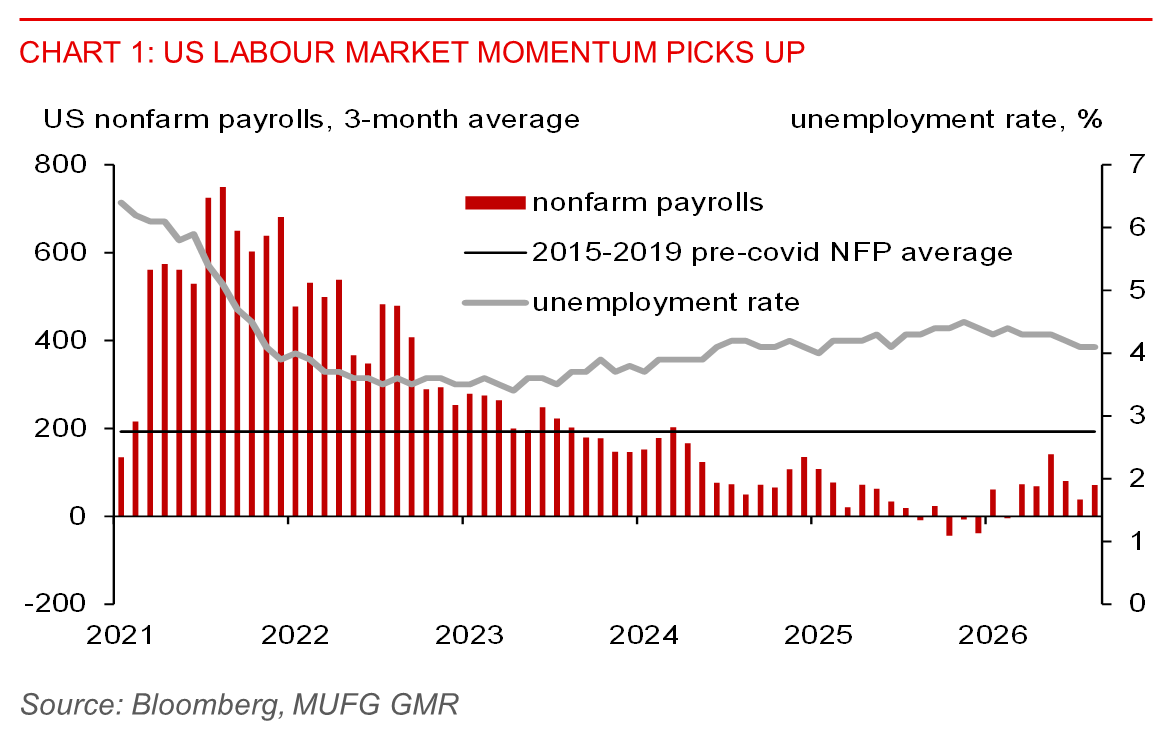
Nonetheless, the risk of Fed tightening on the back of stronger than expected jobs data could test regional FX resilience. Some regional currencies may also still be vulnerable amid a challenging external environment.
In Thailand, headline inflation is likely to accelerate in August as higher energy prices feed through. But Thailand's weaker growth backdrop acts as a constraint on policy tightening. With Brent now approaching US$100/bbl, USDTHB could remain biased higher in the near term.
In Indonesia, US inflation data this week could test the recent rupiah recovery. Firmer US inflation could reinforce elevated US yields and challenge USDIDR's recent break below 17,700. While domestic buffers remain supportive, there are limits. Foreign ownership of outstanding SRBI has already reached around 27%, close to previous highs seen in late 2024. More importantly, Indonesia's commodity offsets are proving insufficient to fully counter the deterioration in the oil and gas trade balance. Our calculations suggest Brent prices above US$82/bbl begin to erode the cushioning effect from coal, palm oil and base-metal exports. If oil prices move above US$100/bbl and remain there for an extended period, renewed concerns over fiscal risks and subsidy costs could re-emerge.