

Ahead Today
G3: US NFIB small business optimism, ADP weekly employment, existing home sales
Asia: Malaysia industrial production
Market Highlights
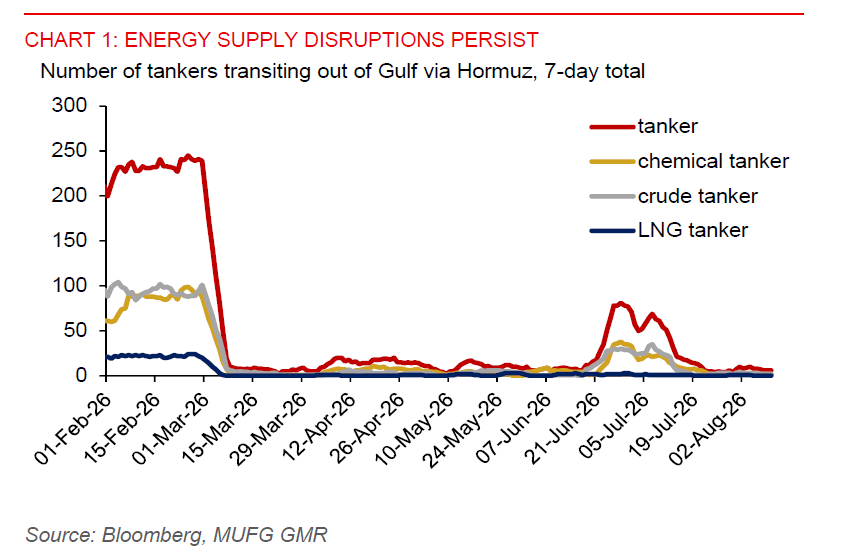
Neither the US nor Iran appears incentivized to escalate further given the huge economic and military costs involved. US President Trump has signalled a preference for allowing economic pressure to build on Iran rather than escalating the conflict. Periodic flare-ups in tensions are still possible, though, but our view remains that the conflict will likely not escalate into a full-blown regional war. The key market concern is still about energy supply disruptions, with tanker traffic through the Strait of Hormuz subdued. While Brent remains below US$100/bbl, it is still above pre-conflict levels, while Singapore jet fuel prices at US$143/bbl are more than 50% above pre-conflict levels.
Despite geopolitical tensions, the dollar has softened following a weak July nonfarm payrolls report, which showed employment falling by 23k versus market expectations for an 80k gain. The three-month average pace of nonfarm payrolls also slowed to 20k from 77k previously. But the unemployment rate eased to 4.1% from 4.2%, alongside an easing in the labour force participation rate. Markets have pared back some net long dollar positions, but expectations for one Fed rate hike this year remain, suggesting that a broader hawkish bias towards US monetary policy persists.
Asian currencies have also strengthened against the dollar so far this month amid the softer dollar. This has been led by KRW, IDR, and THB, each appreciating by more than 1%. This follows the yen intervention, which has helped to cap broader dollar strength, alongside a weaker-than-expected July US nonfarm payrolls report, though geopolitical risks still persist.
In Indonesia, the rupiah appreciated towards 17,750 versus the dollar as markets welcomed the nomination of Senior Deputy Governor Destry Damayanti as the sole candidate to replace former Bank Indonesia Governor Perry Warjiyo. The appointment is likely seen as supportive for policy continuity, helping to restore some investor confidence following the uncertainty created by Warjiyo's sudden resignation.
Meanwhile, Singapore's economy expanded by a stronger-than-expected 5.9%yoy in Q2, slightly above the market consensus of 5.8%, supported by the ongoing tech upcycle. Reflecting the stronger growth outlook, the government raised its 2026 GDP growth forecast to 4.5-5.5%, from 2.0-4.0% previously. Robust growth momentum, together with the MAS's relatively tight policy stance, should continue to underpin SGD resilience.