

Ahead Today
G3: US New Home Sales
Asia: Bank of Thailand
Market Highlights
We saw a sharp sell-off in semiconductor stocks with the KOSPI in particular falling close to 10%, with doubts around the sustainability of the AI-driven rally driving a meaningful risk-off sentiment. It’s not entirely clear what were the immediate catalysts that drove the sharp price movements, but a combination perhaps of a hawkish Fed with rising real US interest rates, coupled with elevated earnings expectations and sharp run-up in share prices may have overall contributed to the market dynamics. China’s AI company Zhipu’s recent release of the GLM 5.2 might have been something happening in the background as well, raising some concerns around future cashflow expectations of the existing AI business models in the US.
Overall, whether these moves continue will depend on whether the market believes the cashflows from deployment and diffusion of AI models justify the infrastructure build-out that we are seeing right now. We tend to lean towards a more positive view and see us as just in the initial innings of a generational shift in technology deployment as the bigger picture beyond the near-term volatility.
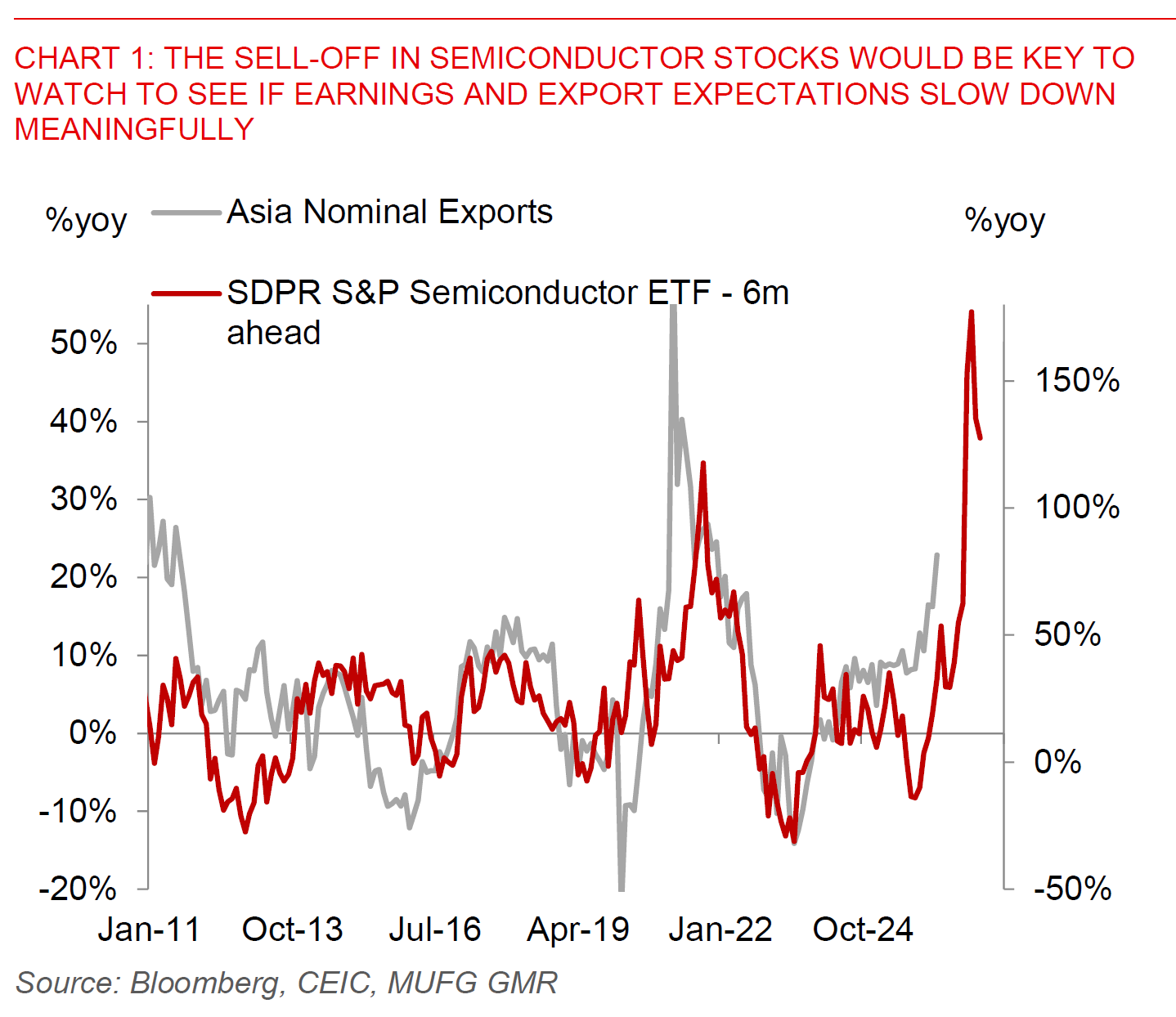
From an FX perspective, these developments have also continued to drive the Dollar stronger with EUR/USD falling below 1.14 levels, USD/JPY still a touch below possible intervention levels of 162, and Asian currencies also seeing some pressure including the lower yielders such as Thai Baht. Certainly FX is a relative game, and the Dollar may continue strengthening if US rates expectations remain elevated. Nonetheless from an Asian FX and rates perspective what’s also important is relative growth and export expectations, and with that whether sentiment towards the electronics cycle remains strong moving forward.
Overnight, MSCI postponed the review of Indonesia’s equity market classification to November, saying it needs more time to see whether recently announced transparency reforms are effective. This is good news at the margin for the Indonesian Rupiah, but more broadly we think for IDR to do better moving forward we will require a more meaningful commitment to fiscal sustainability and policy certainty.