

Ahead Today
G3: US ISM services index, initial jobless claims, trade balance
Asia: RatingDog China PMI Composite, Vietnam CPI and activity data, BNM policy rate decision, India PMI
Market Highlights
The US dollar eased modestly on the back of softer-than-expected US ADP employment data. US private payrolls increased by 38k in August, the weakest pace since February and below market expectations of 46k. But July factory orders were resilient, rising 0.9%mom, from -0.2%mom in June, suggesting that manufacturing activity remains relatively resilient. Market attention now shifts to the upcoming US ISM Services survey later today, particularly the prices-paid component, which will provide important clues on whether inflation pressures remain elevated amid still-solid service-sector activity.
Market pricing continues to reflect a 64% probability of a September rate hike and roughly 1.5 hikes cumulatively by year-end. While US Treasury yields eased modestly yesterday, with the 2-year yield falling 3bps and the 10-year yield declining 2bps, the broader trend since Jackson Hole remains one of higher US rates.
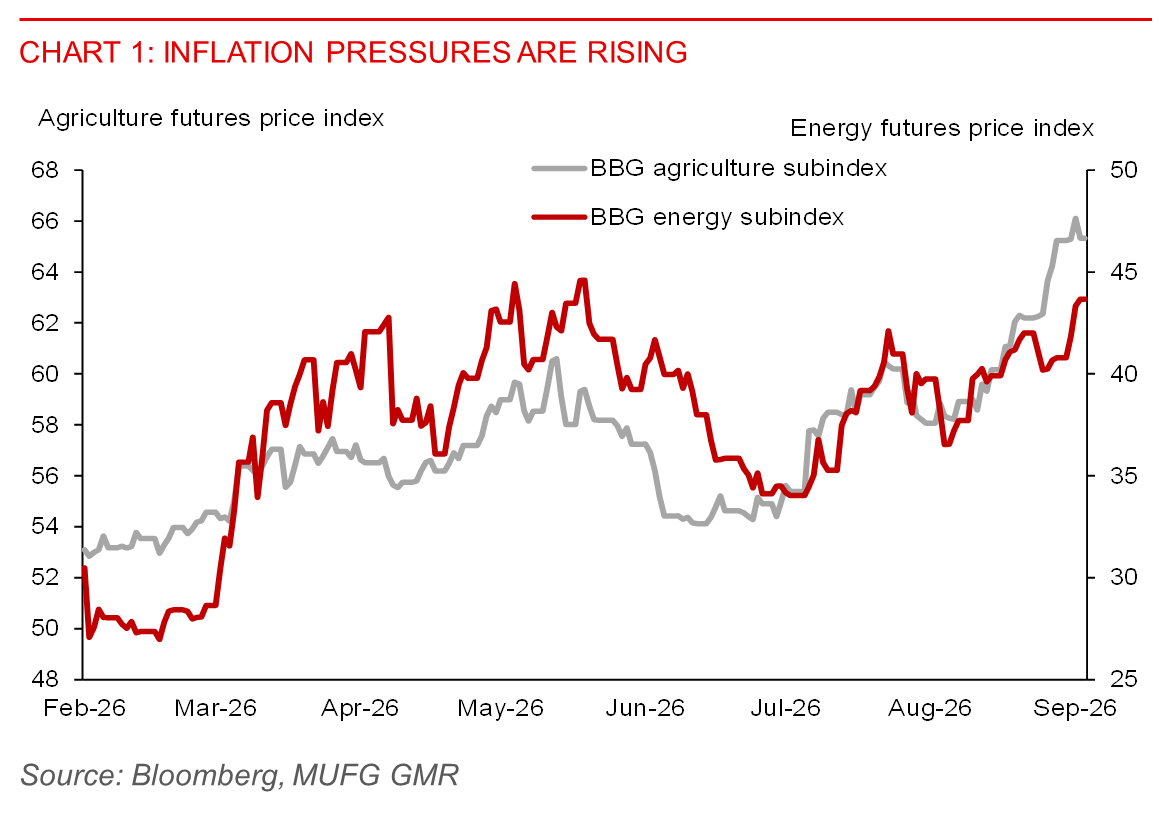
Meanwhile, Brent crude rose another 1% to above USD95/bbl as tensions between the US and Iran flared again, underscoring that Middle East supply risks remain firmly in focus. Agricultural commodity prices have also continued to rise. Inflation pressures are rising, which is likely to keep several Asian central banks on a hawkish bias.
In Asia, KRW has been one of the region's strongest performers, gaining 1% against the US dollar yesterday. South Korea's robust external position remains supportive, with AI-related semiconductor demand driving export growth and pushing the trade surplus to USD34.8bn in August. Persistent inflation pressures should also reinforce the Bank of Korea's tightening bias. Nevertheless, USDKRW is in oversold territory.
A key event today is Bank Negara Malaysia's policy decision. BNM is widely expected to keep the policy rate unchanged at 2.75%, consistent with a broadly neutral stance. Malaysia remains relatively well insulated from the oil shock given fuel subsidies, resilient electronics exports, and continuing investment inflows into data centres. While higher US yields and geopolitical risks may limit near-term MYR gains, Malaysia's healthy external position and easing domestic political uncertainties should continue to support a constructive medium-term outlook for the ringgit.