
Ahead Today
G3: US ADP Employment, Germany Zew Expectations
Asia: Taiwan Export Orders
Market Highlights
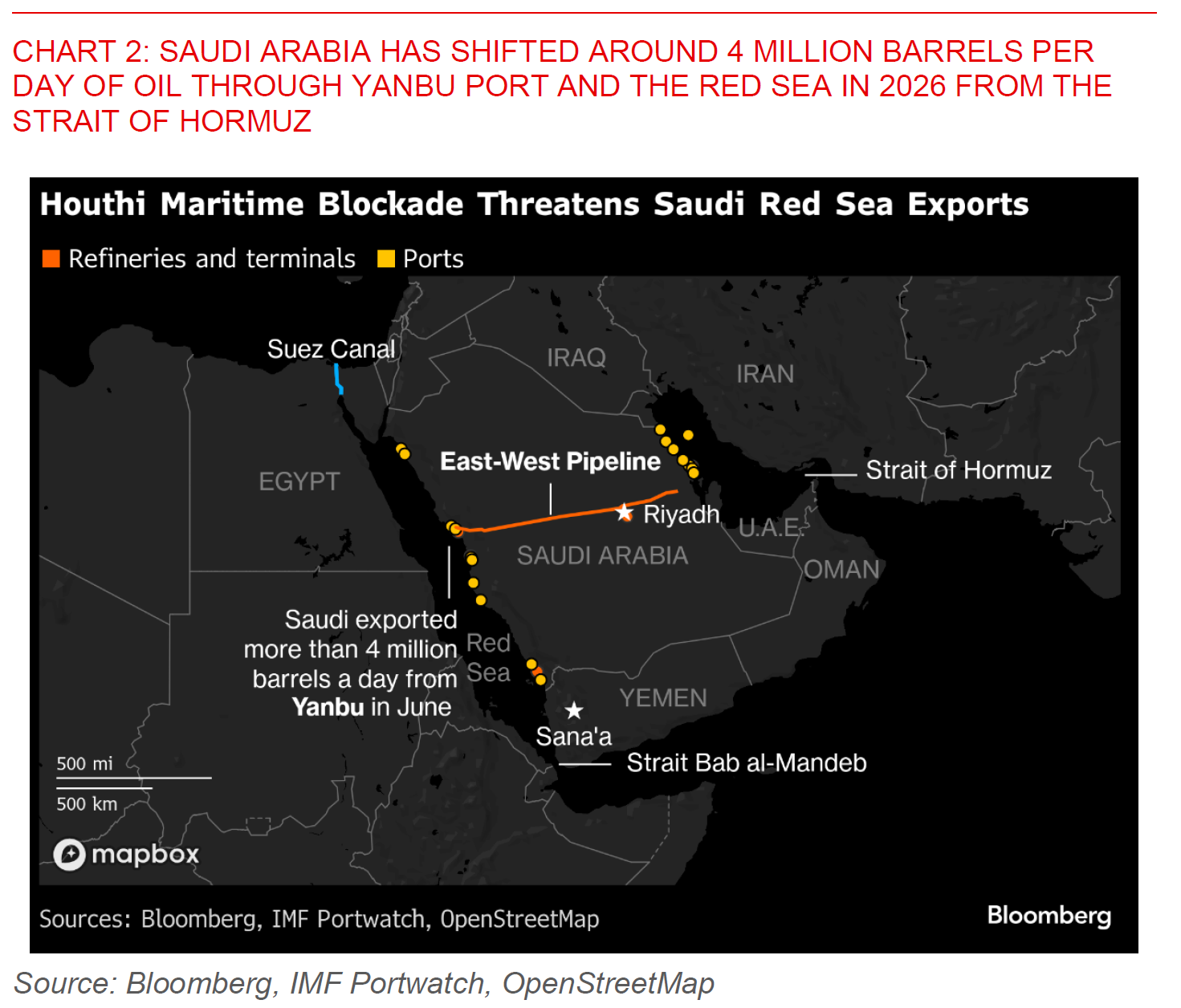
The key themes across markets were an escalation of tensions between US and Iran and this time potentially involving the Houthis in Yemen, coupled with concerns around the sustainability of the AI boom. In particular, the Houthis said they will impose a maritime blockade on Saudi Arabia in response to what they say is Saudi Arabia’s siege of the Yemeni capital. This led to the Saudi Arabia led military coalition in Yemen to begin implementing operational measures to protect ships in the Bab el-Mandeb Strait at the southern end of the Red Sea.
For context, with the ongoing disruptions in the Strait of Hormuz, oil flows have been increasingly reliant on the Red Sea and the Bab el-Mandeb Strait. In particular through the East-West pipeline roughly 4mn barrels per day of oil from Saudi Arabia is now shipped through the Red Sea and as such any effective disruption to oil flows there could be quite impactful for Asian countries dependent on Middle East oil for supplies.
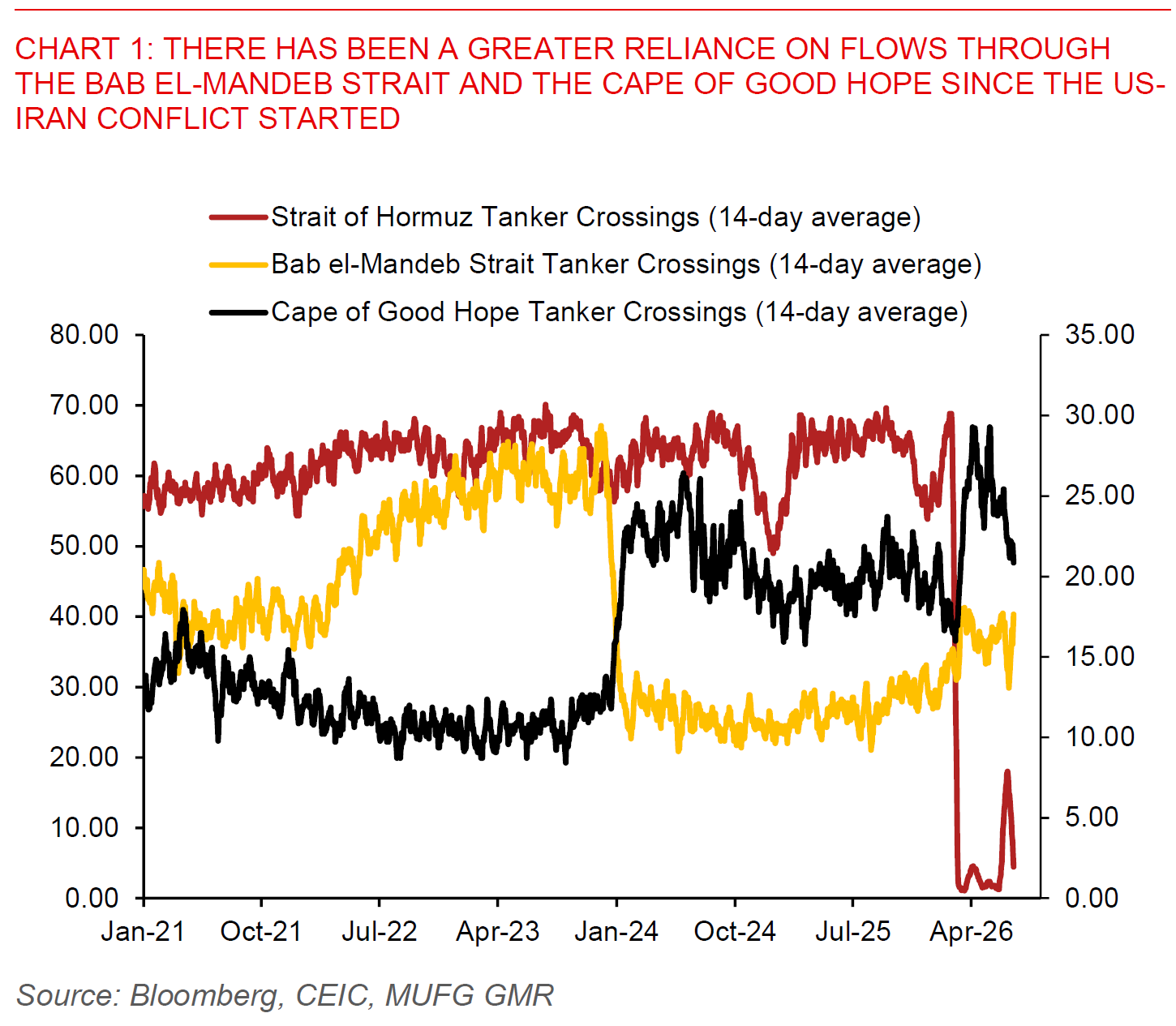
In practice, we think even if there were disruptions it is unlikely to be sustained given the lack of capability right now by the Houthis to do so and also differentiate which are Saudi linked ships or not. A wholesale disruption of the Strait may also be an alternative option, and this may lead some tanker and cargo traffic to take a longer route through the Suez Canal and the Cape of Good Hope which could ultimately lead to higher container freight rates and transport costs.
All-in from a market perspective we think it’s still a reasonable base case that there is resolution in the conflict, even if things may get worse before it gets better. Latest indications are that there continues to be talks and discussions happening in the background including through mediators and with the US mid-terms coming up coupled with lack of munitions by the US military oil prices may not revisit the earlier highs that we saw earlier during the conflict.
Net-net, if this assumption is right, this implies some space for Asian currencies including oil-sensitive currencies INR and PHP to do somewhat better from here relative to what has been seen over the past 3 weeks, but of course we remain cognizant of the risks including through what it might imply for US rates the Dollar and risk sentiment. Local factors will also become increasingly important, including for instance in India how and whether RBI’s FX measures such as the FCNR(B) flows and subsidized hedging for Dollar borrowings start to help the Indian Rupee moving forward.