

Ahead Today
G3: US leading index
Asia: China loan prime rate, Malaysia exports, Philippines BOP
Market Highlights
Inflation risks remain skewed to the upside amid escalating geopolitical tensions in the Middle East. Brent crude prices have rebounded to around USD88/bbl as geopolitical risk premia rise and tanker traffic through the Strait of Hormuz declines. As a result, US gasoline prices remain elevated relative to pre-conflict levels.
While US Treasury yields have eased following softer June CPI and PPI releases, they remain above 4%. The University of Michigan survey showed that 1-year consumer inflation expectations moderated to 4.2%yoy in July from 4.6% previously, but remain elevated. Longer-term inflation expectations (5-10 years) stayed at 3.3%.
The Fed's Vice Chair has said that the central bank should consider raising interest rates if inflation does not cool soon. The US dollar, as measured by the DXY index, has remained firm this month, despite softening somewhat following the June inflation data. Meanwhile, the University of Michigan consumer sentiment index rose to 54.4 in July from 49.5 in June, exceeding market consensus of 51.0 and pointing to improved consumer confidence despite ongoing inflation concerns.
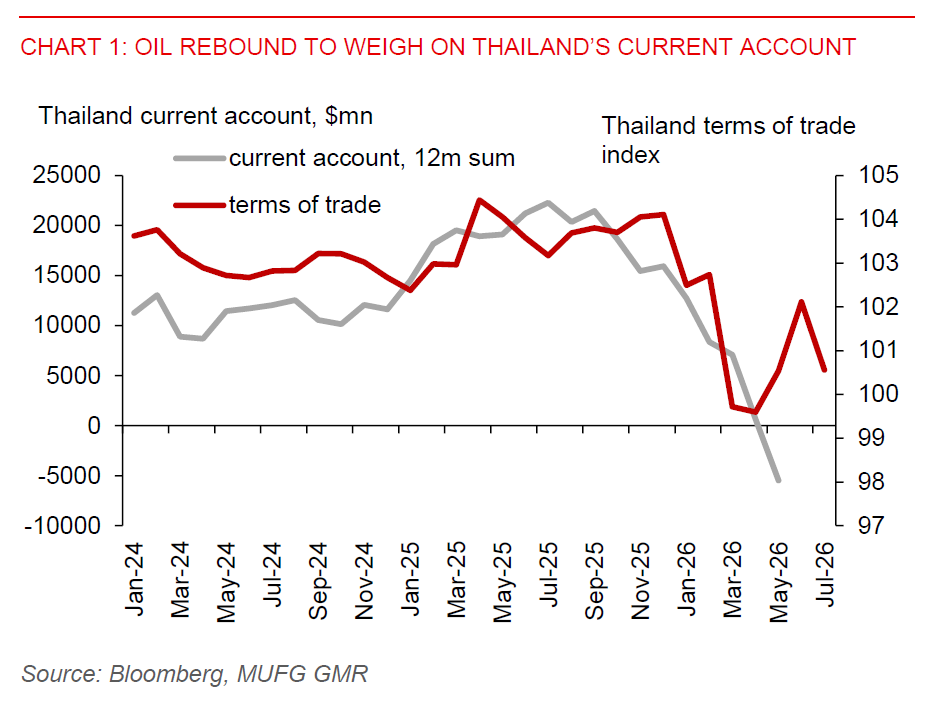
Across Asia, the Indian rupee (INR) and Thai baht (THB) were the worst-performing currencies last week, each depreciating by around 1% against the US dollar. The weakness was particularly notable given the somewhat softer DXY, underscoring their heightened sensitivity to the rebound in oil prices. For the baht, risks remain skewed to the downside, especially with the deterioration in Thailand’s external balance. The current account recorded deficits of USD6.4bn in May and USD7.8bn in April, reflecting elevated energy imports.
Meanwhile, Malaysia’s economy remained resilient, with GDP growth accelerating to 5.8%yoy in Q2 from 5.4% in Q1, surpassing market expectations of 5.2%. Growth was driven primarily by strong electronics exports, which more than offset disruptions stemming from the Middle East conflict. Together with Bank Negara Malaysia’s recent measures encouraging government-linked companies to repatriate overseas earnings, this should help contain downside pressure on the ringgit. The mining sector also expanded by 10.2%, supported by higher natural gas production, while construction activity remained robust on the back of data centre projects. Inflation stayed well contained, easing to 1.9% in June, helped by the continuation of fuel subsidies.