
Ahead Today
G3: US Mortgage Applications
Asia: Bank Indonesia policy
Market Highlights
The key themes across markets remain continued uncertainty around the US-Iran conflict and what that means for oil prices, some fading uncertainty around whether the AI story is a bubble, coupled with the weakness in the Japanese Yen. All this has led to continued dispersion in currency performance across Asia, driven by varying drivers of oil, US rates, and also linkages to the AI theme.
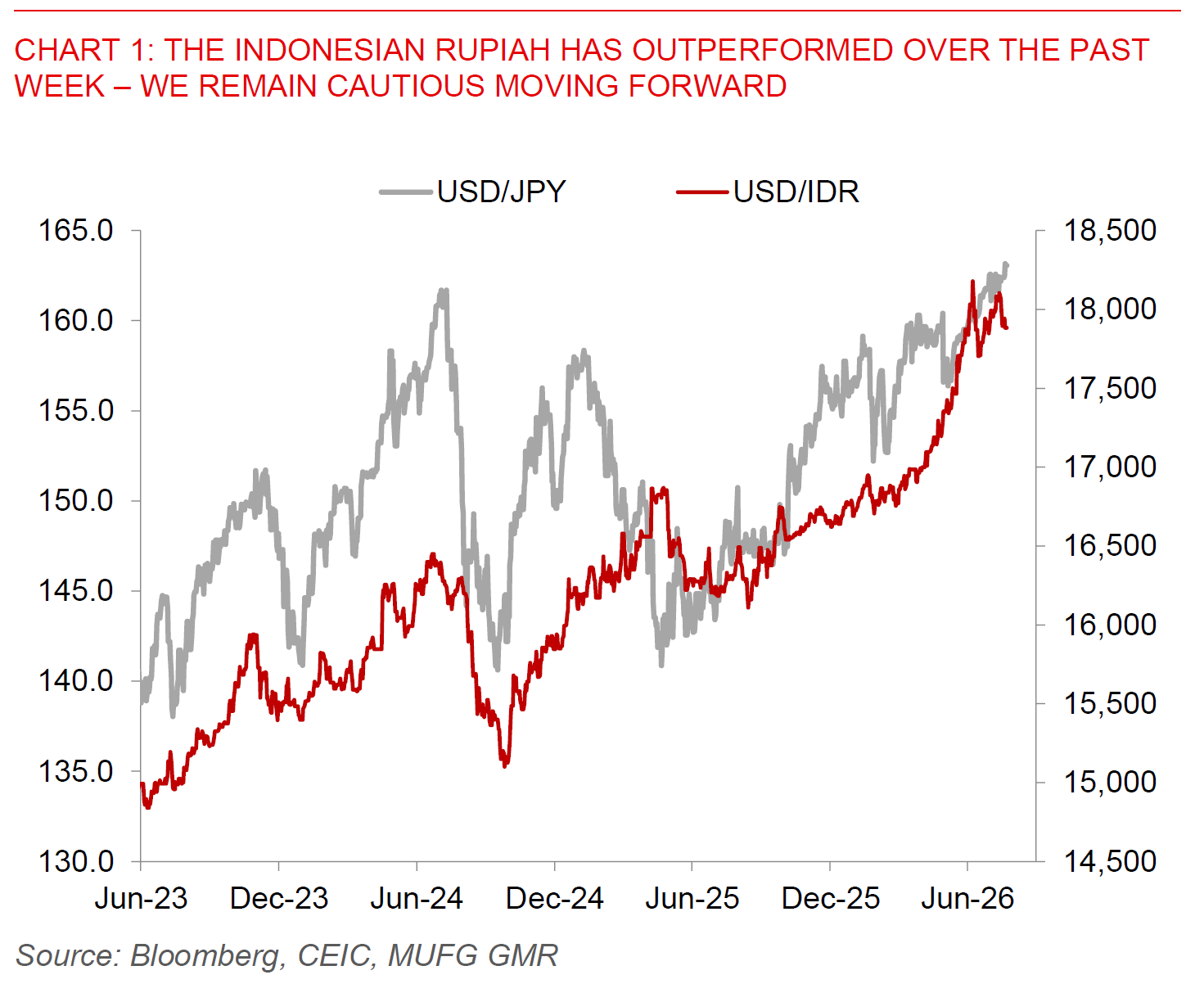
A key example in the Asia FX space is the Indonesian Rupiah, with IDR strengthening over the past few days, with spot USD/IDR moving below the 17,900 handle, rising by more than 1% since last week and outperforming other Asian FX. Some of this was probably driven by an announcement yesterday that Indonesian authorities are reviewing the budget and beneficiary targets of President Prabowo’s flagship free meals program, with the budget likely reduced to 229 Trillion Rupiah from 268 Trillion rupiah through efficiency measures. The National Nutrition Agency is also further refining its list of 63 million beneficiaries, while building a system to make sure that disbursed funds are properly accounted for. From a FX flow perspective, developments that the Indonesia sovereign is targeting to raise more than US$1bn from issuing Panda Bonds may have also helped IDR.
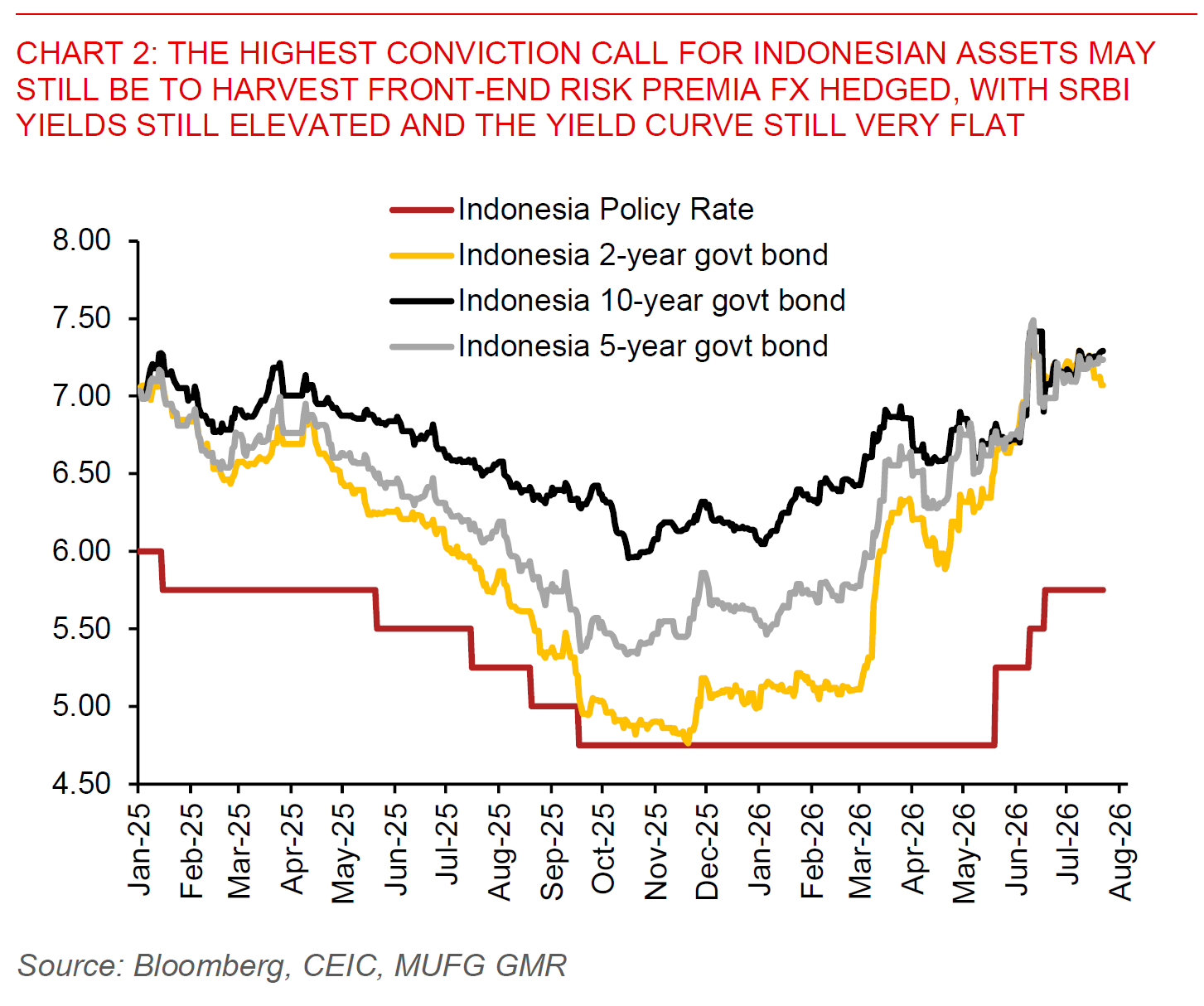
All this comes ahead of Bank Indonesia’s policy meeting today, where we together with the consensus are forecasting another rate hike, which would bring the BI rate to 6% from 5.75%.
Overall, our team remains cautious on IDR and Indonesia macro, with our Indonesia analyst forecasting USD/IDR rising above the 18,000 handle over time. This implies IDR FX underperformance against key G10 and Asia currencies, while we also expect Bank Indonesia to bring interest rates up another notch to 6.25% by end-2026 (see Asia FX Outlook – Divergence in a weaker Dollar world).
From a strategy perspective, our highest conviction call for Indonesian assets may still be to harvest front-end risk premia FX-hedged, rather than jumping in to attempt to be a hero at this time. With SRBI yields still quite elevated at 7.64% and FX hedging costs a touch above 2%, one can benefit from some yield pickup versus Indonesia Dollar bonds without taking duration, FX and excessive sovereign credit risk. If we are right with our view that fiscal policy in Indonesia may remain an issue, we would as such still look for some stickiness and underperformance in Indonesia’s sovereign credit and CDS spreads moving forward.
The big picture for us is that there is no free lunch in life, and we see the market as being reasonable in pricing in greater policy uncertainty in Indonesia, the risk of fiscal slippage from higher oil prices, the changing mix of spending from President Prabowo’s policy priorities, coupled with worries and perceptions rightly or wrongly around the quality of institutions and contingent liabilities for the public sector. Underneath it all the market is probably expecting some chance right now of a sovereign rating downgrade relative to Indonesia's BBB rating, although not fully at this point in time.
Nonetheless, the key change at the margin for markets from recent developments is that the sharp weakness in the Indonesian Rupiah and asset prices has probably reached some pain threshold for many parties - and as such incentives are somewhat more aligned in moving towards ensuring macro stability – but more will need to be done to assure markets and investors. This is in part reflected in the news around a reduction in budget for the free meals program, and also importantly the steps taken by Bank Indonesia to raise interest rates and step back from buying local currency bonds in close coordination with the Ministry of Finance as well.
It’s also important to note that the starting point for Indonesia’s sovereign is not entirely a bad one, and in many cases should not have signified an imminent sovereign rating downgrade relative to its peers. Central government public debt to GDP is just 40%, the headline fiscal deficit is 3% of GDP, the current account deficit is 1-2% of GDP, while FX mismatches are lower today relative to the 2013 taper tantrum period with external debt at 30% of GDP. The key constraint has been low tax revenues and modest FX reserves, but these should have been manageable in normal times.
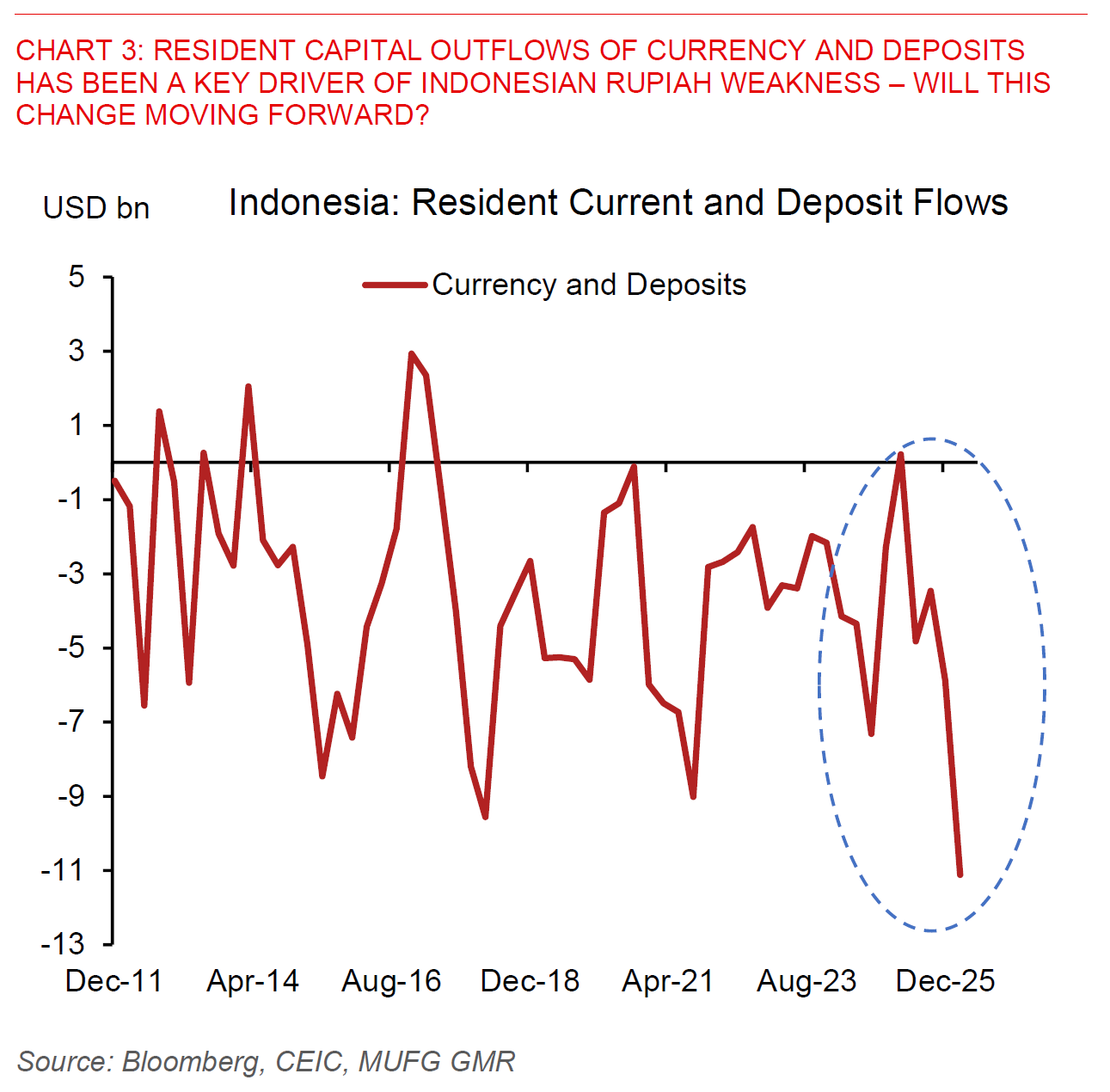
But certainly these are not normal times. Looking ahead there are key vulnerabilities, and among others the most crucial to our minds is continued domestic policy uncertainty, and with that some pressure to fund state programs either directly or indirectly. For now the market provides some constraints for policymakers and hence the risk-reward of being extremely negative on Indonesia assets is not great at this moment, but we would require greater risk premia to be adequately compensated for the underlying risks in Indonesia assets.