

Ahead Today
G3: US initial jobless claims, PPI; ECB policy rate decision
Asia: -
Market Highlights
US Treasury yields continued to push higher despite Treasury Secretary Scott Bessent's announcement of plans to repurchase up to US$6bn of longer-dated debt. The 10-year Treasury yield rose by a further 5bps to 4.84%. The move higher in yields has also been broad-based globally. The combination of tighter financial conditions and a rising term premium remains a challenging backdrop for risk assets.
Meanwhile, inflation risks remain elevated. Brent crude has climbed back above US$100/bbl amid escalating tensions between the US and Iran and ongoing risks surrounding the Strait of Hormuz. Agricultural commodity prices have also trended higher. Against this backdrop, today's US PPI release will be closely watched after the recent rebound in energy prices. A firmer-than-expected producer price print would reinforce concerns that inflation pressures remain sticky. This leaves the Fed in a difficult position. While higher inflation may warrant tighter policy, additional rate hikes would also increase government borrowing costs at a time when fiscal deficits and debt servicing burdens are already under scrutiny. The prospect of a Fed caught between inflation control and debt sustainability concerns could contribute to continued volatility across rates, equities, and FX markets.
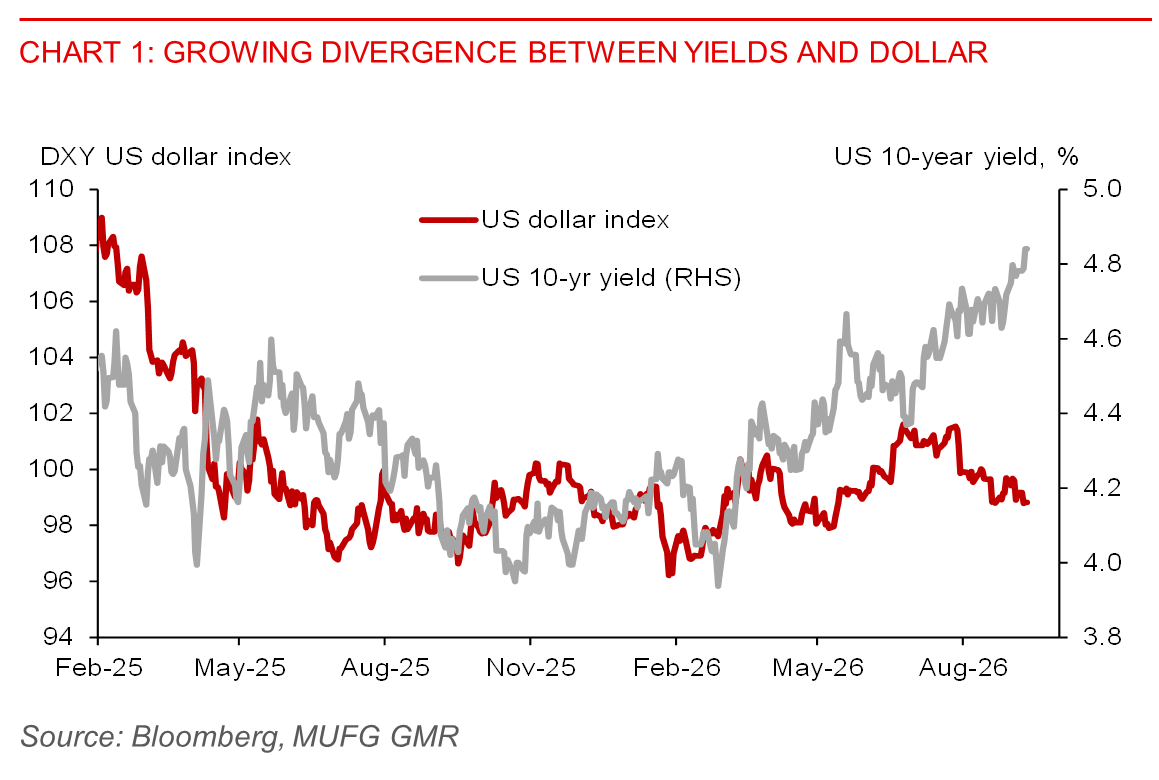
Asian currencies nevertheless displayed resilience. The Chinese yuan strengthened further toward 6.70 against the dollar, helping support a broader rally in North Asian currencies. The Korean won and Taiwan dollar were among the strongest performers, both appreciating 0.4% against the dollar yesterday. Since Jackson Hole, the yen has been the standout performer with USDJPY down 3.8%, while KRW has strengthened by 3.0%, reflecting both expectations of a softer US dollar trend and growing confidence in the region's technology export cycle.
The Malaysian ringgit has underperformed, but domestic economic fundamentals remain constructive, which should provide some cushion. Malaysia's industrial production expanded 4.7%yoy in July, supported by the ongoing electronics upcycle. Continued strength in electronics exports and relatively resilient domestic growth should remain supportive for the ringgit over the medium term despite near-term volatility from rising oil prices and higher global yields.
The rupiah has extended its gains amid a softer dollar backdrop, unwinding of long USD positioning, and cheap rupiah valuations. However, the resurgence of oil prices above US$100/bbl represents a growing challenge. While higher commodity prices continue to provide a buffer, the cushion becomes thinner as oil price rises further.
In Thailand, rising agricultural commodity prices should support Thailand's agro and agro-industrial exports. However, higher oil import costs remain a significant headwind, especially given Thailand's energy dependence and imported input requirements for its electronics sector. The baht stayed under 33.00 level against the US dollar, but it remains one of the more vulnerable currencies should oil prices and US yields remain elevated.