

Ahead Today
G3: US retail sales, import price index, FOMC meeting decision
Asia: -
Market Highlights
The US dollar strengthened modestly overnight, while US Treasury yields continued their march higher across the curve. The US 10y Treasury yield has now reached 5.00%, while the 2y yield climbed to 4.66%. Since the start of the year, US 10y yields have risen by more than 80bps, while Asian and European yields have also surged, amidst rising commodity prices.
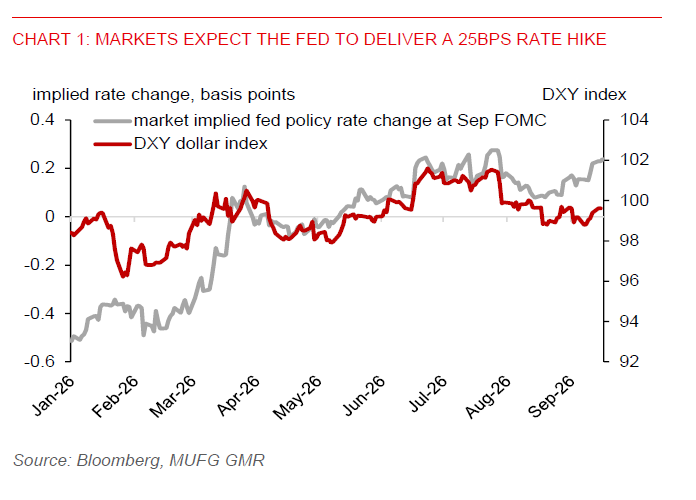
Market attention now turns to the FOMC meeting decision later today. Markets are pricing more than a 90% probability of a 25bps Fed rate hike, while expecting a cumulative two hikes by year-end. That said, the Fed faces a difficult trade-off. On one hand, inflation risks remain elevated, with Brent crude holding above US$100/bbl, US retail gasoline prices staying above USD4/gallon, and agricultural commodity prices moving higher. Escalating tensions in the Middle East continue to threaten energy supply chains, with attacks on Saudi energy infrastructure and disruptions to key transport routes adding upside risks to oil prices. On the other hand, tighter monetary policy raises debt servicing costs for the US government and adds further strain on interest-rate-sensitive sectors such as housing.
Asian currencies weakened broadly against the US dollar as rising Treasury yields and elevated oil prices continued to dominate sentiment.
We remain cautious on the THB outlook. Thailand remains one of Asia's most vulnerable economies to sustained high oil prices given its heavy reliance on imported energy. Rising oil import costs, deteriorating terms of trade and weaker portfolio flows leave the baht exposed to further downside in our view.
We also remain cautious on IDR. Indonesia faces a complicated backdrop following another leadership change at the Finance Ministry, with Purbaya replaced by Deputy Finance Minister Nazara. Although Indonesia continues to benefit from relatively high commodity prices, Brent at above US$100/bbl presents a fiscal challenge through higher fuel subsidy costs and puts pressure on the trade balance. Maintaining the government's commitment to keeping the budget deficit below 3% of GDP may require additional expenditure restraint elsewhere.