

Tech rout weighs on Asia FX before NFP
Ahead Today
G3: US Nonfarm Payrolls, Unemployment Rate, University of Michigan Sentiment
Asia: Thailand CPI, Philippines Unemployment Rate, Foreign Reserves for Indonesia, Singapore, Malaysia and India
Market Highlights
The initial relief following the Democratic sweep of Congress has faded sharply amid concerns over tighter scrutiny of AI infrastructure investment. The Nasdaq 100 plunged 6.4%, while semiconductor stocks tumbled 12%, pushing the S&P 500 down 4.4% in its sharpest decline since April 2025 when President Trump launched reciprocal tariffs across the globe. Investors were seen rotating into safe heaven assets as Yen appreciated, US treasuries gained, and gold price edged somewhat higher.
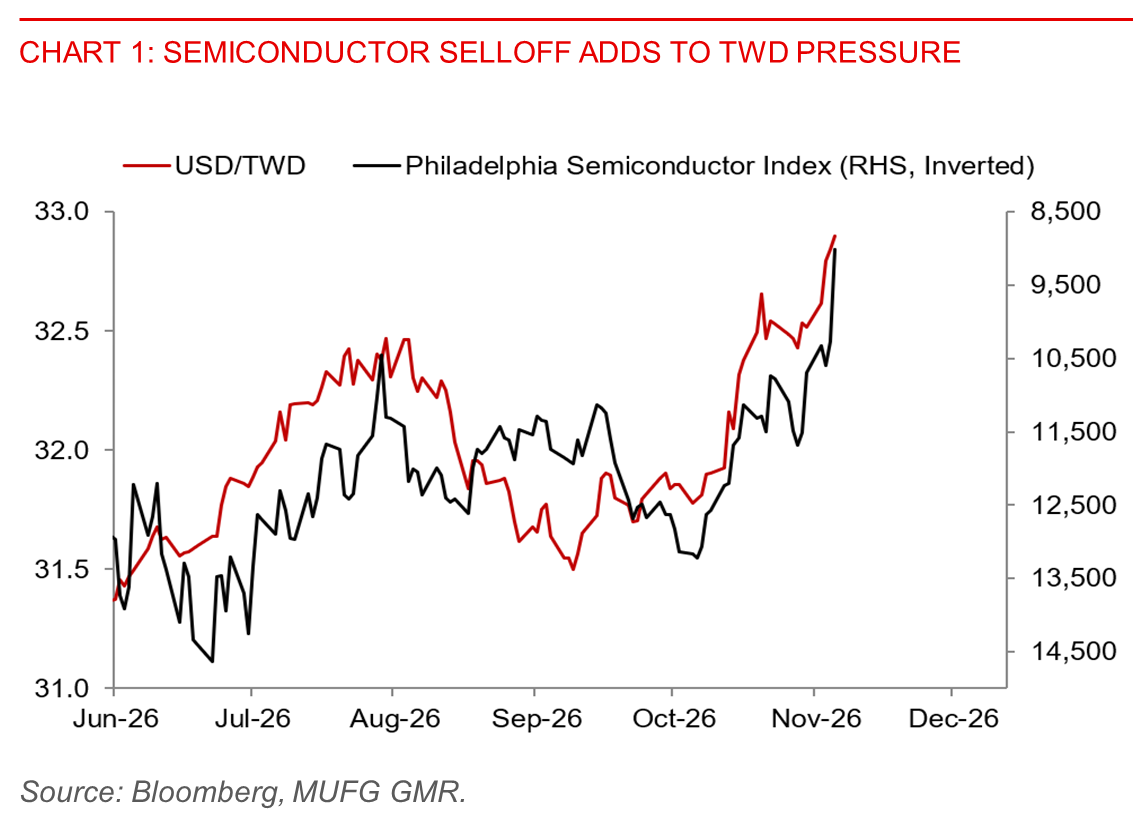
For Asia FX, the sharp deterioration in risk sentiment threatens to outweigh the relief from lower oil prices and US yields in Asia’s trading session today, especially for tech-sensitive currencies such as TWD and KRW. Amidst the risk-off episode, the dollar has regained some ground with the DXY rising towards 101.6 as investors sought safe-haven assets. The 12% plunge in US semiconductor stocks risks triggering another wave of foreign equity outflows from foreign investors selling South Korea and Taiwan equities. While KRW has remained relatively resilient this week, the severity of the tech selloff overnight could erode that resilience, despite the supporting external fundamentals e.g. significant trade surpluses.
Attention turns to today’s US nonfarm payrolls report, with markets expecting 70k jobs added in October, up from 29k in September. Stronger-than-expected JOLTS and ADP data suggest a better-than-expected US labour demand, raising the risk of further Fed tightening, adding another source of pressure for Asia FX.
Bank Negara Malaysia maintained its policy rate at 2.75% as expected, while signalling greater vigilance towards inflation risks heading into 2027. The central bank expects Malaysia’s growth to exceed 5% this year, supported by resilient domestic demand and strong exports. While headline and core inflation are expected to edge higher amid elevated commodity prices, BNM expects price pressures to remain contained. Resilient growth and manageable inflation provide a supportive domestic backdrop for MYR, with limited urgency for further policy tightening.
Indonesia’s Q3 GDP growth surprised to the upside, accelerating to 5.47%yoy from 5.29% in Q2, beating the 5.2% consensus. The uptick was partly helped by improvement in external balance in Q3, with exports of goods and services growing faster by 0.46ppts to 4.59%. Domestic demand is holding up better than expected, with private consumption largely the same at 5.04%yoy and investment expanded 6.06%yoy. While stronger growth reduces the urgency for BI to support economic activity, it does little to address lingering investor confidence concerns. We remain cautious on IDR, with domestic risks and weak portfolio flows likely to constrain any sustained recovery
Meanwhile, Taiwan’s headline inflation eased to 2.33%yoy in October from 2.74%, while core inflation moderated to 2.23%yoy. Despite both measures remaining above 2% alert level, we expect the CBC to keep its policy rate unchanged at 2.00% in December, though a persistent TWD weakness may increase the upside risk at the margin. Yesterday, the CBC officials encouraged the exporters to convert their US dollar proceeds whenever the conditions are favourable and also urged the banks to fulfill exporters’ US dollar conversion needs.
Recently, TWD has been behaved like a high-beta semiconductor and equity-flow currency, rather than a conventional strong current account driven Asian currency. Large portfolio outflows were reasons behind TWD’s depreciation lately, despite Taiwan’s good macro conditions and particularly strong external fundamentals due to very robust exports. Recent market’s concerns on AI valuations and semiconductor stocks caused foreign investors’ aggressive sell of Taiwan equities and conversion demand for USD for repatriation. With a Democratic sweep, we could expect a lower US yield tail risk, which should provide some support for semiconductor valuations and Taiwan equities.