

Upside US growth surprise
Ahead Today
G3: Japan Policy Rate, Eurozone GDP
Asia: Thailand Current Account and Reserves, Taiwan GDP, Philippines Trade, Singapore Unemployment Rate, India Foreign Reserves
Market Highlights
US growth surprised to the upside, with Q3 GDP expanding 3.4%qoq annualised, the fastest pace in a year. Business investment surged 12.7%qoq annualised on AI-related spending, while headline PCE inflation quickened to 3.6%yoy in September from 3.4%yoy, and core PCE edged up to 3.1%yoy from 3.0%yoy. US 10-year yields fell to 4.92% despite the strong data, while the Nasdaq slid on Alphabet-led AI spending concerns.
For Asia FX, resilient US growth and sticky inflation keep a December Fed hike in play. Markets continue to price further tightening into 2027, with the implied policy rate reaching around 4.4% next year. Rate expectations eased slightly after the FOMC and remain below their late-September highs, offering some relief at the margin. Nonetheless, still-elevated US rates and higher energy costs leave several emerging Asian currencies still vulnerable.
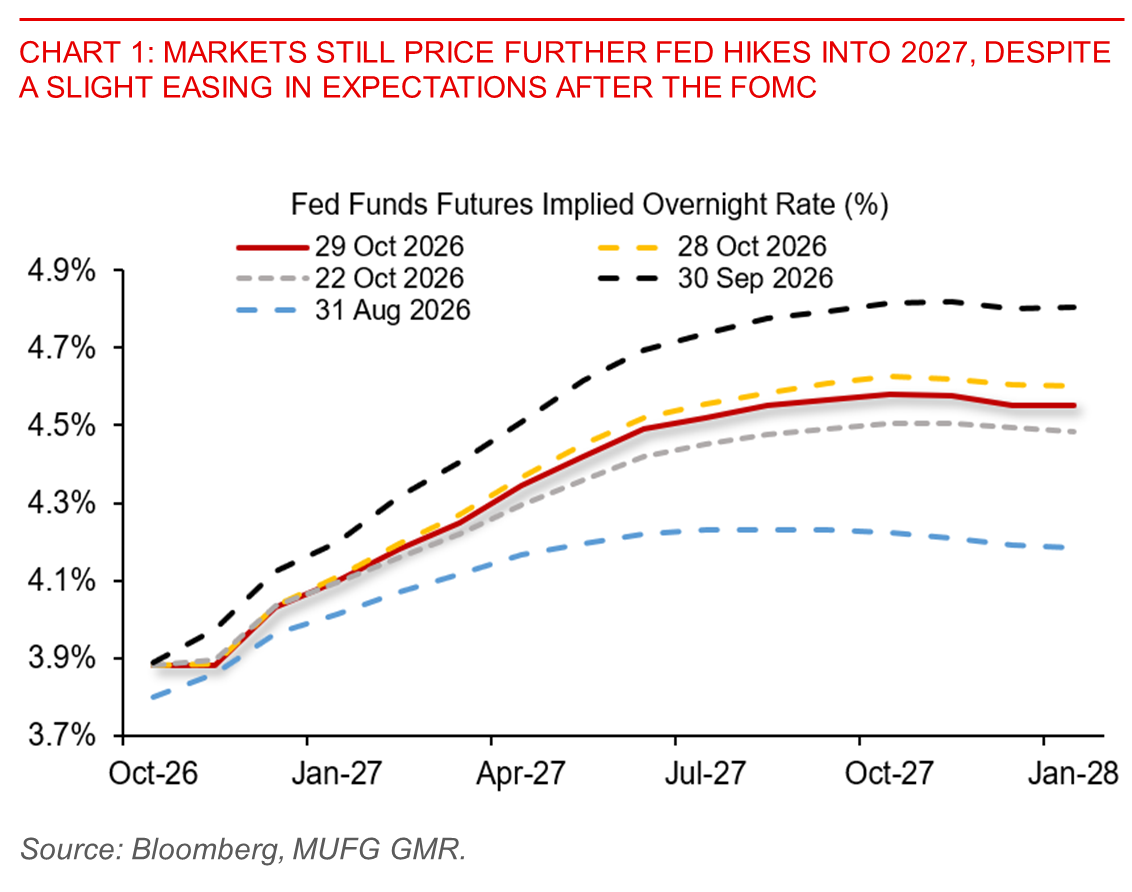
India is a case in point, with the rupee paring recent gains. Onshore and NDF forward premia have also stayed elevated. India’s FX reserves data today will also be closely watched for signs of any FX interventions, amid the RBI’s efforts to stabilise the rupee.
USD/PHP fell to around the 63.80 level after hitting a record high of 64.2 on Tuesday. Philippines President Marcos has pledged to maintain support for the peso, amidst persistent currency weakness. Meanwhile, the government is also implementing selective subsidies, assistance for farmers impacted by El-Nino, and a price freeze on basic goods until year-end. That said, elevated oil-import costs remain a headwind for PHP, limiting the scope for a sustained recovery.
In Japan, the BoJ is expected to keep the policy rate unchanged at 1.25% today following September’s hike. With core inflation (excluding fresh food and energy) reaching 2.4%yoy in September and the policy stance still below our estimated neutral rate, attention will turn to BOJ guidance for signs of further policy normalization in the coming months. A more hawkish signal from BOJ Governor Ueda regarding the timing or the pace of further hikes could provide support for the yen.