

Asia FX faces rising oil and chip risks
Ahead Today
G3: US Wholesale Inventories
Asia: Thailand Customs Trade Data and Reserves, Taiwan Q3 GDP (Preliminary)
Market Highlights
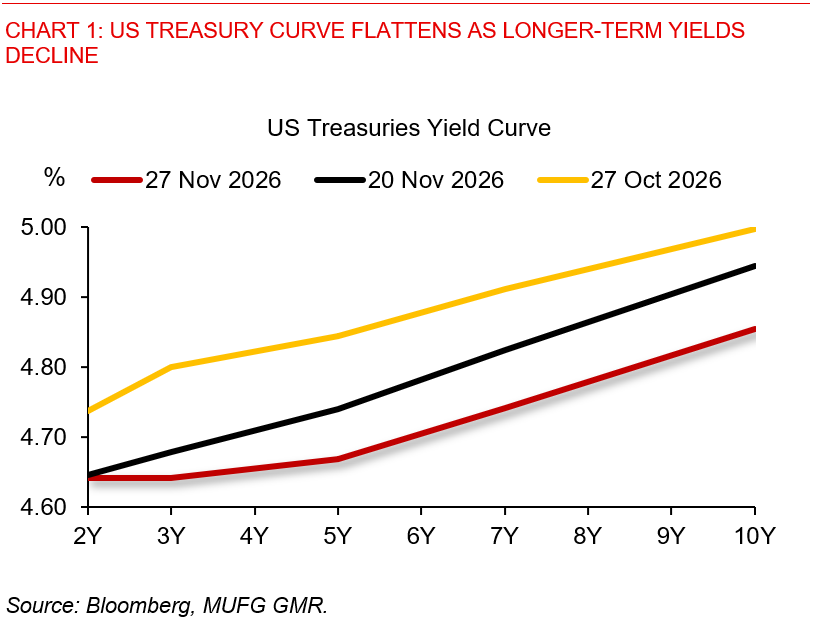
Asia FX enters today on a cautious footing, even as Asian equity markets broadly strengthened following the recent technology-led selloff. Technology-heavy markets led the gains, helping TWD outperform regional currencies with a 0.6% rise against the dollar. Caution remained evident in US Treasuries, where the 10-year yield fell around 8bps this week to 4.86%, compared with a muted 2-year yield movement. The curve flattened as investors reassessed the longer-term growth outlook, while markets continued to price in a December Fed hike.
Brent crude rose above USD 96/bbl after gaining almost 6% the past two days, as attacks on Saudi oil infrastructure and Kuwait’s critical infrastructure revived concerns around a prolonged oil supply disruption. The lack of progress toward ending the Iran conflict is likely to keep a geopolitical risk premium embedded in prices. Elevated oil prices will continue to pressure Asia’s FX given their net importers’ status.
Technology-sensitive currencies face an additional headwind after Financial Times reported that Nvidia halted shipments of AI servers to Malaysia, Thailand, Indonesia and Singapore. The pause follows tighter US scrutiny intended to prevent Chinese companies from accessing advanced chips through regional data centres. Uncertainty over whether the restrictions are temporary could weigh on regional technology investment and sentiment toward MYR, THB, IDR and SGD.
Bank of Korea raised its policy rate by 25bps to 3.25%, looking through recent equity volatility as strong growth and persistent inflation maintained the case for further tightening. Its rate projections point to additional hikes, providing some support to KRW, although concerns over the global AI and semiconductor cycle may limit the benefit.
USD/IDR rose further above 18,350, as depreciation pressures on the rupiah persisted. BI announced interventions through NDF, spot and DNDF transactions, but still-weak global risk sentiment, Fed rates hike expectations and stock-reclassification concerns remain significant headwinds. For Thailand, the customs trade data to be released later will also be in focus for signs of export resilience and whether external demand can support THB amid elevated oil prices.