

External pressures build on regional FX
Ahead Today
G3: US durable goods, University of Michigan sentiment survey; eurozone M3 money supply
Asia: Thailand trade
Market Highlights
The selloff in US Treasuries deepened further. The 2-year yield rose another 3bp, while the 10-year and 30-year yields climbed around 8bp, with the 2s10s spread steepening by around 6bp. The move adds to an already substantial repricing in global bond markets this year. US mortgage rates have also risen above 7%, weighing on mortgage applications and pointing to downward pressure on housing demand.
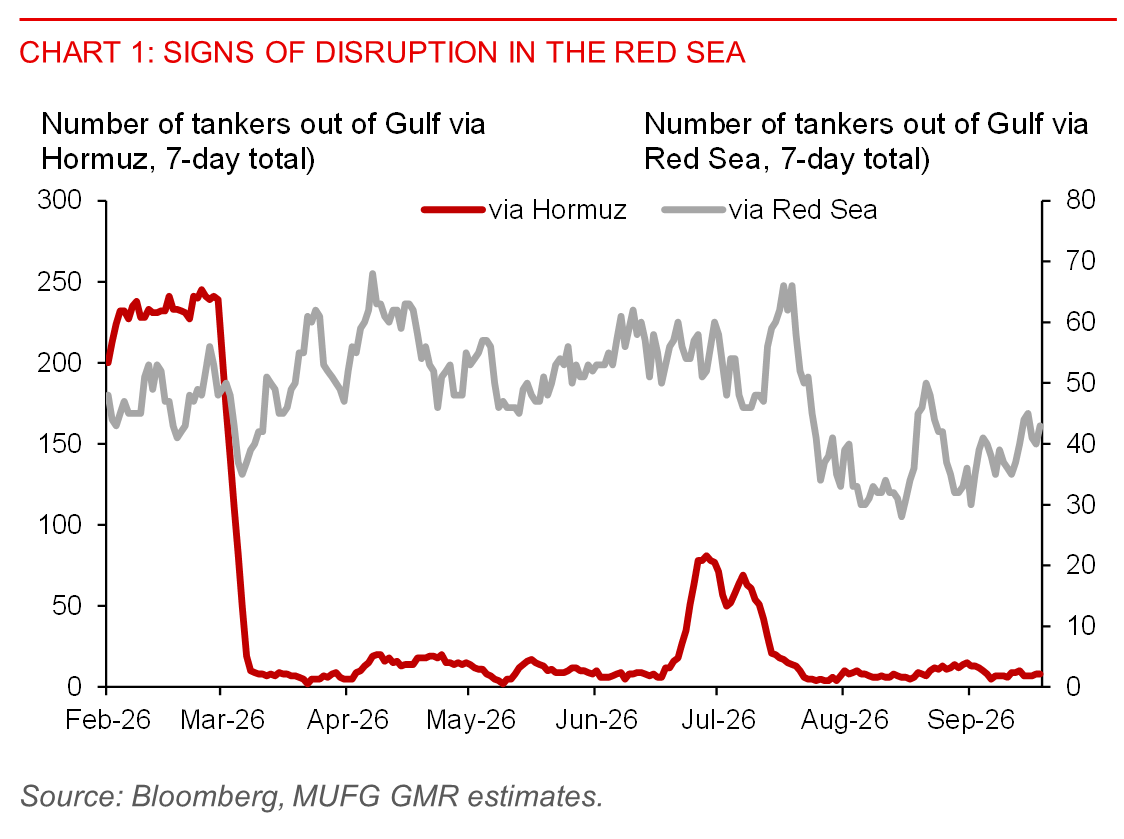
Oil is adding another layer of pressure to the rates story. Brent rose another 3.4% yesterday. Renewed geopolitical risks in the Middle East are occurring against an already tight oil-market backdrop, raising concerns over both supply and inflation. Reports of attacks targeting Yanbu are particularly relevant given its role as an alternative route for Saudi oil exports outside the Strait of Hormuz. The number of tankers transiting out of the Gulf via the Red Sea have notably fallen since July.
Meanwhile, US-China trade risks remain in the background. The trade truce has been extended by just two months to 10 January, leaving issues over tariffs, agricultural purchases, rare earths, and technology restrictions unresolved. The extension shifts the next potential trade-policy risk event into January.
The dollar extended its advance, with DXY rising another 0.2% yesterday. Most Asian currencies weakened against the dollar, with THB (-0.7%) and IDR (-0.6%) underperforming. The external backdrop remains difficult for Asia FX.
In Indonesia, BI and the Finance Ministry will coordinate on next year's financing plans, including aligning government bond issuance with the central bank's securities to avoid large yield gaps. However, there are limits to how much domestic policy coordination can offset a sustained external shock. With BI keeping its policy rate at 5.75%, a worsening of the external environment could leave more of the adjustment pressure on the rupiah, while the hurdle for BI to remain on hold should rise.
We also stay cautious on THB, which weakened 0.7% yesterday and is now down around 1.8% against the dollar since Jackson Hole. Thailand has limited gains from its electronics trade, given high import dependence, while higher oil prices represent an additional terms-of-trade headwind.