

China growth firms as Asia FX headwinds persist
Ahead Today
G3: US Housing Starts
Asia: Taiwan Export Orders
Market Highlights
China’s economy gained momentum in Q3, led by stronger industrial production, although domestic demand remained uneven. GDP growth rose to 4.5%yoy from 4.3%yoy, slightly above consensus of 4.4%yoy, leaving growth at 4.6%yoy YTD. September industrial production accelerated to 5.5%yoy, while the monthly contraction in fixed asset investment narrowed after four months of double-digit declines. The improvement in production and narrower monthly investment contraction helped keep the annual GDP target within reach. For CNY, firmer activity provides a more supportive domestic backdrop, although the composition of growth remains important in assessing whether this improvement can be sustained.
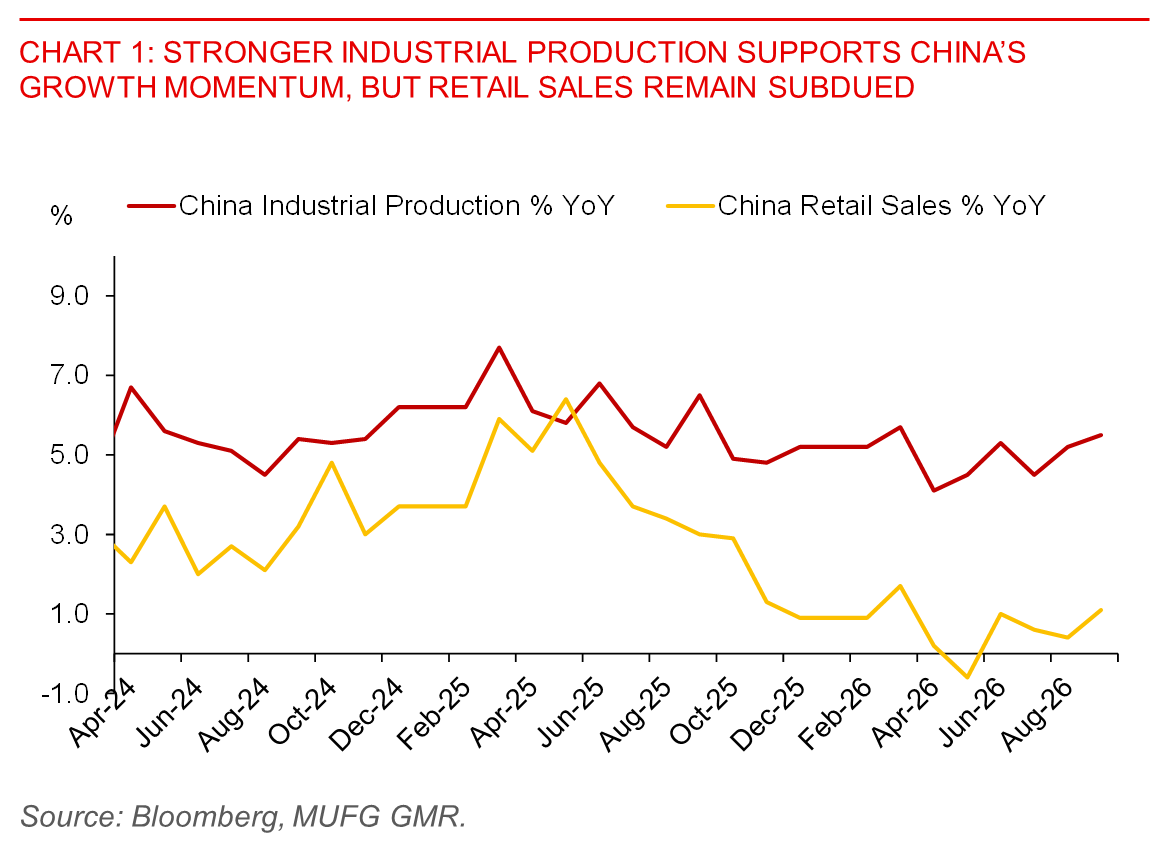
Stronger production has yet to translate into a convincing recovery in household demand or property investment. Retail sales improved to 1.1%yoy from 0.4%yoy, greatly exceeding the 0.5%yoy estimate, with it benefiting from the Mid-Autumn Festival falling in September. Meanwhile, property investment contracted 20.6%yoy over the first three quarters, deepening from the decline recorded through August. Technology manufacturing and digital services continued to outperform, highlighting the divergence between newer growth engines and traditional domestic sectors.
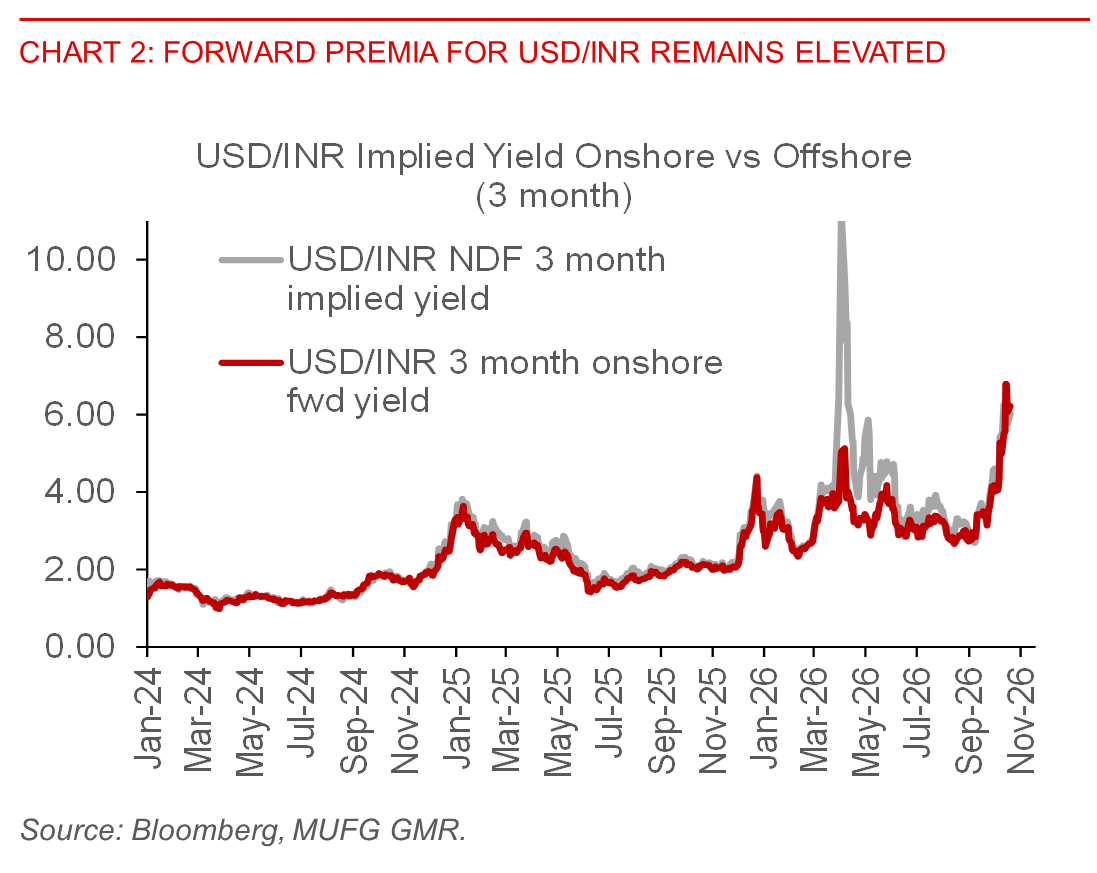
In India, we note that the measures of 10 October have stabilised the rupee, but elevated oil prices and equity outflows continued to limit its recovery. USD/INR ended Monday little changed near the 95 level. Dollar sales and the recently announced measures, including the special dollar window for oil companies, provided support against persistent external pressures. However, tighter domestic liquidity and strong short-dated hedging demand have also pushed forward premia higher. RBI’s interventions this year have cushioned near-term INR pressure, but a more durable improvement would require relief from commodity costs and foreign outflows.
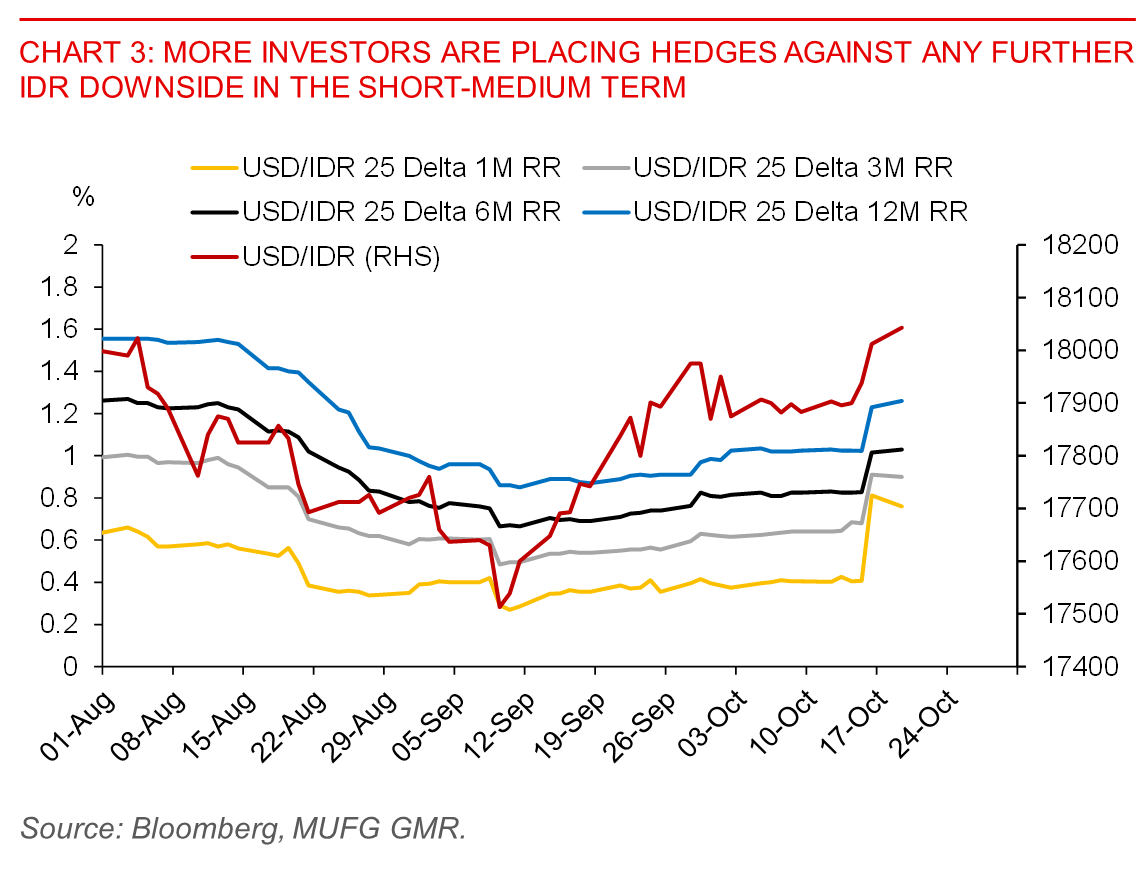
Indonesia’s pledged new equity-market reforms yesterday to restore a semblance of investor confidence, although the implications for foreign participation will depend on implementation and MSCI’s assessment. The exchange plans to exclude tightly owned stocks, accounting for around 18% of benchmark weight, from the Jakarta Composite Index. It will also disclose whether shareholders owning at least 1% are affiliated with the company. These steps address concerns over ownership transparency and coordinated trading, but implementation timelines remain pending. For now, investors have placed hedges against further IDR downside in the short-medium term.
Finally, Malaysia’s September CPI eased to 1.8%yoy, below consensus and August’s 1.9%yoy. Housing-related and communication inflation slowed, offsetting firmer transport prices. The reading points to contained overall price pressures, leaving limited fresh domestic inflation impetus for the Ringgit. Its September exports rose 54.5%yoy, above consensus of 39.9%yoy and August’s revised 45.4%yoy, supported by electronics shipments.