
Oil sell-off to run into tight fundamentals
Oil prices looking for next geopolitical catalyst
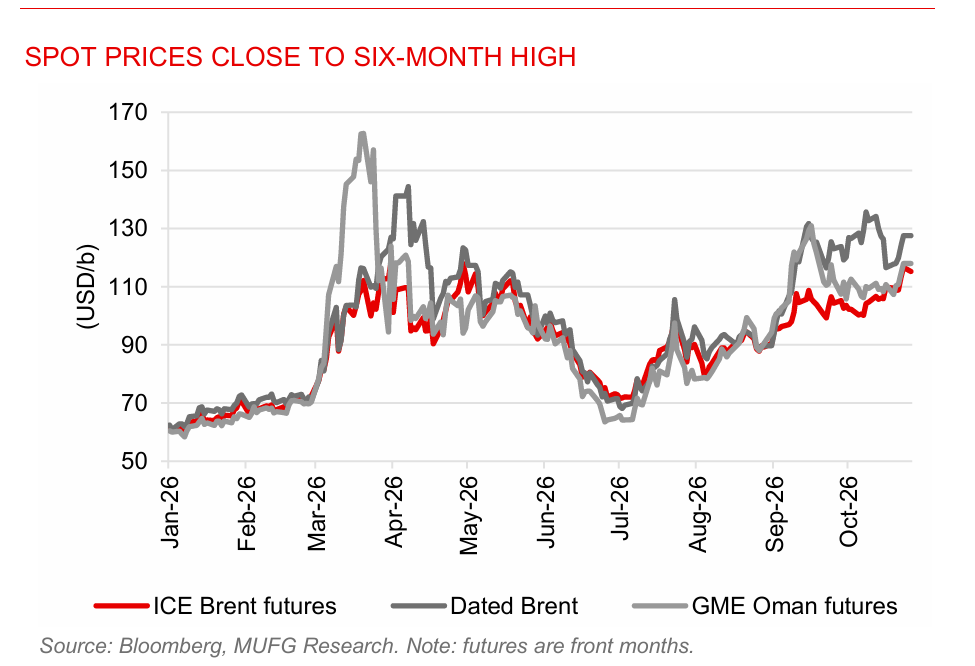
Front month oil prices have pulled back from close to their highest levels in the last six months with Brent December futures at USD 115/b, down from nearly USD 118/b hit at the end of last week. The immediate catalyst for the move lower appears to be the lack of regional geopolitical escalation ahead of two upcoming political anchor events: the Israeli election on October 27 and the US midterm elections on November 3. US President Donald Trump has given no clarity on whether he supports a renewed offensive against Iran, saying a military campaign to “finish off” Iran would be “very easy” but also remaining open to a negotiated settlement.
Time spreads continue to point to tight market
Without a clear diplomatic resolution to the Iran-US conflict, risks for oil markets remain skewed to the upside with today’s sell-off likely representing consolidation rather than a complete reassessment of the oil market fundamentals. Time spreads remain in a wide backwardation: today’s Brent prompt spread at close to USD 5/b is in the 99th percentile in data going back to 1990 and the backwardation across the curve has been increasing in recent weeks, rather than subsiding.
Physical spreads splitting between supply and demand drivers
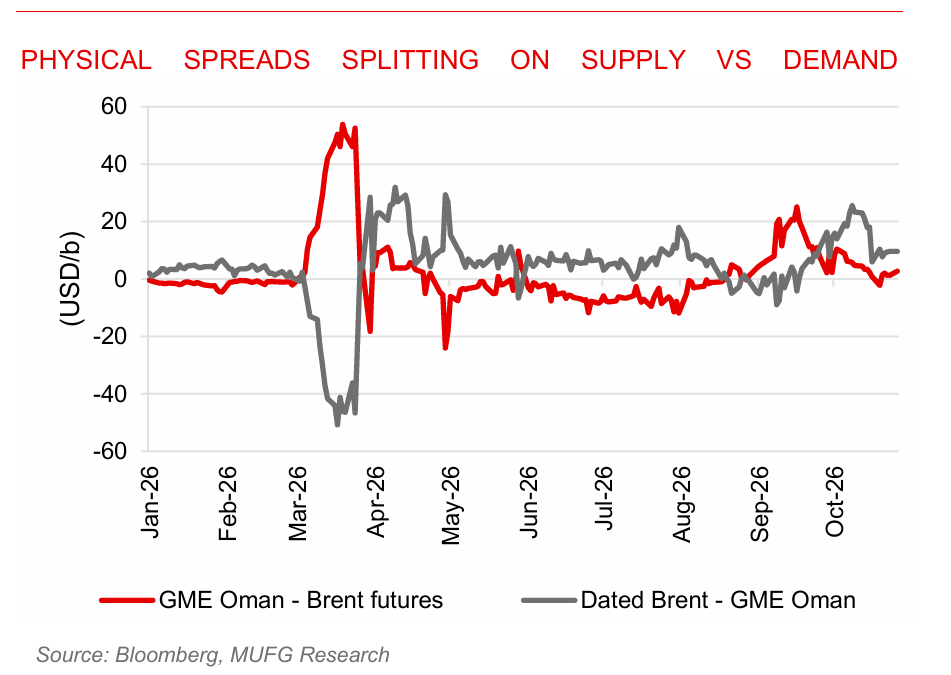
Physical spreads are showing a clear supply / demand split. Oman futures, which are physically delivered outside of the Strait of Hormuz, have sharply narrowed their spread over Brent futures since hitting a recent peak of nearly USD 21/b in mid-September. US escorts of cargoes have helped crude volumes from Gulf producers to recover to close to pre-conflict levels, helping to narrow the “supply spread” gap.
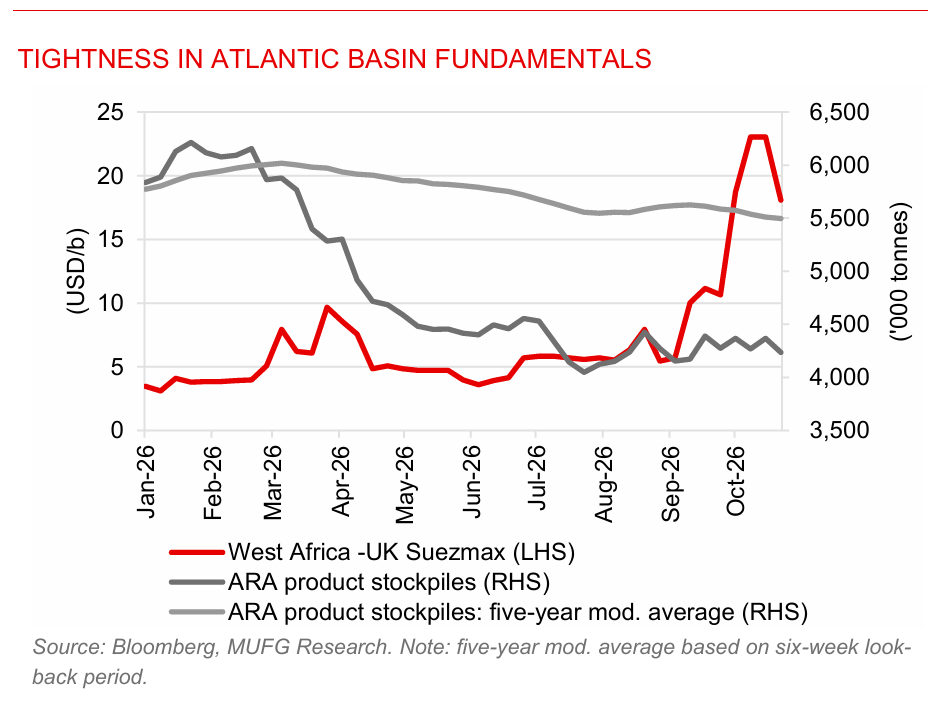
On the demand side though, spreads remain wide. Dated Brent relative to either Brent futures or Oman futures have steadily risen in recent weeks, showing some levelling off last week but holding steady at close to USD 10/b. This “demand spread” gap is being driven by the shortage of available shipping in the Atlantic Basin: Suezmax rates for West Africa to UK routes remain aggravated at USD 18/b, down from a recent spike to more than USD 23/b. Regional inventories in North West Europe also remain tighter than other key trading hubs: ARA (Amsterdam/Rotterdam/Antwerp) product inventories are at about 77% of their five-year average compared with 88% for product inventories in Singapore and more than 90% for product stockpiles in the US.