

Oil sell-off to run into tight fundamentals
Oil prices slides since start of the month
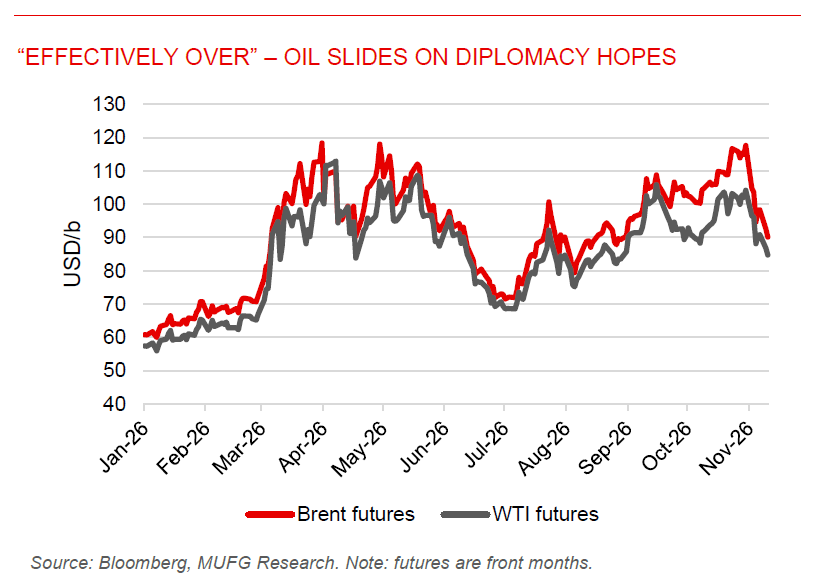
Oil prices remain under substantial selling pressure following the US midterm elections last week with Brent futures for January expiry moving below USD 90/b for the first time since August. As of mid-day 10 November, Brent futures were trading at USD 89.57/b, down nearly 24% since the start of the month while WTI was trading below USD 85/b, down 19% since the start of November.
Market growing more optimistic on a diplomatic outcome
The primary catalyst for the move has been a shift in messaging from US President Donald Trump who overnight said that the war with Iran “militarily, is effectively over.” Trump’s comments followed on from a meeting held between the US and Qatar which has acted as a primary mediator in the conflict and market expectations that the heavy Republican losses in the midterms last week will force some concessions from the administration, including on foreign policy.
Increasing flows of oil and natural gas from the Middle East through the Strait of Hormuz are also helping to ease oil market balances and bring physical prices into alignment with futures: dated Brent is now less than USD 92/b, narrowing the spread over futures to less than USD 2/b, down from more than USD 10/b at the end of October and more than USD 30/b at the start of last month.
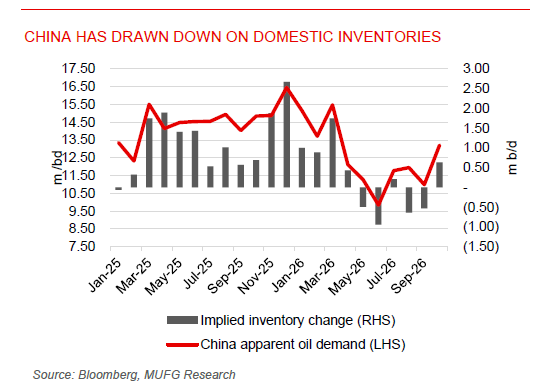
Adding more pressure to the selloff has been the sustained decline in China’s oil imports with October data showing import volumes extending their decline this year with a drop of 13% y/y to just under 10m b/d while year-to-date imports have fallen by 15%. China’s apparent oil demand has declined by an average of 8% year-to-date in 2026 with demand being met by a substantial draw in crude inventories.
Barriers remain high to a sustained drop in energy prices
Spot markets have reacted strongly to the apparent rise in diplomatic optimism but the sustainability of the selloff is going to rely on:
The US and Iran coming to a lasting and believable agreement. The MoU that opened the Strait of Hormuz in June-July lasted only a few weeks before attacks resumed so markets will have to believe that something has fundamentally altered on the part of the US and Iran for any new deal to last. President Trump has given more optimistic messages in recent days but US Secretary of State Marco Rubio and his Iranian counterpart Abbas Araghchi have been much more sceptical. Moreover, President Trump has declared the war “over” several times in 2026 only for military action to resume.
If no deal can be reached, then flows of oil via the Strait of Hormuz will have to continue to rely on US military escort and support. Another US carrier group is inbound toward the Middle East region and an elevated military presence in the region will keep the risk of renewed strikes high. The election of a Democrat Congress may change that calculus if the House or Senate seeks to impose restrictions on the administration’s ability to carry out military operations.
Shipping confidence that the Strait of Hormuz is clear and passages are unthreatened. Vessels have continued to report attacks in the Strait of Hormuz as of this week while Iranian forces have claimed that ships have hit mines.
China’s oil demand staying moderate. While in annual terms, China is still consuming far less than it did last year, on a sequential basis a shift is underway. Import volumes rose by 13% m/m in October and have increased by a monthly average of 10% m/m since July.